
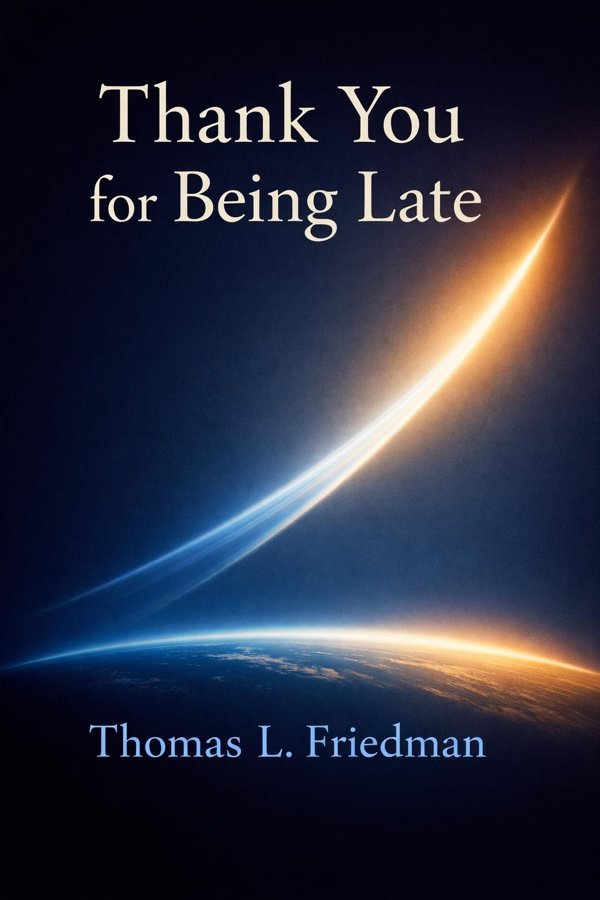
Thank You for Being Late: An Optimist’s Guide to Thriving in the Age of Accelerations: Summary & Key Insights
 10 min11 chaptersAudio available
What Is Thank You for Being Late: An Optimist’s Guide to Thriving in the Age of Accelerations About?
Thank You for Being Late: An Optimist’s Guide to Thriving in the Age of Accelerations by Thomas L. Friedman is a future_trends book spanning 11 pages. In this book, Thomas L. Friedman explores how the world is being transformed by three accelerating forces—technology, globalization, and climate change—and how individuals, communities, and nations can adapt to thrive amid these rapid shifts. Drawing on interviews, research, and personal reflection, Friedman argues that understanding and embracing these accelerations is key to sustaining progress and human dignity in the 21st century.
This FizzRead summary covers all 11 key chapters of Thank You for Being Late: An Optimist’s Guide to Thriving in the Age of Accelerations in approximately 10 minutes, distilling the most important ideas, arguments, and takeaways from Thomas L. Friedman's work. Also available as an audio summary and Key Quotes Podcast.
Thank You for Being Late: An Optimist’s Guide to Thriving in the Age of Accelerations
In this book, Thomas L. Friedman explores how the world is being transformed by three accelerating forces—technology, globalization, and climate change—and how individuals, communities, and nations can adapt to thrive amid these rapid shifts. Drawing on interviews, research, and personal reflection, Friedman argues that understanding and embracing these accelerations is key to sustaining progress and human dignity in the 21st century.
Who Should Read Thank You for Being Late: An Optimist’s Guide to Thriving in the Age of Accelerations?
This book is perfect for anyone interested in future_trends and looking to gain actionable insights in a short read. Whether you're a student, professional, or lifelong learner, the key ideas from Thank You for Being Late: An Optimist’s Guide to Thriving in the Age of Accelerations by Thomas L. Friedman will help you think differently.
- ✓Readers who enjoy future_trends and want practical takeaways
- ✓Professionals looking to apply new ideas to their work and life
- ✓Anyone who wants the core insights of Thank You for Being Late: An Optimist’s Guide to Thriving in the Age of Accelerations in just 10 minutes
Want the full summary?
Get instant access to this book summary and 100K+ more with Fizz Moment.
Get Free SummaryAvailable on App Store • Free to download
Key Chapters
From my vantage point as a journalist watching the world evolve, I’ve come to realize that the feeling of disorientation many people share arises from a simple truth: three giant forces have all entered hyper-drive at once. I call them Moore’s Law, the Market, and Mother Nature. Moore’s Law, named after Intel cofounder Gordon Moore, predicts that computing power doubles roughly every two years while its cost halves. The Market refers to the intricate network of trade, finance, and global connectivity that now binds producers and consumers from every corner of the planet. And Mother Nature—our ecological system—responds to our industrial and population growth with unprecedented feedback: hotter summers, melting glaciers, and species loss at alarming rates.
What’s striking is not merely that each of these forces is accelerating, but that they amplify one another. Faster technology accelerates globalization; globalization increases environmental strain; environmental stress then demands better technology for mitigation and adaptation. We are caught in a feedback loop of acceleration.
Understanding these interwoven forces is the first step toward adapting. Our institutions—schools, governments, companies—were built for a slower time. They’re structured for predictability, for gradual evolution. Yet now, the rate of change is exponential. That mismatch between speed and institutional capacity creates instability in politics, economies, and everyday life. But if we can recognize the pattern, we can begin to respond consciously rather than reactively.
In this age, adaptation becomes the new measure of intelligence. The societies, companies, and individuals that can learn faster, retool continuously, and collaborate creatively will be the ones that thrive. It’s no longer about resisting acceleration—it’s about harnessing its momentum thoughtfully.
When I first began writing about technological change in the 1990s, it was thrilling to explore the emerging digital frontier. But what I’ve learned since then is that technology has crossed a threshold: it’s no longer something that evolves linearly, it evolves exponentially. The year 2007 stands out to me as a tipping point. That was when the iPhone appeared, when cloud computing reached critical mass, when Twitter and Facebook became global platforms, and when big data analytics transformed how we process information. From that moment onward, the world didn’t just change—it exploded into a new orbit.
Exponential change means that humans must constantly retool their skills. Artificial intelligence, machine learning, autonomous systems—all these are advancing faster than our social systems can absorb. The half-life of knowledge is shrinking; what you learned in college may be outdated within years. But this very challenge also creates extraordinary opportunities. With open online learning, democratized data, and networked creativity, individuals can now innovate from anywhere.
The problem isn’t that technology is running away from us. The problem is that our adaptation mechanisms—our schools, workplaces, and politics—haven’t sped up with it. Education must evolve from transmitting static knowledge to nurturing curiosity and problem-solving. In my conversations with educators and entrepreneurs, I sensed the same shift in tone: teaching must become lifelong, participatory, dynamic. We are all beginners now, constantly rebooting ourselves for relevance.
Technology’s acceleration can be overwhelming, but it’s also deeply empowering. It gives small actors leverage once reserved for great powers. A lone coder can design an app that changes an industry. The challenge is to infuse those powers with ethical purpose. Because as machines become smarter, our humanity—our capacity for empathy, creativity, and humility—becomes our most valuable comparative advantage.
+ 9 more chapters — available in the FizzRead app
All Chapters in Thank You for Being Late: An Optimist’s Guide to Thriving in the Age of Accelerations
About the Author
Thomas L. Friedman is an American journalist, author, and three-time Pulitzer Prize winner. He is best known for his work as a columnist for The New York Times, where he writes on foreign affairs, globalization, and environmental issues. His books, including 'The World Is Flat' and 'Hot, Flat, and Crowded,' have been influential in shaping public discourse on global interconnectedness and innovation.
Get This Summary in Your Preferred Format
Read or listen to the Thank You for Being Late: An Optimist’s Guide to Thriving in the Age of Accelerations summary by Thomas L. Friedman anytime, anywhere. FizzRead offers multiple formats so you can learn on your terms — all free.
Available formats: App · Audio · PDF · EPUB — All included free with FizzRead
Download Thank You for Being Late: An Optimist’s Guide to Thriving in the Age of Accelerations PDF and EPUB Summary
Key Quotes from Thank You for Being Late: An Optimist’s Guide to Thriving in the Age of Accelerations
“I call them Moore’s Law, the Market, and Mother Nature.”
“When I first began writing about technological change in the 1990s, it was thrilling to explore the emerging digital frontier.”
Frequently Asked Questions about Thank You for Being Late: An Optimist’s Guide to Thriving in the Age of Accelerations
Thank You for Being Late: An Optimist’s Guide to Thriving in the Age of Accelerations by Thomas L. Friedman is a future_trends book that explores key ideas across 11 chapters. In this book, Thomas L. Friedman explores how the world is being transformed by three accelerating forces—technology, globalization, and climate change—and how individuals, communities, and nations can adapt to thrive amid these rapid shifts. Drawing on interviews, research, and personal reflection, Friedman argues that understanding and embracing these accelerations is key to sustaining progress and human dignity in the 21st century.
More by Thomas L. Friedman
The Lexus And The Olive Tree: Understanding Globalization
Thomas L. Friedman
10 min
The World Is Flat: A Brief History of the Twenty-First Century
Thomas L. Friedman
10 min
Hot, Flat, and Crowded: Why We Need a Green Revolution—and How It Can Renew America
Thomas L. Friedman
10 min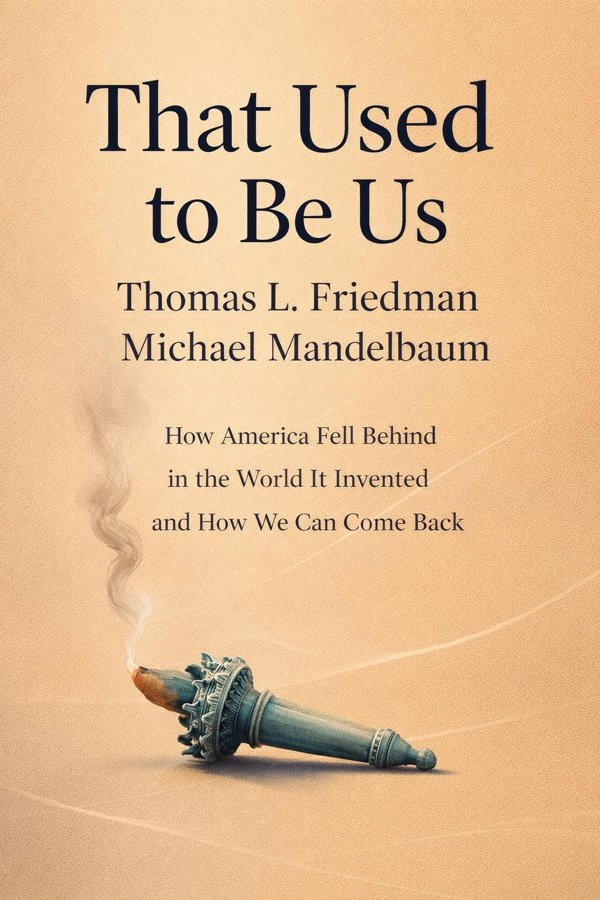
That Used to Be Us: How America Fell Behind in the World It Invented and How We Can Come Back
Thomas L. Friedman, Michael Mandelbaum
10 minYou Might Also Like
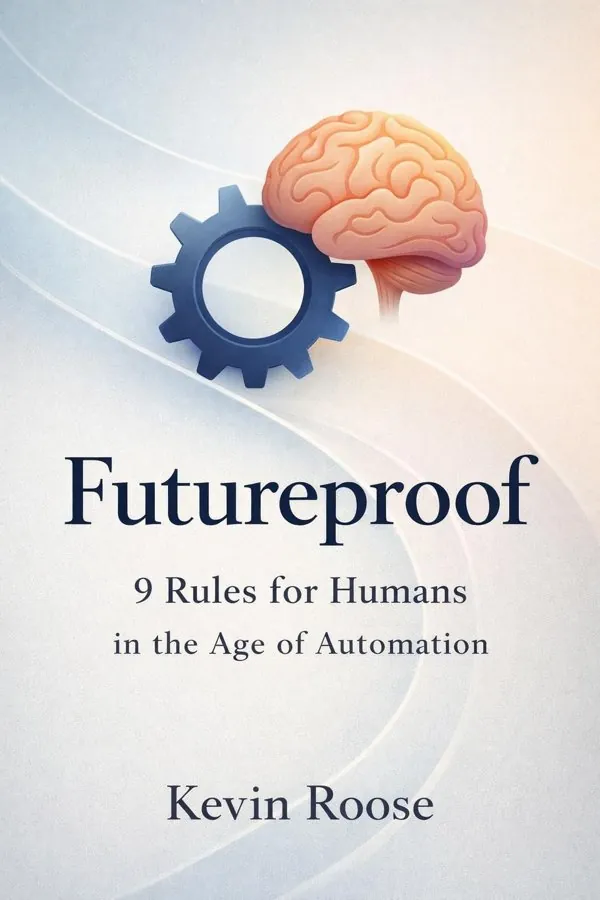
Futureproof: 9 Rules for Humans in the Age of Automation
Kevin Roose
10 min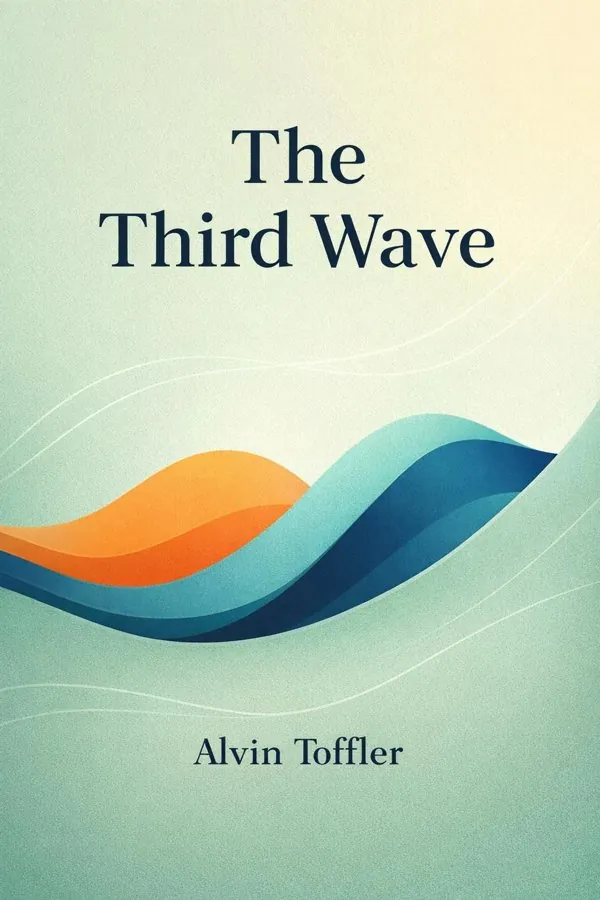
The Third Wave
Alvin Toffler
10 min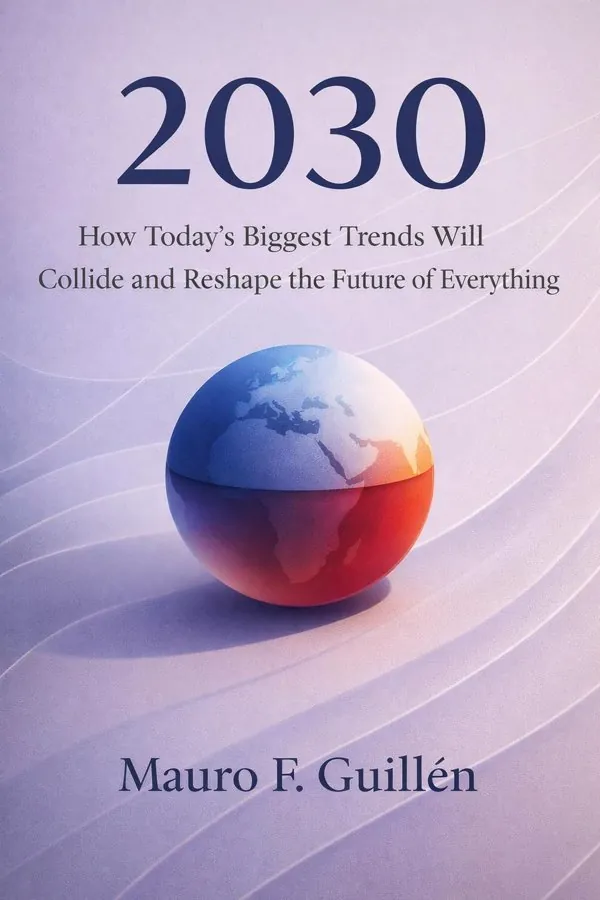
2030: How Today's Biggest Trends Will Collide and Reshape the Future of Everything
Mauro F. Guillén
10 min
A Very Human Future: Enriching Humanity in a Digitized World
Rohit Talwar, Steve Wells, Alexandra Whittington
10 min
AI 2041: Ten Visions for Our Future
Kai-Fu Lee, Chen Qiufan
10 min
Abundance: The Future Is Better Than You Think
Peter H. Diamandis, Steven Kotler
10 minBrowse by Category
Ready to read Thank You for Being Late: An Optimist’s Guide to Thriving in the Age of Accelerations?
Get the full summary and 100K+ more books with Fizz Moment.