
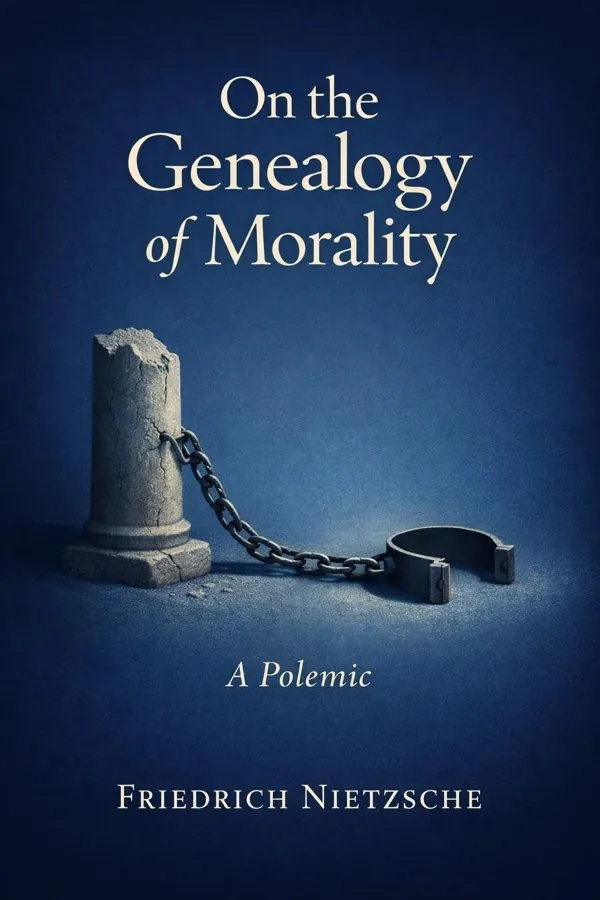
On the Genealogy of Morality: A Polemic: Summary & Key Insights
 10 min3 chaptersAudio available
What Is On the Genealogy of Morality: A Polemic About?
On the Genealogy of Morality: A Polemic by Friedrich Nietzsche is a western_phil book spanning 3 pages. On the Genealogy of Morality is a philosophical work by Friedrich Nietzsche, first published in 1887. In three essays, Nietzsche explores the origins and development of moral values, focusing on concepts such as guilt, bad conscience, and asceticism. He critiques traditional morality as an expression of ressentiment and examines the psychological and historical conditions under which moral systems arise.
This FizzRead summary covers all 3 key chapters of On the Genealogy of Morality: A Polemic in approximately 10 minutes, distilling the most important ideas, arguments, and takeaways from Friedrich Nietzsche's work. Also available as an audio summary and Key Quotes Podcast.
On the Genealogy of Morality: A Polemic
On the Genealogy of Morality is a philosophical work by Friedrich Nietzsche, first published in 1887. In three essays, Nietzsche explores the origins and development of moral values, focusing on concepts such as guilt, bad conscience, and asceticism. He critiques traditional morality as an expression of ressentiment and examines the psychological and historical conditions under which moral systems arise.
Who Should Read On the Genealogy of Morality: A Polemic?
This book is perfect for anyone interested in western_phil and looking to gain actionable insights in a short read. Whether you're a student, professional, or lifelong learner, the key ideas from On the Genealogy of Morality: A Polemic by Friedrich Nietzsche will help you think differently.
- ✓Readers who enjoy western_phil and want practical takeaways
- ✓Professionals looking to apply new ideas to their work and life
- ✓Anyone who wants the core insights of On the Genealogy of Morality: A Polemic in just 10 minutes
Want the full summary?
Get instant access to this book summary and 100K+ more with Fizz Moment.
Get Free SummaryAvailable on App Store • Free to download
Key Chapters
When I first set out to analyze morality, I realized how few had ever asked the fundamental question: under what conditions did people invent moral values? The first essay is my attempt to answer that question by tracing the two great moral frameworks that have governed humanity—the noble and the slavish.
The noble, or master morality, was born among the strong: warriors, aristocrats, those whose sense of self overflowed with vitality and power. For them, “good” meant noble, powerful, life-affirming; “bad” meant common, low, contemptible. Their ethics were spontaneous expressions of strength. They didn't need others’ approval to know what was worthy. Their values emerged naturally, like the fragrance of a blooming tree.
But with the advent of the priestly classes—the cunning, the resentful—this order of valuation was turned upside down. The priests, physically weak but psychologically inventive, transformed “good” into what the powerless could claim for themselves: meekness, humility, obedience, and patience in suffering. This inversion, I call the slave revolt in morality. It was a revolution of the weak, who, unable to act directly, created moral systems to condemn the powerful. Power became ‘evil’, impotence became ‘good’. What began as reactive hatred—ressentiment—became the foundation of Western morality.
The Jews were the most ingenious of these revolutionaries. They redefined nobility: the once-victorious became sinners before their God. The Christians inherited this logic, making pity and humility the supreme virtues. Here lies the psychological triumph of the sickly over the strong: they made suffering itself a weapon, reshaping human valuation by sanctifying weakness. What we call ‘conscience’ or ‘virtue’ is often only disguised revenge.
This transformation has consequences for every cultural form that followed. The modern democratic and egalitarian spirit is an echo of that same moral genealogy. It still wages war against difference, against excellence, in the name of equality. My goal is not to return to the ancient aristocratic mode of valuation, but to expose the falseness and contradiction at the heart of the moral ideals we have inherited. Only through such a genealogy can we see morality as a symptom—and mankind as a field of struggle between life-affirming and life-denying forces.
+ 1 more chapters — available in the FizzRead app
All Chapters in On the Genealogy of Morality: A Polemic
About the Author
Friedrich Wilhelm Nietzsche (1844–1900) was a German philosopher, philologist, and writer. He is regarded as one of the most influential thinkers of the 19th century, shaping philosophy, literature, and psychology. His works, including Thus Spoke Zarathustra and Beyond Good and Evil, address critiques of morality, religion, and culture, as well as the concept of the Übermensch.
Get This Summary in Your Preferred Format
Read or listen to the On the Genealogy of Morality: A Polemic summary by Friedrich Nietzsche anytime, anywhere. FizzRead offers multiple formats so you can learn on your terms — all free.
Available formats: App · Audio · PDF · EPUB — All included free with FizzRead
Download On the Genealogy of Morality: A Polemic PDF and EPUB Summary
Key Quotes from On the Genealogy of Morality: A Polemic
“When I first set out to analyze morality, I realized how few had ever asked the fundamental question: under what conditions did people invent moral values?”
“The second essay turns from the social to the psychological, from morals as valuations to morals as inner torment.”
Frequently Asked Questions about On the Genealogy of Morality: A Polemic
On the Genealogy of Morality: A Polemic by Friedrich Nietzsche is a western_phil book that explores key ideas across 3 chapters. On the Genealogy of Morality is a philosophical work by Friedrich Nietzsche, first published in 1887. In three essays, Nietzsche explores the origins and development of moral values, focusing on concepts such as guilt, bad conscience, and asceticism. He critiques traditional morality as an expression of ressentiment and examines the psychological and historical conditions under which moral systems arise.
More by Friedrich Nietzsche



You Might Also Like

A Little History of Philosophy
Nigel Warburton
10 min
Areopagitica
John Milton
10 min
How To Think Like A Philosopher: Essential Principles For Clear Thinking
Peter Cave
10 min
Language, Truth and Logic
A. J. Ayer
10 min
The Age of Reason
Thomas Paine
10 min
The Essays
Michel De Montaigne
10 minBrowse by Category
Ready to read On the Genealogy of Morality: A Polemic?
Get the full summary and 100K+ more books with Fizz Moment.