

Elastic: Flexible Thinking in a Time of Change: Summary & Key Insights
 10 min10 chaptersAudio available
What Is Elastic: Flexible Thinking in a Time of Change About?
Elastic: Flexible Thinking in a Time of Change by Leonard Mlodinow is a cognition book spanning 10 pages. Elastic explores how the human mind adapts to change and uncertainty through flexible thinking. Leonard Mlodinow draws on neuroscience, psychology, and examples from everyday life to show how creativity and adaptability help us thrive in a rapidly evolving world.
This FizzRead summary covers all 10 key chapters of Elastic: Flexible Thinking in a Time of Change in approximately 10 minutes, distilling the most important ideas, arguments, and takeaways from Leonard Mlodinow's work. Also available as an audio summary and Key Quotes Podcast.
Elastic: Flexible Thinking in a Time of Change
Elastic explores how the human mind adapts to change and uncertainty through flexible thinking. Leonard Mlodinow draws on neuroscience, psychology, and examples from everyday life to show how creativity and adaptability help us thrive in a rapidly evolving world.
Who Should Read Elastic: Flexible Thinking in a Time of Change?
This book is perfect for anyone interested in cognition and looking to gain actionable insights in a short read. Whether you're a student, professional, or lifelong learner, the key ideas from Elastic: Flexible Thinking in a Time of Change by Leonard Mlodinow will help you think differently.
- ✓Readers who enjoy cognition and want practical takeaways
- ✓Professionals looking to apply new ideas to their work and life
- ✓Anyone who wants the core insights of Elastic: Flexible Thinking in a Time of Change in just 10 minutes
Want the full summary?
Get instant access to this book summary and 100K+ more with Fizz Moment.
Get Free SummaryAvailable on App Store • Free to download
Key Chapters
Elastic thinking begins where linear reasoning ends. Our brains are wired with two major approaches to problem solving: analytical and associative. Analytical thought operates sequentially, weighing evidence and applying logic to reach conclusions. But elastic thinking jumps the rails — it flows freely between ideas, noticing patterns and connections where none seem apparent at first glance. This form of thinking thrives on uncertainty, disregards boundaries, and embraces ambiguity. It is closely linked to what psychologists call divergent thinking, the capacity to generate multiple ideas from a single stimulus.
When humans confront novelty, our associative networks activate, forming unconventional linkages. This gives rise to those moments when insights seem to appear from nowhere — a sudden realization in the shower, or an unexpected solution while daydreaming. In truth, the subconscious mind has been playing with ideas while the conscious mind rests. The remarkable thing about elastic thinking is that it does not rely on external input alone; it reorganizes existing information into new configurations. The challenge is to allow it space to work, rather than suppress it in favor of analytical closure.
In this section, I guide readers through examples of innovation born from elasticity: from the scientists who challenged orthodoxies to the entrepreneurs who reimagined industries. Their ideas did not emerge from mere logic but from letting the mind stretch beyond assumptions. Elastic thinking is, at its core, creative adaptation — the capacity to rearrange mental models when the old ones fail.
To understand how elastic thinking arises, we must look inside the brain. Neuroscientists have identified a network of regions that light up during creative and imaginative thought — particularly the prefrontal cortex and the brain’s default mode network (DMN). The prefrontal cortex, responsible for executive control and planning, works with the DMN, which becomes active when the mind is at rest or wandering. When these systems interact fluidly, we experience greater flexibility in our thinking.
Elasticity depends on this dynamic interplay. During focused problem solving, the brain’s control networks dominate, suppressing distractions. When we relax, the DMN allows associations to drift freely, generating unexpected combinations of ideas. Creativity, therefore, emerges not from chaos alone, but from the rhythm between focus and flux. Neuroscience reveals that the best problem-solvers toggle gracefully between these modes, letting their minds wander and then reining them in when it’s time for refinement.
In the book, I also discuss how neurotransmitters like dopamine influence exploratory behavior and risk tolerance, directly affecting our capacity for elastic thought. A slightly elevated mood, for example, can enhance associative processing, while stress tends to lock us into rigid thinking patterns. Understanding that elasticity has a biological basis allows us to better manage conditions that nurture it — such as setting aside mental space for play, reflection, and imagination.
+ 8 more chapters — available in the FizzRead app
All Chapters in Elastic: Flexible Thinking in a Time of Change
About the Author
Leonard Mlodinow is an American physicist and author known for his works on science and human behavior. He has collaborated with Stephen Hawking and written several popular science books that make complex ideas accessible to general readers.
Get This Summary in Your Preferred Format
Read or listen to the Elastic: Flexible Thinking in a Time of Change summary by Leonard Mlodinow anytime, anywhere. FizzRead offers multiple formats so you can learn on your terms — all free.
Available formats: App · Audio · PDF · EPUB — All included free with FizzRead
Download Elastic: Flexible Thinking in a Time of Change PDF and EPUB Summary
Key Quotes from Elastic: Flexible Thinking in a Time of Change
“Elastic thinking begins where linear reasoning ends.”
“To understand how elastic thinking arises, we must look inside the brain.”
Frequently Asked Questions about Elastic: Flexible Thinking in a Time of Change
Elastic: Flexible Thinking in a Time of Change by Leonard Mlodinow is a cognition book that explores key ideas across 10 chapters. Elastic explores how the human mind adapts to change and uncertainty through flexible thinking. Leonard Mlodinow draws on neuroscience, psychology, and examples from everyday life to show how creativity and adaptability help us thrive in a rapidly evolving world.
More by Leonard Mlodinow

The Drunkard’s Walk: How Randomness Rules Our Lives
Leonard Mlodinow
10 min
The Grand Design
Stephen Hawking, Leonard Mlodinow
10 min
Emotional: The New Thinking About Feelings
Leonard Mlodinow
10 min
The Upright Thinkers: The Human Journey from Living in Trees to Understanding the Cosmos
Leonard Mlodinow
10 minYou Might Also Like
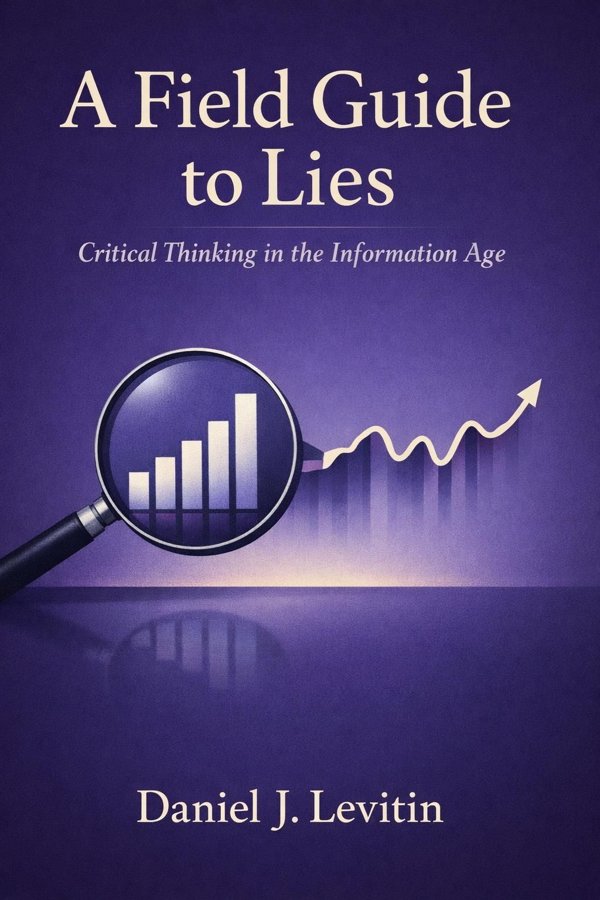
A Field Guide to Lies: Critical Thinking in the Information Age
Daniel J. Levitin
10 min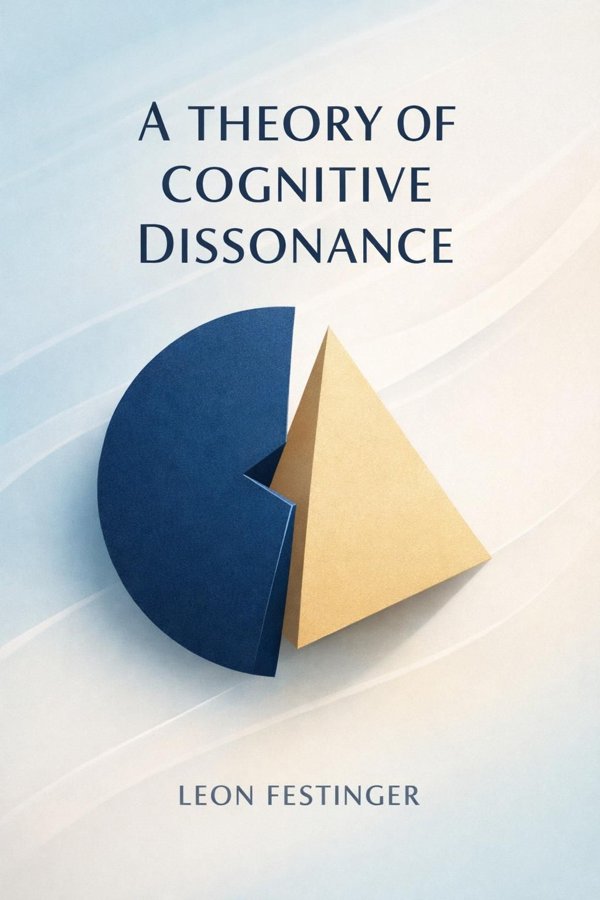
A Theory of Cognitive Dissonance
Leon Festinger
10 min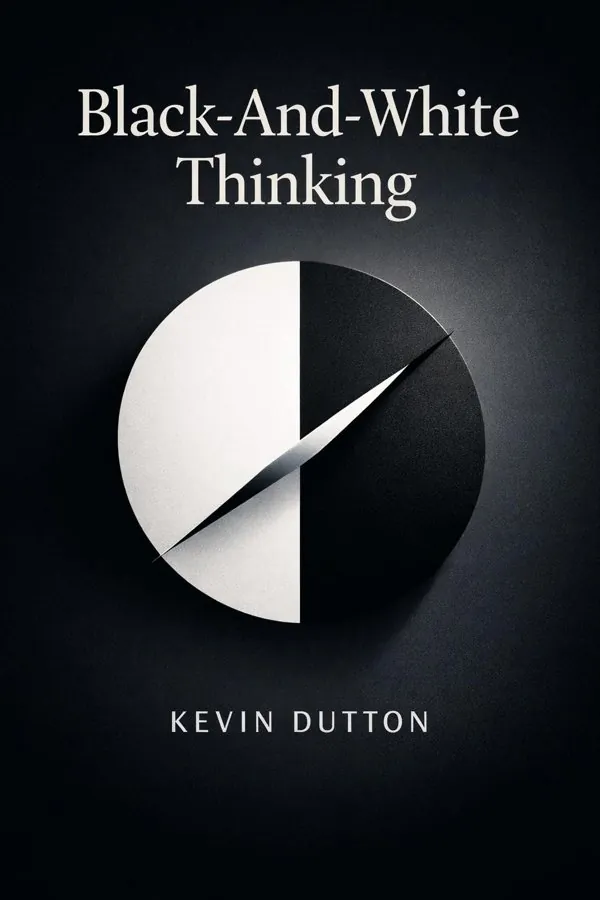
Black-And-White Thinking: The Burden of a Binary Brain in a Complex World
Kevin Dutton
10 min
Born Liars: Why We Can’t Live Without Deceit
Ian Leslie
10 min
Collective Illusions: Conformity, Complicity, and the Science of Why We Make Bad Decisions
Todd Rose
10 min
Concrete Mathematics: A Foundation for Computer Science
Ronald L. Graham, Donald E. Knuth, Oren Patashnik
10 minBrowse by Category
Ready to read Elastic: Flexible Thinking in a Time of Change?
Get the full summary and 100K+ more books with Fizz Moment.