
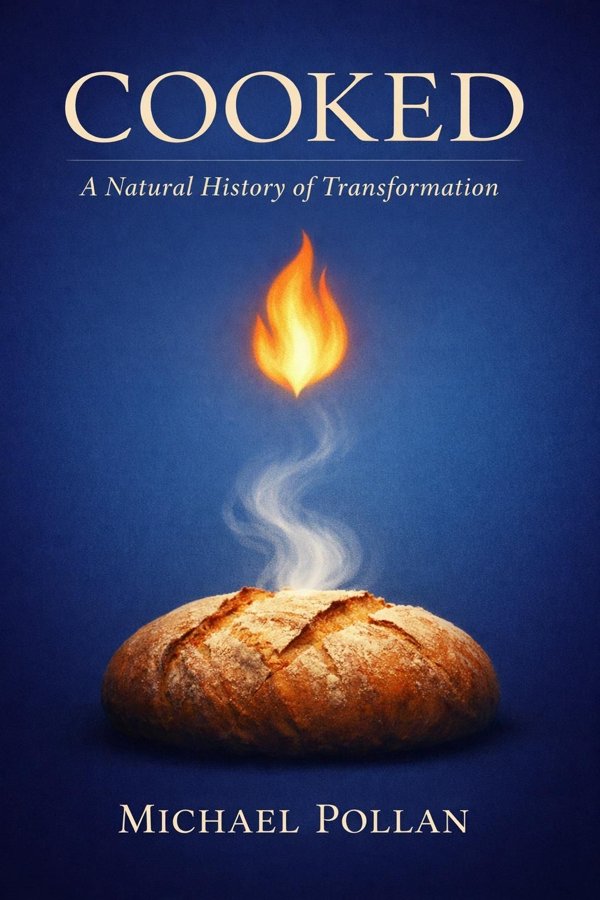
Cooked: A Natural History of Transformation: Summary & Key Insights
 10 min4 chaptersAudio available
What Is Cooked: A Natural History of Transformation About?
Cooked: A Natural History of Transformation by Michael Pollan is a popular_sci book spanning 4 pages. In 'Cooked: A Natural History of Transformation', Michael Pollan explores the fundamental human act of cooking through four elemental methods—fire, water, air, and earth. He immerses himself in each process, from barbecuing with pit masters to baking bread and fermenting foods, revealing how cooking connects us to nature, culture, and one another. The book blends history, science, and personal narrative to show how the act of cooking transforms both food and the cook.
This FizzRead summary covers all 4 key chapters of Cooked: A Natural History of Transformation in approximately 10 minutes, distilling the most important ideas, arguments, and takeaways from Michael Pollan's work. Also available as an audio summary and Key Quotes Podcast.
Cooked: A Natural History of Transformation
In 'Cooked: A Natural History of Transformation', Michael Pollan explores the fundamental human act of cooking through four elemental methods—fire, water, air, and earth. He immerses himself in each process, from barbecuing with pit masters to baking bread and fermenting foods, revealing how cooking connects us to nature, culture, and one another. The book blends history, science, and personal narrative to show how the act of cooking transforms both food and the cook.
Who Should Read Cooked: A Natural History of Transformation?
This book is perfect for anyone interested in popular_sci and looking to gain actionable insights in a short read. Whether you're a student, professional, or lifelong learner, the key ideas from Cooked: A Natural History of Transformation by Michael Pollan will help you think differently.
- ✓Readers who enjoy popular_sci and want practical takeaways
- ✓Professionals looking to apply new ideas to their work and life
- ✓Anyone who wants the core insights of Cooked: A Natural History of Transformation in just 10 minutes
Want the full summary?
Get instant access to this book summary and 100K+ more with Fizz Moment.
Get Free SummaryAvailable on App Store • Free to download
Key Chapters
Fire is where humanity’s story of cooking begins. Long before we had pots or ovens, we had flames and the patience to gather around them. When I began to explore this element, I found myself drawn to barbecue—the ritualized, slow, smoky transformation of raw flesh into something altogether different. To understand fire, I apprenticed myself to a North Carolina pit master named Ed Mitchell. What struck me first was not just the heat or technique, but the reverence with which he tended his fire. In his world, barbecue wasn’t simply about flavor; it was about community, respect, and continuity.
In those long hours watching the coals turn to embers, I came to appreciate fire as the most primal force in cooking. It’s both creative and destructive, a precise balance between control and surrender. Anthropologists remind us that the harnessing of fire marked the beginning of civilization. Fire allowed early humans to release more energy from their food, which quite literally helped our brains grow. Cooking made us human. But the modern world has distanced us from this intimacy. We delegate cooking to machines or factories, replacing smoke with seasoning packets.
Working beside Ed, I realized that fire-cooking isn’t just about technique; it’s about participation in a social ritual. The pit is a communal hearth, drawing people together to wait, talk, and share. This elemental slowness invites not only flavor but connection. Fire demands patience; it teaches presence. It’s a reminder of what we lose when we speed through meals or outsource them entirely. Fire cooking transforms not only the food but also the cooks, shaping community through shared experience.
When we cook with fire, we reconnect with something ancient in ourselves—a creative spark that has been burning since the dawn of time. Through fire, we transform the raw into the cooked; through attention and care, we transform mere ingredients into sustenance. Fire gives us a way to remember our origins and reclaim the act of cooking as a celebration of life.
Water represents a different kind of transformation—one mediated by time, patience, and containment. Unlike fire’s wild freedom, water cooking—boiling, braising, stewing—symbolizes domestic comfort and nurturing. To explore this, I entered a professional kitchen under a trained chef’s guidance. There, I confronted the precision and discipline that defines modern culinary craft. In a braise, for instance, you learn to trust the gentle, consistent heat of simmering water to coax flavor from connective tissue, turning the tough into tender. It’s the chemistry of patience.
Cookery by water is an intimate form of transformation—one that represents civilization’s shift from communal fires to the private hearth. In studying this, I realized that the act of cooking at home is far more than a practical necessity—it’s a cultural statement. Industrialization has eroded domestic cooking, replacing handmade meals with processed products. Yet, when you braise a stew from scratch, you take back control of your own nourishment. You move from being a passive consumer to an active participant in life’s transformations.
Under my chef mentor’s watchful eye, I learned that mastery does not mean domination; it means partnership with the elements. Water cooking forces us to slow down. The smell of onions caramelizing, the bubbling sound of a sauce reducing—these subtle signals become a language between cook and food. In this way, braising becomes meditation. You discover that cooking is not about executing recipes but developing sensitivity, care, and respect for time’s transforming power.
As industrial food culture continues to promise convenience, we grow increasingly detached from our ingredients and their natural rhythms. But in the kitchen, surrounded by steam and scent, I found a counterbalance: a reminder that nourishment should never be divorced from effort. Water cooking represents the home, the family table, the tradition handed down through generations. It asks us to invest ourselves in sustenance—to turn the act of feeding into a form of love.
+ 2 more chapters — available in the FizzRead app
All Chapters in Cooked: A Natural History of Transformation
About the Author
Michael Pollan is an American author, journalist, and professor known for his works on food, agriculture, and the environment. His books, including 'The Omnivore’s Dilemma' and 'In Defense of Food', have influenced public discourse on sustainable eating and food culture. Pollan teaches journalism at the University of California, Berkeley.
Get This Summary in Your Preferred Format
Read or listen to the Cooked: A Natural History of Transformation summary by Michael Pollan anytime, anywhere. FizzRead offers multiple formats so you can learn on your terms — all free.
Available formats: App · Audio · PDF · EPUB — All included free with FizzRead
Download Cooked: A Natural History of Transformation PDF and EPUB Summary
Key Quotes from Cooked: A Natural History of Transformation
“Fire is where humanity’s story of cooking begins.”
“Water represents a different kind of transformation—one mediated by time, patience, and containment.”
Frequently Asked Questions about Cooked: A Natural History of Transformation
Cooked: A Natural History of Transformation by Michael Pollan is a popular_sci book that explores key ideas across 4 chapters. In 'Cooked: A Natural History of Transformation', Michael Pollan explores the fundamental human act of cooking through four elemental methods—fire, water, air, and earth. He immerses himself in each process, from barbecuing with pit masters to baking bread and fermenting foods, revealing how cooking connects us to nature, culture, and one another. The book blends history, science, and personal narrative to show how the act of cooking transforms both food and the cook.
More by Michael Pollan
You Might Also Like

Structures: Or Why Things Don"t Fall Down
J.E. Gordon
10 min
The Road to Wigan Pier
George Orwell
10 min
Bonk: The Curious Coupling of Science and Sex
Mary Roach
10 min
First Bite: How We Learn to Eat
Bee Wilson
10 min
In Pursuit Of The Unknown: 17 Equations That Changed The World
Ian Stewart
10 min
Napoleon's Buttons: 17 Molecules That Changed History
Penny Le Couteur and Jay Burreson
10 minBrowse by Category
Ready to read Cooked: A Natural History of Transformation?
Get the full summary and 100K+ more books with Fizz Moment.