
Benjamin Franklin: An American Life: Summary & Key Insights
 10 min7 chaptersAudio available
What Is Benjamin Franklin: An American Life About?
Benjamin Franklin: An American Life by Walter Isaacson is a biographies book published in 1996 spanning 7 pages. Benjamin Franklin’s autobiography is a classic work of American literature and one of the most influential autobiographies ever written. Composed intermittently between 1771 and 1790, it recounts Franklin’s early life, his rise from modest beginnings in Boston to success as a printer, inventor, scientist, and statesman. The work reflects his values of industry, frugality, and self-improvement, offering insight into the formation of American identity and Enlightenment ideals.
This FizzRead summary covers all 7 key chapters of Benjamin Franklin: An American Life in approximately 10 minutes, distilling the most important ideas, arguments, and takeaways from Walter Isaacson's work. Also available as an audio summary and Key Quotes Podcast.
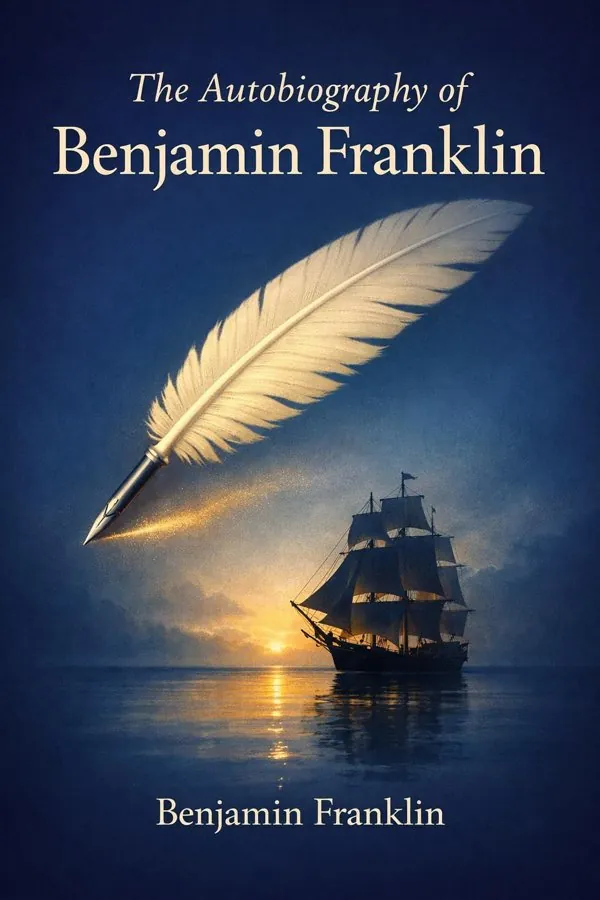
The Autobiography of Benjamin Franklin
Benjamin Franklin’s autobiography is a classic work of American literature and one of the most influential autobiographies ever written. Composed intermittently between 1771 and 1790, it recounts Franklin’s early life, his rise from modest beginnings in Boston to success as a printer, inventor, scientist, and statesman. The work reflects his values of industry, frugality, and self-improvement, offering insight into the formation of American identity and Enlightenment ideals.
Who Should Read Benjamin Franklin: An American Life?
This book is perfect for anyone interested in biographies and looking to gain actionable insights in a short read. Whether you're a student, professional, or lifelong learner, the key ideas from Benjamin Franklin: An American Life by Walter Isaacson will help you think differently.
- ✓Readers who enjoy biographies and want practical takeaways
- ✓Professionals looking to apply new ideas to their work and life
- ✓Anyone who wants the core insights of Benjamin Franklin: An American Life in just 10 minutes
Want the full summary?
Get instant access to this book summary and 100K+ more with Fizz Moment.
Get Free SummaryAvailable on App Store • Free to download
Key Chapters
I came into the world in Boston, in 1706, the fifteenth of seventeen children. My father, Josiah Franklin, was a humble man, a tallow chandler and soap boiler by trade. He showed me early that honest labor could sustain a family even when wealth was scarce. My mother, Abiah Folger, was of good sense and piety, and from both I inherited the belief that thrift and virtue are better treasures than gold.
My schooling lasted but two years — my father could not bear the cost of further education — yet my love of reading carried me farther than any classroom might. I devoured books wherever I could find them, especially works that taught reason or improved conduct. Before long my father placed me as apprentice under my brother James, a printer. That shop became both my training ground and my prison, for the trade suited me, yet my brother often asserted his authority with harshness. I learned typesetting, ink, and paper, but also the value of independence.
When James began publishing the *New England Courant*, I contributed anonymously, slipping essays under the door signed under the name ‘Silence Dogood.’ These playful pieces found favor among readers, and though James suspected, he did not at first know their author. When he discovered the truth, anger followed. Our quarrels grew unbearable, and I resolved to make my own way.
Leaving my apprenticeship prematurely was against custom — it branded me a runaway — yet I judged that liberty was worth the risk. At seventeen, with little money and no sure future, I slipped away from Boston. The city had been my cradle, but it was clear that my ambitions required a larger field.
I left Boston first for New York, where I sought work as a printer, but none was to be found. Fortune led me to Philadelphia, then but a modest town, where I arrived with two or three coins in my pocket. My appearance must have seemed odd: I carried three loaves of bread, munching one and offering the others to strangers — a picture, perhaps, of youth’s unembarrassed energy. Yet that moment marked my turning point. In that unfamiliar city, I determined to build a life through diligence alone.
Soon I found employment with Samuel Keimer, a printer whose business floundered but who needed hands capable of work. My aptitude and industry attracted notice, not least from the governor, Sir William Keith, who proposed to set me up with a printing house of my own. Trusting too easily to words, I sailed to England to procure equipment at the governor’s behest, only to learn that his promises were empty.
England, however, taught me invaluable lessons. There, working as a pressman and then as a compositor, I improved my skill and observed the habits of learned men. I practiced thrift, kept sober, and used my small leisure to read and study philosophy. When at last I returned to Philadelphia, I was seasoned by trial. The experience hardened my resolve — no longer would I depend upon idle promises of patrons. My fortune would come through self-reliance and steady application.
In Philadelphia, I began afresh, joining with a partner named Meredith to start our own press. The enterprise demanded long hours and frugal habits. We lived simply, avoided debt, and built our reputation upon reliability. Books and thoughtful conversation replaced amusements. Through those years, perseverance became my watchword; each success was earned by patience rather than sudden luck. The practice of daily labor, moderation, and learning laid the foundation for every achievement that followed.
+ 5 more chapters — available in the FizzRead app
All Chapters in Benjamin Franklin: An American Life
About the Author
Benjamin Franklin (1706–1790) was an American polymath—printer, scientist, inventor, diplomat, and one of the Founding Fathers of the United States. He contributed to the drafting of the Declaration of Independence and the U.S. Constitution, and his experiments with electricity and inventions such as the lightning rod and bifocal glasses made him a leading figure of the Enlightenment.
Get This Summary in Your Preferred Format
Read or listen to the Benjamin Franklin: An American Life summary by Walter Isaacson anytime, anywhere. FizzRead offers multiple formats so you can learn on your terms — all free.
Available formats: App · Audio · PDF · EPUB — All included free with FizzRead
Download Benjamin Franklin: An American Life PDF and EPUB Summary
Key Quotes from Benjamin Franklin: An American Life
“I came into the world in Boston, in 1706, the fifteenth of seventeen children.”
“I left Boston first for New York, where I sought work as a printer, but none was to be found.”
Frequently Asked Questions about Benjamin Franklin: An American Life
Benjamin Franklin: An American Life by Walter Isaacson is a biographies book that explores key ideas across 7 chapters. Benjamin Franklin’s autobiography is a classic work of American literature and one of the most influential autobiographies ever written. Composed intermittently between 1771 and 1790, it recounts Franklin’s early life, his rise from modest beginnings in Boston to success as a printer, inventor, scientist, and statesman. The work reflects his values of industry, frugality, and self-improvement, offering insight into the formation of American identity and Enlightenment ideals.
More by Walter Isaacson




You Might Also Like

An American Marriage
Tayari Jones
10 min
I Know Why The Caged Bird Sings
Maya Angelou
10 min
Long Walk to Freedom
Nelson Mandela
10 min
Persepolis
Marjane Satrapi
10 min
Surely You're Joking, Mr. Feynman!
Richard P. Feynman
10 min
The Autobiography of Eleanor Roosevelt
Eleanor Roosevelt
10 minFeatured In
Browse by Category
Ready to read Benjamin Franklin: An American Life?
Get the full summary and 100K+ more books with Fizz Moment.