
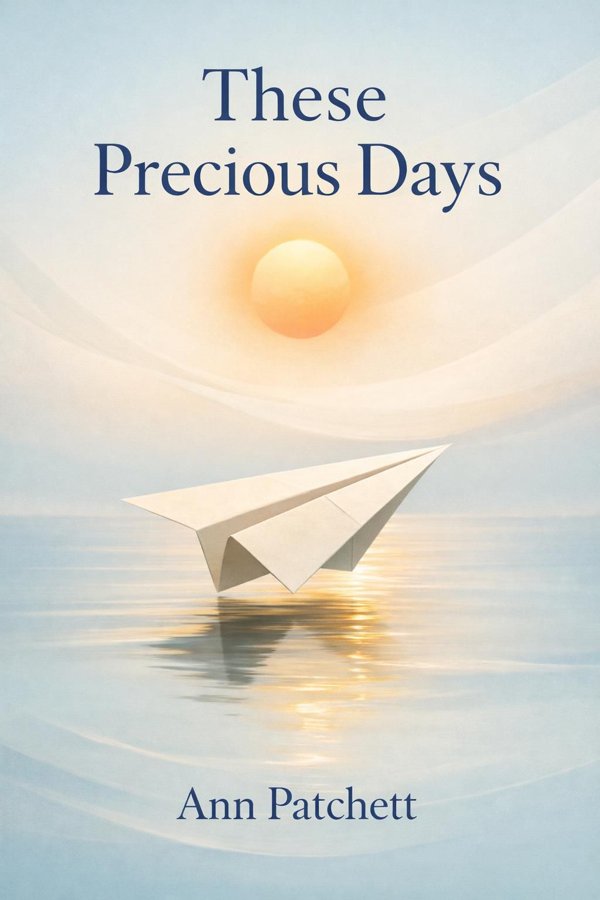
These Precious Days: Summary & Key Insights
by Ann Patchett
 10 min9 chaptersAudio available
Key Takeaways from These Precious Days
The stories that shape us usually begin long before we know how to tell them.
Great work is rarely born from waiting for the perfect mood.
Some of the most important relationships arrive unexpectedly and ask more of us than we planned to give.
Family is rarely simple, and Patchett understands that love often arrives through imperfect arrangements.
We do not only remember our lives; we interpret them through the stories we tell about ourselves.
What Is These Precious Days About?
These Precious Days by Ann Patchett is a biographies book spanning 11 pages. These Precious Days is Ann Patchett’s intimate and beautifully observed essay collection about friendship, family, creativity, mortality, memory, and the fragile grace of ordinary life. Rather than building a single linear argument, Patchett gathers moments—some funny, some painful, some quietly transformative—and shows how the deepest truths often arrive through everyday encounters: caring for a loved one, running a bookstore, revisiting childhood, meeting an unexpected friend, or facing illness with honesty. The essays move between memoir and meditation, revealing how a life is shaped not only by dramatic events but also by habits of attention, gratitude, and love. What makes the book matter is Patchett’s rare ability to turn personal experience into shared insight. She writes with warmth, precision, and moral clarity, never forcing sentiment yet allowing emotion to emerge naturally. As the celebrated author of Bel Canto and The Dutch House, and as the co-owner of Parnassus Books, Patchett brings both literary mastery and lived authority to these reflections. The result is a humane, wise collection that reminds readers to notice the people and moments that give life meaning before they pass.
This FizzRead summary covers all 9 key chapters of These Precious Days in approximately 10 minutes, distilling the most important ideas, arguments, and takeaways from Ann Patchett's work. Also available as an audio summary and Key Quotes Podcast.
These Precious Days
These Precious Days is Ann Patchett’s intimate and beautifully observed essay collection about friendship, family, creativity, mortality, memory, and the fragile grace of ordinary life. Rather than building a single linear argument, Patchett gathers moments—some funny, some painful, some quietly transformative—and shows how the deepest truths often arrive through everyday encounters: caring for a loved one, running a bookstore, revisiting childhood, meeting an unexpected friend, or facing illness with honesty. The essays move between memoir and meditation, revealing how a life is shaped not only by dramatic events but also by habits of attention, gratitude, and love. What makes the book matter is Patchett’s rare ability to turn personal experience into shared insight. She writes with warmth, precision, and moral clarity, never forcing sentiment yet allowing emotion to emerge naturally. As the celebrated author of Bel Canto and The Dutch House, and as the co-owner of Parnassus Books, Patchett brings both literary mastery and lived authority to these reflections. The result is a humane, wise collection that reminds readers to notice the people and moments that give life meaning before they pass.
Who Should Read These Precious Days?
This book is perfect for anyone interested in biographies and looking to gain actionable insights in a short read. Whether you're a student, professional, or lifelong learner, the key ideas from These Precious Days by Ann Patchett will help you think differently.
- ✓Readers who enjoy biographies and want practical takeaways
- ✓Professionals looking to apply new ideas to their work and life
- ✓Anyone who wants the core insights of These Precious Days in just 10 minutes
Want the full summary?
Get instant access to this book summary and 100K+ more with Fizz Moment.
Get Free SummaryAvailable on App Store • Free to download
Key Chapters
The stories that shape us usually begin long before we know how to tell them. In These Precious Days, Patchett suggests that the roots of a writer’s life are found in the textures of childhood: family rituals, unstable homes, books that offered refuge, and the emotional atmosphere of growing up. She does not present childhood as a neat origin story but as a storehouse of impressions that later become material for meaning. What matters is not only what happened, but what was noticed.
Patchett’s recollections show how a writer is formed through attention. A child who listens closely at the dinner table, studies adults with curiosity, or finds solace in libraries is already practicing the art of observation. These early experiences become more than memories; they become a way of seeing. Even for readers who do not write, this idea has practical value. Your background—whether joyful, confusing, ordinary, or chaotic—contains clues to your values and recurring emotional patterns. Looking back with honesty can reveal what you have always longed for, feared, and loved.
A useful application is to think of memory as an archive rather than a burden. Instead of asking whether your past was important enough, ask what details remain vivid and why. Which rooms, voices, or objects still live in your mind? Those are often the places where identity was formed. Patchett turns personal history into understanding by paying attention to those details.
Actionable takeaway: Write down five childhood memories that still feel physically vivid, then note what each one may have taught you about safety, love, creativity, or belonging.
Great work is rarely born from waiting for the perfect mood. One of Patchett’s clearest insights is that creativity is less about mystical inspiration and more about disciplined devotion. Writing, in her view, begins with showing up—returning to the desk, honoring silence, and trusting routine even when brilliance feels absent. This demystifies art without diminishing it. The creative life is not reserved for geniuses; it is built by people willing to practice.
Patchett’s own life makes this argument persuasive. She balances writing with public responsibilities, including helping run a bookstore, yet she still treats the work seriously. That means protecting time, accepting imperfection, and understanding that consistency matters more than occasional bursts of energy. The same principle extends beyond writing. A musician improves by rehearsing, a teacher becomes stronger by reflecting on each class, and a parent shapes family culture through repeated acts of care.
Many people avoid creative effort because they assume meaningful work must feel inspired from the beginning. Patchett rejects that fantasy. Often the path into concentration opens only after we begin. The first pages may be clumsy, the first sketch awkward, the first attempt distracted. But devotion creates the conditions in which inspiration can eventually appear. This is freeing because it places progress within reach.
Actionable takeaway: Choose one creative or meaningful practice and commit to a modest, repeatable schedule—thirty minutes a day or three sessions a week—then measure success by consistency, not by immediate results.
Some of the most important relationships arrive unexpectedly and ask more of us than we planned to give. The title essay, centered on Patchett’s friendship with Sooki Raphael during a season of grave illness and global disruption, becomes the emotional heart of the book. What begins as an acquaintance grows into a profound bond marked by care, hospitality, humor, and spiritual companionship. Patchett shows that friendship is not a lesser form of love; it can be as life-altering as romance or family.
The power of this essay lies in how naturally friendship expands. Patchett and her husband open their home, routines shift, vulnerability deepens, and the boundaries between guest and family soften. In a culture that often prizes efficiency and personal space, the relationship illustrates a more generous model of living. Friendship is not merely shared interests or occasional support. At its best, it becomes a willingness to let another person’s reality matter deeply to your own.
This has practical implications. Many adults say they want deeper friendship but organize their lives in ways that prevent it. Genuine connection usually requires inconvenience: time, emotional availability, flexibility, and acts of care that cannot be scheduled neatly. Patchett’s example encourages readers to reconsider who they make room for and how hospitality can become a spiritual practice.
Actionable takeaway: Identify one friendship with the potential for greater depth and take a concrete step—invite that person into your daily life, offer sustained help, or create unhurried time for honest conversation.
Family is rarely simple, and Patchett understands that love often arrives through imperfect arrangements. In the essay often referred to as “Three Fathers,” she reflects on the different paternal figures who shaped her life. Rather than reducing fatherhood to biology, she explores how care, presence, absence, personality, and timing all contribute to the way a child understands love and authority. The result is a nuanced portrait of family as layered rather than singular.
This matters because many readers carry complicated feelings about parents, stepparents, or other guardians. Patchett offers no sentimental formula for reconciliation, nor does she flatten pain. Instead, she allows multiple truths to coexist: a parent can matter deeply and still fail; a non-biological figure can become foundational; gratitude and grief can inhabit the same memory. That emotional complexity is one of the book’s strengths. It gives readers permission to think about family with greater honesty.
In practical terms, the essay invites a broader understanding of who helps form us. Mentors, relatives, family friends, and chosen family may all contribute to one’s moral and emotional education. This can be healing for those whose biological families were fragmented or inconsistent. It also reminds adults that their influence may be larger than they realize.
Actionable takeaway: Make a list of the people who have parented, guided, or protected you in any form, then reflect on one quality from each that you want to carry forward in your own relationships.
We do not only remember our lives; we interpret them through the stories we tell about ourselves. Across essays such as “The Paris Tattoo” and others rooted in personal history, Patchett examines the ways identity is shaped by memory, myth, travel, aspiration, and self-revision. A small decision, an old object, a past version of the self, or a half-forgotten ambition can reveal how people construct meaning over time. The point is not that identity is false, but that it is always being edited.
Patchett is especially good at noticing the gap between who we imagined we would become and who we actually are. Instead of treating that gap as failure, she often reveals it as a source of wisdom. The self changes through experience, disappointment, love, work, and age. A younger person may chase symbols of significance; an older self may discover that authenticity matters more than performance. This makes her essays relatable even when the details are highly personal.
Readers can apply this by examining the stories they repeat most often. Do you define yourself by an old wound, an early success, a family label, or an abandoned dream? Those stories may once have been useful, but they can become restrictive if left unquestioned. Patchett’s essays encourage a gentler re-authoring of the self.
Actionable takeaway: Write one sentence describing who you believe you are, then ask whether that description comes from present truth or from an outdated story you have continued to repeat.
Nothing clarifies value more quickly than the awareness that time is limited. A central thread in These Precious Days is mortality—not as abstract philosophy, but as lived reality. Illness, loss, aging, and uncertainty move through the collection, yet Patchett does not write in a spirit of despair. Instead, she suggests that the nearness of death can make life more visible. When permanence is stripped away, attention becomes sacred.
This is most powerful in the essays that deal directly with sickness and vulnerability. Patchett observes how people reveal themselves when facing limits: through courage, denial, generosity, fear, humor, and grace. She also shows that witnessing another person’s suffering can reorder one’s own priorities. Petty concerns fall away. Ordinary routines become precious. Time with loved ones acquires a density it previously lacked.
For readers, the lesson is not to become obsessed with loss but to let finitude clarify love. Many people move through life as if meaningful conversations, reconciliations, or acts of tenderness can always happen later. Patchett’s essays resist that assumption. They ask what deserves our attention now, while the people we love are still here and while we ourselves still have the chance to be present.
Actionable takeaway: Choose one relationship or daily ritual you usually rush through, and this week treat it as if it were unrepeatable—slow down, pay full attention, and express what you would regret leaving unsaid.
A meaningful life is not built in isolation; it is sustained by places and people that teach us how to belong. Patchett returns often to the idea of community, whether through neighborhood ties, literary circles, her bookstore, marriage, or the temporary household formed during crisis. She portrays belonging not as automatic comfort but as an active, ongoing practice of showing up for others and allowing oneself to be known.
This is especially resonant in a time when many people feel socially fragmented despite being constantly connected online. Patchett reminds us that community is tactile. It happens in rooms, around meals, through shared responsibilities, in local institutions, and through repeated presence. A bookstore becomes more than a business; it becomes a cultural commons. A home becomes more than private shelter; it becomes a place where care circulates. Community, in her essays, is where abstraction turns human.
There is also an important corrective here to individualism. Modern life often teaches us to optimize personal success, guard our boundaries, and treat dependence as weakness. Patchett offers another image: interdependence as richness. To belong is to receive and to contribute. It means being shaped by commitments larger than the self.
Actionable takeaway: Strengthen one real-world community connection this month—shop locally and talk to the owner, host a meal, join a reading group, volunteer regularly, or become a dependable presence in a place that matters to you.
Art matters not because it decorates life, but because it enlarges our ability to imagine other lives. Throughout the collection, Patchett reflects on books, opera, visual culture, and storytelling as forms of connection. Art gives language to experiences we cannot fully explain alone. It also invites us out of our own narrow self-concern by asking us to inhabit another person’s fears, desires, and contradictions.
Patchett’s authority on this theme is especially compelling because she stands both inside and outside the literary world: she is a major novelist, a working essayist, and a bookseller who sees how readers live with stories. She understands art not as elite consumption but as nourishment. A novel can help a grieving person feel less solitary. A memoir can illuminate a family conflict. A performance can restore wonder. In this sense, art becomes practical. It does emotional and moral work.
For readers, the application is simple but significant. What we read and watch shapes the size of our inner life. If we consume only what confirms us, empathy shrinks. If we engage seriously with art that challenges or deepens us, we become more attentive and humane. Patchett’s essays model this openness by moving constantly between personal story and larger reflection.
Actionable takeaway: Choose one work of art this month—a novel, essay collection, play, or film—that lies outside your usual preferences, then reflect on what it revealed about a life experience different from your own.
The deepest wisdom in These Precious Days may be its insistence that a meaningful life is composed of seemingly small moments. Patchett does not rely on grand revelations. Instead, she notices the quiet exchanges, domestic arrangements, travel mishaps, family stories, and daily habits through which love and identity become visible. Her essays suggest that the ordinary is not the backdrop to life’s important events; it is where those events actually occur.
This perspective changes how we evaluate our days. Many people assume significance belongs to milestones—awards, weddings, diagnoses, departures. Patchett does not deny the power of those events, but she keeps returning to the humble scenes around them: conversations in kitchens, acts of caretaking, reading in bed, driving, waiting, making room for another person. Meaning accumulates through attention to what is already here.
There is practical freedom in this idea. You do not need a dramatic reinvention to live more fully. You may need, instead, to become more awake to your current life. Gratitude in Patchett’s hands is not denial of difficulty; it is the discipline of recognizing value before it disappears. This makes her closing reflections feel less like endings and more like instructions for living.
Actionable takeaway: At the end of each day for one week, record three ordinary moments that mattered—a conversation, a meal, a gesture, a silence—and notice how quickly your sense of what counts begins to change.
All Chapters in These Precious Days
About the Author
Ann Patchett is an American novelist, essayist, and memoirist celebrated for her elegant prose, emotional intelligence, and richly observed portraits of human relationships. She is the author of several acclaimed books, including Bel Canto, Commonwealth, State of Wonder, The Dutch House, and the memoir Truth & Beauty. Her work has received major literary honors and has earned a wide international readership. In addition to her writing career, Patchett is the co-owner of Parnassus Books, an independent bookstore in Nashville, Tennessee, where she has become a prominent advocate for reading, independent bookselling, and literary culture. Her nonfiction is especially admired for transforming personal experience into broader reflections on art, family, friendship, and moral attention. These Precious Days showcases the warmth, wit, and clarity that have made her one of America’s most respected contemporary authors.
Get This Summary in Your Preferred Format
Read or listen to the These Precious Days summary by Ann Patchett anytime, anywhere. FizzRead offers multiple formats so you can learn on your terms — all free.
Available formats: App · Audio · PDF · EPUB — All included free with FizzRead
Download These Precious Days PDF and EPUB Summary
Key Quotes from These Precious Days
“The stories that shape us usually begin long before we know how to tell them.”
“Great work is rarely born from waiting for the perfect mood.”
“Some of the most important relationships arrive unexpectedly and ask more of us than we planned to give.”
“Family is rarely simple, and Patchett understands that love often arrives through imperfect arrangements.”
“We do not only remember our lives; we interpret them through the stories we tell about ourselves.”
Frequently Asked Questions about These Precious Days
These Precious Days by Ann Patchett is a biographies book that explores key ideas across 9 chapters. These Precious Days is Ann Patchett’s intimate and beautifully observed essay collection about friendship, family, creativity, mortality, memory, and the fragile grace of ordinary life. Rather than building a single linear argument, Patchett gathers moments—some funny, some painful, some quietly transformative—and shows how the deepest truths often arrive through everyday encounters: caring for a loved one, running a bookstore, revisiting childhood, meeting an unexpected friend, or facing illness with honesty. The essays move between memoir and meditation, revealing how a life is shaped not only by dramatic events but also by habits of attention, gratitude, and love. What makes the book matter is Patchett’s rare ability to turn personal experience into shared insight. She writes with warmth, precision, and moral clarity, never forcing sentiment yet allowing emotion to emerge naturally. As the celebrated author of Bel Canto and The Dutch House, and as the co-owner of Parnassus Books, Patchett brings both literary mastery and lived authority to these reflections. The result is a humane, wise collection that reminds readers to notice the people and moments that give life meaning before they pass.
More by Ann Patchett

You Might Also Like

An American Marriage
Tayari Jones
10 min
Benjamin Franklin: An American Life
Walter Isaacson
10 min
I Know Why The Caged Bird Sings
Maya Angelou
10 min
Long Walk to Freedom
Nelson Mandela
10 min
Persepolis
Marjane Satrapi
10 min
Surely You're Joking, Mr. Feynman!
Richard P. Feynman
10 minBrowse by Category
Ready to read These Precious Days?
Get the full summary and 100K+ more books with Fizz Moment.