
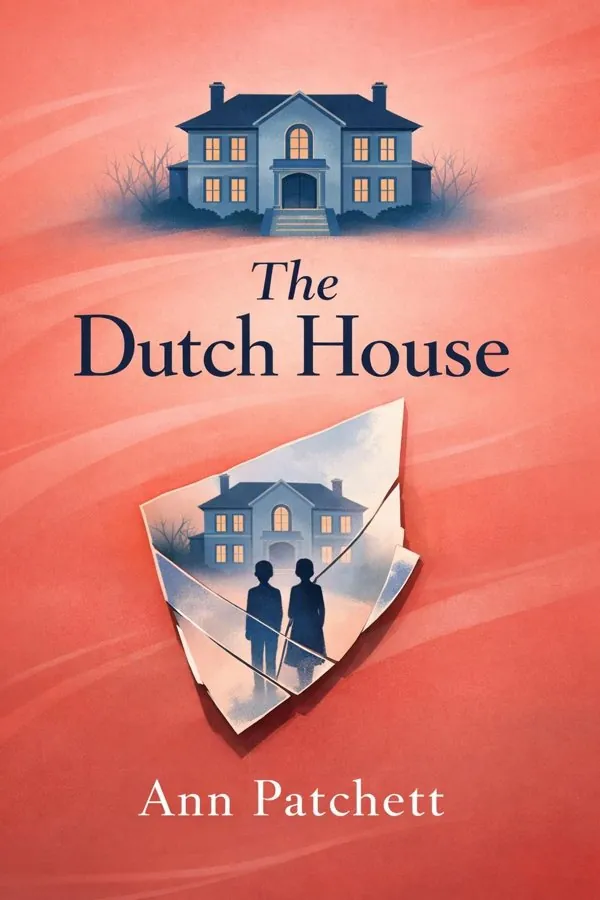
The Dutch House: Summary & Key Insights
by Ann Patchett
 10 min9 chaptersAudio available
Key Takeaways from The Dutch House
Sometimes the places meant to shelter us become the stories we can never leave.
The deepest forms of exile often happen without leaving town.
People return to the past not because it is pleasant, but because it remains unfinished.
Families do not end their conflicts; they hand them forward until someone absorbs the cost of understanding.
The strongest love in The Dutch House is not romantic or parental; it is the nearly sacred bond between brother and sister.
What Is The Dutch House About?
The Dutch House by Ann Patchett is a bestsellers book spanning 4 pages. Ann Patchett’s The Dutch House is a quiet, emotionally powerful novel about two siblings who spend their lives circling the same losses: a vanished mother, a distant father, and the grand house that both defined and expelled them. Set across five decades in suburban Philadelphia, the story follows Danny and Maeve Conroy, whose bond deepens after they are shut out of the lavish estate their father once bought as a symbol of success. What begins as a family saga gradually becomes a profound meditation on memory, class, resentment, forgiveness, and the strange ways people remain loyal to what has hurt them. The novel matters because it turns a single house into a living force—part dream, part prison, part inheritance. Patchett examines how childhood wounds can shape adult identity, and how love between siblings can become both refuge and limitation. With her trademark clarity, psychological insight, and moral nuance, she transforms domestic drama into something expansive and enduring. Patchett, acclaimed for novels such as Bel Canto and Commonwealth, writes with unusual authority about family bonds, emotional debts, and the stories people tell themselves to survive. The Dutch House is both intimate and sweeping, and its emotional precision lingers long after the final page.
This FizzRead summary covers all 9 key chapters of The Dutch House in approximately 10 minutes, distilling the most important ideas, arguments, and takeaways from Ann Patchett's work. Also available as an audio summary and Key Quotes Podcast.
The Dutch House
Ann Patchett’s The Dutch House is a quiet, emotionally powerful novel about two siblings who spend their lives circling the same losses: a vanished mother, a distant father, and the grand house that both defined and expelled them. Set across five decades in suburban Philadelphia, the story follows Danny and Maeve Conroy, whose bond deepens after they are shut out of the lavish estate their father once bought as a symbol of success. What begins as a family saga gradually becomes a profound meditation on memory, class, resentment, forgiveness, and the strange ways people remain loyal to what has hurt them.
The novel matters because it turns a single house into a living force—part dream, part prison, part inheritance. Patchett examines how childhood wounds can shape adult identity, and how love between siblings can become both refuge and limitation. With her trademark clarity, psychological insight, and moral nuance, she transforms domestic drama into something expansive and enduring. Patchett, acclaimed for novels such as Bel Canto and Commonwealth, writes with unusual authority about family bonds, emotional debts, and the stories people tell themselves to survive. The Dutch House is both intimate and sweeping, and its emotional precision lingers long after the final page.
Who Should Read The Dutch House?
This book is perfect for anyone interested in bestsellers and looking to gain actionable insights in a short read. Whether you're a student, professional, or lifelong learner, the key ideas from The Dutch House by Ann Patchett will help you think differently.
- ✓Readers who enjoy bestsellers and want practical takeaways
- ✓Professionals looking to apply new ideas to their work and life
- ✓Anyone who wants the core insights of The Dutch House in just 10 minutes
Want the full summary?
Get instant access to this book summary and 100K+ more with Fizz Moment.
Get Free SummaryAvailable on App Store • Free to download
Key Chapters
Sometimes the places meant to shelter us become the stories we can never leave. In The Dutch House, Ann Patchett presents the grand suburban estate not merely as a backdrop but as the emotional engine of the Conroy family’s history. Cyril Conroy, a practical man who rises from modest beginnings through postwar real estate success, buys the Dutch House almost as a gesture of triumph. It is opulent, imposing, and full of inherited beauty. Yet from the beginning, it creates distance as much as comfort. The house gives the family status, but it also freezes them inside roles they do not fully understand.
For Danny and Maeve, the house becomes both childhood paradise and source of injury. It shapes their taste, memory, and expectations of belonging. For Cyril, it is proof that he has won something in life. For others, especially Andrea, it is an object of fantasy and possession. Patchett shows how material success can hide emotional failure: a father may provide abundance while remaining unavailable; a home may appear secure while quietly undermining intimacy.
This idea extends beyond fiction. Many families inherit not only money or property, but atmospheres—unspoken values, old resentments, and symbols of status that shape relationships long after circumstances change. A family business, heirloom home, or even a neighborhood can become emotionally charged in the same way. People often confuse what a possession means with what it can actually provide.
The Dutch House asks readers to consider what they have attached their identity to. Is a home a refuge, a trophy, or a burden? Are cherished symbols holding a family together, or keeping it emotionally stuck?
Actionable takeaway: Identify one physical place or possession that carries outsized emotional meaning in your life, and ask what part of your identity you may be outsourcing to it.
The deepest forms of exile often happen without leaving town. After Danny and Maeve lose their mother to abandonment and their father to emotional remoteness, they face another devastating rupture: expulsion from the Dutch House by their stepmother, Andrea. This event is not just a plot twist; it is the central emotional wound of the novel. Andrea’s control over the house turns inheritance into something unstable, revealing that what we assume belongs to us can disappear through power, manipulation, and legal authority.
Patchett explores how dispossession works on multiple levels. Danny and Maeve are not only denied property; they are denied narrative legitimacy. Andrea attempts to redefine the family, reshaping the household to favor her daughters and erase the children who came before. The cruelty lies partly in how ordinary and plausible it appears. Families often fracture not through dramatic evil, but through everyday selfishness, selective loyalty, and the ability of one person to control access—access to money, memory, attention, or space.
This dynamic resonates far beyond inheritance law. In blended families, workplaces, and institutions, people can be pushed to the margins not because they lack history, but because someone else gains the power to tell the official version of events. Being excluded from a family home after believing it is yours mirrors how people are cut off from traditions, recognition, or belonging in other contexts.
What makes the novel especially moving is that Danny and Maeve never fully recover from this expulsion, even when they achieve financial security. Material recovery does not automatically restore emotional safety. The injustice stays alive because it violated something deeper than ownership: their sense of place in the world.
Actionable takeaway: When faced with conflict over family, work, or legacy, distinguish between what you legally possess and what you emotionally need, then address both instead of assuming one will fix the other.
People return to the past not because it is pleasant, but because it remains unfinished. One of the most striking images in The Dutch House is Danny and Maeve repeatedly sitting in a car outside their former home, looking at it night after night. This ritual captures the novel’s central insight: memory is not passive recollection but active habitation. The siblings do not simply remember the house—they revisit it, perform it, and allow it to structure their adult lives.
Patchett is especially perceptive about the way unresolved pain becomes routine. Danny and Maeve build successful lives, yet they continue to orient themselves around old injuries. Their conversations in the parked car are intimate, witty, and comforting, but they are also circular. The past gives them connection, identity, and a shared language. It also traps them. Memory, in this sense, is both devotion and delay.
This pattern is deeply recognizable. Many people revisit old betrayals through repeated storytelling, mental rehearsal, social media checking, or symbolic returns to people and places they claim to have outgrown. The repetition can feel meaningful because it preserves a version of the self that suffered and survived. But it can also postpone transformation. We may think we are honoring the truth of what happened when, in fact, we are preserving our dependence on it.
The novel does not suggest that forgetting is the answer. Instead, it shows that memory needs reinterpretation. Healing begins when characters stop asking only, “What was taken from me?” and begin asking, “What story have I built around that loss?” This shift allows grief to become part of identity rather than its master.
Actionable takeaway: Notice one memory you revisit compulsively, and write down how repeating it has protected you as well as how it may be keeping you from changing.
Families do not end their conflicts; they hand them forward until someone absorbs the cost of understanding. In its later movements, The Dutch House becomes a novel about what it means to outlive grievance. Danny and Maeve carry loss for decades—loss of home, parents, certainty, and uncomplicated belonging. Yet Patchett gradually shifts the emotional horizon from injury to continuity. The question is no longer whether the past can be undone, but whether its burden can be transformed before it reaches another generation.
This is where the novel’s emotional maturity becomes most apparent. Acceptance in The Dutch House is not sentimental closure or easy forgiveness. It is the difficult recognition that people are limited, history is uneven, and love is often expressed through failure as much as sacrifice. The return of long-absent figures, especially Danny and Maeve’s mother, complicates simple moral judgments. Patchett resists revenge and instead asks what becomes possible when characters allow reality to be messier than their resentments.
Generational continuity appears in the children who arrive later in Danny’s life and in the altered meanings of care, home, and duty. The siblings’ fierce attachment to one another, once entirely defensive, slowly opens toward others. This matters because trauma often narrows emotional circulation: people protect each other so tightly that no one else can enter. Growth occurs when loyalty stops being exclusive.
In practical life, many families reach a point where no one gets the apology they deserve, but someone still must decide how to parent differently, inherit differently, or tell the story differently. That choice does not erase damage; it interrupts replication.
Actionable takeaway: Ask yourself which family pattern you are still carrying as loyalty, and decide one concrete way to keep its lessons without passing on its harm.
The strongest love in The Dutch House is not romantic or parental; it is the nearly sacred bond between brother and sister. Danny and Maeve care for each other with a devotion so complete that it becomes the emotional center of both their lives. After repeated parental failures, they create a private world built on shared jokes, old stories, mutual protection, and unwavering allegiance. Their relationship is touching because it offers the security their family denied them. It is also complex because such intense closeness can quietly limit growth.
Patchett shows sibling love as a form of rescue. Maeve mothers Danny, advises him, and anchors his sense of self. Danny, in turn, admires her, relies on her, and remains emotionally oriented toward her long into adulthood. They become each other’s home. Yet by becoming home for one another, they also postpone forming fuller emotional lives elsewhere. Danny’s marriage suffers in part because his deepest loyalty remains tied to the emotional world he shares with Maeve. Their bond, beautiful as it is, can shade into enclosure.
This is one of the novel’s most subtle truths: even healthy-seeming love can become restrictive when it develops primarily as defense against pain. In real life, siblings who survive instability often become inseparable, taking pride in being the only ones who truly understand each other. That solidarity can be lifesaving. But it may also prevent difficult individuation, especially when one sibling’s identity depends on being needed.
Patchett does not criticize Danny and Maeve for loving each other too much. Instead, she invites readers to consider how intimacy shaped by loss may require rebalancing. Mature love makes room for history without asking the future to remain subordinate to it.
Actionable takeaway: Reflect on one close relationship that has protected you, and ask whether its current form still supports growth for both people rather than only preserving old survival roles.
Children rarely judge love by intention; they judge it by presence. A major emotional force in The Dutch House is the painful inadequacy of parental love. Cyril Conroy provides wealth but not warmth. Elna, the children’s mother, possesses compassion but abandons domestic life. Andrea offers attention, but only selectively and strategically. None of the adults fit neatly into the category of villain or saint, and that ambiguity gives the novel much of its power.
Patchett explores an uncomfortable truth: parents may love their children and still fail them profoundly. Cyril’s distance is not theatrical cruelty but habitual emotional absence. He cannot translate responsibility into intimacy. Elna’s departure appears unforgivable through the eyes of the children, yet later understanding reveals a woman whose spiritual and moral impulses made ordinary family life feel impossible. Andrea’s harshness is easier to condemn, but even she emerges from recognizable cravings for status, security, and control.
The effect on Danny and Maeve is lifelong. Because children make meaning from what they receive, they interpret adult limitations as personal verdicts. A parent’s withdrawal can become a child’s belief that need itself is dangerous. A parent’s preference can become a template for shame. The novel carefully traces how adult children continue negotiating these early emotional equations.
This has wide practical relevance. Many readers will recognize families where no one was entirely malicious, yet everyone was hurt. Understanding such histories requires moving beyond simple blame into a more demanding question: what kind of love was available, and what kind was missing?
The novel suggests that seeing parents clearly is part of freedom. Not excusing them, not idealizing them, but recognizing them as limited people rather than all-defining forces.
Actionable takeaway: Revisit one assumption you formed from a parent’s behavior and ask whether it was a true judgment about your worth or a child’s interpretation of an adult’s limitation.
Prosperity can solve inconvenience while leaving vulnerability untouched. The Conroy family’s story is, in part, a critique of the assumption that money creates security. Cyril’s fortune gives his children elite schooling, medical opportunities, and social standing. The Dutch House itself is proof of abundance. Yet none of these advantages protect Danny and Maeve from abandonment, displacement, or grief. The novel repeatedly reminds readers that emotional deprivation can flourish inside materially privileged lives.
This is one reason the book resonates so widely. Patchett does not romanticize poverty or deny the real usefulness of wealth. Money matters. It shapes options, treatment, and survival. But she is equally clear that financial success cannot substitute for emotional labor. A father can fund education while failing to create trust. A magnificent house can intensify loneliness by presenting a polished image no one inside can inhabit honestly.
The novel also examines how wealth changes social dynamics. People project motives onto the rich, excuse their failings, or pursue them for access and advancement. Andrea’s attachment to the Dutch House is inseparable from what it represents socially. Danny learns to navigate the privileges and distortions that accompany money, especially as he becomes successful himself. Yet he also discovers that financial achievement does not liberate him from old psychic debts.
In contemporary life, this insight remains urgent. Many people spend years pursuing status, assuming they will finally feel safe once they reach a certain salary, title, or zip code. The Dutch House shows that without emotional clarity, success can simply provide a more elegant setting for unresolved pain.
Actionable takeaway: Define what security means to you beyond income or possessions, and identify one emotional practice—such as honest conversation, therapy, or boundary-setting—that builds the kind of safety money alone cannot buy.
Forgiveness in serious family stories rarely arrives as a sudden act of generosity; it emerges from altered perception. In The Dutch House, forgiveness is not presented as moral heroism or instant reconciliation. Instead, Patchett treats it as the slow consequence of understanding people in fuller dimensions. Danny spends years anchored in grievance, especially toward Andrea and toward the mother who left. His resentment is understandable, even justified. But the novel gradually suggests that righteous anger can become a form of self-imprisonment when it fixes others permanently in the roles they once played.
What changes is not the past but the frame around it. As hidden histories surface and time exposes each character’s limits, Danny is forced to confront the incompleteness of his judgments. This does not erase wrongdoing. Andrea remains deeply damaging. Elna’s choices remain costly. Yet compassion becomes possible when Danny begins to see that people are shaped by needs, delusions, fears, and callings that have little to do with the neat moral stories children create to survive chaos.
This version of forgiveness is especially useful because it does not demand denial. Many readers resist forgiveness language because it can sound like surrender. Patchett offers a more durable alternative: forgiveness as release from totalizing narratives. You do not say, “It was fine.” You say, “It was real, it hurt, and it is no longer the only truth I can see.”
In daily life, such forgiveness may involve changing how we tell family stories, loosening our need to assign stable villains, or allowing new evidence to complicate old anger. It is less about absolving others than refusing to build a permanent home inside injury.
Actionable takeaway: Choose one person you still define by a single wound they caused, and write down three facts about their life or limitations that complicate—but do not excuse—your current story about them.
A true home is not the place we long for most intensely, but the place where care is actually practiced. This may be the novel’s quietest and most profound lesson. For much of The Dutch House, Danny and Maeve mistake the lost mansion for the center of their lives because it concentrates their grief, beauty, and exclusion. But as the story unfolds, Patchett reveals that home has been scattered elsewhere all along—in Maeve’s practical devotion, in small apartments, in hospitals, in ordinary routines, in acts of protection and return.
The brilliance of the novel lies in how it allows readers to feel the seduction of the symbolic home while slowly dismantling it. The Dutch House is unforgettable precisely because it is so vivid, but its grandeur can obscure a harder truth: architecture does not love you back. People do. And even people do so imperfectly. The task of adulthood is to recognize which spaces nurture life and which merely preserve fantasy.
This insight has broad application. Many individuals spend years trying to recover an earlier version of belonging—a childhood town, a vanished relationship, a family image, a lost phase of success. Yet home may need to be made rather than recovered. It may appear in chosen family, caregiving, community, or emotional honesty rather than in restoration of what once existed.
Patchett’s final wisdom is not anti-memory but pro-presence. The past remains meaningful, but it should not monopolize the definition of where one belongs. Home is a verb before it is a place.
Actionable takeaway: Strengthen one current source of real belonging—through a visit, conversation, ritual, or act of care—instead of spending all your emotional energy longing for a home that exists mainly in memory.
All Chapters in The Dutch House
About the Author
Ann Patchett is an award-winning American author celebrated for her novels, essays, and memoir writing. Born in Los Angeles in 1963 and raised partly in Tennessee, she became one of the most respected literary voices of her generation through books such as Bel Canto, State of Wonder, Commonwealth, and The Dutch House. Her work is known for its emotional intelligence, moral complexity, and deep interest in family relationships, human connection, and the burdens people carry across time. In addition to fiction, Patchett has written acclaimed nonfiction, including essays on writing, friendship, and public life. She is also the co-owner of Parnassus Books, an independent bookstore in Nashville, where she has become a prominent advocate for reading and literary culture.
Get This Summary in Your Preferred Format
Read or listen to the The Dutch House summary by Ann Patchett anytime, anywhere. FizzRead offers multiple formats so you can learn on your terms — all free.
Available formats: App · Audio · PDF · EPUB — All included free with FizzRead
Download The Dutch House PDF and EPUB Summary
Key Quotes from The Dutch House
“Sometimes the places meant to shelter us become the stories we can never leave.”
“The deepest forms of exile often happen without leaving town.”
“People return to the past not because it is pleasant, but because it remains unfinished.”
“Families do not end their conflicts; they hand them forward until someone absorbs the cost of understanding.”
“The strongest love in The Dutch House is not romantic or parental; it is the nearly sacred bond between brother and sister.”
Frequently Asked Questions about The Dutch House
The Dutch House by Ann Patchett is a bestsellers book that explores key ideas across 9 chapters. Ann Patchett’s The Dutch House is a quiet, emotionally powerful novel about two siblings who spend their lives circling the same losses: a vanished mother, a distant father, and the grand house that both defined and expelled them. Set across five decades in suburban Philadelphia, the story follows Danny and Maeve Conroy, whose bond deepens after they are shut out of the lavish estate their father once bought as a symbol of success. What begins as a family saga gradually becomes a profound meditation on memory, class, resentment, forgiveness, and the strange ways people remain loyal to what has hurt them. The novel matters because it turns a single house into a living force—part dream, part prison, part inheritance. Patchett examines how childhood wounds can shape adult identity, and how love between siblings can become both refuge and limitation. With her trademark clarity, psychological insight, and moral nuance, she transforms domestic drama into something expansive and enduring. Patchett, acclaimed for novels such as Bel Canto and Commonwealth, writes with unusual authority about family bonds, emotional debts, and the stories people tell themselves to survive. The Dutch House is both intimate and sweeping, and its emotional precision lingers long after the final page.
More by Ann Patchett




You Might Also Like

The Godfather
Mario Puzo
10 min
The Handmaid's Tale
Margaret Atwood
10 min
The Hunger Games
Suzanne Collins
10 min
The Nightingale
Kristin Hannah
10 min
The Seven Husbands of Evelyn Hugo
Taylor Jenkins Reid
10 min
Backwater Justice
Fern Michaels
10 minBrowse by Category
Ready to read The Dutch House?
Get the full summary and 100K+ more books with Fizz Moment.