
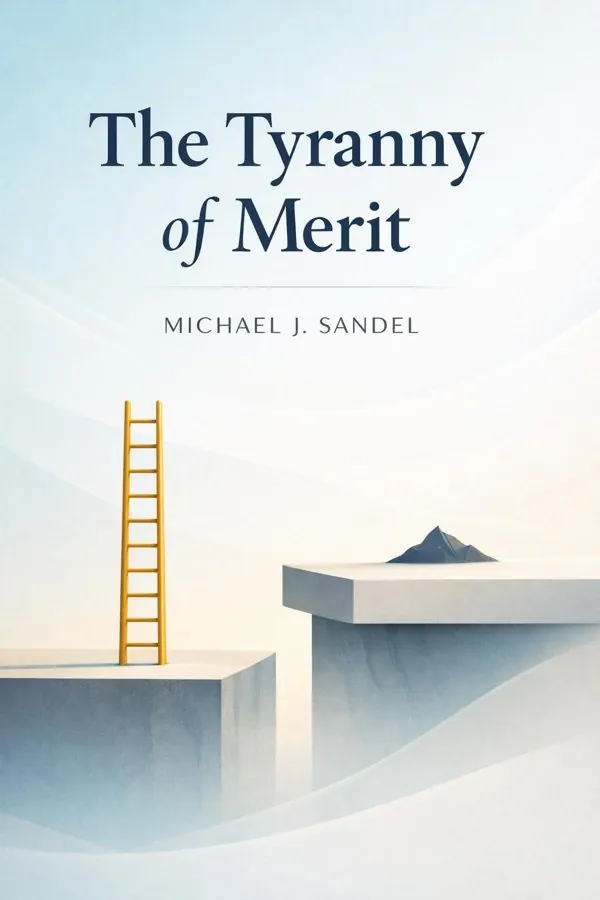
The Tyranny of Merit: What's Become of the Common Good?: Summary & Key Insights
 10 min8 chaptersAudio available
What Is The Tyranny of Merit: What's Become of the Common Good? About?
The Tyranny of Merit: What's Become of the Common Good? by Michael J. Sandel is a politics book spanning 8 pages. In this book, political philosopher Michael J. Sandel explores how the idea of meritocracy has reshaped modern societies, fostering hubris among the successful and resentment among those left behind. He argues that the moral logic of merit undermines solidarity and the dignity of work, and calls for a renewed sense of the common good that values contribution over credentials.
This FizzRead summary covers all 8 key chapters of The Tyranny of Merit: What's Become of the Common Good? in approximately 10 minutes, distilling the most important ideas, arguments, and takeaways from Michael J. Sandel's work. Also available as an audio summary and Key Quotes Podcast.
The Tyranny of Merit: What's Become of the Common Good?
In this book, political philosopher Michael J. Sandel explores how the idea of meritocracy has reshaped modern societies, fostering hubris among the successful and resentment among those left behind. He argues that the moral logic of merit undermines solidarity and the dignity of work, and calls for a renewed sense of the common good that values contribution over credentials.
Who Should Read The Tyranny of Merit: What's Become of the Common Good??
This book is perfect for anyone interested in politics and looking to gain actionable insights in a short read. Whether you're a student, professional, or lifelong learner, the key ideas from The Tyranny of Merit: What's Become of the Common Good? by Michael J. Sandel will help you think differently.
- ✓Readers who enjoy politics and want practical takeaways
- ✓Professionals looking to apply new ideas to their work and life
- ✓Anyone who wants the core insights of The Tyranny of Merit: What's Become of the Common Good? in just 10 minutes
Want the full summary?
Get instant access to this book summary and 100K+ more with Fizz Moment.
Get Free SummaryAvailable on App Store • Free to download
Key Chapters
Throughout modern American history, the language of opportunity has framed our public life. Politicians have invoked the 'rhetoric of rising'—the idea that anyone who works hard can climb the ladder. This rhetoric was meant to inspire, to reaffirm the nation’s faith in equality and effort. But over time, I noticed that it began to perform a different function. It justified inequality by linking outcomes to individual worth.
From the 1990s onward, presidents of both parties championed the same promise: that education would open doors, that success belonged to those willing to strive. Clinton spoke of 'those who worked hard and played by the rules.' Obama praised 'the self-made success' as the emblem of American possibility. It all sounded empowering. Yet, I argue, it carried a moral sting. For if rising depends only on our own efforts, falling becomes our own fault. The rhetoric that celebrates mobility becomes, in practice, a moral hierarchy.
Our political discourse has long treated meritocracy as the great equalizer. But in celebrating effort and talent, we overlooked the deeper structural realities—the accidents of birth, the webs of support, the cumulative advantages that make success possible. Meritocratic politics offered recognition to the striving individual while neglecting the broader community that sustains striving itself.
I invite readers to consider how this rhetoric shaped not only the aspirations of the winners but the self-perception of the rest. It is no accident that many working-class citizens today feel moral resentment, not because they reject equality of opportunity, but because they feel condemned by a language that tells them their station reflects their worth. In this way, meritocratic discourse became the seedbed of the populist backlash that now defines our time.
To truly reimagine equality, we must move beyond the rhetoric that measures dignity by ascent. Rising should no longer mean escaping the working class; it should mean honoring contribution wherever it occurs. The rhetoric of rising can inspire, yes—but only if it’s grounded in recognition of our shared dependence and common purpose.
In a meritocratic society, success becomes a measure of virtue. Those who win see their achievements as validation of their talent and effort; those who fall behind internalize failure as a reflection of personal inadequacy. This moral divide—between winners who feel entitled and losers who feel ashamed—is perhaps the most corrosive legacy of meritocratic thinking.
When the successful tell themselves, 'I earned this,' they imply that others deserve their misfortune. This logic breeds hubris—a quiet moral arrogance. It denies the role of luck, family, mentorship, and social infrastructure in shaping outcomes. Meanwhile, those left behind struggle not only with material hardship but with moral injury, the sense that they have failed the test of worthiness.
I remember the stories of workers in communities hollowed out by globalization—men and women who once built cars, steel, and schools, now told that if only they had gone to college, they might have been spared. This is the cruelty of meritocracy: it converts economic inequality into moral judgment.
The division between winners and losers has political consequences. It fuels resentment against elites who appear not only richer but morally superior. The aristocracies of old justified their privilege through lineage; the new elite justifies it through achievement. But unjust privilege, however earned, is still privilege. And when success becomes a badge of moral worth, solidarity collapses.
To repair that moral fabric, we must recover humility—the awareness that our triumphs are never ours alone. The antidote to meritocratic hubris is gratitude. Gratitude for the teachers, parents, public institutions, and even luck that make achievement possible. Only through such humility can we rebuild respect across social divides and restore the shared dignity that meritocracy erodes.
+ 6 more chapters — available in the FizzRead app
All Chapters in The Tyranny of Merit: What's Become of the Common Good?
About the Author
Michael J. Sandel is an American political philosopher and professor at Harvard University, known for his work on justice, ethics, democracy, and markets. His course 'Justice' has reached millions worldwide through television and online platforms. Sandel’s writings challenge prevailing liberal and market-based conceptions of morality and civic life.
Get This Summary in Your Preferred Format
Read or listen to the The Tyranny of Merit: What's Become of the Common Good? summary by Michael J. Sandel anytime, anywhere. FizzRead offers multiple formats so you can learn on your terms — all free.
Available formats: App · Audio · PDF · EPUB — All included free with FizzRead
Download The Tyranny of Merit: What's Become of the Common Good? PDF and EPUB Summary
Key Quotes from The Tyranny of Merit: What's Become of the Common Good?
“Throughout modern American history, the language of opportunity has framed our public life.”
“In a meritocratic society, success becomes a measure of virtue.”
Frequently Asked Questions about The Tyranny of Merit: What's Become of the Common Good?
The Tyranny of Merit: What's Become of the Common Good? by Michael J. Sandel is a politics book that explores key ideas across 8 chapters. In this book, political philosopher Michael J. Sandel explores how the idea of meritocracy has reshaped modern societies, fostering hubris among the successful and resentment among those left behind. He argues that the moral logic of merit undermines solidarity and the dignity of work, and calls for a renewed sense of the common good that values contribution over credentials.
More by Michael J. Sandel
Justice: What's the Right Thing to Do?
Michael J. Sandel
10 min
What Money Can't Buy: The Moral Limits of Markets
Michael J. Sandel
10 min
Democracy's Discontent: America in Search of a Public Philosophy
Michael J. Sandel
10 min
Public Philosophy: Essays on Morality in Politics
Michael J. Sandel
10 minYou Might Also Like

Antifa: The Anti-Fascist Handbook
Mark Bray
10 min
Attack from Within: How Disinformation Is Sabotaging America
Barbara McQuade
10 min
Coercion, Capital, and European States, AD 990–1992
Charles Tilly
10 min
Digital Democracy: Concepts, Methodologies, Tools, and Applications
Various Authors
10 min
Fascism
Stanley G. Payne
10 min
Fire And Fury: Inside The Trump White House
Michael Wolff
10 minBrowse by Category
Ready to read The Tyranny of Merit: What's Become of the Common Good??
Get the full summary and 100K+ more books with Fizz Moment.