
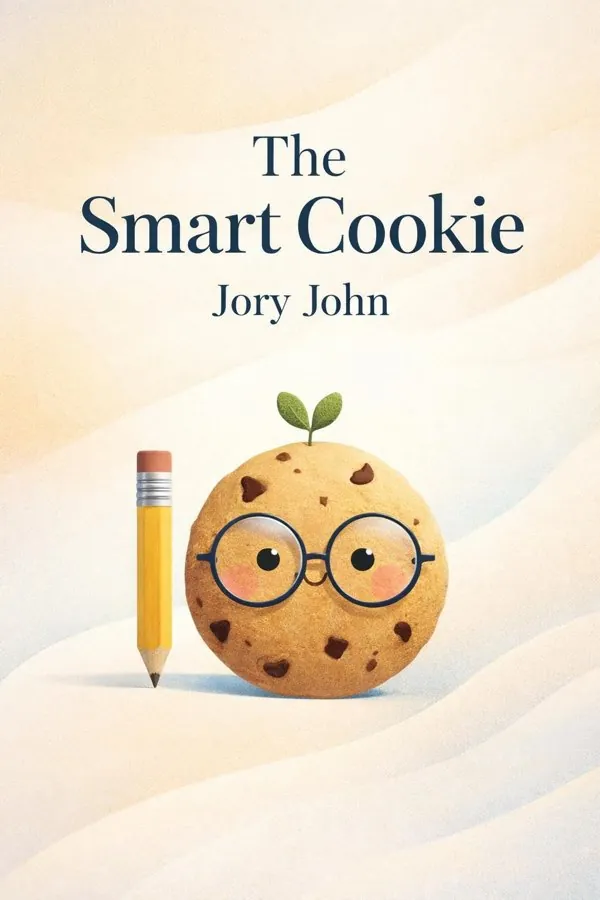
The Smart Cookie: Summary & Key Insights
by Jory John
 10 min9 chaptersAudio available
Key Takeaways from The Smart Cookie
A child can be surrounded by warmth, encouragement, and opportunity and still feel like they are falling short.
Many children first learn the meaning of “smart” through school, and that definition can become painfully narrow.
The fastest way for a child to miss their own gifts is to spend all their energy measuring themselves against someone else.
Sometimes a child does not need a brand-new ability; they need someone who can see the ability already there.
Not all smartness looks orderly, quiet, or easy to grade.
What Is The Smart Cookie About?
The Smart Cookie by Jory John is a parenting book spanning 8 pages. The Smart Cookie by Jory John is a warm, funny, and emotionally intelligent picture book that asks a question many children quietly carry: what does it really mean to be smart? Set in the same charming world as John’s beloved food-themed characters, the story follows a cookie who doesn’t feel clever in the ways school and society often reward. She struggles with mistakes, comparison, and the painful belief that everyone else seems to “get it” faster. But as the story unfolds, she discovers that intelligence is much bigger than perfect scores, quick answers, or polished performance. Creativity, perseverance, kindness, and self-expression matter too. For parents, caregivers, and educators, this book offers more than a sweet story. It opens the door to conversations about self-worth, learning differences, confidence, and the pressure children feel to perform. Jory John is especially effective in this space because his books blend humor with emotional truth, helping children process difficult feelings without shame. The Smart Cookie is a gentle but powerful reminder that every child has strengths worth noticing, even if they don’t fit a narrow definition of success.
This FizzRead summary covers all 9 key chapters of The Smart Cookie in approximately 10 minutes, distilling the most important ideas, arguments, and takeaways from Jory John's work. Also available as an audio summary and Key Quotes Podcast.
The Smart Cookie
The Smart Cookie by Jory John is a warm, funny, and emotionally intelligent picture book that asks a question many children quietly carry: what does it really mean to be smart? Set in the same charming world as John’s beloved food-themed characters, the story follows a cookie who doesn’t feel clever in the ways school and society often reward. She struggles with mistakes, comparison, and the painful belief that everyone else seems to “get it” faster. But as the story unfolds, she discovers that intelligence is much bigger than perfect scores, quick answers, or polished performance. Creativity, perseverance, kindness, and self-expression matter too.
For parents, caregivers, and educators, this book offers more than a sweet story. It opens the door to conversations about self-worth, learning differences, confidence, and the pressure children feel to perform. Jory John is especially effective in this space because his books blend humor with emotional truth, helping children process difficult feelings without shame. The Smart Cookie is a gentle but powerful reminder that every child has strengths worth noticing, even if they don’t fit a narrow definition of success.
Who Should Read The Smart Cookie?
This book is perfect for anyone interested in parenting and looking to gain actionable insights in a short read. Whether you're a student, professional, or lifelong learner, the key ideas from The Smart Cookie by Jory John will help you think differently.
- ✓Readers who enjoy parenting and want practical takeaways
- ✓Professionals looking to apply new ideas to their work and life
- ✓Anyone who wants the core insights of The Smart Cookie in just 10 minutes
Want the full summary?
Get instant access to this book summary and 100K+ more with Fizz Moment.
Get Free SummaryAvailable on App Store • Free to download
Key Chapters
A child can be surrounded by warmth, encouragement, and opportunity and still feel like they are falling short. In The Smart Cookie, the bakery world is cheerful and inviting, filled with polished treats and bright energy, yet Cookie feels pressure beneath the surface. Everyone around her seems to have a clear place and a visible talent. In that setting, she starts to believe that being accepted depends on being flawless.
This idea matters because many children absorb expectations long before they can name them. They notice who gets praised, who finishes first, who earns stickers, and who seems naturally confident. Even in loving homes or classrooms, they may conclude that worth is tied to performance. Cookie’s anxiety reflects a common emotional pattern: when children think mistakes make them less lovable or less capable, they begin to hide, overwork, or give up.
Parents can see this in everyday moments. A child erases a drawing repeatedly because it is not “right.” A student tears up after one wrong answer. A sibling refuses to try a new game unless they know they will win. These are not just behavior problems; they are clues that perfectionism may be crowding out joy.
The story helps adults recognize that confidence does not grow from constant evaluation. It grows when children feel safe to experiment, stumble, and still belong. Praising effort, curiosity, and persistence instead of only outcomes can shift the emotional climate. So can sharing your own mistakes openly and calmly.
Actionable takeaway: Notice where your child may be linking love or worth with perfection, and intentionally praise process, bravery, and growth instead of polished results.
Many children first learn the meaning of “smart” through school, and that definition can become painfully narrow. Cookie remembers classroom moments where quick answers, neat work, and strong test performance seem to define success. When she cannot keep up in those exact ways, she assumes the problem is not the task but herself. Her struggle shows how easily children internalize one version of intelligence and treat it as the only one that counts.
This is especially important for parents because school feedback carries enormous emotional weight. A child who hears “good job” only when they score high may start believing that intelligence is something you either prove publicly or do not have. A child who processes more slowly, thinks visually, learns by doing, or excels in storytelling, music, empathy, or design may be overlooked in traditional settings.
The book invites us to ask deeper questions. Is a child less smart because they need more time? Is memorization the highest form of thinking? What about imagination, problem-solving, resilience, humor, or the ability to make others feel included? Cookie’s pain comes from measuring herself against a system that notices certain strengths more easily than others.
Adults can respond by widening the language they use at home. Instead of asking only, “What grade did you get?” try asking, “What challenged you today?” “What did you create?” or “What are you getting better at?” Teachers and caregivers can also point out hidden forms of intelligence: noticing patterns, asking thoughtful questions, building things, comforting friends, or thinking in original ways.
Actionable takeaway: Help children build a broader definition of intelligence by regularly naming strengths that school grades do not always capture.
The fastest way for a child to miss their own gifts is to spend all their energy measuring themselves against someone else. In The Smart Cookie, Cookie looks around and sees classmates and peers who appear sharper, quicker, and more successful. Her attention shifts away from her own growth and toward everyone else’s performance. That comparison becomes its own trap: the more she compares, the less capable she feels.
This dynamic is familiar in real life. Children compare reading levels, art skills, athletic ability, social popularity, and even how often they get praised by adults. Comparison can motivate in small doses, but when it becomes a habit, it teaches children that identity is a competition. They stop asking, “What am I learning?” and start asking, “Am I ahead or behind?”
The emotional cost is significant. Comparison can create envy, shame, anxiety, and a fear of being seen trying. A child may quit piano because a sibling learns faster. Another may say they “hate math” when what they really hate is feeling slower than a classmate. Social media and highly curated peer images intensify this pattern for older children, but the seeds are planted early.
The book gently reminds readers that every person develops unevenly. One child may be articulate at age six and insecure at age ten. Another may struggle academically but show remarkable empathy, originality, or leadership. Growth is not synchronized.
Adults can reduce the damage of comparison by avoiding sibling ranking, public pressure, and labels such as “the smart one” or “the artistic one.” These labels may sound positive, but they often create fixed identities and hidden stress. Instead, emphasize personal progress: “You stuck with that,” “You explained your thinking well,” or “You’re learning to trust yourself.”
Actionable takeaway: Replace comparison-based praise with progress-based language that helps children measure themselves against their own growth, not someone else’s timeline.
Sometimes a child does not need a brand-new ability; they need someone who can see the ability already there. In Cookie’s journey, a teacher offers a fresh perspective on what learning looks like. Rather than reinforcing the idea that smartness belongs only to the quickest or most polished students, this adult opens the possibility that intelligence can be creative, personal, and multidimensional.
That shift is powerful because adults often act as mirrors. Children use teachers, parents, and caregivers to understand who they are. If the adults around them focus only on correction, speed, or visible achievement, children may conclude that their value is conditional. But when an adult notices effort, originality, or determination, a different self-image begins to form.
A wise teacher might say, “I noticed the way you solved that differently,” or “You ask thoughtful questions,” or “Your idea helped the whole class think.” These statements do more than encourage. They train children to recognize strengths that standard measures may miss. For a child who has begun to doubt themselves, being truly seen can interrupt a damaging story.
Parents can adopt the same role at home. If your child struggles in one domain, look for where they come alive. Maybe they invent stories with toys, observe tiny details in nature, build intricate structures, comfort upset siblings, or remember how others feel. When adults reflect these strengths consistently, children gain language for an identity beyond struggle.
This does not mean avoiding honesty or lowering standards. It means anchoring correction in belief. A child can hear, “This is hard right now,” while also hearing, “I see how your mind works, and it matters.”
Actionable takeaway: Become a mirror that reflects specific, often-overlooked strengths so children can build a fuller and more hopeful picture of themselves.
Not all smartness looks orderly, quiet, or easy to grade. One of the most uplifting turns in The Smart Cookie comes when Cookie begins to reconnect with creativity. Through drawing, making, and self-expression, she discovers that her mind is not empty or inadequate; it simply works in ways that flourish through imagination rather than rigid performance.
This lesson is essential for modern parenting because creativity is often treated as a bonus instead of a core human strength. Yet creativity involves observation, experimentation, pattern recognition, emotional expression, and problem-solving. A child who invents stories, combines unusual ideas, builds imaginative worlds, or finds original solutions is demonstrating sophisticated thinking.
In practical terms, creativity can become a rescue route for children who feel discouraged by traditional academic benchmarks. A child who dreads worksheets may eagerly explain a concept through a comic strip. A reluctant writer may light up when allowed to dictate a story, perform it aloud, or illustrate it first. A child who struggles with facts may deeply understand meaning through music, movement, or play.
The story encourages adults not to separate learning from joy. When children create, they often reveal understanding in ways tests cannot. Parents can support this by keeping simple art supplies available, inviting open-ended projects, asking imaginative questions, and valuing original ideas over polished products. The goal is not to produce talented artists but to nurture flexible thinkers who trust their own voice.
When creativity is welcomed, children begin to feel capable again. They experience themselves as makers, not just evaluators of their own shortcomings.
Actionable takeaway: Make room for creative expression at home and in learning routines, and treat imagination as evidence of intelligence rather than a distraction from it.
A child who fears mistakes cannot fully learn, because real learning always involves not knowing. In The Smart Cookie, mistakes are not just moments of embarrassment; they are part of Cookie’s larger struggle with self-worth. At first, errors seem like proof that she is not smart. But the story gradually reframes mistakes as normal, useful, and even necessary steps in growth.
This is one of the book’s most practical messages for families. Many children believe that successful people get things right the first time. When they hit difficulty, they assume they lack ability. This fixed mindset can show up as tears over homework, refusal to try, or anger when corrected. Yet what they need most is repeated evidence that error is not the opposite of intelligence; it is part of intelligence in action.
Adults can normalize mistakes in small daily ways. If you burn dinner, misplace keys, or misunderstand directions, narrate your response calmly: “That didn’t work. Let me try another way.” In schoolwork, instead of rushing to the answer, ask, “What did this mistake teach you?” or “What can we try next?” These questions move children from shame to problem-solving.
The book also suggests that emotional recovery matters as much as academic correction. A child may know the right answer eventually, but if they associate learning with humiliation, their confidence erodes. Gentle feedback, patience, and humor can make persistence feel safe.
Over time, children who are allowed to make mistakes without losing dignity become more resilient. They try harder tasks, ask better questions, and recover faster from setbacks. They begin to trust that being imperfect does not mean being incapable.
Actionable takeaway: Treat mistakes as information, not identity, and consistently model calm, curious responses when things go wrong.
Confidence is not built by repeating empty praise; it grows when children notice that they can contribute something real. In The Smart Cookie, the turning point comes when Cookie begins to see her own gifts clearly. She is not transformed into someone else. Instead, she stops ignoring the strengths she already has. That shift from deficiency to recognition is what allows confidence to emerge.
This matters because many well-meaning adults try to build self-esteem through generic encouragement: “You’re amazing,” “You’re so smart,” or “You can do anything.” While kind, these statements can feel vague or unbelievable to a child who is struggling. Stronger confidence comes from specific evidence. “You kept trying even when that was frustrating.” “You notice details other people miss.” “You made your friend feel included.” These comments help children connect identity to actual lived experience.
The book shows that strengths do not need to be dramatic to be meaningful. A child may be observant, funny, thoughtful, inventive, loyal, patient with younger siblings, or skilled at noticing how others feel. These traits are not secondary to achievement; they are part of who the child is becoming.
Parents can help by creating regular moments of reflection. At dinner, ask, “What is something you did well today that isn’t about grades?” In conflict, remind children of strengths they can use: “You’re good at calming down and trying again,” or “You’re thoughtful with words—how do you want to say this?” This teaches them that strengths are tools, not labels.
As children identify and use their strengths, they become less dependent on outside ranking and more grounded in self-knowledge.
Actionable takeaway: Build confidence through specific, evidence-based recognition of your child’s real strengths, especially the ones that are easy to overlook.
One of the most generous ideas in The Smart Cookie is that intelligence is broader, richer, and more humane than most children are taught to believe. By the end of the story, smartness is no longer limited to grades, speed, or correctness. It includes creativity, emotional awareness, persistence, problem-solving, and the courage to be yourself.
This broader definition is deeply valuable in parenting because children need room to become whole people, not just high performers. If intelligence is defined too narrowly, children who do not fit the mold may feel defective, while children who do fit it may become afraid of losing their status. A healthier definition benefits everyone.
In daily life, broad intelligence appears everywhere. A child who comforts a lonely classmate is socially and emotionally perceptive. A child who invents a new game is imaginative and strategic. A child who keeps working after repeated failure is demonstrating grit and adaptive thinking. A child who asks unusual questions is showing curiosity, one of the foundations of lifelong learning.
When adults honor these capacities, children begin to understand that being smart is not about outperforming others but about engaging deeply with the world. This reduces pressure while still supporting growth. It says, in effect, “You are allowed to learn in your own way, and your mind has value.”
The story offers an antidote to a culture that often celebrates measurable output over inner development. It invites families and classrooms to define success in ways that include character, originality, and resilience.
Actionable takeaway: Start using a wider vocabulary for intelligence at home so children learn that being smart includes empathy, creativity, persistence, curiosity, and self-expression.
Before children can take risks in learning, they need to believe that they belong even when they are uncertain. Beneath the humor of The Smart Cookie lies a tender truth: much of Cookie’s pain comes from feeling different and fearing that difference means she is less worthy. The story’s healing message is not only that she is capable, but that she still has a place while figuring herself out.
Belonging is a powerful condition for growth. When children feel secure, they are more willing to ask questions, attempt difficult tasks, and recover from mistakes. When they fear judgment or exclusion, they often protect themselves through silence, perfectionism, or avoidance. That is why emotional safety is not separate from learning; it is part of it.
Parents can create belonging through simple patterns: listening without rushing to fix, welcoming feelings without mockery, and separating behavior from identity. For example, “That choice wasn’t kind” lands differently from “You’re being bad.” Similarly, “This assignment is tough, but we’ll work through it” communicates partnership instead of evaluation.
Rituals also matter. Bedtime chats, shared reading, inside jokes, family walks, and regular check-ins remind children that they are known beyond performance. In classrooms, belonging grows when teachers celebrate many kinds of participation, not just the loudest or fastest.
The emotional lesson of the book is subtle but lasting: children flourish when they do not have to earn basic acceptance. From that secure base, confidence and competence can grow naturally.
Actionable takeaway: Make sure your child experiences consistent connection and acceptance, especially on the days when learning feels hard or confidence is low.
All Chapters in The Smart Cookie
About the Author
Jory John is a New York Times bestselling author celebrated for children’s books that combine humor, heart, and emotional insight. He is best known for popular titles such as The Bad Seed, The Good Egg, The Cool Bean, and The Smart Cookie, many of which explore identity, insecurity, friendship, and self-acceptance through memorable character-driven stories. His writing stands out for its ability to speak to children in a playful, accessible voice while also giving parents and educators meaningful tools for discussing feelings and personal growth. John’s books are widely used at home and in classrooms because they entertain while supporting social-emotional learning. Through witty storytelling and relatable struggles, he has become one of the most trusted contemporary authors in children’s literature.
Get This Summary in Your Preferred Format
Read or listen to the The Smart Cookie summary by Jory John anytime, anywhere. FizzRead offers multiple formats so you can learn on your terms — all free.
Available formats: App · Audio · PDF · EPUB — All included free with FizzRead
Download The Smart Cookie PDF and EPUB Summary
Key Quotes from The Smart Cookie
“A child can be surrounded by warmth, encouragement, and opportunity and still feel like they are falling short.”
“Many children first learn the meaning of “smart” through school, and that definition can become painfully narrow.”
“The fastest way for a child to miss their own gifts is to spend all their energy measuring themselves against someone else.”
“Sometimes a child does not need a brand-new ability; they need someone who can see the ability already there.”
“Not all smartness looks orderly, quiet, or easy to grade.”
Frequently Asked Questions about The Smart Cookie
The Smart Cookie by Jory John is a parenting book that explores key ideas across 9 chapters. The Smart Cookie by Jory John is a warm, funny, and emotionally intelligent picture book that asks a question many children quietly carry: what does it really mean to be smart? Set in the same charming world as John’s beloved food-themed characters, the story follows a cookie who doesn’t feel clever in the ways school and society often reward. She struggles with mistakes, comparison, and the painful belief that everyone else seems to “get it” faster. But as the story unfolds, she discovers that intelligence is much bigger than perfect scores, quick answers, or polished performance. Creativity, perseverance, kindness, and self-expression matter too. For parents, caregivers, and educators, this book offers more than a sweet story. It opens the door to conversations about self-worth, learning differences, confidence, and the pressure children feel to perform. Jory John is especially effective in this space because his books blend humor with emotional truth, helping children process difficult feelings without shame. The Smart Cookie is a gentle but powerful reminder that every child has strengths worth noticing, even if they don’t fit a narrow definition of success.
More by Jory John


You Might Also Like
Never Enough
Jennifer Breheny Wallace
10 min
Bluey: Sleepytime
Joe Brumm
10 min
In My Heart: A Book of Feelings
Jo Witek
10 min
Love From The Crayons
Drew Daywalt, Oliver Jeffers
10 min
Pete The Cat: Big Easter Adventure
James Dean, Kimberly Dean
10 min
Smart Money Smart Kids: Raising the Next Generation to Win with Money
Dave Ramsey, Rachel Cruze
10 minBrowse by Category
Ready to read The Smart Cookie?
Get the full summary and 100K+ more books with Fizz Moment.