
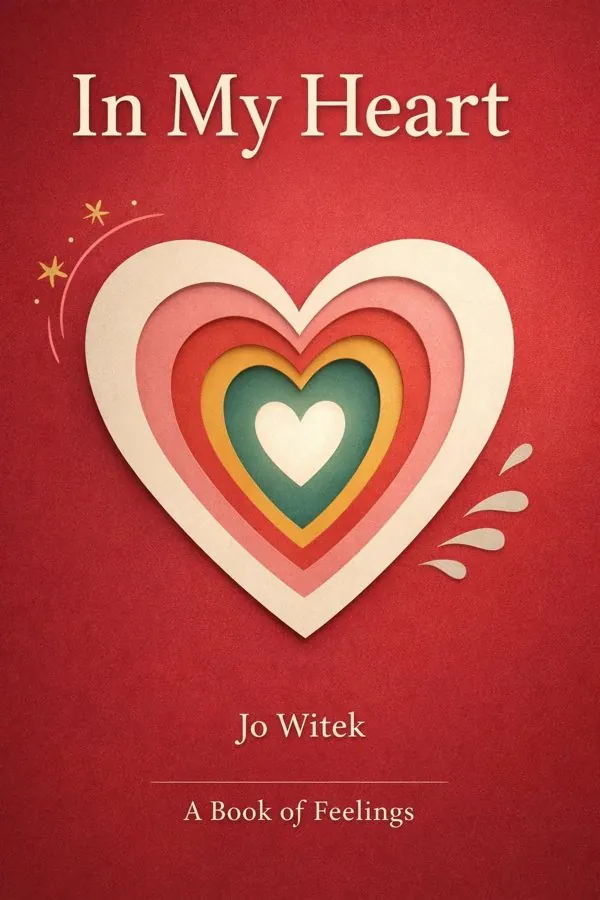
In My Heart: A Book of Feelings: Summary & Key Insights
by Jo Witek
 10 min8 chaptersAudio available
Key Takeaways from In My Heart: A Book of Feelings
A child cannot manage what they cannot name.
Not all feelings are comfortable, but all feelings are valid.
Children often think in absolutes, but emotions are rarely simple.
A difficult feeling can seem endless to a child, but no emotion stays forever.
Children understand feelings best when those feelings become tangible.
What Is In My Heart: A Book of Feelings About?
In My Heart: A Book of Feelings by Jo Witek is a parenting book. In My Heart: A Book of Feelings by Jo Witek is a warm, imaginative picture book that helps children identify, name, and understand the emotions they experience every day. Using simple language and vivid, layered illustrations, the book presents feelings as living inside the heart, changing shape, color, size, and energy depending on the moment. Joy feels bright and bouncy, sadness feels heavy, anger blazes hot, and courage rises when it is needed. This approach gives children a concrete way to talk about inner experiences that often feel confusing or overwhelming. The book matters because emotional literacy is one of the foundational skills of healthy childhood development. Children who can recognize their feelings are better able to express needs, build relationships, and regulate behavior. For parents, caregivers, and teachers, Witek’s book offers a gentle tool for starting conversations that might otherwise feel too abstract for young minds. Jo Witek is a respected children’s author known for creating emotionally intelligent books that honor children’s inner worlds. In My Heart stands out as both a beautiful read-aloud and a practical resource for raising emotionally aware, resilient children.
This FizzRead summary covers all 8 key chapters of In My Heart: A Book of Feelings in approximately 10 minutes, distilling the most important ideas, arguments, and takeaways from Jo Witek's work. Also available as an audio summary and Key Quotes Podcast.
In My Heart: A Book of Feelings
In My Heart: A Book of Feelings by Jo Witek is a warm, imaginative picture book that helps children identify, name, and understand the emotions they experience every day. Using simple language and vivid, layered illustrations, the book presents feelings as living inside the heart, changing shape, color, size, and energy depending on the moment. Joy feels bright and bouncy, sadness feels heavy, anger blazes hot, and courage rises when it is needed. This approach gives children a concrete way to talk about inner experiences that often feel confusing or overwhelming.
The book matters because emotional literacy is one of the foundational skills of healthy childhood development. Children who can recognize their feelings are better able to express needs, build relationships, and regulate behavior. For parents, caregivers, and teachers, Witek’s book offers a gentle tool for starting conversations that might otherwise feel too abstract for young minds. Jo Witek is a respected children’s author known for creating emotionally intelligent books that honor children’s inner worlds. In My Heart stands out as both a beautiful read-aloud and a practical resource for raising emotionally aware, resilient children.
Who Should Read In My Heart: A Book of Feelings?
This book is perfect for anyone interested in parenting and looking to gain actionable insights in a short read. Whether you're a student, professional, or lifelong learner, the key ideas from In My Heart: A Book of Feelings by Jo Witek will help you think differently.
- ✓Readers who enjoy parenting and want practical takeaways
- ✓Professionals looking to apply new ideas to their work and life
- ✓Anyone who wants the core insights of In My Heart: A Book of Feelings in just 10 minutes
Want the full summary?
Get instant access to this book summary and 100K+ more with Fizz Moment.
Get Free SummaryAvailable on App Store • Free to download
Key Chapters
A child cannot manage what they cannot name. One of the most powerful ideas in In My Heart is that emotions become less mysterious when children are given words for them. Rather than treating feelings as vague moods that simply take over, Jo Witek shows that the heart can hold many distinct experiences: happiness, sadness, bravery, anger, shyness, calm, and more. This naming process is not just poetic; it is developmental. When children learn emotional vocabulary, they gain a map for what is happening inside them.
The book presents feelings in concrete, sensory ways. A feeling might feel big, small, heavy, or light. It may move quickly or slowly. For young children, this matters because abstract explanations often do not stick. But when a parent says, “Does your anger feel hot like in the book?” or “Is your sadness heavy today?” the child is given a bridge between inner sensation and language.
This has practical value in daily life. A preschooler who screams when frustrated may not yet know the word frustrated. A child who withdraws at school may not know they feel shy or worried. Reading the book together helps adults introduce emotional language before a meltdown, not just during one. Over time, children begin to replace “I don’t know” with “I feel lonely,” “I feel excited,” or “I feel scared.”
A helpful family practice is to use feeling words regularly at home. At dinner, ask everyone to share one feeling from their day. During conflict, reflect the child’s likely emotion before correcting behavior. The actionable takeaway: build your child’s emotional vocabulary by naming feelings early, often, and without judgment.
Not all feelings are comfortable, but all feelings are valid. In My Heart quietly teaches a lesson many adults still struggle to learn: emotions themselves are not bad. Some feelings feel pleasant and others feel difficult, yet each one belongs in the full experience of being human. The book does not suggest children should only aim for happiness. Instead, it normalizes emotional variety, showing that the heart can hold joy one moment and sadness the next.
This message is deeply important in parenting. When adults rush to stop tears, dismiss anger, or shame fear, children may absorb the idea that certain emotions make them unacceptable. That can lead to suppression, confusion, or explosive behavior later. Witek’s approach invites acceptance without chaos. A child can feel angry without being allowed to hit. A child can feel scared without being told there is nothing to fear. The emotion is welcomed, even when the behavior still needs guidance.
In practice, this changes how adults respond. Instead of saying, “Don’t be upset,” a parent might say, “It makes sense that you’re upset.” Instead of “You’re okay,” they might say, “That was scary.” These responses do not make feelings bigger; they make children feel seen. Once seen, emotions often become easier to regulate.
This idea also helps children understand others. If all feelings have a place, then classmates, siblings, and parents are also allowed to have emotional ups and downs. That creates empathy as well as self-acceptance.
A useful habit is to separate feeling from action in your language: “It’s okay to feel angry. It’s not okay to throw toys.” The actionable takeaway: teach children that every feeling is welcome, while calmly setting limits on harmful behavior.
Children often think in absolutes, but emotions are rarely simple. One of the most beautiful ideas in In My Heart is that the heart is spacious enough to hold many different feelings, even at the same time. A child can feel excited about a birthday party and nervous about the crowd. They can feel proud of starting school and sad about leaving home. By portraying the heart as a container with room for change and complexity, the book helps children move beyond all-or-nothing thinking.
This is a valuable emotional skill because mixed feelings are common, especially during transitions. Young children may struggle when they assume they are supposed to feel only one “correct” emotion. If they love their new baby sibling but also feel jealous, they may believe something is wrong with them. The book gently suggests otherwise: feelings shift, overlap, and coexist.
Parents and educators can use this idea to normalize emotional complexity. Before a big event, ask, “Are there two feelings in your heart today?” A child might say, “I’m excited and scared.” That simple recognition reduces pressure. It also helps adults avoid oversimplifying children’s experiences. Instead of deciding how a child feels, we can remain curious.
This concept is especially useful during change: moving houses, starting school, visiting family, or dealing with illness. A child who learns that the heart can hold both happiness and worry is better equipped to navigate uncertainty. They do not need to force themselves into a single emotional state.
Try creating a “two feelings” ritual during transitions, where children name both a comfortable and uncomfortable feeling. The actionable takeaway: help children understand that mixed emotions are normal, and invite them to identify more than one feeling at a time.
A difficult feeling can seem endless to a child, but no emotion stays forever. In My Heart communicates the natural movement of emotions by showing them as changing experiences rather than permanent identities. This distinction matters. A child is not an angry child; they are a child who feels angry right now. A child is not a fearful child; they are experiencing fear in this moment. That subtle shift protects self-esteem and encourages resilience.
Children need help understanding that feelings rise, peak, and pass. Without that understanding, intense moments can feel frightening and final. A tantrum, disappointment, or burst of anxiety may seem like proof that something is wrong. The book instead suggests that the heart is dynamic. Some feelings leap, some sink, some rest, some flare up and fade.
Adults can reinforce this by using temporary language. Phrases like “You’re feeling frustrated right now” or “This sadness won’t last forever” teach emotional impermanence. This does not dismiss the feeling; it adds hope and perspective. It also helps children tolerate discomfort instead of panicking about it.
Practical tools can support this lesson. A feelings chart with changing faces, a calm corner, deep breathing, drawing, or simply sitting together quietly can help children observe emotions as experiences that move through them. Over time, they begin to trust that they can survive strong feelings without becoming those feelings.
For parents, this idea also offers reassurance. Hard emotional moments are part of development, not always signs of failure. The goal is not to eliminate emotion but to teach children how to move through it safely.
A simple question to ask during distress is, “What does your feeling need right now?” The actionable takeaway: remind children that emotions are temporary experiences, and give them tools to ride the wave instead of fearing it.
Children understand feelings best when those feelings become tangible. One reason In My Heart is so effective is its use of metaphor, color, texture, and movement to make emotions visible. Rather than defining feelings in clinical terms, the book invites children to imagine them. A feeling can be huge like a giant, delicate like a flower, bright like sunshine, or heavy like a stone. This imaginative method meets children where they are.
For early learners, symbolic thinking is often more accessible than direct analysis. A child may not explain, “I am experiencing social anxiety,” but they may say, “My heart feels small today.” That kind of symbolic expression is meaningful and usable. It gives adults valuable clues while allowing children to communicate in developmentally appropriate ways.
This also opens the door to creative emotional practice. Children can draw what their hearts feel like, choose colors for their mood, or act out emotions through movement. A teacher might ask students to paint a calm heart and an angry heart. A parent might say, “If your worry were an animal, what would it be?” These playful activities build emotional awareness without pressure.
Imagination can also reduce defensiveness. Some children resist direct questions like “What’s wrong?” but open up when invited into metaphor. They may reveal more through stories, pictures, or pretend play than through straightforward conversation.
Witek’s approach reminds adults that emotional education does not have to feel like a lesson. It can be woven into art, reading, play, and bedtime conversations. When inner life becomes visible, children feel more confident exploring it.
Try asking your child to draw their heart after a big day and describe what is inside it. The actionable takeaway: use stories, art, and metaphor to help children express feelings that are too complex for direct words.
Sometimes the safest way to talk about feelings is indirectly. In My Heart works so well because it creates emotional distance while still being deeply personal. Children can first discuss the feelings in the book before recognizing those same emotions in themselves. This makes read-aloud time more than a literacy activity; it becomes a relationship-building tool.
Shared reading creates predictable closeness. A child sits with a trusted adult, hears language for emotion, sees expressive images, and experiences calm attention. That setting makes difficult topics easier to approach. A parent does not have to begin with, “Why were you so upset today?” They can simply read the page about anger and ask, “Have you ever felt like this?”
Books are especially useful for children who resist direct correction or intense questioning. A story lowers pressure. It also helps adults stay gentle and curious instead of reactive. In classrooms, books like this provide common language for all students, supporting group conversations about empathy, conflict, and self-expression.
To make the most of the book, adults can pause and ask open-ended questions: “Which page feels like your heart today?” “What color is your happy feeling?” “What helps when your heart feels heavy?” These invitations encourage reflection without demanding performance.
Regular rereading is also powerful. Children often return to the same book because repetition builds mastery. Each reading may reveal a new emotional insight as the child matures.
The larger lesson is that emotional connection often grows through ordinary rituals. Bedtime reading, classroom circle time, or quiet afternoon cuddles can become moments where children feel safe enough to know themselves better.
The actionable takeaway: use read-aloud time as a low-pressure space to explore emotions together and strengthen trust through conversation.
Many behavior problems are really communication problems. In My Heart suggests that when children understand what they feel, they are better able to act with control and seek help appropriately. Emotional literacy does not eliminate tantrums, sibling fights, or tears, but it gives children alternatives to impulsive behavior. A child who can say, “I’m frustrated,” has already taken a step away from hitting, screaming, or shutting down.
This matters because adults often focus on behavior before feeling. We ask children to stop yelling, share toys, sit still, or calm down, but we may skip the step of helping them identify what is happening internally. Yet regulation begins with recognition. If a child cannot tell the difference between disappointment, anger, embarrassment, and tiredness, their reactions may seem random or excessive.
The book provides a framework for early intervention. If a child knows that a heart can feel jumpy, heavy, hot, or quiet, they gain language before behavior escalates. Parents can support this by naming patterns: “Your body gets loud when your heart feels angry.” Teachers can create classroom routines where students check in with feelings each morning. Over time, children learn that emotions offer information, not just disruption.
This also leads to more compassionate discipline. Instead of punishing emotion, adults can coach skills: taking space, asking for a hug, using words, breathing, or finding a calm activity. Boundaries still matter, but they become more effective when rooted in understanding.
Children who feel understood are often more cooperative because they are less overwhelmed and less defensive. Emotional coaching builds the foundation for problem-solving, empathy, and self-control.
When challenging behavior appears, start by asking what feeling may be underneath it. The actionable takeaway: treat emotional language as a core behavior tool, and help children express feelings before they act them out.
Children learn about emotions not only from books, but from the adults who surround them. In My Heart gives parents and caregivers a wonderful opportunity to reflect on their own emotional habits. If children are taught to honor feelings in stories but see those feelings denied, mocked, or exploded at home, the lesson becomes confusing. Emotional literacy is most effective when adults model it in real time.
Modeling does not require perfect calm or endless patience. In fact, it is often more helpful for children to see adults handle imperfection honestly. A parent might say, “I’m feeling frustrated, so I’m going to take a deep breath,” or “I felt disappointed, but I’m okay and I can try again.” These moments show children that emotions are manageable, speakable, and normal.
This is especially important in families where feelings were not openly discussed across generations. Many adults grew up hearing phrases like “Stop crying,” “Be tough,” or “Calm down” without support. Reading this book with a child can begin a family shift toward healthier emotional culture. Parents can practice curiosity instead of control, and connection before correction.
The book also reminds adults that emotional tone is contagious. A rushed, tense home often creates more dysregulation in children. When adults slow down, validate feelings, and respond predictably, children feel safer. Safety is the foundation of emotional growth.
A practical family habit is to narrate coping strategies aloud. Say, “I’m upset, so I’m going to drink water and sit for a minute,” or “I feel nervous, so I’m taking a slow breath.” This teaches children specific responses rather than vague advice.
The actionable takeaway: model emotional awareness in your own words and actions, because children learn how to handle feelings by watching how you handle yours.
All Chapters in In My Heart: A Book of Feelings
About the Author
Jo Witek is an acclaimed French author who writes for children and young adults. She is especially known for books that explore emotional life with honesty, warmth, and imagination. Her work often helps young readers make sense of feelings, identity, courage, and the challenges of growing up. Witek has earned international recognition for creating stories that are accessible to children while also giving parents and educators meaningful tools for conversation. In My Heart: A Book of Feelings is one of her most celebrated titles, praised for its gentle approach to emotional literacy and its appeal as a read-aloud book. Through clear language and thoughtful themes, Jo Witek has become a trusted voice for families seeking children’s books that support both emotional development and connection.
Get This Summary in Your Preferred Format
Read or listen to the In My Heart: A Book of Feelings summary by Jo Witek anytime, anywhere. FizzRead offers multiple formats so you can learn on your terms — all free.
Available formats: App · Audio · PDF · EPUB — All included free with FizzRead
Download In My Heart: A Book of Feelings PDF and EPUB Summary
Key Quotes from In My Heart: A Book of Feelings
“A child cannot manage what they cannot name.”
“Not all feelings are comfortable, but all feelings are valid.”
“Children often think in absolutes, but emotions are rarely simple.”
“A difficult feeling can seem endless to a child, but no emotion stays forever.”
“Children understand feelings best when those feelings become tangible.”
Frequently Asked Questions about In My Heart: A Book of Feelings
In My Heart: A Book of Feelings by Jo Witek is a parenting book that explores key ideas across 8 chapters. In My Heart: A Book of Feelings by Jo Witek is a warm, imaginative picture book that helps children identify, name, and understand the emotions they experience every day. Using simple language and vivid, layered illustrations, the book presents feelings as living inside the heart, changing shape, color, size, and energy depending on the moment. Joy feels bright and bouncy, sadness feels heavy, anger blazes hot, and courage rises when it is needed. This approach gives children a concrete way to talk about inner experiences that often feel confusing or overwhelming. The book matters because emotional literacy is one of the foundational skills of healthy childhood development. Children who can recognize their feelings are better able to express needs, build relationships, and regulate behavior. For parents, caregivers, and teachers, Witek’s book offers a gentle tool for starting conversations that might otherwise feel too abstract for young minds. Jo Witek is a respected children’s author known for creating emotionally intelligent books that honor children’s inner worlds. In My Heart stands out as both a beautiful read-aloud and a practical resource for raising emotionally aware, resilient children.
You Might Also Like
Never Enough
Jennifer Breheny Wallace
10 min
Bluey: Sleepytime
Joe Brumm
10 min
Love From The Crayons
Drew Daywalt, Oliver Jeffers
10 min
Pete The Cat: Big Easter Adventure
James Dean, Kimberly Dean
10 min
Smart Money Smart Kids: Raising the Next Generation to Win with Money
Dave Ramsey, Rachel Cruze
10 min
1-2-3 Magic: Effective Discipline for Children 2–12
Thomas W. Phelan
10 minBrowse by Category
Ready to read In My Heart: A Book of Feelings?
Get the full summary and 100K+ more books with Fizz Moment.