
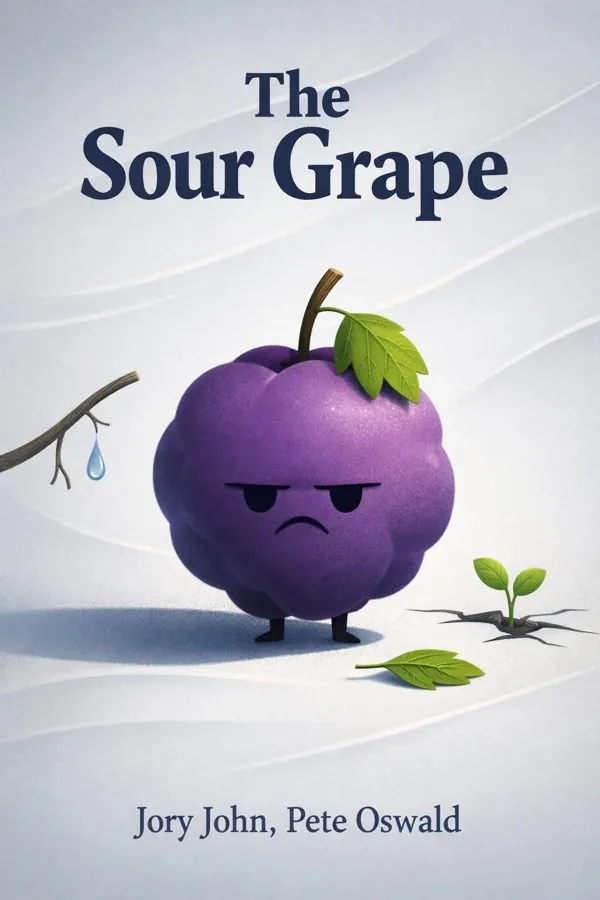
The Sour Grape: Summary & Key Insights
by Jory John, Pete Oswald
 10 min9 chaptersAudio available
Key Takeaways from The Sour Grape
One of the most striking ideas in The Sour Grape is that holding a grudge does not just affect a moment; it can begin to define who you are.
A provocative truth at the heart of The Sour Grape is that perfect memory is not the same as emotional intelligence.
The Sour Grape works so well because it understands that anger is often the surface emotion, not the deepest one.
Another key insight from The Sour Grape is that fairness can become harsh when it is separated from compassion.
A central message in The Sour Grape is that forgiveness is not about pretending nothing happened.
What Is The Sour Grape About?
The Sour Grape by Jory John, Pete Oswald is a bestsellers book. The Sour Grape by Jory John and Pete Oswald is a funny, emotionally sharp picture book about resentment, grudges, and the difficult path toward forgiveness. On the surface, it follows a grape who feels wronged by others and proudly keeps track of every slight, disappointment, and insult. But beneath the humor and expressive illustrations, the book explores a familiar human experience: what happens when hurt hardens into bitterness. As the grape catalogs offenses and avoids those who caused pain, readers begin to see how grudges can shape identity, relationships, and even a person’s sense of fairness. What makes the book especially meaningful is its ability to speak to children and adults at the same time, turning a simple story into a reflection on emotional maturity, empathy, and letting go. Jory John is widely known for writing witty, emotionally intelligent children’s books that help young readers name big feelings, while illustrator Pete Oswald brings those emotions to life with warmth and visual comedy. Together, they create a story that is playful enough to entertain and thoughtful enough to spark lasting conversations.
This FizzRead summary covers all 9 key chapters of The Sour Grape in approximately 10 minutes, distilling the most important ideas, arguments, and takeaways from Jory John, Pete Oswald's work. Also available as an audio summary and Key Quotes Podcast.
The Sour Grape
The Sour Grape by Jory John and Pete Oswald is a funny, emotionally sharp picture book about resentment, grudges, and the difficult path toward forgiveness. On the surface, it follows a grape who feels wronged by others and proudly keeps track of every slight, disappointment, and insult. But beneath the humor and expressive illustrations, the book explores a familiar human experience: what happens when hurt hardens into bitterness. As the grape catalogs offenses and avoids those who caused pain, readers begin to see how grudges can shape identity, relationships, and even a person’s sense of fairness. What makes the book especially meaningful is its ability to speak to children and adults at the same time, turning a simple story into a reflection on emotional maturity, empathy, and letting go. Jory John is widely known for writing witty, emotionally intelligent children’s books that help young readers name big feelings, while illustrator Pete Oswald brings those emotions to life with warmth and visual comedy. Together, they create a story that is playful enough to entertain and thoughtful enough to spark lasting conversations.
Who Should Read The Sour Grape?
This book is perfect for anyone interested in bestsellers and looking to gain actionable insights in a short read. Whether you're a student, professional, or lifelong learner, the key ideas from The Sour Grape by Jory John, Pete Oswald will help you think differently.
- ✓Readers who enjoy bestsellers and want practical takeaways
- ✓Professionals looking to apply new ideas to their work and life
- ✓Anyone who wants the core insights of The Sour Grape in just 10 minutes
Want the full summary?
Get instant access to this book summary and 100K+ more with Fizz Moment.
Get Free SummaryAvailable on App Store • Free to download
Key Chapters
One of the most striking ideas in The Sour Grape is that holding a grudge does not just affect a moment; it can begin to define who you are. The grape in the story starts as someone who has been hurt, disappointed, and annoyed by others. Those reactions are understandable. But over time, instead of processing those feelings and moving forward, the grape builds an identity around remembering every offense. Being “sour” becomes more than a mood. It becomes a personality.
This is a powerful lesson for readers of any age because it shows how easy it is to confuse self-protection with self-definition. Children may recognize this in simple ways: refusing to play with someone who once excluded them, bringing up old mistakes during new conflicts, or deciding someone is “always mean” based on one bad experience. Adults do it too, often by replaying workplace slights, family misunderstandings, or social disappointments until resentment feels justified and permanent.
The story makes clear that keeping score can feel empowering. The grape believes remembering every wrong proves wisdom and fairness. But the book gently exposes the downside: grudges isolate, narrow perspective, and make joy harder to access. When someone expects others to disappoint them, they stop leaving room for growth, apology, or change.
In practice, this idea invites readers to notice the stories they tell about themselves. Are you the person who was wronged, or the person who learned and moved on? Are you protecting your dignity, or feeding your bitterness? The distinction matters.
Actionable takeaway: The next time you repeat an old grievance, ask yourself whether it is helping you heal or simply helping you stay sour.
A provocative truth at the heart of The Sour Grape is that perfect memory is not the same as emotional intelligence. The grape takes pride in recalling every insult, every slight, and every broken expectation. In the grape’s mind, this careful mental record proves attentiveness and fairness. If someone did something wrong, why should it ever be forgotten? Yet the story suggests that total recall can become a trap when it leaves no space for context, change, or grace.
This distinction matters because many readers equate forgiveness with weakness or forgetting with naïveté. The book challenges that assumption. It shows that there is a difference between learning from harm and living inside it. A child who remembers being teased may become wary, but if they cannot see when a classmate is trying to be kind later, memory has stopped serving them. An adult who remembers a broken promise may set better boundaries, but if they refuse every future effort at repair, memory has hardened into judgment.
The grape’s attitude is humorous because it is exaggerated, but the emotional pattern is familiar. We often feel morally superior when we keep receipts on other people. We imagine that replaying events protects us from future pain. In reality, it can make us suspicious, rigid, and lonely. Emotional maturity requires discernment: keeping lessons, not carrying every wound forever.
The practical application is simple but not easy. When conflict happens, it helps to ask what deserves to be remembered as a boundary and what can be released as a moment. Not every offense needs a permanent place in your identity or your relationships.
Actionable takeaway: Separate the lesson from the resentment by writing down what you want to remember for the future, then consciously let go of the emotional replay.
The Sour Grape works so well because it understands that anger is often the surface emotion, not the deepest one. The grape seems sharp, sarcastic, and proud of staying mad, but underneath that sourness is something more vulnerable: hurt. This emotional layering is an important lesson for children, who may not yet have the language to say, “My feelings were hurt,” and for adults, who often find anger easier to express than sadness or disappointment.
The book helps readers see that bitterness is frequently a shield. If someone acts distant, snappy, or unforgiving, it may be because they feel embarrassed, excluded, ignored, or betrayed. That does not excuse every reaction, but it creates room for understanding. A child who declares, “I’m never talking to them again,” may really mean, “I didn’t feel valued.” A parent who stays irritated long after a disagreement may be carrying deeper feelings of disrespect or exhaustion. A friend who withdraws may be protecting themselves from further hurt.
By personifying these feelings through a grape, the story makes emotional complexity approachable. Readers can laugh at the grape’s dramatic complaints while also recognizing themselves. That is part of the book’s strength: it lowers defensiveness. It allows difficult emotions to be explored safely.
In real life, this idea can improve communication. When people move beyond accusations and name the softer feeling underneath, conflicts often become easier to resolve. “I was hurt when that happened” invites understanding more effectively than “You always do this.” Emotional honesty is not weakness; it is clarity.
Actionable takeaway: When you feel irritated or resentful, pause and ask, “What softer feeling is underneath this?” Then try expressing that feeling directly.
Another key insight from The Sour Grape is that fairness can become harsh when it is separated from compassion. The grape believes in a strict moral logic: if someone hurt you, they deserve distance; if someone disappointed you, they should not be trusted again; if someone made a mistake, they should live with the consequences. On paper, this can sound reasonable. But the story reveals that fairness without empathy quickly becomes unforgiving.
This matters because many people justify grudges as principles. They tell themselves they are simply being careful, just, or consistent. And sometimes boundaries are necessary. The book does not argue that readers should ignore harm or accept repeated mistreatment. Instead, it asks a subtler question: are you responding proportionally, or permanently? Are you protecting yourself wisely, or punishing others endlessly?
Children encounter this dynamic in friendships all the time. A friend forgets to share, and suddenly they are excluded for days. Someone says the wrong thing once, and they are labeled “bad.” Adults do it in more sophisticated ways, but the pattern is similar. A coworker misses one deadline and is never fully trusted again. A sibling says something thoughtless and is mentally sentenced for years.
Compassion changes how fairness is practiced. It allows room for apology, context, and growth. It asks whether the person meant harm, whether they understand the impact, and whether they are trying to do better. This does not erase accountability. It makes accountability more human.
The book invites readers to see that being morally right is not always the same as being emotionally wise. Justice matters, but relationships often survive through mercy, nuance, and repair.
Actionable takeaway: Before deciding what someone “deserves” after a mistake, ask whether your response includes both accountability and the possibility of growth.
A central message in The Sour Grape is that forgiveness is not about pretending nothing happened. It is about loosening the emotional grip of an injury so it no longer controls you. The grape initially sees grudges as strength and forgiveness as surrender. That misunderstanding is common. Many readers, especially children navigating fairness, assume that letting go means saying the hurt was acceptable. The story gently reframes the issue.
Forgiveness in this book is not sentimental or simplistic. It does not demand instant reconciliation, nor does it suggest that every person should regain full trust. Instead, it points toward freedom. When you cling to every offense, you remain tied to the people and moments that hurt you. Your energy stays trapped in replaying, judging, and guarding. Letting go can be a way of reclaiming your peace.
This idea has practical value in everyday relationships. A child might forgive a classmate for an accidental mistake while still asking for kinder behavior next time. An adult may forgive a friend for a thoughtless comment without denying that it caused pain. In more serious situations, forgiveness may be private and internal rather than relational. It may mean choosing not to carry daily bitterness, even if closeness is not restored.
The story’s emotional power lies in how it shows the cost of not forgiving. The grape’s sourness affects more than opinions; it shapes mood, connection, and openness. Forgiveness becomes meaningful not because others always earn it perfectly, but because resentment has a price.
Actionable takeaway: Define one situation where forgiveness could mean releasing emotional burden without erasing boundaries, and take one small step toward that release.
One reason The Sour Grape resonates so deeply is that it demonstrates how empathy can disrupt a one-sided narrative. When we feel wronged, our perspective naturally narrows. We become the injured party, and everyone else becomes careless, selfish, or unfair. The grape lives inside that narrowed story, seeing offenses clearly while missing context. Empathy expands the frame.
This does not mean other people are always right or that hurt feelings are imaginary. It means that understanding another person’s intentions, struggles, or limitations can soften absolute judgments. A friend who forgot to include you may have been distracted, not cruel. A parent who sounded impatient may have been overwhelmed, not uncaring. A classmate who behaved badly may feel embarrassed and not know how to repair the damage. Empathy does not erase impact, but it helps us interpret behavior with greater accuracy.
For children, this is a crucial social skill. Many conflicts escalate because kids interpret mistakes as deliberate rejection. The book provides a gentle way to discuss alternative explanations. Adults benefit from the same reminder. In families and workplaces, assumptions often harden faster than facts. Empathy can interrupt that hardening process.
The grape’s journey suggests that emotional healing sometimes begins when we stop asking only, “How was I wronged?” and start asking, “What else might be true here?” That question does not excuse harmful behavior, but it can reduce unnecessary resentment and make conversation possible.
In practice, empathy often requires slowing down before reacting. It means gathering more information, listening, and resisting the impulse to define someone by a single action.
Actionable takeaway: When you feel offended, challenge yourself to name two possible explanations for the other person’s behavior before deciding what it meant.
A major strength of The Sour Grape is the way it uses humor to teach emotional lessons that might otherwise feel heavy or preachy. The grape’s dramatic voice, exaggerated complaints, and visual expressions make readers laugh, but that laughter does important work. It lowers resistance. When people can recognize their own pettiness in a playful character, they become more open to reflection.
This is especially effective in children’s literature. Young readers are often more receptive to emotional guidance when it comes through story and comedy rather than direct instruction. A child may not respond well to a lecture about grudges, but they can instantly understand a hilariously offended grape who remembers every tiny insult. The humor creates distance, and that distance creates safety. Readers can examine behavior without feeling attacked.
Adults can learn from this too. Difficult conversations about resentment, forgiveness, and emotional habits often become more productive when approached with gentleness and a little humility. Humor can help families discuss conflict without defensiveness. Teachers can use playful examples to talk about fairness and friendship. Even in personal reflection, noticing the absurdity of one’s own scorekeeping can be the first step toward change.
Pete Oswald’s illustrations are essential to this process. The visual storytelling amplifies emotions while keeping the tone warm and accessible. Readers do not just hear about sourness; they see it, laugh at it, and then understand it.
The broader lesson is that emotional growth does not always require solemnity. Sometimes people learn best when truth arrives with wit, warmth, and recognizable silliness.
Actionable takeaway: Use a light, non-shaming tone the next time you discuss conflict with a child or loved one, and notice whether humor makes honesty easier.
The Sour Grape quietly reminds readers that healthy relationships are not built on never making mistakes; they are built on how people respond after mistakes happen. The grape’s worldview assumes that errors are final evidence of who people are. If someone hurts you once, the judgment is settled. But real relationships are more dynamic than that. People fail, misunderstand, forget, react poorly, and sometimes cause pain without meaning to. What matters greatly is whether repair is possible.
This is a liberating message for readers because it shifts the goal from perfection to responsibility. Children can learn that friendship does not require flawless behavior. It requires apology, listening, and trying again. Adults can remember that trust is often rebuilt through consistent repair rather than spotless records. In homes, schools, and workplaces, relationships become more resilient when people know mistakes can be acknowledged and addressed.
The book’s emotional arc suggests that refusing all repair keeps everyone stuck in the worst version of a moment. It preserves injury but prevents growth. By contrast, openness to repair allows both truth and hope to coexist. Harm can be named, and connection can still be restored where appropriate.
Practically, this idea encourages better conflict habits. Instead of asking only who was wrong, ask what would help make things right. That might include a sincere apology, changed behavior, clearer communication, or simply time and honesty. Repair is not automatic, but it is often more fruitful than punishment.
This lesson is especially valuable in a culture that can be quick to label, dismiss, or permanently define people by mistakes. The story offers a gentler and more constructive model.
Actionable takeaway: After the next conflict, focus the conversation on one concrete act of repair rather than replaying the offense alone.
Perhaps the most hopeful idea in The Sour Grape is that releasing bitterness does more than improve relationships; it restores your ability to enjoy life. The grape’s sourness initially seems like a justified stance, but it gradually reveals itself as a burden. When someone is consumed by old wrongs, they become less available for playfulness, connection, surprise, and delight. Resentment narrows the emotional world.
This lesson is easy to overlook because anger can feel energizing. Holding a grudge can create a sense of moral clarity and even importance. But that energy is costly. It keeps attention fixed on the past. The book shows, in child-friendly form, that emotional baggage occupies space that could otherwise hold curiosity, warmth, and peace.
For children, this may mean realizing that staying mad all day can ruin recess, bedtime, or a chance to reconnect with a friend. For adults, it may mean seeing how chronic resentment shadows family gatherings, partnerships, or ordinary moments of pleasure. Letting go does not deny that something hurt. It simply refuses to let that hurt dominate everything else.
The practical implication is profound. Emotional freedom often begins not with getting justice in every situation, but with deciding that your inner life deserves more than constant replay. Joy returns when attention is no longer monopolized by grievance.
The book leaves readers with a gentle but important question: what might become possible if you stopped carrying every slight? More laughter, more openness, and more peace are all waiting on the other side of release.
Actionable takeaway: Identify one lingering resentment and imagine what daily emotional energy it would free up if you chose to loosen your grip on it.
All Chapters in The Sour Grape
About the Authors
Jory John is a bestselling American author known for witty, emotionally resonant children’s books that help young readers explore big feelings through memorable characters and sharp humor. He has written numerous popular titles, including books in The Bad Seed picture-book series, which often focus on self-awareness, behavior, and personal growth. Pete Oswald is an acclaimed illustrator, artist, and production designer whose expressive, energetic artwork has appeared in many beloved children’s books. He is widely recognized for creating visually rich characters that communicate emotion with clarity and charm. Together, John and Oswald have formed a standout creative partnership, producing stories that are funny, accessible, and surprisingly insightful. Their books appeal to children for their playful style and to adults for their emotional intelligence and lasting lessons.
Get This Summary in Your Preferred Format
Read or listen to the The Sour Grape summary by Jory John, Pete Oswald anytime, anywhere. FizzRead offers multiple formats so you can learn on your terms — all free.
Available formats: App · Audio · PDF · EPUB — All included free with FizzRead
Download The Sour Grape PDF and EPUB Summary
Key Quotes from The Sour Grape
“One of the most striking ideas in The Sour Grape is that holding a grudge does not just affect a moment; it can begin to define who you are.”
“A provocative truth at the heart of The Sour Grape is that perfect memory is not the same as emotional intelligence.”
“The Sour Grape works so well because it understands that anger is often the surface emotion, not the deepest one.”
“Another key insight from The Sour Grape is that fairness can become harsh when it is separated from compassion.”
“A central message in The Sour Grape is that forgiveness is not about pretending nothing happened.”
Frequently Asked Questions about The Sour Grape
The Sour Grape by Jory John, Pete Oswald is a bestsellers book that explores key ideas across 9 chapters. The Sour Grape by Jory John and Pete Oswald is a funny, emotionally sharp picture book about resentment, grudges, and the difficult path toward forgiveness. On the surface, it follows a grape who feels wronged by others and proudly keeps track of every slight, disappointment, and insult. But beneath the humor and expressive illustrations, the book explores a familiar human experience: what happens when hurt hardens into bitterness. As the grape catalogs offenses and avoids those who caused pain, readers begin to see how grudges can shape identity, relationships, and even a person’s sense of fairness. What makes the book especially meaningful is its ability to speak to children and adults at the same time, turning a simple story into a reflection on emotional maturity, empathy, and letting go. Jory John is widely known for writing witty, emotionally intelligent children’s books that help young readers name big feelings, while illustrator Pete Oswald brings those emotions to life with warmth and visual comedy. Together, they create a story that is playful enough to entertain and thoughtful enough to spark lasting conversations.
You Might Also Like

The Godfather
Mario Puzo
10 min
The Handmaid's Tale
Margaret Atwood
10 min
The Hunger Games
Suzanne Collins
10 min
The Nightingale
Kristin Hannah
10 min
The Seven Husbands of Evelyn Hugo
Taylor Jenkins Reid
10 min
Backwater Justice
Fern Michaels
10 minBrowse by Category
Ready to read The Sour Grape?
Get the full summary and 100K+ more books with Fizz Moment.