
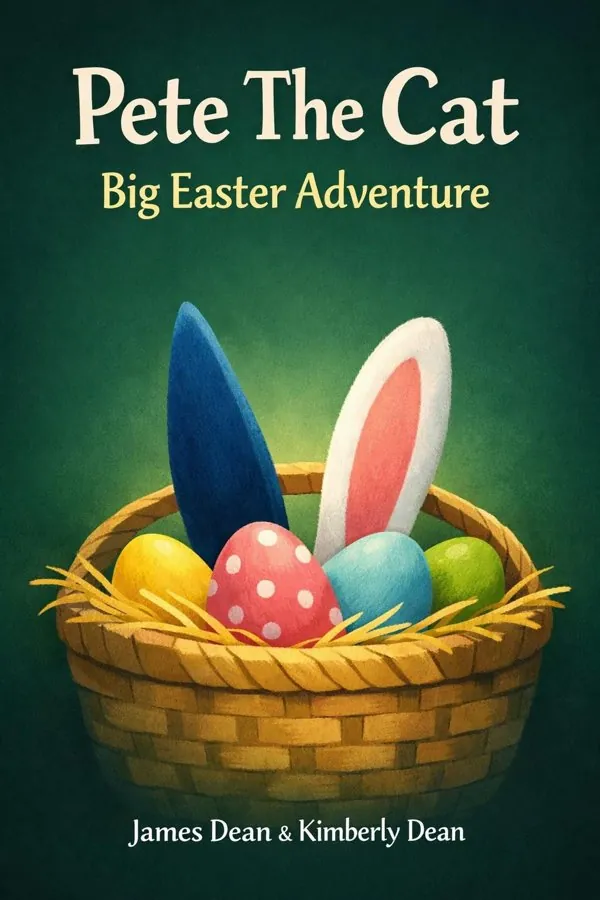
Pete The Cat: Big Easter Adventure: Summary & Key Insights
 10 min9 chaptersAudio available
Key Takeaways from Pete The Cat: Big Easter Adventure
One of the most powerful lessons children can learn is that confidence often grows through helping, not showing off.
Children often feel overwhelmed not because a task is impossible, but because it looks too large all at once.
Holiday traditions feel magical partly because they are familiar, but this story reminds readers that real magic often comes from flexibility.
Many children are taught to think of leadership as being in charge, but this story presents a gentler and more useful version: leadership through kindness.
The heart of many holiday books is not the candy, decorations, or excitement, but the emotion underneath them.
What Is Pete The Cat: Big Easter Adventure About?
Pete The Cat: Big Easter Adventure by James Dean, Kimberly Dean is a parenting book. Pete The Cat: Big Easter Adventure is a cheerful holiday picture book that turns a simple Easter mission into a warm lesson about responsibility, kindness, and staying calm when plans change. In this story, the Easter Bunny needs help, and Pete the Cat steps in to deliver eggs, candy, and joy to children everywhere. What follows is a playful adventure filled with colorful surprises, gentle humor, and the reassuring spirit that has made Pete such a beloved character for young readers. The book matters because it shows children that being helpful can be exciting, that big tasks become manageable one step at a time, and that generosity is one of the best parts of any celebration. For parents, it offers an easy way to talk about empathy, teamwork, and flexibility without sounding preachy. James Dean and Kimberly Dean are the creative team behind the widely loved Pete the Cat series, known for combining bright illustrations, rhythmic storytelling, and emotionally accessible lessons. Their authority comes from consistently crafting stories that entertain children while also supporting social-emotional growth and early literacy.
This FizzRead summary covers all 9 key chapters of Pete The Cat: Big Easter Adventure in approximately 10 minutes, distilling the most important ideas, arguments, and takeaways from James Dean, Kimberly Dean's work. Also available as an audio summary and Key Quotes Podcast.
Pete The Cat: Big Easter Adventure
Pete The Cat: Big Easter Adventure is a cheerful holiday picture book that turns a simple Easter mission into a warm lesson about responsibility, kindness, and staying calm when plans change. In this story, the Easter Bunny needs help, and Pete the Cat steps in to deliver eggs, candy, and joy to children everywhere. What follows is a playful adventure filled with colorful surprises, gentle humor, and the reassuring spirit that has made Pete such a beloved character for young readers. The book matters because it shows children that being helpful can be exciting, that big tasks become manageable one step at a time, and that generosity is one of the best parts of any celebration. For parents, it offers an easy way to talk about empathy, teamwork, and flexibility without sounding preachy. James Dean and Kimberly Dean are the creative team behind the widely loved Pete the Cat series, known for combining bright illustrations, rhythmic storytelling, and emotionally accessible lessons. Their authority comes from consistently crafting stories that entertain children while also supporting social-emotional growth and early literacy.
Who Should Read Pete The Cat: Big Easter Adventure?
This book is perfect for anyone interested in parenting and looking to gain actionable insights in a short read. Whether you're a student, professional, or lifelong learner, the key ideas from Pete The Cat: Big Easter Adventure by James Dean, Kimberly Dean will help you think differently.
- ✓Readers who enjoy parenting and want practical takeaways
- ✓Professionals looking to apply new ideas to their work and life
- ✓Anyone who wants the core insights of Pete The Cat: Big Easter Adventure in just 10 minutes
Want the full summary?
Get instant access to this book summary and 100K+ more with Fizz Moment.
Get Free SummaryAvailable on App Store • Free to download
Key Chapters
One of the most powerful lessons children can learn is that confidence often grows through helping, not showing off. In Pete The Cat: Big Easter Adventure, Pete is asked to take on an important responsibility when the Easter Bunny needs assistance. Pete does not become a hero by being louder, faster, or more impressive than everyone else. Instead, he becomes dependable. That distinction matters for children, because many stories celebrate dramatic bravery, while this one highlights calm usefulness.
The idea is simple but meaningful: when someone needs help, stepping in with a willing attitude can transform an ordinary day into an important one. Pete’s adventure shows that responsibility may arrive unexpectedly. He is not spending the story trying to prove he is special. He simply says yes to a task that matters. For young readers, that models a healthy view of confidence. Confidence is not just feeling good about yourself; it is trusting that you can do the next right thing.
Parents can apply this lesson in everyday life. A child who helps set the table, carry groceries, organize Easter baskets, or make cards for relatives is practicing the same mindset Pete demonstrates. These small acts build competence and self-belief. Teachers can use the story to ask students when they have helped someone who needed support. That discussion helps children connect the adventure to their own experiences.
The beauty of the book is that helping is presented as joyful rather than burdensome. Pete’s task is big, but the tone remains upbeat, showing children that responsibility and fun can coexist. This makes the lesson easier to absorb.
Actionable takeaway: Give children one meaningful helper role during holiday traditions and praise their reliability, not just their enthusiasm.
Children often feel overwhelmed not because a task is impossible, but because it looks too large all at once. Pete The Cat: Big Easter Adventure quietly teaches a useful mental skill: break a giant job into manageable steps. Pete faces an enormous challenge delivering Easter joy, yet the story unfolds in a way that makes the mission feel doable. That is an important model for young readers, who are still learning how to approach multi-step tasks without frustration.
This concept matters far beyond Easter. A child may feel intimidated by cleaning a room, finishing a school project, getting ready for guests, or preparing for a family event. Adults know these things can be broken down into parts, but children often need stories to help them visualize that process. Pete’s adventure works because it presents a large responsibility in a friendly, rhythmic way. He keeps moving forward instead of getting stuck on the total size of the job.
Parents can use this lesson by translating big expectations into clear steps: first put away books, then gather toys, then make the bed. During seasonal celebrations, children can help prepare by sorting eggs, placing baskets, or choosing where decorations go. Each small success builds momentum. Teachers can connect the book to classroom routines by showing students how to tackle assignments one instruction at a time.
The emotional value here is just as important as the practical one. When children learn to focus on the next step instead of the whole mountain, they feel less anxious and more capable. Pete models that calm progress beautifully.
Actionable takeaway: When a child faces a big task, help them name just three next steps and encourage them to start with the easiest one.
Holiday traditions feel magical partly because they are familiar, but this story reminds readers that real magic often comes from flexibility. In Pete The Cat: Big Easter Adventure, the expected plan changes when the Easter Bunny needs help. Rather than letting the disruption ruin the holiday, the story turns the change into an opportunity for generosity and creativity. That message is especially valuable for families, because celebrations rarely go exactly as planned.
Children can become attached to how things are supposed to happen. If egg hunts move indoors because of rain, if a favorite dessert is unavailable, or if relatives cannot attend, disappointment can quickly take over. Pete’s story offers another way of thinking: a change in plan does not mean a ruined experience. It may simply mean a different kind of adventure.
This lesson supports emotional resilience. Flexible children are better able to handle small frustrations and recover from unexpected shifts. Parents can reinforce the idea by talking openly about changes in a calm tone. For example, if a holiday event needs adjusting, adults can say, “This was not the original plan, but we can still make it fun.” The book gives families a shared reference point for that conversation.
There is also a deeper social lesson here. Flexibility helps children consider other people’s needs. Pete adjusts because someone else needs support. This makes flexibility feel generous rather than passive. It is not just about accepting change; it is about responding helpfully.
By presenting change as playful instead of threatening, the book helps children build a mindset that will benefit them in school, friendships, and family life.
Actionable takeaway: During special occasions, intentionally mention one change that happened and ask your child to help think of a cheerful solution.
Many children are taught to think of leadership as being in charge, but this story presents a gentler and more useful version: leadership through kindness. Pete the Cat takes responsibility for making sure others experience joy. He is not leading by commanding people. He is leading by serving a need. That lesson can reshape how children understand influence and character.
Kind leadership is especially important in early childhood, when social dynamics begin to take shape. Some children naturally seek attention or control, while others hesitate to step forward at all. Pete offers a third model. He is steady, considerate, and focused on the mission. His behavior suggests that the best leaders are not always the loudest; they are often the ones who bring calm, consistency, and care.
This idea can be applied in families and classrooms. A child who helps a younger sibling find hidden eggs, shares treats fairly, or makes sure everyone is included in a game is practicing leadership. In a classroom, students can lead by passing out supplies, welcoming a new classmate, or helping clean up after an activity. Adults can point out these moments explicitly, saying, “That was leadership because you helped everyone have a good experience.”
The story also reinforces that kindness is active. It is not only about being nice in feeling; it is about doing something that benefits others. Pete’s example shows that kindness can carry responsibility, effort, and follow-through.
When children connect kindness with strength rather than softness alone, they gain a more balanced understanding of what it means to be capable. That makes the message enduring.
Actionable takeaway: Praise children for “leading with kindness” whenever they help include, support, or encourage someone else.
The emotional atmosphere of a children’s book can be as important as its plot, and one reason Pete the Cat stories endure is their calm, reassuring tone. In Big Easter Adventure, the situation could easily feel stressful: a beloved holiday depends on someone stepping in. Yet the book never becomes frantic. Pete’s presence signals steadiness. That tone matters because young children often borrow emotional cues from the stories they hear.
A calm character facing a big task teaches emotional regulation without naming it directly. Pete does not model panic. He keeps going. This can be deeply comforting for children who worry when routines shift or when expectations feel big. Through repetition, rhythm, and bright visuals, the story creates the sense that challenges can be handled with composure.
Parents can use the book during busy holiday seasons precisely because it softens overstimulation. Easter can involve travel, sugar, visitors, and schedule changes. Reading a story where the main character responds with ease can help children settle and reset. Teachers may also find it useful before classroom celebrations, as it frames excitement within a secure emotional container.
The lesson extends beyond books. Adults influence children most when they model the same calm behavior. If something goes wrong during a holiday, a parent who pauses, smiles, and problem-solves resembles Pete more than they might realize. That emotional modeling often shapes children more than any spoken lecture.
By pairing a high-interest adventure with a soothing emotional rhythm, the book supports both enjoyment and emotional development.
Actionable takeaway: Read the story before a busy holiday event and talk with your child about how Pete stays calm when he has a lot to do.
Children engage more willingly with responsibility when it feels meaningful and imaginative. Pete The Cat: Big Easter Adventure captures this beautifully by turning a practical job into a playful mission. Delivering eggs and candy could be described as a list of chores, but in Pete’s world it becomes an adventure. That shift is not just entertaining; it is psychologically smart.
Young children often resist tasks they experience as dull, repetitive, or imposed. But when adults invite imagination into the process, cooperation increases. The book models how ordinary actions can be framed as exciting and purposeful. Pete is doing work, but the tone makes it feel like exploration and contribution. This helps children develop a more positive relationship with responsibility.
Families can apply this lesson in simple ways. Cleaning up after egg decorating can become a “color rescue mission.” Hiding eggs for siblings can become a “secret helper job.” Packing gifts for relatives can become “holiday delivery prep.” Teachers can use imaginative framing for classroom tasks too, such as asking students to be “celebration helpers” or “kindness captains.”
The deeper message is that attitude changes experience. Pete does not need a different task; he needs a way of seeing the task. That is a valuable life skill. While adults cannot make every obligation magical, they can help children discover that purpose and imagination often make effort feel lighter.
The book succeeds because it never separates joy from responsibility. Instead, it blends them. That is exactly why children are likely to remember its lessons.
Actionable takeaway: Reframe one holiday chore as an imaginative mission and invite your child to complete it as a special helper role.
Repetition in children’s literature is not accidental filler; it is one of the most effective tools for learning. Pete The Cat: Big Easter Adventure uses familiar rhythm, recurring structure, and predictable emotional beats to help young readers stay engaged and confident. When children can anticipate the flow of a story, they feel more capable as listeners and emerging readers. That sense of participation increases comprehension.
This matters especially for preschool and early elementary audiences. At these ages, children thrive on patterns. Repeated phrases, expected character behavior, and stable tone give them a framework for understanding what is happening. In Pete’s case, his familiar personality becomes part of the repetition. Readers know he will approach things with cool steadiness, and that expectation creates security.
Parents may notice that children ask for the same books repeatedly, especially around holidays. Rather than seeing this as a limitation, it helps to recognize it as practice. Repeated reading strengthens vocabulary, sequencing, memory, and expressive language. A seasonal book like this also becomes part of family ritual, deepening emotional connection as well as literacy.
Teachers can extend this by inviting children to predict what Pete might do next or by discussing recurring patterns in the story. Such conversations build narrative awareness. Even children who are not yet reading independently can feel successful when they recognize familiar story elements.
The book’s accessible structure is part of its value. It makes the lessons easier to revisit and the reading experience easier to share.
Actionable takeaway: Reread the book several times during the Easter season and invite your child to predict repeated patterns or favorite moments.
Adults sometimes underestimate picture books because their language is simple, but simplicity is often what makes a message usable. Pete The Cat: Big Easter Adventure does not offer a complex theory of child development. Instead, it delivers practical emotional wisdom through a story a young child can enjoy in one sitting. That is one reason books like this remain so valuable in parenting and early education.
Within its accessible format, the story touches on responsibility, adaptability, generosity, and emotional steadiness. It does so without lecturing, which is exactly why children are receptive to it. The wisdom is embedded in what Pete does, not in long explanations. This allows adults to return to the story later when relevant situations arise. If a child needs to help, handle a change in plans, or stay calm during a busy day, parents can say, “Remember how Pete handled a big job?”
This practical portability is a major strength of children’s literature. A short story can become a family reference point, a classroom discussion starter, or a bedtime routine that reinforces values over time. The simpler the narrative, the easier it is for children to remember and apply.
For adults, the reminder is equally useful: meaningful teaching does not always require long speeches. Sometimes a colorful character and a clear example do more than a complicated lesson. James Dean and Kimberly Dean understand that well, which is why Pete books resonate across so many homes and schools.
Actionable takeaway: Use the story as a reference tool by connecting Pete’s example to everyday moments when your child needs to help, adapt, or stay calm.
All Chapters in Pete The Cat: Big Easter Adventure
About the Authors
James Dean and Kimberly Dean are the creative duo behind the bestselling Pete the Cat series, one of the most recognizable brands in modern children’s literature. James Dean, an artist and illustrator, helped bring Pete to life through his bold colors, expressive images, and playful visual style. Kimberly Dean has contributed significantly to shaping the books’ stories, tone, and child-friendly lessons. Together, they have created books that blend humor, repetition, music-like rhythm, and social-emotional themes in ways that connect with young readers and the adults reading with them. Their work is widely used at home and in classrooms because it supports early literacy while keeping stories fun, reassuring, and memorable.
Get This Summary in Your Preferred Format
Read or listen to the Pete The Cat: Big Easter Adventure summary by James Dean, Kimberly Dean anytime, anywhere. FizzRead offers multiple formats so you can learn on your terms — all free.
Available formats: App · Audio · PDF · EPUB — All included free with FizzRead
Download Pete The Cat: Big Easter Adventure PDF and EPUB Summary
Key Quotes from Pete The Cat: Big Easter Adventure
“One of the most powerful lessons children can learn is that confidence often grows through helping, not showing off.”
“Children often feel overwhelmed not because a task is impossible, but because it looks too large all at once.”
“Holiday traditions feel magical partly because they are familiar, but this story reminds readers that real magic often comes from flexibility.”
“Many children are taught to think of leadership as being in charge, but this story presents a gentler and more useful version: leadership through kindness.”
“The heart of many holiday books is not the candy, decorations, or excitement, but the emotion underneath them.”
Frequently Asked Questions about Pete The Cat: Big Easter Adventure
Pete The Cat: Big Easter Adventure by James Dean, Kimberly Dean is a parenting book that explores key ideas across 9 chapters. Pete The Cat: Big Easter Adventure is a cheerful holiday picture book that turns a simple Easter mission into a warm lesson about responsibility, kindness, and staying calm when plans change. In this story, the Easter Bunny needs help, and Pete the Cat steps in to deliver eggs, candy, and joy to children everywhere. What follows is a playful adventure filled with colorful surprises, gentle humor, and the reassuring spirit that has made Pete such a beloved character for young readers. The book matters because it shows children that being helpful can be exciting, that big tasks become manageable one step at a time, and that generosity is one of the best parts of any celebration. For parents, it offers an easy way to talk about empathy, teamwork, and flexibility without sounding preachy. James Dean and Kimberly Dean are the creative team behind the widely loved Pete the Cat series, known for combining bright illustrations, rhythmic storytelling, and emotionally accessible lessons. Their authority comes from consistently crafting stories that entertain children while also supporting social-emotional growth and early literacy.
You Might Also Like

Never Enough
Jennifer Breheny Wallace
10 min
Bluey: Sleepytime
Joe Brumm
10 min
In My Heart: A Book of Feelings
Jo Witek
10 min
Love From The Crayons
Drew Daywalt, Oliver Jeffers
10 min
Smart Money Smart Kids: Raising the Next Generation to Win with Money
Dave Ramsey, Rachel Cruze
10 min
1-2-3 Magic: Effective Discipline for Children 2–12
Thomas W. Phelan
10 minBrowse by Category
Ready to read Pete The Cat: Big Easter Adventure?
Get the full summary and 100K+ more books with Fizz Moment.