
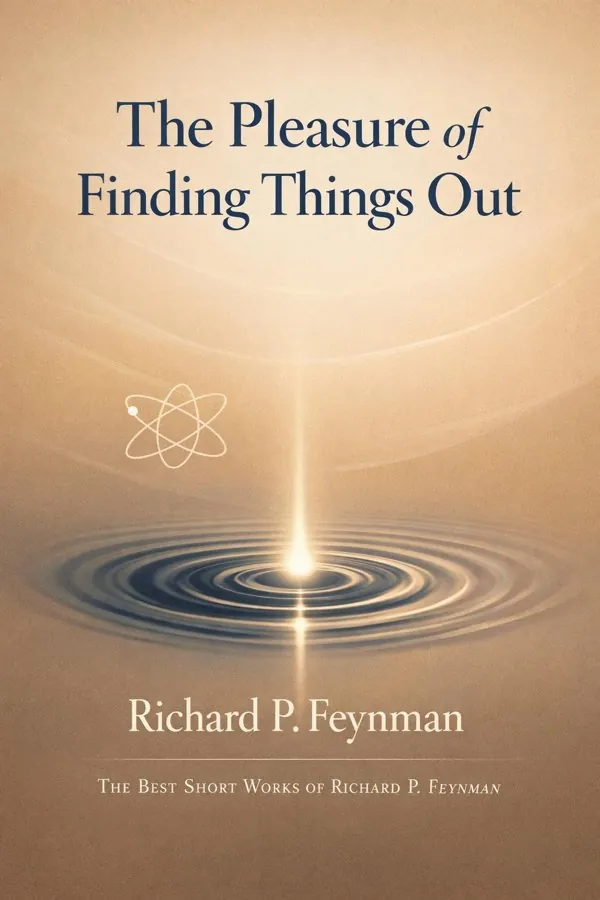
The Pleasure of Finding Things Out: The Best Short Works of Richard P. Feynman: Summary & Key Insights
 10 min10 chaptersAudio available
Key Takeaways from The Pleasure of Finding Things Out: The Best Short Works of Richard P. Feynman
Real understanding starts when we admit that we do not already know.
Long before digital technology became intimate and ubiquitous, Feynman saw that computing machines would transform how humans think, calculate, and explore problems.
History often remembers grand achievements from the top down, but Feynman’s “Los Alamos from Below” shows that reality looks different from the ground.
Feynman argues that the value of science cannot be reduced to gadgets, medicine, or industrial progress, valuable as those are.
One of Feynman’s most enduring ideas is “cargo cult science,” his term for practices that imitate the surface features of real science while lacking its core integrity.
What Is The Pleasure of Finding Things Out: The Best Short Works of Richard P. Feynman About?
The Pleasure of Finding Things Out: The Best Short Works of Richard P. Feynman by Richard P. Feynman is a popular_sci book spanning 10 pages. The Pleasure of Finding Things Out is a lively collection of essays, interviews, speeches, and autobiographical reflections by Richard P. Feynman, one of the twentieth century’s most brilliant and beloved physicists. Rather than presenting a single argument in a formal structure, the book offers something more intimate: Feynman’s mind at work. Across topics such as science, education, war research, religion, imagination, and intellectual honesty, he reveals a worldview built on curiosity, skepticism, humor, and delight in discovery. The title captures the book’s central spirit. For Feynman, the true reward of science was not prestige or certainty, but the joy of asking questions and uncovering how reality actually works. That makes this book matter far beyond physics. It is about how to think clearly, how to resist empty authority, and how to remain open to wonder without surrendering rigor. Feynman’s authority comes not only from winning the Nobel Prize for his work in quantum electrodynamics, but from his rare ability to explain difficult ideas in plain language while preserving their excitement. This collection is both a portrait of an extraordinary scientist and a guide to an intellectually adventurous life.
This FizzRead summary covers all 10 key chapters of The Pleasure of Finding Things Out: The Best Short Works of Richard P. Feynman in approximately 10 minutes, distilling the most important ideas, arguments, and takeaways from Richard P. Feynman's work. Also available as an audio summary and Key Quotes Podcast.
The Pleasure of Finding Things Out: The Best Short Works of Richard P. Feynman
The Pleasure of Finding Things Out is a lively collection of essays, interviews, speeches, and autobiographical reflections by Richard P. Feynman, one of the twentieth century’s most brilliant and beloved physicists. Rather than presenting a single argument in a formal structure, the book offers something more intimate: Feynman’s mind at work. Across topics such as science, education, war research, religion, imagination, and intellectual honesty, he reveals a worldview built on curiosity, skepticism, humor, and delight in discovery. The title captures the book’s central spirit. For Feynman, the true reward of science was not prestige or certainty, but the joy of asking questions and uncovering how reality actually works. That makes this book matter far beyond physics. It is about how to think clearly, how to resist empty authority, and how to remain open to wonder without surrendering rigor. Feynman’s authority comes not only from winning the Nobel Prize for his work in quantum electrodynamics, but from his rare ability to explain difficult ideas in plain language while preserving their excitement. This collection is both a portrait of an extraordinary scientist and a guide to an intellectually adventurous life.
Who Should Read The Pleasure of Finding Things Out: The Best Short Works of Richard P. Feynman?
This book is perfect for anyone interested in popular_sci and looking to gain actionable insights in a short read. Whether you're a student, professional, or lifelong learner, the key ideas from The Pleasure of Finding Things Out: The Best Short Works of Richard P. Feynman by Richard P. Feynman will help you think differently.
- ✓Readers who enjoy popular_sci and want practical takeaways
- ✓Professionals looking to apply new ideas to their work and life
- ✓Anyone who wants the core insights of The Pleasure of Finding Things Out: The Best Short Works of Richard P. Feynman in just 10 minutes
Want the full summary?
Get instant access to this book summary and 100K+ more with Fizz Moment.
Get Free SummaryAvailable on App Store • Free to download
Key Chapters
Real understanding starts when we admit that we do not already know. That is the animating principle behind Feynman’s famous idea of “the pleasure of finding things out.” He treats curiosity not as a childish impulse to be outgrown, but as one of the highest expressions of intelligence. The world becomes interesting when we stop pretending to have complete explanations and start asking better questions. Why do magnets repel? Why do leaves have patterns? Why do people cling to false certainty? For Feynman, the joy lies not only in the answer but in the movement of the mind toward it.
This attitude explains both his scientific work and his style as a teacher. He disliked memorized formulas detached from meaning. Instead, he wanted to rebuild knowledge from the ground up, testing whether he truly understood something well enough to explain it simply. Curiosity, in his hands, was active rather than decorative. It demanded observation, experimentation, and the willingness to say, “I might be wrong.”
That makes his perspective deeply practical. In everyday life, curiosity improves decision-making because it replaces assumptions with investigation. A manager can ask why a process keeps failing instead of blaming employees. A student can ask what a concept means instead of memorizing jargon. A parent can ask what a child is actually confused about instead of repeating instructions more loudly.
Feynman also reminds us that wonder and rigor belong together. You do not have to choose between delight and discipline. In fact, scientific thinking becomes more powerful when fueled by fascination.
Actionable takeaway: Pick one ordinary thing today—a shadow, a traffic light, a recipe, a rumor—and ask three deeper questions about how it works. Train yourself to enjoy inquiry, not just conclusions.
Long before digital technology became intimate and ubiquitous, Feynman saw that computing machines would transform how humans think, calculate, and explore problems. His reflections on future computing are striking because he understood both the power and the limits of machines. Computers can process enormous quantities of information at incredible speed, but they do not remove the need for human imagination. Instead, they amplify it when used well.
Feynman approached computing with the same playful seriousness he brought to physics. He was fascinated by the possibility of designing systems that could simulate complex processes, solve equations too tedious for hand calculation, and reveal patterns hidden inside overwhelming data. Yet he did not romanticize automation. A machine follows rules; a human decides which questions matter, how to interpret results, and whether the underlying assumptions are sensible.
That distinction is even more relevant today. We often confuse technological sophistication with understanding. A spreadsheet may produce a precise output, an algorithm may offer a prediction, and a software tool may generate an answer in seconds. But speed is not wisdom. If the inputs are weak, the model is flawed, or the question is badly framed, the result may be impressive-looking nonsense.
Feynman’s view encourages technological optimism grounded in intellectual responsibility. Use tools boldly, but never surrender judgment. A scientist using simulations must still ask whether the model captures reality. A business analyst using dashboards must still check whether the metrics reflect what actually matters. A student using educational software must still learn the principles, not just click through the interface.
Actionable takeaway: Whenever you use a digital tool to solve a problem, pause and ask three questions: What assumptions is this tool making? What could it be missing? How would I verify the result independently?
History often remembers grand achievements from the top down, but Feynman’s “Los Alamos from Below” shows that reality looks different from the ground. His account of life at Los Alamos during the Manhattan Project is not a triumphant official history. It is messy, human, absurd, clever, and morally complicated. Through stories about bureaucracy, pranks, security weaknesses, and improvised problem-solving, Feynman reveals how major scientific enterprises actually function: through ordinary people navigating extraordinary conditions.
This perspective matters because it demystifies genius. Breakthrough work does not happen in a pure realm of abstract thought. It happens amid confusion, institutional rules, personality clashes, shortcuts, mistakes, and moments of improvisation. Feynman’s stories make clear that intelligence includes practical ingenuity. He famously picked locks and exposed security flaws not merely for amusement, but to demonstrate that systems people trust are often more fragile than they appear.
The deeper lesson is that large institutions can drift into self-deception. They may create procedures that signal seriousness without ensuring effectiveness. Feynman noticed gaps between official confidence and actual performance, and he had little patience for such illusions. That skepticism later shaped his public role in investigating the Challenger disaster, where he again emphasized facts over appearances.
In modern organizations, this lesson is invaluable. A company may have polished policies but poor execution. A school may proclaim excellence while students remain confused. A hospital may track compliance while overlooking outcomes. Ground-level observation often reveals truths that strategic presentations hide.
Feynman’s account also reminds us that ethical reflection must accompany technical achievement. Capability is not the same as wisdom.
Actionable takeaway: In any complex system you belong to, spend time examining how things work at the operational level. Talk to the people doing the actual work, compare policy to practice, and look for gaps between appearance and reality.
Feynman argues that the value of science cannot be reduced to gadgets, medicine, or industrial progress, valuable as those are. Science matters because it cultivates a particular relationship to truth. It teaches us to tolerate uncertainty, to revise our beliefs in light of evidence, and to distinguish between what we wish were true and what can actually be supported. That habit of mind is one of civilization’s greatest achievements.
In “The Value of Science,” Feynman emphasizes three dimensions of scientific importance. First, science produces practical power: it helps us understand nature well enough to build tools, cure diseases, and solve material problems. Second, science deepens our sense of wonder. Knowing how stars form or how cells divide does not drain beauty from the world; it enlarges it. Third, science teaches humility. Every answer opens new questions, reminding us that knowledge is provisional and expanding.
This last point is especially important in public life. Societies are often tempted by ideologies that promise certainty. Science offers something less comforting but more reliable: disciplined doubt. It shows that progress comes not from pretending to be infallible, but from creating methods for detecting error.
Practical application appears everywhere. In health, a scientific mindset encourages people to ask whether a treatment has been tested rather than whether it sounds persuasive. In politics, it encourages examination of data rather than tribal slogans. In personal life, it encourages reflection on whether beliefs are based on evidence or mere repetition.
Feynman does not claim that science tells us what we ought to value. But it can help us see the world more clearly, and clearer seeing is indispensable for wiser choices.
Actionable takeaway: The next time you encounter a strong claim—in media, business, health, or conversation—ask, “What evidence would convince me this is wrong?” That question brings the spirit of science into daily life.
One of Feynman’s most enduring ideas is “cargo cult science,” his term for practices that imitate the surface features of real science while lacking its core integrity. The phrase comes from Pacific island communities that built mock airstrips and control towers in hopes of attracting planes they had once seen delivering goods. They copied the visible forms, but not the hidden mechanisms. Feynman uses this image to criticize research, education, and public discourse that preserve rituals of seriousness without the substance of honest inquiry.
At the heart of his warning is a moral demand: scientific integrity means bending over backward to show how you may be wrong. It is not enough to collect data that support your theory. You must also report what does not fit, examine alternative explanations, and resist presenting conclusions more confidently than the evidence allows. The temptation to perform expertise is powerful because institutions reward publication, authority, and certainty. But those incentives can corrupt truth-seeking.
This concept reaches far beyond laboratories. A business may track meaningless metrics because they look analytical. A school may emphasize standardized procedures while neglecting whether students actually understand. A self-help influencer may cite “studies” without methodological rigor. A workplace may hold endless strategy meetings that mimic serious thinking but avoid hard facts.
Feynman’s remedy is not cynicism but discipline. Be precise. Test assumptions. Invite criticism. Admit limitations. The point is not to destroy confidence, but to ground it in reality.
In a world flooded with polished presentations, dashboards, and expert branding, cargo cult thinking is everywhere. Feynman’s challenge is to care more about being accurate than appearing impressive.
Actionable takeaway: When evaluating any method or claim, separate form from function. Ask: What evidence shows this actually works, not just that it looks professional or scientific?
For Feynman, scientific culture is not merely the possession of technical knowledge. It is a social habit of open inquiry, respectful disagreement, and freedom to doubt. A society shaped by scientific culture does not require every citizen to become a physicist, but it does encourage people to think critically, tolerate ambiguity, and evaluate claims on their merits rather than their source. This culture is vital not only for laboratories, but for democracy, education, and civic life.
He distinguishes scientific culture from mere admiration of science. A society may celebrate scientists while still discouraging questioning. It may use advanced technology while remaining vulnerable to superstition, propaganda, and dogma. True scientific culture involves norms: arguments must be testable, criticism must be allowed, and authority must not be immune from challenge.
This idea has powerful implications. In education, scientific culture means students should not just learn results; they should learn how those results were discovered and why they remain open to revision. In organizations, it means leaders should welcome bad news early instead of punishing dissent. In public conversation, it means changing one’s mind should be seen as intellectual maturity rather than weakness.
Feynman’s position also highlights why freedom of thought matters so much. Discovery depends on the ability to ask inconvenient questions. Creativity withers in climates where conformity is rewarded more than truthfulness. Scientific culture therefore supports not only knowledge, but personal courage.
You can practice this culture in ordinary settings. In meetings, reward people who identify problems before they become crises. In family discussions, model curiosity instead of domination. In self-education, seek out sources that challenge your assumptions.
Actionable takeaway: Create one small environment this week—a team meeting, study group, or conversation—where disagreement is explicitly welcomed and evidence matters more than hierarchy.
Feynman believed that genuine learning is revealed by simplicity. If you cannot explain something in clear language, there is a good chance you do not fully understand it yourself. This does not mean every subject is easy. Physics is difficult, and many truths are mathematically subtle. But understanding should reduce confusion, not decorate it with jargon. Feynman repeatedly challenged educational systems that rewarded repetition over comprehension.
His teaching style embodied this conviction. He did not treat students as containers to be filled with formulas. He tried to lead them back to first principles, showing how complex ideas grow from simple questions. Why does an object move the way it does? What is energy? What do we really mean by probability? This method requires effort, because it forces both teacher and learner to confront gaps in understanding.
The practical value is enormous. In school, students who focus on underlying concepts retain knowledge longer than those who cram vocabulary. At work, professionals who can explain their process clearly are more likely to diagnose mistakes and collaborate well. In creative fields, simplifying an idea often reveals what is essential and what is unnecessary.
This approach is sometimes called the “Feynman technique”: choose a concept, explain it in plain language as if teaching a beginner, identify where you get stuck, return to the source material, and refine your explanation. The brilliance of the method is that it transforms confusion into a roadmap. Instead of hiding weak spots, it exposes them in a useful way.
Feynman also shows that simplicity is not anti-intellectual. It is a sign of respect—for truth, for learners, and for thought itself.
Actionable takeaway: Take one idea you think you know well and explain it in writing for a twelve-year-old. Wherever your explanation becomes vague, that is where your next learning should begin.
Science is often portrayed as cold fact collection, but Feynman shows that it also depends on imagination. In pieces such as “Richard Feynman Builds a Universe,” we see his delight in constructing understanding from basic principles, mentally assembling a cosmos from particles, forces, and patterns. Mathematics gives precision, but imagination gives direction. Without imaginative leaps, there would be no new models, no fresh questions, and no conceptual breakthroughs.
Feynman’s genius lay partly in his ability to move between intuition and formalism. He could picture interactions, invent diagrams, and play with analogies, then translate those insights into rigorous equations. This creative process is not unique to physics. Architects imagine structures before calculating loads. Entrepreneurs imagine unmet needs before building systems. Writers imagine characters before refining sentences. In every field, disciplined creativity joins vision to method.
What makes Feynman distinctive is that he never treated imagination as a license to ignore reality. The imagined model had to survive contact with evidence. That is the balance worth learning from. Creativity should be expansive in generating possibilities and strict in testing them.
This principle also helps with problem-solving. When stuck, people often search for the one correct answer too early. Feynman’s example suggests first generating multiple ways of seeing the problem. Can you draw it? Simplify it? Exaggerate it? Reverse it? Build it from zero? Such reframing often unlocks progress.
His work reminds us that the universe is not only understandable in fragments; it can be rebuilt in the mind through patient, imaginative effort. That possibility is one of science’s deepest pleasures.
Actionable takeaway: When facing a difficult problem, spend ten minutes creating at least three different mental models of it before choosing a solution. Imagination widens the path to understanding.
Feynman’s reflections on science and religion are notable for their honesty and restraint. He does not argue that science answers every human question, nor does he endorse comforting beliefs simply because they are emotionally appealing. Instead, he defends the ability to live with uncertainty. For him, not knowing is not a failure of character. It is a mature condition of intellectual life.
This stance is especially important where existential questions arise. Many people feel pressured to choose between rigid certainty and total nihilism. Feynman refuses that false choice. One can experience awe, moral seriousness, and reverence for existence without claiming more certainty than the evidence permits. Mystery, in his view, should not be sealed off with premature answers.
His approach has practical relevance far beyond religion. In careers, relationships, and public decisions, people often crave simple narratives. But many important choices must be made under incomplete knowledge. The challenge is to act responsibly without pretending ambiguity has disappeared. Feynman models a form of courage that accepts this tension.
He also suggests that scientific understanding can deepen rather than diminish wonder. Knowing something about atoms, stars, or evolution does not strip life of meaning. It can make existence feel even more astonishing. The universe need not be less beautiful because it is lawful.
For readers, the value of this perspective lies in its psychological freedom. You do not have to manufacture certainty to live thoughtfully. You can remain open, inquisitive, and ethically serious while acknowledging limits to your knowledge.
Actionable takeaway: The next time you feel pressured to take an absolute position on a complex question, try stating what you know, what you do not know, and what evidence would change your mind. Clarity begins with honest limits.
Across Feynman’s interviews and speeches on education, creativity, and learning, one pattern appears again and again: serious achievement is often fueled by a playful mind. Feynman was famous for treating intellectual work as an adventure. He played with equations, pursued side interests, asked odd questions, and followed problems because they were interesting, not because they were fashionable. This playful persistence made him unusually creative.
The lesson is not that discipline is unnecessary. Feynman worked hard and mastered difficult material. But he resisted the grim, performative seriousness that often surrounds achievement. Playfulness keeps attention alive. It reduces fear of failure, encourages experimentation, and allows unusual connections to emerge. People are more likely to discover something original when they feel permitted to explore.
This insight applies widely. A student can turn learning into experimentation by asking, “What happens if I solve this another way?” A designer can sketch absurd versions of a product before refining the practical one. A manager can invite unconventional ideas before narrowing options. In each case, play enlarges the search space.
Feynman also emphasizes persistence. Curiosity alone is not enough; discovery requires staying with a problem after the first excitement fades. The combination of play and perseverance is powerful because it sustains effort without making it joyless. You keep returning to the puzzle because it still feels alive.
In a culture obsessed with credentials and polished outcomes, Feynman reminds us that the creative process is often messy, exploratory, and deeply personal. You do not have to look impressive while learning. You only have to remain engaged.
Actionable takeaway: Choose one project this week and spend time experimenting without pressure for immediate usefulness. Follow one surprising question further than usual, and let disciplined play reopen your creativity.
All Chapters in The Pleasure of Finding Things Out: The Best Short Works of Richard P. Feynman
About the Author
Richard Phillips Feynman (1918–1988) was an American theoretical physicist, celebrated teacher, and one of the most influential scientific thinkers of the modern era. He made foundational contributions to quantum electrodynamics, work that earned him the Nobel Prize in Physics in 1965 alongside Julian Schwinger and Sin-Itiro Tomonaga. Feynman taught for many years at the California Institute of Technology, where his lectures became legendary for their clarity, energy, and originality. Beyond academic physics, he was widely admired for his curiosity, wit, and refusal to accept vague or secondhand explanations. His books, lectures, and interviews helped bring scientific thinking to a broad public audience. Feynman also gained recognition for his role in the Challenger disaster investigation, where he demonstrated his commitment to evidence, plain speaking, and intellectual honesty.
Get This Summary in Your Preferred Format
Read or listen to the The Pleasure of Finding Things Out: The Best Short Works of Richard P. Feynman summary by Richard P. Feynman anytime, anywhere. FizzRead offers multiple formats so you can learn on your terms — all free.
Available formats: App · Audio · PDF · EPUB — All included free with FizzRead
Download The Pleasure of Finding Things Out: The Best Short Works of Richard P. Feynman PDF and EPUB Summary
Key Quotes from The Pleasure of Finding Things Out: The Best Short Works of Richard P. Feynman
“Real understanding starts when we admit that we do not already know.”
“Long before digital technology became intimate and ubiquitous, Feynman saw that computing machines would transform how humans think, calculate, and explore problems.”
“History often remembers grand achievements from the top down, but Feynman’s “Los Alamos from Below” shows that reality looks different from the ground.”
“Feynman argues that the value of science cannot be reduced to gadgets, medicine, or industrial progress, valuable as those are.”
“One of Feynman’s most enduring ideas is “cargo cult science,” his term for practices that imitate the surface features of real science while lacking its core integrity.”
Frequently Asked Questions about The Pleasure of Finding Things Out: The Best Short Works of Richard P. Feynman
The Pleasure of Finding Things Out: The Best Short Works of Richard P. Feynman by Richard P. Feynman is a popular_sci book that explores key ideas across 10 chapters. The Pleasure of Finding Things Out is a lively collection of essays, interviews, speeches, and autobiographical reflections by Richard P. Feynman, one of the twentieth century’s most brilliant and beloved physicists. Rather than presenting a single argument in a formal structure, the book offers something more intimate: Feynman’s mind at work. Across topics such as science, education, war research, religion, imagination, and intellectual honesty, he reveals a worldview built on curiosity, skepticism, humor, and delight in discovery. The title captures the book’s central spirit. For Feynman, the true reward of science was not prestige or certainty, but the joy of asking questions and uncovering how reality actually works. That makes this book matter far beyond physics. It is about how to think clearly, how to resist empty authority, and how to remain open to wonder without surrendering rigor. Feynman’s authority comes not only from winning the Nobel Prize for his work in quantum electrodynamics, but from his rare ability to explain difficult ideas in plain language while preserving their excitement. This collection is both a portrait of an extraordinary scientist and a guide to an intellectually adventurous life.
More by Richard P. Feynman
Surely You're Joking, Mr. Feynman!
Richard P. Feynman
10 min
The Feynman Lectures on Physics
Richard P. Feynman
10 min
The Character of Physical Law
Richard P. Feynman
10 min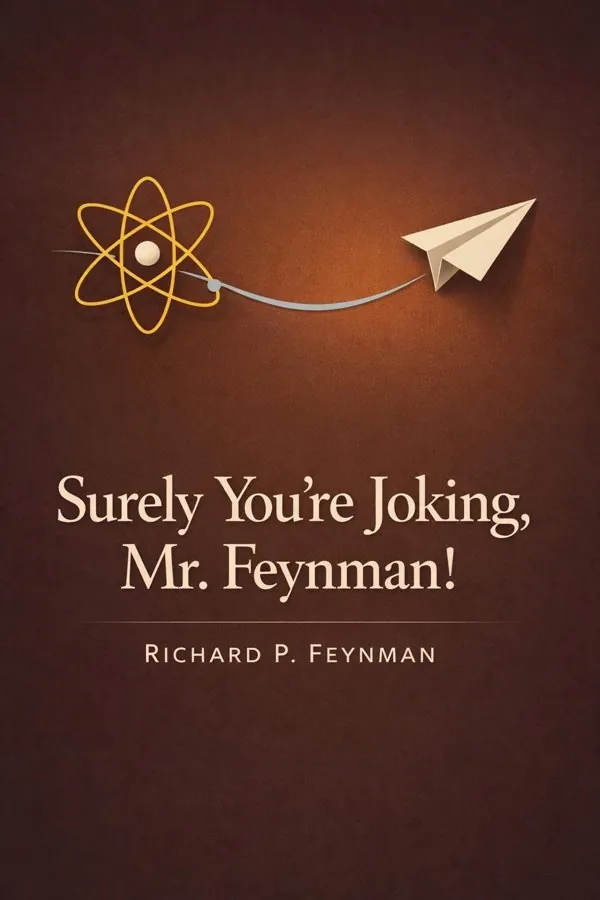
Surely You’re Joking, Mr. Feynman!: Adventures of a Curious Character
Richard P. Feynman
10 minYou Might Also Like

Structures: Or Why Things Don"t Fall Down
J.E. Gordon
10 min
The Road to Wigan Pier
George Orwell
10 min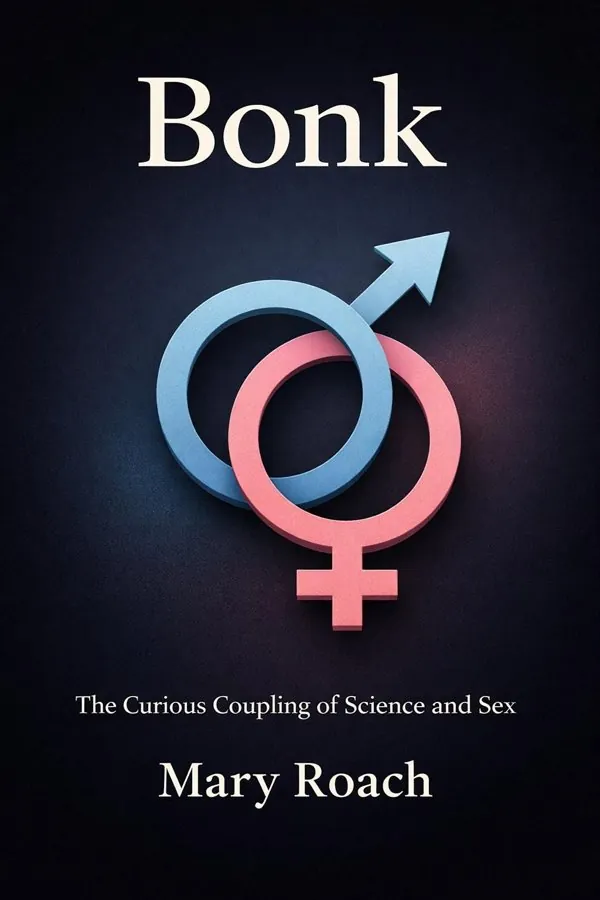
Bonk: The Curious Coupling of Science and Sex
Mary Roach
10 min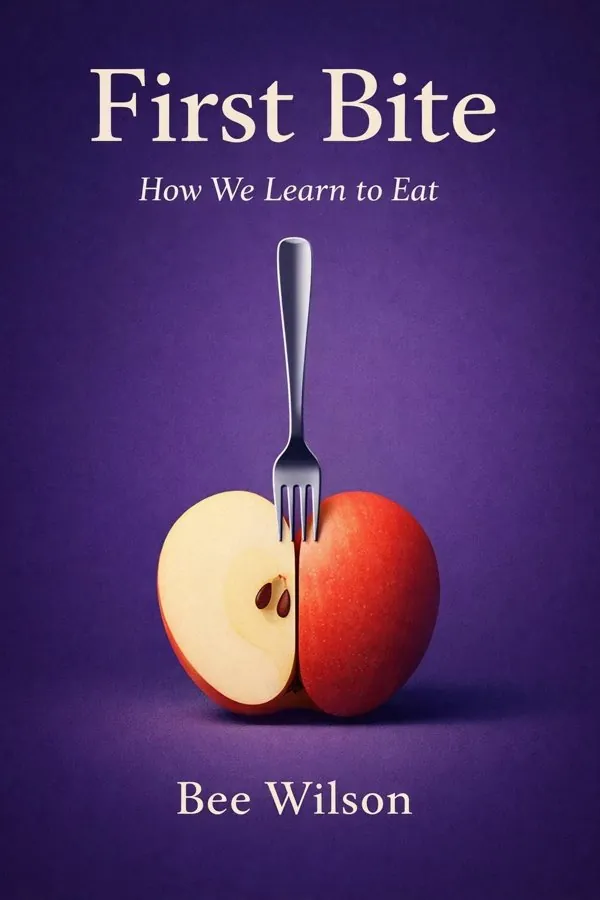
First Bite: How We Learn to Eat
Bee Wilson
10 min
In Pursuit Of The Unknown: 17 Equations That Changed The World
Ian Stewart
10 min
Napoleon's Buttons: 17 Molecules That Changed History
Penny Le Couteur and Jay Burreson
10 minBrowse by Category
Ready to read The Pleasure of Finding Things Out: The Best Short Works of Richard P. Feynman?
Get the full summary and 100K+ more books with Fizz Moment.