
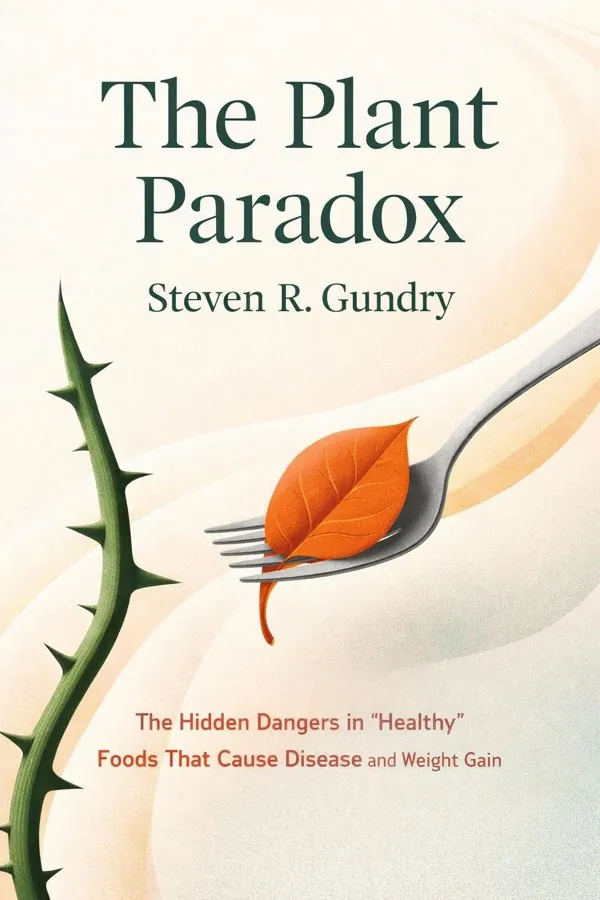
The Plant Paradox: The Hidden Dangers in 'Healthy' Foods That Cause Disease and Weight Gain: Summary & Key Insights
 10 min6 chaptersAudio available
What Is The Plant Paradox: The Hidden Dangers in 'Healthy' Foods That Cause Disease and Weight Gain About?
The Plant Paradox: The Hidden Dangers in 'Healthy' Foods That Cause Disease and Weight Gain by Steven R. Gundry is a nutrition book spanning 6 pages. In this groundbreaking book, Dr. Steven R. Gundry reveals how certain plant-based foods, long considered healthy, can actually contribute to inflammation, weight gain, and chronic disease. He introduces the concept of lectins—proteins found in many plants that can disrupt digestion and immune function—and provides a comprehensive program to avoid them. The book offers dietary guidance, recipes, and scientific explanations to help readers improve their health and vitality by rethinking what they eat.
This FizzRead summary covers all 6 key chapters of The Plant Paradox: The Hidden Dangers in 'Healthy' Foods That Cause Disease and Weight Gain in approximately 10 minutes, distilling the most important ideas, arguments, and takeaways from Steven R. Gundry's work. Also available as an audio summary and Key Quotes Podcast.
The Plant Paradox: The Hidden Dangers in 'Healthy' Foods That Cause Disease and Weight Gain
In this groundbreaking book, Dr. Steven R. Gundry reveals how certain plant-based foods, long considered healthy, can actually contribute to inflammation, weight gain, and chronic disease. He introduces the concept of lectins—proteins found in many plants that can disrupt digestion and immune function—and provides a comprehensive program to avoid them. The book offers dietary guidance, recipes, and scientific explanations to help readers improve their health and vitality by rethinking what they eat.
Who Should Read The Plant Paradox: The Hidden Dangers in 'Healthy' Foods That Cause Disease and Weight Gain?
This book is perfect for anyone interested in nutrition and looking to gain actionable insights in a short read. Whether you're a student, professional, or lifelong learner, the key ideas from The Plant Paradox: The Hidden Dangers in 'Healthy' Foods That Cause Disease and Weight Gain by Steven R. Gundry will help you think differently.
- ✓Readers who enjoy nutrition and want practical takeaways
- ✓Professionals looking to apply new ideas to their work and life
- ✓Anyone who wants the core insights of The Plant Paradox: The Hidden Dangers in 'Healthy' Foods That Cause Disease and Weight Gain in just 10 minutes
Want the full summary?
Get instant access to this book summary and 100K+ more with Fizz Moment.
Get Free SummaryAvailable on App Store • Free to download
Key Chapters
Plants are not passive food sources waiting to nourish us. They are intelligent, reactive organisms seeking survival. As a species without mobility, their best weapons are chemical. Over eons, plants have evolved an array of molecular defense mechanisms designed to deter predators — and one of the most potent categories among them is lectins. These proteins bind to sugars and cell membranes, disrupting biological communication between cells.
Imagine biting into a raw bean or grain thousands of years ago. That mild stomach discomfort or bitterness wasn’t accidental; it was a plant’s way of saying ‘don’t eat me.’ Humans, however, learned to exploit plants anyway. We devised cooking methods and agricultural manipulations to mitigate their toxicity. But here lies the paradox: as modern agriculture optimized yields and variety, we unknowingly magnified our exposure to these irritants.
Lectins are evolutionary shields for plants — but for humans, they translate into subtle long-term harm. They attach to the lining of the gut, puncturing what should be a secure barrier. This molecular sabotage can confuse our immune systems into attacking our own tissues. In nature, this mechanism would have worked beautifully for plants to deter consumption. In our daily diets, it creates autoimmune chaos.
So this paradox is about balance — understanding that not all plant compounds are friends. Vegetables are essential, yes, but not all are created equal. Our challenge is to identify plant foods that contribute to healing, and avoid those whose primary biochemical purpose is defense. Once you see plants through this lens, ‘healthy eating’ transforms from blind trust into conscious selection.
Let’s look closer at these lectins. They are carbohydrate-binding proteins found in nearly every plant species. Some lectins remain harmless, but others — particularly those in grains, legumes, and nightshade vegetables — are problematic. Wheat germ agglutinin, peanut agglutinin, and tomato lectin, for example, can all adhere stubbornly to the lining of your intestines, creating microscopic tears over time.
This process is not immediate. It’s slow, cumulative, and often masked by symptoms we consider normal: bloating, fatigue, joint pain, difficulty losing weight. Lectins exploit a vulnerability in humans — the gut’s permeability. Once the gut barrier weakens, lectins can enter the bloodstream, triggering immune responses. That’s when inflammation becomes chronic and systemic.
Through my clinical experiences, I’ve seen that patients who eliminate lectin-rich foods often experience profound transformations. Their autoimmune indicators decline, joint discomfort fades, and their metabolic flexibility returns. This reaction is not magic; it is biology finally operating without attack signals.
To understand lectins fully, you must grasp their purpose. They’re not malicious entities—they defend plants. But in our bodies, their biochemical affinity for certain cell sugars leads to confusion. Our immune system perceives consistent interference and reacts fiercely. To control this cascade, you must control exposure. Awareness is the first cure.
+ 4 more chapters — available in the FizzRead app
All Chapters in The Plant Paradox: The Hidden Dangers in 'Healthy' Foods That Cause Disease and Weight Gain
About the Author
Dr. Steven R. Gundry is a former cardiac surgeon and medical researcher who has become a leading expert in nutrition and preventive medicine. He is the founder of the International Heart and Lung Institute and the Center for Restorative Medicine. Gundry has authored several bestselling books on diet and health, focusing on the relationship between food, inflammation, and longevity.
Get This Summary in Your Preferred Format
Read or listen to the The Plant Paradox: The Hidden Dangers in 'Healthy' Foods That Cause Disease and Weight Gain summary by Steven R. Gundry anytime, anywhere. FizzRead offers multiple formats so you can learn on your terms — all free.
Available formats: App · Audio · PDF · EPUB — All included free with FizzRead
Download The Plant Paradox: The Hidden Dangers in 'Healthy' Foods That Cause Disease and Weight Gain PDF and EPUB Summary
Key Quotes from The Plant Paradox: The Hidden Dangers in 'Healthy' Foods That Cause Disease and Weight Gain
“Plants are not passive food sources waiting to nourish us.”
“They are carbohydrate-binding proteins found in nearly every plant species.”
Frequently Asked Questions about The Plant Paradox: The Hidden Dangers in 'Healthy' Foods That Cause Disease and Weight Gain
The Plant Paradox: The Hidden Dangers in 'Healthy' Foods That Cause Disease and Weight Gain by Steven R. Gundry is a nutrition book that explores key ideas across 6 chapters. In this groundbreaking book, Dr. Steven R. Gundry reveals how certain plant-based foods, long considered healthy, can actually contribute to inflammation, weight gain, and chronic disease. He introduces the concept of lectins—proteins found in many plants that can disrupt digestion and immune function—and provides a comprehensive program to avoid them. The book offers dietary guidance, recipes, and scientific explanations to help readers improve their health and vitality by rethinking what they eat.
More by Steven R. Gundry

You Might Also Like
Eating by the Seasons Cookbook: Seasonal Produce-Focused Recipes
Clare Foster
10 min
From Crook to Cook: Platinum Recipes from Tha Boss Dogg's Kitchen
Snoop Dogg with Ryan Ford
10 min
Juicing for Beginners: The Essential Guide to Juicing Recipes and Juicing for Weight Loss
Rockridge Press
10 min
The Food Therapist: Break Bad Habits, Eat with Intention, and Indulge Without Worry
Shira Lenchewski
10 min
The Mediterranean Diet Meal Plan: A 4-Week Meal Plan for Optimal Health and Weight Loss
Various Contributors
10 min
The Well Plated Cookbook: Simple, Wholesome Recipes for Everyday Meals
Erin Clarke
10 minBrowse by Category
Ready to read The Plant Paradox: The Hidden Dangers in 'Healthy' Foods That Cause Disease and Weight Gain?
Get the full summary and 100K+ more books with Fizz Moment.