
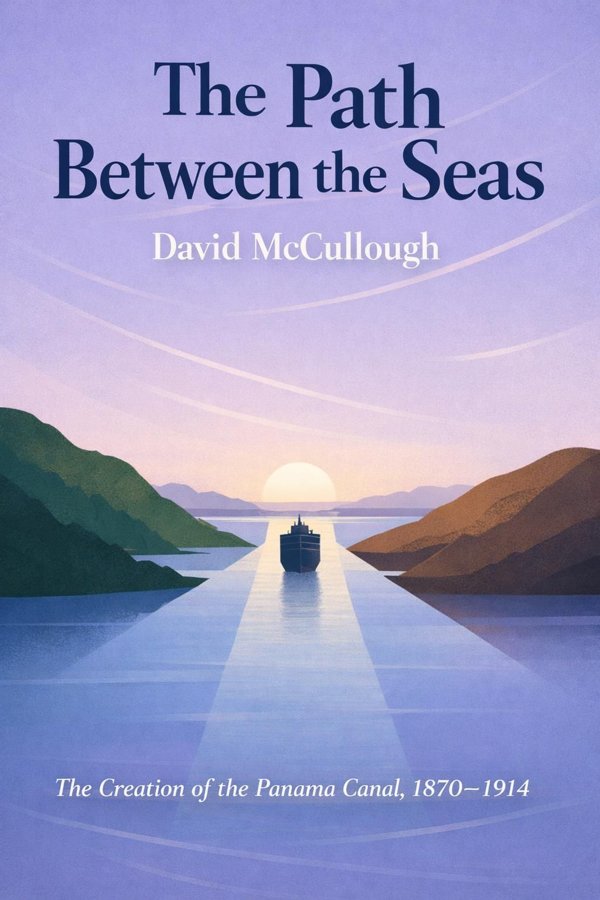
The Path Between the Seas: The Creation of the Panama Canal, 1870–1914: Summary & Key Insights
 10 min12 chaptersAudio available
What Is The Path Between the Seas: The Creation of the Panama Canal, 1870–1914 About?
The Path Between the Seas: The Creation of the Panama Canal, 1870–1914 by David McCullough is a world_history book spanning 12 pages. This historical work by David McCullough chronicles the monumental effort to construct the Panama Canal, tracing its conception, engineering challenges, political intrigues, and human cost. It explores the vision and perseverance that transformed a perilous dream into one of the greatest engineering achievements of the modern era.
This FizzRead summary covers all 12 key chapters of The Path Between the Seas: The Creation of the Panama Canal, 1870–1914 in approximately 10 minutes, distilling the most important ideas, arguments, and takeaways from David McCullough's work. Also available as an audio summary and Key Quotes Podcast.
The Path Between the Seas: The Creation of the Panama Canal, 1870–1914
This historical work by David McCullough chronicles the monumental effort to construct the Panama Canal, tracing its conception, engineering challenges, political intrigues, and human cost. It explores the vision and perseverance that transformed a perilous dream into one of the greatest engineering achievements of the modern era.
Who Should Read The Path Between the Seas: The Creation of the Panama Canal, 1870–1914?
This book is perfect for anyone interested in world_history and looking to gain actionable insights in a short read. Whether you're a student, professional, or lifelong learner, the key ideas from The Path Between the Seas: The Creation of the Panama Canal, 1870–1914 by David McCullough will help you think differently.
- ✓Readers who enjoy world_history and want practical takeaways
- ✓Professionals looking to apply new ideas to their work and life
- ✓Anyone who wants the core insights of The Path Between the Seas: The Creation of the Panama Canal, 1870–1914 in just 10 minutes
Want the full summary?
Get instant access to this book summary and 100K+ more with Fizz Moment.
Get Free SummaryAvailable on App Store • Free to download
Key Chapters
The idea of a canal between the Atlantic and Pacific Oceans was centuries old when Ferdinand de Lesseps, hero of the Suez Canal, emerged to make it tangible. The French initiative embodied the romantic faith of the 19th century—that engineering could tame nature easily, that the lessons of Suez could be transplanted effortlessly to the Americas.
De Lesseps, surrounded by prestige and the adulation of Europe, ignored the warnings of geographers and engineers who knew Panama’s terrain was entirely different from the Egyptian desert. His plan was to dig a sea-level canal through one of the most unstable landscapes on earth, across a mountain spine drenched in rain. Backed by the French government and a wave of public investment, the project began with grandeur, as if historical destiny were on its side. What unfolded instead was an encounter with the limits of optimism.
In recounting this phase, I wanted to capture the blend of genius and delusion that marked the era—the massive machinery shipped across oceans, the glittering ceremonies of commencement, and then the quiet descent into chaos. De Lesseps saw himself as continuing the legacy of the ancients; he believed human effort could flatten mountains. But in Panama, he discovered that enthusiasm could not substitute for engineering precision.
The French initiative was as much an expression of vanity as of vision. The dreams of investors back in Paris collided with tropical reality, and the distance between office ambition and jungle despair became fatal. My narrative draws you into the tension between those worlds—the Parisian salons glowing with confidence and the muddy camps teeming with fever and exhaustion. The French chapter of the canal is a cautionary tale of human overreach, and yet it was an essential first act. Without the French, there would be no American triumph later. Their failure illuminated what had to change: not merely in engineering methods, but in the understanding of nature itself.
Every project worthy of history meets its crucible. For the French canal, that crucible was the land and climate of Panama. The engineers, many drawn from the ranks of visionary builders who had conquered deserts and rivers elsewhere, soon found themselves humbled. The terrain was unforgiving—heavy rain eroded excavations almost as fast as they were dug. Landslides swallowed machinery. The Culebra Cut, intended to slice through the continental divide, became a nightmare of collapsing slopes and mortal accidents.
I wanted readers to experience this phase not as a chain of technical details but as a drama of endurance. These were men who believed every problem had a mechanical solution, and yet in Panama, their instruments were rendered useless by mud, rot, and disease. Their grand machines rusted where they stood. The jungle itself seemed to resist intrusion. Added to this were administrative chaos and corruption. Funds evaporated through mismanagement; reports were falsified to maintain public confidence. Behind these failures lay the tragedy of an enterprise led more by pride than by prudence.
The engineers struggled valiantly. Some displayed remarkable ingenuity, improvising new drainage methods, reshaping excavation plans, and laboring under impossible conditions. Yet their efforts were betrayed by larger systemic incompetence. There was no coherent plan; De Lesseps refused to abandon the sea-level concept even as experts pleaded for locks. In telling their story, I sought to honor the bravery of those who fought losing battles daily, men who arrived full of hope and left in despair. Their efforts laid not only physical groundwork but moral lessons—the necessity of humility before nature and truth before ambition.
+ 10 more chapters — available in the FizzRead app
All Chapters in The Path Between the Seas: The Creation of the Panama Canal, 1870–1914
About the Author
David McCullough (1933–2022) was an American historian, biographer, and lecturer known for his narrative style and meticulous research. He received two Pulitzer Prizes and two National Book Awards for his works on American history.
Get This Summary in Your Preferred Format
Read or listen to the The Path Between the Seas: The Creation of the Panama Canal, 1870–1914 summary by David McCullough anytime, anywhere. FizzRead offers multiple formats so you can learn on your terms — all free.
Available formats: App · Audio · PDF · EPUB — All included free with FizzRead
Download The Path Between the Seas: The Creation of the Panama Canal, 1870–1914 PDF and EPUB Summary
Key Quotes from The Path Between the Seas: The Creation of the Panama Canal, 1870–1914
“The idea of a canal between the Atlantic and Pacific Oceans was centuries old when Ferdinand de Lesseps, hero of the Suez Canal, emerged to make it tangible.”
“Every project worthy of history meets its crucible.”
Frequently Asked Questions about The Path Between the Seas: The Creation of the Panama Canal, 1870–1914
The Path Between the Seas: The Creation of the Panama Canal, 1870–1914 by David McCullough is a world_history book that explores key ideas across 12 chapters. This historical work by David McCullough chronicles the monumental effort to construct the Panama Canal, tracing its conception, engineering challenges, political intrigues, and human cost. It explores the vision and perseverance that transformed a perilous dream into one of the greatest engineering achievements of the modern era.
More by David McCullough
You Might Also Like
The Age of Capital
Eric Hobsbawm
10 min
The Gulag Archipelago
Aleksandr Solzhenitsyn
10 min
Jerusalem: The Biography
Simon Sebag Montefiore
10 min
The Anglo-Saxons
James Campbell
10 min
The Boer War
Thomas Pakenham
10 min
The Industrial Revolutionaries: The Making of the Modern World 1776–1914
Gavin Weightman
10 minBrowse by Category
Ready to read The Path Between the Seas: The Creation of the Panama Canal, 1870–1914?
Get the full summary and 100K+ more books with Fizz Moment.