
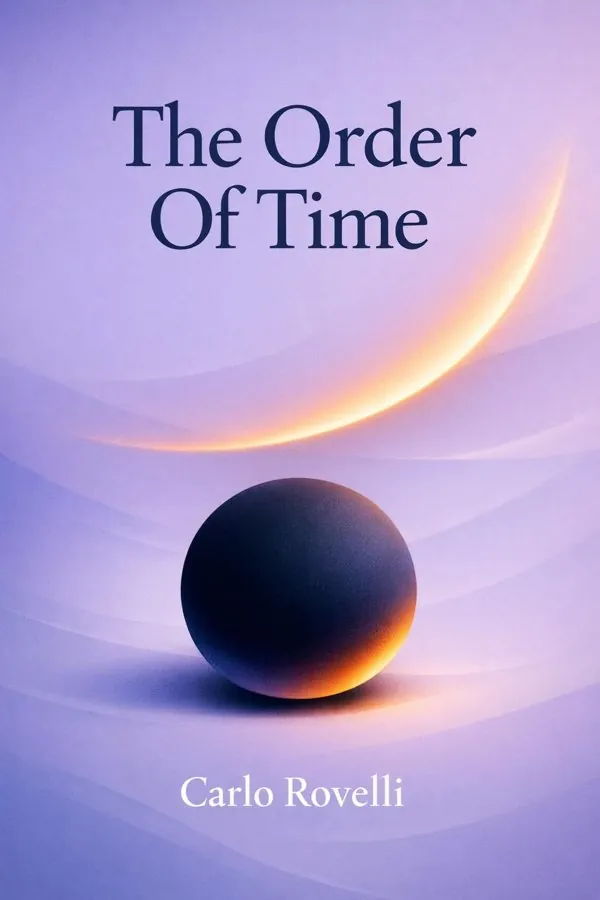
The Order Of Time: Summary & Key Insights
 10 min9 chaptersAudio available
Key Takeaways from The Order Of Time
The first shock of modern physics is this: the time you take for granted does not exist in the way you think it does.
One of the most destabilizing ideas in the book is that the present is not universal.
If time is not a universal container, then what is it?
To imagine a universe without time sounds impossible because our thoughts are soaked in temporal language.
If fundamental physics does not provide a strong arrow of time, why do we experience life as moving from past to future?
What Is The Order Of Time About?
The Order Of Time by Carlo Rovelli is a popular_sci book spanning 3 pages. What if time is not the solid, universal backdrop we assume it to be, but something fragile, local, and partly born from the way we experience the world? In The Order Of Time, Carlo Rovelli takes one of the most familiar features of life and shows how strange it becomes under the lens of modern physics. Drawing on Einstein’s relativity, thermodynamics, quantum theory, and philosophy, he argues that the tidy, shared timeline of everyday intuition does not survive scientific scrutiny. There is no single cosmic clock ticking uniformly for everyone and everything. Yet this is not a dry technical argument. Rovelli writes with unusual elegance, linking equations to memory, emotion, mortality, and human meaning. He reveals that time is not simply demolished by science; it is reinterpreted as a set of relationships, limits, and perspectives. That makes the book matter far beyond physics. It changes how we think about change, causality, identity, and our place in the universe. As a leading theoretical physicist and a major figure in quantum gravity, Rovelli brings both scientific authority and literary grace to one of the deepest questions we can ask: what, really, is time?
This FizzRead summary covers all 9 key chapters of The Order Of Time in approximately 10 minutes, distilling the most important ideas, arguments, and takeaways from Carlo Rovelli's work. Also available as an audio summary and Key Quotes Podcast.
The Order Of Time
What if time is not the solid, universal backdrop we assume it to be, but something fragile, local, and partly born from the way we experience the world? In The Order Of Time, Carlo Rovelli takes one of the most familiar features of life and shows how strange it becomes under the lens of modern physics. Drawing on Einstein’s relativity, thermodynamics, quantum theory, and philosophy, he argues that the tidy, shared timeline of everyday intuition does not survive scientific scrutiny. There is no single cosmic clock ticking uniformly for everyone and everything.
Yet this is not a dry technical argument. Rovelli writes with unusual elegance, linking equations to memory, emotion, mortality, and human meaning. He reveals that time is not simply demolished by science; it is reinterpreted as a set of relationships, limits, and perspectives. That makes the book matter far beyond physics. It changes how we think about change, causality, identity, and our place in the universe. As a leading theoretical physicist and a major figure in quantum gravity, Rovelli brings both scientific authority and literary grace to one of the deepest questions we can ask: what, really, is time?
Who Should Read The Order Of Time?
This book is perfect for anyone interested in popular_sci and looking to gain actionable insights in a short read. Whether you're a student, professional, or lifelong learner, the key ideas from The Order Of Time by Carlo Rovelli will help you think differently.
- ✓Readers who enjoy popular_sci and want practical takeaways
- ✓Professionals looking to apply new ideas to their work and life
- ✓Anyone who wants the core insights of The Order Of Time in just 10 minutes
Want the full summary?
Get instant access to this book summary and 100K+ more with Fizz Moment.
Get Free SummaryAvailable on App Store • Free to download
Key Chapters
The first shock of modern physics is this: the time you take for granted does not exist in the way you think it does. For centuries, classical physics seemed to confirm common sense. Newton described a universe unfolding within a single, universal time, flowing evenly everywhere, independent of events. It was a majestic picture: one cosmic stage, one clock, one sequence of before and after. But that picture began to crack when physics looked more carefully at nature.
Einstein’s theory of relativity showed that clocks do not all agree. Time passes differently depending on speed and gravity. A clock on a mountain ticks slightly faster than one at sea level. A fast-moving astronaut ages a little less than someone on Earth. These are not philosophical metaphors; they are measurable facts used in technologies like GPS, which must account for relativistic time differences to work accurately.
Rovelli uses this shift to unsettle our deepest habits of thought. There is no master timeline governing the universe. Different observers slice reality differently, and no single perspective has privileged access to the true present. The notion of a universal “now” turns out to be a human convenience, not a fundamental feature of reality.
In daily life, this matters because it teaches intellectual humility. Many things feel obvious only because our scale is limited. We live slowly, on one planet, under moderate gravity, so time appears uniform. Physics reminds us that experience is local, not absolute. The world is more relational than it first seems.
Actionable takeaway: Whenever something feels self-evident, ask whether it is a universal truth or just a product of your particular perspective and scale.
One of the most destabilizing ideas in the book is that the present is not universal. We often imagine that the world shares one common “now,” as if all events in the cosmos can be lined up on a single temporal page. Rovelli shows that relativity makes this impossible. Events that appear simultaneous from one point of view may not be simultaneous from another. The present, in the broad cosmic sense, is not a feature of the universe but a feature of our limited perspective.
This has profound consequences. It means that asking what is happening “right now” in a distant galaxy is not as straightforward as it sounds. There is no unique answer independent of a frame of reference. Our psychological sense of now arises from our biological and local situation, not from a universal structure written into reality.
Consider everyday communication. When you send a message across the world, there is already a delay. Scale that up to interstellar distances and the idea of a shared present becomes even less meaningful. The neat split between past, present, and future begins to blur. Physics does not deny change or events; it denies that they are all organized by one global clock.
Rovelli’s point is not to make life absurd, but to refine our understanding. The present matters deeply to us because our minds process information in a particular way. We organize memory, action, and anticipation around a local temporal horizon. That horizon is real for us, even if it is not universal.
Actionable takeaway: Treat the “present moment” less as a cosmic fact and more as a practical window shaped by your body, your environment, and your way of perceiving the world.
If time is not a universal container, then what is it? Rovelli’s answer is subtle: time is tied to change, relation, and difference rather than to an independent flow. We do not observe time itself; we observe things changing relative to one another. The position of clock hands changes relative to the dial. The Earth rotates relative to the Sun. Your body ages relative to your memories and records. What we call time is often an organized way of comparing processes.
This relational view is central to Rovelli’s physics. In modern science, especially in relativity and quantum gravity, the world is less like a machine running inside a timeline and more like a web of events influencing one another. Instead of asking, “What time is it for the universe?” we ask, “How does one process unfold relative to another?” That shift may seem technical, but it transforms the metaphysics of time.
A practical example appears in ordinary scheduling. We say a meeting is at 3:00 p.m., but what that really means is that a social event is coordinated with a clock process agreed upon by a community. Timekeeping is a relationship among systems, not a mystical flow. Likewise, biological time is tied to metabolism, circadian rhythms, and environmental cues.
This view also softens anxiety around time as an external force pushing us forward. Much of what we call time pressure is really a conflict among processes: obligations, energy, expectations, and attention. Thinking relationally can make life feel less like a race against an abstract enemy and more like an exercise in coordination.
Actionable takeaway: When you feel overwhelmed by “time,” identify the actual processes in conflict and adjust the relationships among them rather than blaming time itself.
To imagine a universe without time sounds impossible because our thoughts are soaked in temporal language. Yet Rovelli argues that at the deepest level of physics, time may not be fundamental at all. In efforts to unite general relativity with quantum mechanics, especially in quantum gravity, the standard variable we call time starts to disappear from the basic equations. Instead of a universe evolving inside time, we may have a universe made of events and relations from which time emerges only approximately.
This does not mean nothing happens. Rather, it means that our familiar temporal framework may be a large-scale approximation, like solidity emerging from atoms that are mostly empty space. The basic level of reality may be described without any universal clock parameter. Rovelli invites readers to accept a difficult but fruitful possibility: time might be like temperature, real and useful at certain scales, but not fundamental to the deepest layer of nature.
The application of this idea is not that you should stop using clocks. It is that categories we rely on every day may not be ultimate. Science often advances by revealing that what feels basic is emergent. Heat emerges from molecular motion; color emerges from interactions between light, matter, and perception; perhaps time emerges from more primitive physical relations.
This idea matters intellectually because it loosens our attachment to intuitive pictures. It also matters existentially because it shows that reality may be richer and stranger than our survival-oriented minds evolved to grasp. The universe need not mirror human common sense.
Actionable takeaway: Practice holding familiar concepts lightly. Useful ideas are not always fundamental truths, and intellectual flexibility is often the first step toward deeper understanding.
If fundamental physics does not provide a strong arrow of time, why do we experience life as moving from past to future? Rovelli points to thermodynamics, especially entropy. Entropy is often described as disorder, but more precisely it concerns the number of ways a system can be arranged while still appearing the same at a coarse level. The reason eggs scramble but do not spontaneously unscramble, and cream mixes into coffee rather than unmixing, is that systems naturally evolve from less probable ordered states toward more probable disordered ones.
This gives time direction. The laws of basic physics are often largely reversible, but entropy introduces asymmetry at the scale we inhabit. We remember the past, not the future, because traces and records are formed in one direction. A footprint, a scar, a photograph, a fossil: all are effects of irreversible processes. Our sense that time flows may be deeply connected to the way we, as thermodynamic beings, interact with a universe that began in a low-entropy state.
Everyday life is saturated with this principle. A tidy room tends to become messy unless energy is spent maintaining order. Your body requires constant metabolic work to remain organized. Businesses need systems because without effort, information degrades and confusion grows. The arrow of time is visible in maintenance, aging, memory, and decay.
Rovelli’s brilliance lies in showing that this is not a side issue but a major source of temporal experience. The future is not fundamentally “coming toward us”; rather, entropy structures what can be predicted, remembered, and transformed.
Actionable takeaway: Use the arrow of entropy practically—build routines, backups, and maintenance habits, because order rarely sustains itself without deliberate energy.
What we call the flow of time may say as much about the mind as it does about the cosmos. Rovelli emphasizes that human experience of time is shaped by memory, anticipation, and limited information. We feel located in a moving present because we retain records of some events and not others. We are organisms built to navigate change by storing traces of the past and projecting expectations into the future.
This helps explain why physics can undermine absolute time without eliminating lived time. You still feel duration, urgency, nostalgia, and suspense because your brain is a machine for ordering events in meaningful sequences. The psychological present is not an illusion in the trivial sense; it is a real feature of how conscious systems operate. But it should not be confused with a universal feature of the universe.
Think about how time seems to accelerate with age, slow during boredom, or disappear during intense concentration. These variations reveal that experienced time is elastic. A waiting room minute can feel longer than an hour in conversation. Trauma can freeze moments; routine can erase weeks. The clock measures one thing, consciousness another.
Recognizing this has practical value. Many modern frustrations come from conflating measured time with lived time. Productivity culture teaches us to optimize hours, but fulfillment often depends more on attention, novelty, and emotional presence. A day packed with tasks can feel empty, while a quiet afternoon deeply noticed can feel full.
Rovelli invites us to take seriously both science and subjectivity. Physics corrects our cosmology; psychology explains our intimacy with time. We need both perspectives to understand human life.
Actionable takeaway: Improve your experience of time by managing attention and memory—create meaningful moments, not just efficient schedules.
Few subjects feel more personal than time because time is inseparable from finitude. We measure birthdays, deadlines, aging, and loss. Rovelli does not treat time only as a technical scientific puzzle; he also explores its emotional and philosophical depth. Once the idea of a universal flowing time dissolves, what remains is not emptiness but a more intimate picture of existence as events, relations, and transformations.
This can be unsettling. If there is no grand cosmic present carrying us all forward, then our lives may seem smaller, more contingent. But Rovelli’s account can also be liberating. Meaning does not depend on occupying a privileged moment in a universe-centered timeline. It arises from participation in the world: from memory, care, action, and connection.
In practical terms, this invites a healthier relationship with mortality. We often fear time as something stealing our life from us. Rovelli’s perspective suggests another view: life is not a possession being drained by an external river, but a pattern of interactions unfolding within the world. What matters is not stopping time, which is impossible, but inhabiting our finite relations more fully.
This idea resonates in ordinary choices. Spending an evening with family, tending a garden, learning a skill, or preserving a story all become ways of shaping meaningful traces. Human life is temporal not because we ride a universal clock, but because we remember, hope, and affect what comes next in our local web of events.
Actionable takeaway: Replace the goal of “beating time” with the goal of deepening the relationships, memories, and contributions that make your finite life meaningful.
Rovelli’s book stands out because it refuses to separate scientific discovery from philosophical reflection. Time is not merely a quantity in equations; it is also a concept tied to language, causality, consciousness, and existence. Physics can tell us that simultaneity is relative and that fundamental equations may exclude time, but philosophy helps us ask what follows from that for meaning, knowledge, and human self-understanding.
Too often, science is presented as a collection of facts and philosophy as abstract speculation. Rovelli shows that the two are partners. Scientific revolutions force us to rethink categories once considered obvious. Philosophy helps us avoid confusion when ordinary language no longer fits the world uncovered by experiment and theory.
This matters beyond physics. In medicine, artificial intelligence, climate science, and economics, raw data alone never settles every important question. We also need conceptual clarity: What counts as explanation? What is a model? What is an observer? What assumptions are hidden in our language? Time is an especially powerful example because it sits at the boundary of measurement and meaning.
For readers, the practical lesson is that intellectual maturity requires crossing disciplines. A scientifically informed worldview should be philosophically aware, and philosophical reflection should stay accountable to evidence. The richest understanding emerges when precision and wonder meet.
Actionable takeaway: When confronting a difficult question, use both scientific and philosophical thinking—ask not only what the data says, but also what concepts and assumptions shape your interpretation.
At its core, The Order Of Time is not only a book about time; it is a book about learning to live with mystery without surrendering rigor. Rovelli repeatedly invites readers to let go of the comfort of familiar pictures. The reward is not confusion for its own sake, but wonder grounded in evidence. The universe becomes more astonishing, not less, when our naive certainties fall away.
This is an important corrective to two common errors. One is scientism, which treats science as a finished set of answers. The other is anti-intellectualism, which treats complexity as proof that nothing can be known. Rovelli occupies a wiser middle ground: much can be known, but what is known often unsettles the imagination. Real understanding is humbling.
In everyday life, this attitude has broad applications. It can make us better learners, because we become less attached to simplistic models. It can make us more patient in disagreement, because we see that even basic concepts like time are more intricate than common sense suggests. It can also restore awe to a world flattened by routine. A cup of cooling tea, your aging face in the mirror, the memory of childhood, and the orbit of satellites all become part of a deeper story about order, entropy, relation, and perception.
Rovelli’s achievement is to show that clarity and poetry do not have to be enemies. The dismantling of certainty can become a form of liberation, opening space for curiosity and reverence.
Actionable takeaway: Cultivate wonder by treating baffling ideas not as threats to understanding, but as invitations to expand it.
All Chapters in The Order Of Time
About the Author
Carlo Rovelli is an Italian theoretical physicist and one of the world’s most prominent thinkers in contemporary fundamental physics. He is especially known for his work on loop quantum gravity, a major attempt to reconcile Einstein’s general relativity with quantum mechanics. Beyond academia, Rovelli has earned international acclaim for bringing difficult scientific ideas to general readers with unusual clarity, elegance, and philosophical depth. He has taught and conducted research at several leading institutions, including Aix-Marseille University in France. His writing stands out for blending rigorous science with literary sensitivity, making abstract concepts feel vivid and human. Through books such as The Order Of Time, Rovelli has become an influential public intellectual, helping broad audiences engage with the deepest questions about reality, space, time, and our place in the universe.
Get This Summary in Your Preferred Format
Read or listen to the The Order Of Time summary by Carlo Rovelli anytime, anywhere. FizzRead offers multiple formats so you can learn on your terms — all free.
Available formats: App · Audio · PDF · EPUB — All included free with FizzRead
Download The Order Of Time PDF and EPUB Summary
Key Quotes from The Order Of Time
“The first shock of modern physics is this: the time you take for granted does not exist in the way you think it does.”
“One of the most destabilizing ideas in the book is that the present is not universal.”
“If time is not a universal container, then what is it?”
“To imagine a universe without time sounds impossible because our thoughts are soaked in temporal language.”
“If fundamental physics does not provide a strong arrow of time, why do we experience life as moving from past to future?”
Frequently Asked Questions about The Order Of Time
The Order Of Time by Carlo Rovelli is a popular_sci book that explores key ideas across 9 chapters. What if time is not the solid, universal backdrop we assume it to be, but something fragile, local, and partly born from the way we experience the world? In The Order Of Time, Carlo Rovelli takes one of the most familiar features of life and shows how strange it becomes under the lens of modern physics. Drawing on Einstein’s relativity, thermodynamics, quantum theory, and philosophy, he argues that the tidy, shared timeline of everyday intuition does not survive scientific scrutiny. There is no single cosmic clock ticking uniformly for everyone and everything. Yet this is not a dry technical argument. Rovelli writes with unusual elegance, linking equations to memory, emotion, mortality, and human meaning. He reveals that time is not simply demolished by science; it is reinterpreted as a set of relationships, limits, and perspectives. That makes the book matter far beyond physics. It changes how we think about change, causality, identity, and our place in the universe. As a leading theoretical physicist and a major figure in quantum gravity, Rovelli brings both scientific authority and literary grace to one of the deepest questions we can ask: what, really, is time?
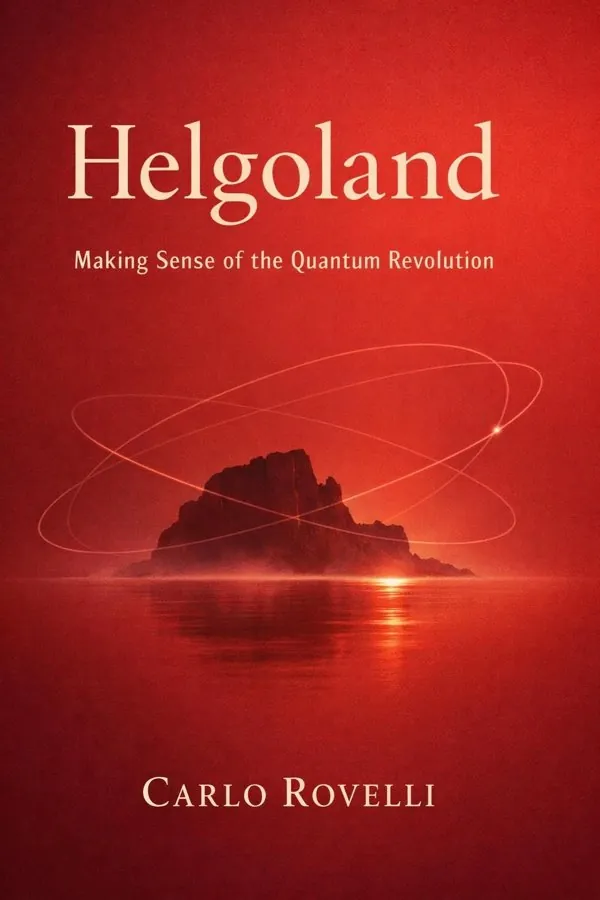
More by Carlo Rovelli
You Might Also Like
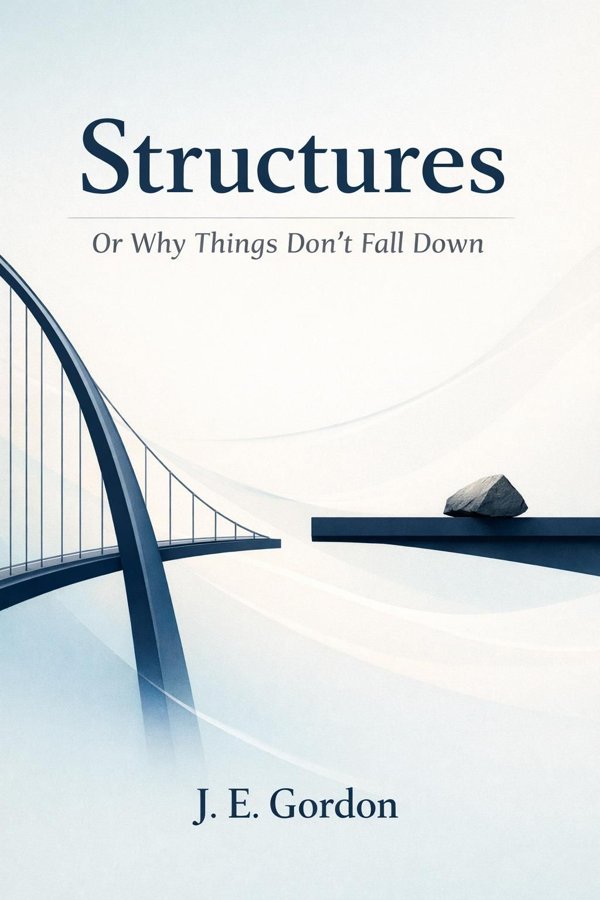
Structures: Or Why Things Don"t Fall Down
J.E. Gordon
10 min
The Road to Wigan Pier
George Orwell
10 min
Bonk: The Curious Coupling of Science and Sex
Mary Roach
10 min
First Bite: How We Learn to Eat
Bee Wilson
10 min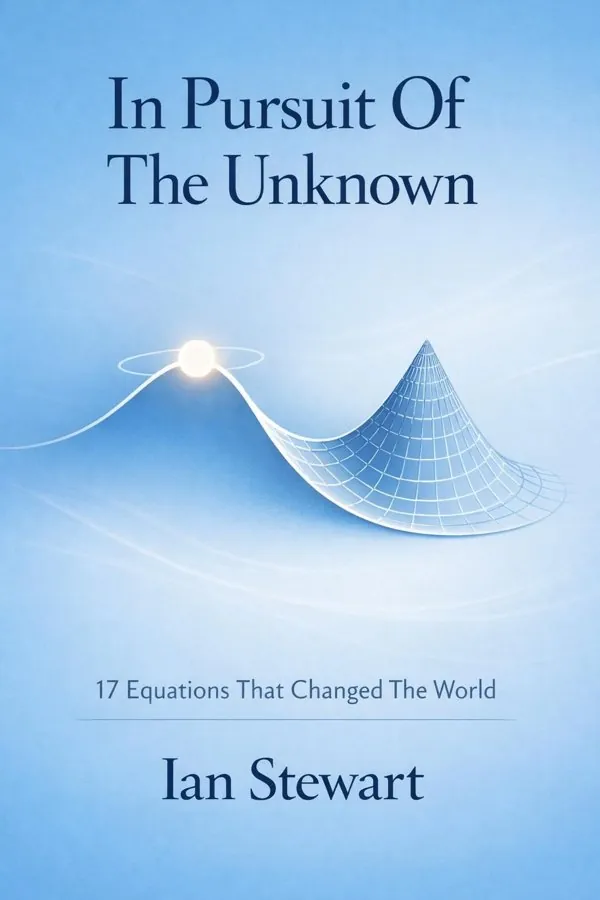
In Pursuit Of The Unknown: 17 Equations That Changed The World
Ian Stewart
10 min
Napoleon's Buttons: 17 Molecules That Changed History
Penny Le Couteur and Jay Burreson
10 minBrowse by Category
Ready to read The Order Of Time?
Get the full summary and 100K+ more books with Fizz Moment.