

The One Thing: Summary & Key Insights
by Gary Keller
 10 min9 chapters
Key Takeaways from The One Thing
A remarkable life is usually built on a surprisingly narrow path.
Big achievements often look dramatic from the outside, but they usually begin with one small, well-placed action.
What people call multitasking is usually just rapid task-switching, and the cost is higher than most realize.
Many common beliefs about success sound reasonable but quietly sabotage progress.
A goal without direction becomes wishful thinking.
What Is The One Thing About?
The One Thing by Gary Keller is a productivity book published in 2006 spanning 9 pages. Most people do not fail because they lack ambition. They fail because their attention is split in too many directions at once. In The One Thing, Gary Keller argues that extraordinary results come not from doing more, but from doing less with greater purpose. The book challenges the modern obsession with multitasking, balance, and endless to-do lists, showing instead that success is built by identifying the single most important task that makes everything else easier or unnecessary. Keller, co-founder of Keller Williams Realty and a highly successful entrepreneur, combines business experience with practical productivity principles to offer a simple but powerful operating system for work and life. His message is direct: if you want better results, stop treating everything as equally important. Whether you are leading a company, building a career, studying for exams, or trying to create more meaningful personal habits, this book matters because it cuts through the noise. It helps readers replace busyness with clarity, discipline, and momentum by focusing on what matters most right now.
This FizzRead summary covers all 9 key chapters of The One Thing in approximately 10 minutes, distilling the most important ideas, arguments, and takeaways from Gary Keller's work.
The One Thing
Most people do not fail because they lack ambition. They fail because their attention is split in too many directions at once. In The One Thing, Gary Keller argues that extraordinary results come not from doing more, but from doing less with greater purpose. The book challenges the modern obsession with multitasking, balance, and endless to-do lists, showing instead that success is built by identifying the single most important task that makes everything else easier or unnecessary. Keller, co-founder of Keller Williams Realty and a highly successful entrepreneur, combines business experience with practical productivity principles to offer a simple but powerful operating system for work and life. His message is direct: if you want better results, stop treating everything as equally important. Whether you are leading a company, building a career, studying for exams, or trying to create more meaningful personal habits, this book matters because it cuts through the noise. It helps readers replace busyness with clarity, discipline, and momentum by focusing on what matters most right now.
Who Should Read The One Thing?
This book is perfect for anyone interested in productivity and looking to gain actionable insights in a short read. Whether you're a student, professional, or lifelong learner, the key ideas from The One Thing by Gary Keller will help you think differently.
- ✓Readers who enjoy productivity and want practical takeaways
- ✓Professionals looking to apply new ideas to their work and life
- ✓Anyone who wants the core insights of The One Thing in just 10 minutes
Want the full summary?
Get instant access to this book summary and 100K+ more with Fizz Moment.
Get Free SummaryAvailable on App Store • Free to download
Key Chapters
A remarkable life is usually built on a surprisingly narrow path. Keller’s central claim is that extraordinary success is never the result of spreading yourself evenly across dozens of priorities. Instead, it comes from concentrating your energy on the one activity that has the greatest leverage. He captures this through the book’s defining question: What’s the ONE Thing I can do such that by doing it everything else will be easier or unnecessary? This question forces you to move beyond busyness and into effectiveness.
The idea is simple, but its implications are profound. Most people begin their day reacting to emails, messages, meetings, and small tasks that feel urgent. By the evening, they may be exhausted, yet have made little progress on what truly matters. Keller argues that progress accelerates when you identify the task at the center of your most important goal and give it priority over everything else. A salesperson might discover that lead generation matters more than updating spreadsheets. A student may realize deep study matters more than color-coding notes. An entrepreneur may find that building a repeatable system matters more than responding to every minor issue.
The power of this approach lies in sequencing. Once the most important action is completed, many other tasks become simpler, less necessary, or irrelevant. This does not mean other responsibilities disappear, but it does mean they should stop competing for first place.
Actionable takeaway: Before starting work each day, write down your biggest goal and ask the focusing question. Protect the answer with time, attention, and energy before doing anything else.
Big achievements often look dramatic from the outside, but they usually begin with one small, well-placed action. Keller uses the domino effect to explain how focused effort creates disproportionate results. A tiny domino can knock over a larger one, which can knock over an even larger one, and so on. In the same way, the right first priority can trigger a chain reaction of progress.
This matters because people often underestimate the power of the next step. They imagine success as a giant leap and feel overwhelmed by the distance between where they are and where they want to be. Keller reframes this. You do not need to solve your entire future today. You need to identify the next domino—the one task that starts momentum. If you want to write a book, your first domino may be outlining the central argument. If you want to get fit, it may be scheduling a recurring workout time and preparing your environment. If you want to grow a business, it may be defining the most profitable customer segment.
The domino effect also teaches patience. Massive outcomes are usually the accumulated result of small but aligned actions repeated over time. What looks like overnight success is often the final visible domino in a long sequence that others never noticed.
A practical application is to think in cascading levels: what is your someday goal, what must happen this year, this month, this week, today, and right now to move toward it? This backward planning makes the next move obvious and manageable.
Actionable takeaway: Pick one meaningful long-term goal, then work backward until you identify the single next action you can complete today to start your domino chain.
What people call multitasking is usually just rapid task-switching, and the cost is higher than most realize. Keller challenges the popular belief that juggling many things at once is a sign of competence. In reality, constantly shifting attention reduces quality, slows completion, increases mistakes, and drains mental energy. Focus fractured is performance compromised.
When you switch between tasks, your brain pays a transition penalty. A manager writing a strategic proposal while checking messages every few minutes may feel productive, but the interrupted work rarely reaches the depth or clarity of uninterrupted thinking. A student trying to study while texting and watching videos may spend hours in motion without truly learning. This is why busy people are not always effective people.
The modern work environment rewards responsiveness, but Keller warns that responsiveness can become a trap. If every notification gets equal access to your mind, your most important goals will always be held hostage by the least important interruptions. Deep work requires uninterrupted concentration, and meaningful results often depend on stretches of time where your attention is fully committed.
This does not mean life will be perfectly interruption-free. It means you must consciously design conditions that support focus: silence devices, close unnecessary tabs, set communication windows, and tell others when you are unavailable. Even one hour of protected concentration can produce more progress than a day of fragmented effort.
Actionable takeaway: Choose one daily focus block of at least 60 minutes, remove all distractions, and work on a single high-impact task until the block ends.
Many common beliefs about success sound reasonable but quietly sabotage progress. Keller identifies several myths, or what he calls lies, that distort how people work and live: everything matters equally, multitasking works, discipline is endless, willpower is always available, a balanced life is ideal, and big goals are bad. These ideas are widely accepted, yet they often keep people trapped in mediocrity.
Take the belief that everything matters equally. If every task receives the same urgency, then priorities disappear. Or consider the ideal of perfect balance. While balance sounds healthy, Keller argues that important achievements require temporary imbalance. When one area matters most in a given moment, it deserves disproportionate attention. Trying to keep every part of life in perfect symmetry every day usually leads to shallow progress everywhere.
Another damaging myth is that discipline must be constant. Keller suggests that success depends less on heroic self-control and more on establishing the right habits. You do not need endless discipline if you design routines that make key behaviors automatic. Similarly, big goals are not dangerous by default; they are energizing when paired with a clear next step.
These myths are powerful because they flatter us. They make scattered effort feel acceptable. But real productivity begins when we stop protecting comforting assumptions and start asking what actually produces results.
Actionable takeaway: Identify one productivity belief you rarely question—such as multitasking or balance—and test the opposite approach for a week to see which produces better outcomes.
A goal without direction becomes wishful thinking. Keller advocates a method he calls goal setting to the now, which links long-term vision to immediate action through a logical chain. Rather than asking only what you want someday, you ask what needs to happen this year, this month, this week, today, and in this moment to make that future real.
This approach solves a major problem in personal development: the gap between inspiration and execution. Many people have ambitious dreams but no mechanism for translating them into consistent behavior. They set goals that are too vague, too broad, or too disconnected from daily decisions. Keller’s sequential method makes goals practical by forcing alignment between distant aspirations and present commitments.
Imagine someone who wants financial freedom. That someday goal may require building a business or increasing investment income. This year’s goal might be to raise revenue by a specific amount. This month’s goal could be launching a new offer. This week’s goal might be contacting ten qualified prospects. Today’s goal may be drafting the sales message. Right now’s task might be writing the opening paragraph. Suddenly the future is no longer abstract.
The method also increases confidence. People gain momentum when they know exactly what matters next. It reduces overwhelm because you stop carrying the whole mountain in your head and focus on the step under your feet.
Actionable takeaway: Write one someday goal, then break it down into year, month, week, day, and now. Start with the “now” item and complete it before choosing anything else.
What gets scheduled gets done, and what does not gets pushed aside by convenience. Keller emphasizes time blocking as one of the most practical tools in the book. If your most important work is left to “whenever I get time,” it will usually lose to meetings, email, errands, and other people’s agendas. The calendar reveals your real priorities more honestly than your intentions do.
Time blocking means reserving protected chunks of time for your ONE Thing before the day fills up. This is not merely a planning trick; it is a commitment device. By assigning time to high-leverage work in advance, you reduce the need to renegotiate with yourself when distractions appear. Instead of hoping to write, practice, strategize, or build later, you create a concrete appointment with your future results.
Keller recommends blocking time for three things in particular: your time off, your ONE Thing, and planning. This order may seem surprising, but it reflects sustainability. Rest supports performance, focused work drives progress, and planning keeps attention aligned. A business owner might block 8:00 to 10:00 each morning for revenue-generating activity. A writer might reserve early hours for drafting before checking communication. A parent studying part-time might carve out recurring evening sessions for coursework.
The value of time blocking increases when others know to respect it. Boundaries may feel uncomfortable at first, but they are often the difference between living intentionally and living reactively.
Actionable takeaway: Put your most important recurring task on your calendar for the same time each day or week, and treat it as non-negotiable for the next 30 days.
The quality of your decisions often depends less on character than on timing. Keller argues that willpower is not an unlimited resource available on demand. It rises and falls throughout the day, and if you rely on it casually, your most important work may be attempted when your mental fuel is already depleted.
This insight changes how productivity should be designed. Many people spend their best cognitive energy on low-value tasks such as inbox maintenance, social media, or administrative cleanup, then expect themselves to tackle deep strategic work later when they are tired. Keller suggests the opposite: use your strongest hours for your ONE Thing. For many people, that means the morning, though individual rhythms vary.
Managing willpower also means reducing unnecessary decisions. Habits, routines, and prepared environments preserve mental energy for what matters. A consultant who begins each day with a predefined priority wastes less energy choosing what to do. A person trying to eat better benefits from preparing meals in advance instead of negotiating food choices while stressed. A manager can reserve certain hours for meetings and others for focused work to avoid constant context switching.
This principle also encourages compassion. If you struggle to make progress late at night after a demanding day, the problem may not be laziness. It may be poor energy allocation. Better systems often outperform stronger intentions.
Actionable takeaway: Track your energy for one week, identify your peak mental hours, and reserve that time exclusively for the task that matters most.
Balance sounds admirable, but in practice it can become an excuse for never going all in. Keller makes a provocative argument: extraordinary results require counterbalancing rather than perfect balance. In any meaningful pursuit, some areas will receive more attention than others depending on what matters most in the moment.
This does not mean neglecting health, family, or integrity. It means accepting that equal attention at all times is unrealistic. If you are launching a business, preparing for exams, caring for a newborn, or completing a major project, life will temporarily tilt. Trying to maintain symmetry across every domain every day can prevent major progress anywhere. Success often requires short-term disproportionality in service of long-term purpose.
Keller distinguishes between work life and personal life in an important way. At work, some imbalance may be necessary to achieve results. In personal life, however, chronic neglect carries serious costs. The lesson is not to become obsessive and blind, but to be intentional about where intensity belongs and for how long.
A practical example: an employee aiming for promotion may dedicate a focused quarter to mastering a high-value skill while still preserving key personal commitments. A writer may spend mornings in deep concentration but keep evenings for family. Counterbalancing asks, what deserves extra weight right now, and how will I protect what must not be lost?
Actionable takeaway: Decide which area of life deserves disproportionate focus this season, then consciously set minimum standards to protect the relationships and habits you cannot afford to sacrifice.
Productivity without meaning can make you efficient at the wrong things. Keller builds his framework around three connected ideas: purpose, priority, and productivity. Purpose answers why you are doing what you do. Priority identifies what matters most in service of that purpose. Productivity is the disciplined execution of that priority. When these three align, effort gains force and direction.
Many people struggle not because they lack motivation, but because they have not connected daily action to a larger reason. If work feels random or purely reactive, focus becomes difficult. Purpose creates emotional energy. It gives context to sacrifice and helps you endure repetition, boredom, or setbacks. A teacher’s purpose may be shaping young lives. An entrepreneur’s purpose may be creating freedom, solving a real problem, or providing opportunities for others. A parent returning to school may be driven by a better future for the family.
Once purpose is clear, priority becomes easier. You can judge opportunities, tasks, and commitments according to whether they move you toward what matters. Productivity then stops being about squeezing more into the day and becomes about doing the right thing consistently.
This framework is especially useful during overwhelm. Instead of asking, “How can I get everything done?” Keller’s model asks, “What matters most, and why?” That shift often reduces anxiety and increases conviction.
Actionable takeaway: Write a one-sentence statement of purpose for your current season of life, then identify the single recurring priority that best expresses it in your daily schedule.
All Chapters in The One Thing
About the Author
Gary Keller is an American entrepreneur, author, and business strategist best known as the co-founder of Keller Williams Realty, one of the world’s largest real estate companies. Over the course of his career, he built a reputation for helping individuals and organizations achieve sustained growth through clear priorities, strong systems, and focused execution. In addition to leading a major business, Keller has written influential books on success, real estate, and productivity. His work combines practical business experience with straightforward guidance that readers can apply immediately. The One Thing reflects his belief that extraordinary outcomes come from narrowing attention to what matters most rather than chasing endless activity. His ideas have shaped leaders, sales professionals, and entrepreneurs seeking better results through simplicity and discipline.
Get This Summary in Your Preferred Format
Read or listen to the The One Thing summary by Gary Keller anytime, anywhere. FizzRead offers multiple formats so you can learn on your terms — all free.
Available formats: App · Audio · PDF · EPUB — All included free with FizzRead
Download The One Thing PDF and EPUB Summary
Key Quotes from The One Thing
“A remarkable life is usually built on a surprisingly narrow path.”
“Big achievements often look dramatic from the outside, but they usually begin with one small, well-placed action.”
“What people call multitasking is usually just rapid task-switching, and the cost is higher than most realize.”
“Many common beliefs about success sound reasonable but quietly sabotage progress.”
“A goal without direction becomes wishful thinking.”
Frequently Asked Questions about The One Thing
The One Thing by Gary Keller is a productivity book that explores key ideas across 9 chapters. Most people do not fail because they lack ambition. They fail because their attention is split in too many directions at once. In The One Thing, Gary Keller argues that extraordinary results come not from doing more, but from doing less with greater purpose. The book challenges the modern obsession with multitasking, balance, and endless to-do lists, showing instead that success is built by identifying the single most important task that makes everything else easier or unnecessary. Keller, co-founder of Keller Williams Realty and a highly successful entrepreneur, combines business experience with practical productivity principles to offer a simple but powerful operating system for work and life. His message is direct: if you want better results, stop treating everything as equally important. Whether you are leading a company, building a career, studying for exams, or trying to create more meaningful personal habits, this book matters because it cuts through the noise. It helps readers replace busyness with clarity, discipline, and momentum by focusing on what matters most right now.
Compare The One Thing

More by Gary Keller
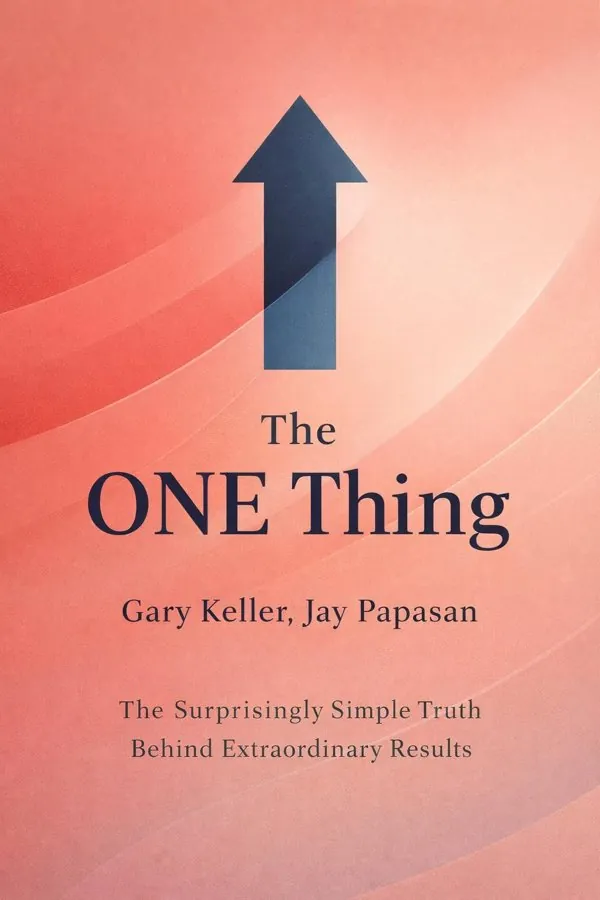
The ONE Thing: The Surprisingly Simple Truth Behind Extraordinary Results
Gary Keller, Jay Papasan
10 min
The Millionaire Real Estate Investor
Gary Keller
10 min
The Millionaire Real Estate Agent: It's Not About the Money... It's About Being the Best You Can Be!
Gary Keller, Dave Jenks, Jay Papasan
10 minYou Might Also Like
Browse by Category
Ready to read The One Thing?
Get the full summary and 100K+ more books with Fizz Moment.