
The 7 Habits of Highly Effective People vs The One Thing: Which Should You Read?
A detailed comparison of The 7 Habits of Highly Effective People by Stephen Covey and The One Thing by Gary Keller. Discover the key differences, strengths, and which book is right for you.
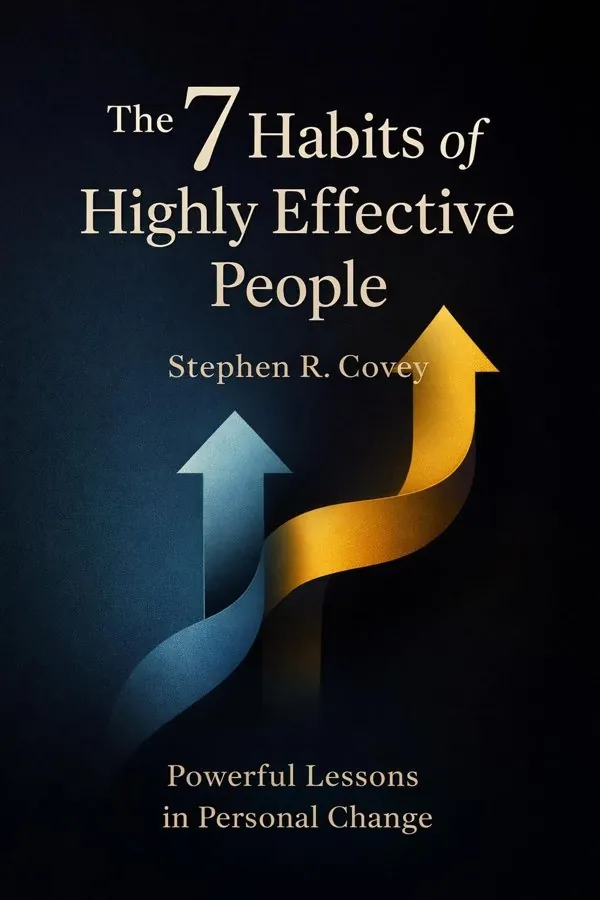

The 7 Habits of Highly Effective People
The One Thing
In-Depth Analysis
At the outset, an important clarification is necessary: the material labeled as The One Thing does not match Gary Keller’s actual book. Instead of focusing on Keller’s well-known thesis about narrowing attention to the single highest-leverage priority, the supplied introduction and key ideas describe Stephen M. R. Covey’s The Speed of Trust. Because the request asks for specificity and actual content, the fairest comparison is between Stephen R. Covey’s The 7 Habits of Highly Effective People and the trust-centered book represented by the provided summary. That distinction matters, because otherwise the comparison would be built on mismatched premises.
With that established, the two books overlap in a meaningful way: both reject superficial productivity hacks in favor of deeper drivers of performance. In The 7 Habits, Covey’s central claim is that effectiveness is rooted in character and principles. Habit 1, “Be Proactive,” asserts that human beings are not merely products of conditions; they retain the freedom to choose their response. Habit 2, “Begin with the End in Mind,” moves from reactivity to intentionality by asking readers to define success before chasing it. Habit 3, “Put First Things First,” then translates values into calendars and commitments. The result is a developmental sequence: govern yourself first, then become capable of healthy interdependence with others.
The trust-centered second book narrows its focus. Rather than offering an entire operating system for life, it argues that trust is a hidden variable behind organizational and relational outcomes. The ideas of the “trust tax” and “trust dividend” are especially telling. Low trust creates drag: more meetings, more checking, more politics, more friction. High trust creates speed: decisions happen faster, people coordinate with less defensive overhead, and execution improves. While The 7 Habits asks, “What kind of person must you become to live effectively?” the second book asks, “What happens to relationships and institutions when credibility is present or absent?” One is an ethical-developmental framework; the other is a performance-and-relationship multiplier.
This difference affects tone and use. The 7 Habits is broader and more philosophical. Covey is trying to reeducate the reader’s worldview. For example, Habit 4, “Think Win-Win,” is not merely a negotiation tactic but a challenge to scarcity thinking. Habit 5, “Seek First to Understand, Then to Be Understood,” similarly goes beyond communication tips; it rests on the belief that most conflict is intensified by autobiographical listening, where people listen to answer instead of to understand. These ideas feel expansive because they apply to marriage, parenting, office politics, leadership, and personal purpose alike.
By contrast, the trust book is more concentrated and managerial. The “Five Waves of Trust” structure suggests an outward movement: self-trust, relationship trust, organizational trust, and beyond. That progression resembles The 7 Habits in one respect: both books begin internally and then move outward. But they differ in emphasis. Covey’s internal work is about conscience, vision, and discipline. The trust framework’s internal work is about credibility—whether one is believable, consistent, and aligned. In a practical office example, Covey might ask whether your weekly schedule reflects your true priorities; the trust book would ask whether your behavior makes colleagues more willing to rely on you without hesitation.
Another key contrast is actionability versus transformation. The 7 Habits can be life-changing, but it is not always immediately easy to implement. Writing a mission statement, identifying roles, prioritizing Quadrant II activities, and practicing empathic listening all sound straightforward, yet they require serious self-revision. Readers often feel convicted before they feel competent. The trust framework, at least from the supplied content, may produce faster visible gains. A team leader can immediately reduce a “trust tax” by clarifying expectations, following through on commitments, and behaving in ways that increase confidence. That makes the second book particularly useful for readers under performance pressure who need a language for diagnosing why execution feels slow and costly.
Emotionally, the books also work differently. The 7 Habits tends to strike readers at the level of identity. “Begin with the End in Mind” can force a reckoning with whether one is climbing the wrong ladder entirely. “Put First Things First” exposes the gap between proclaimed values and actual attention. The trust book, by comparison, is more likely to resonate through the pain of dysfunction: stalled projects, guarded conversations, and systems clogged by suspicion. It speaks less to existential direction and more to relational efficiency and credibility.
If one judges depth in the broadest sense, The 7 Habits is the more comprehensive work. It contains a fuller anthropology of choice, responsibility, maturity, and interdependence. It can function as a personal constitution. The trust book is narrower, but within its lane it may feel sharper, especially in leadership settings. A senior manager struggling with alignment problems may gain more immediate value from the trust lens than from Covey’s wider moral architecture.
Ultimately, these are complementary rather than interchangeable books. The 7 Habits supplies the foundation: proactive agency, principled goals, disciplined priorities, and empathic relationships. The trust book identifies one of the most important social consequences of living or failing to live those principles. In fact, one could say that trust is what many of Covey’s habits look like when translated into organizational behavior. A proactive person who keeps commitments builds self-trust. A win-win thinker with empathic listening builds relationship trust. A leader who aligns systems with values builds organizational trust. So while Book 1 asks readers to become effective from the inside out, Book 2 shows how one crucial result of that transformation—trust—changes the speed and quality of collective outcomes.
Side-by-Side Comparison
| Aspect | The 7 Habits of Highly Effective People | The One Thing |
|---|---|---|
| Core Philosophy | The 7 Habits of Highly Effective People argues that durable effectiveness comes from character, principles, and internal alignment rather than techniques alone. Covey builds from private victory to public victory, stressing proactivity, purpose, priorities, and mutual benefit. | The supplied summary for The One Thing actually describes The Speed of Trust, centering on trust as a force that increases speed and reduces cost in relationships and organizations. Its philosophy is less about broad life design and more about credibility, behavior, and trust as leverage. |
| Writing Style | Covey writes in a didactic, reflective style, often using frameworks like the maturity continuum, circles of concern and influence, and the time-management matrix. The tone is earnest and teacherly, designed to reshape worldview as much as behavior. | Based on the provided material, the second book appears more managerial and business-oriented, using concise conceptual structures such as the trust tax, trust dividend, and five waves of trust. Its style is more diagnostic and organizational than philosophical. |
| Practical Application | The 7 Habits offers practical tools like drafting a personal mission statement, scheduling Quadrant II priorities, and practicing empathic listening in conflict. Its applications span personal life, family, leadership, and workplace effectiveness. | The trust framework is highly applicable in teams and organizations: leaders can improve execution by increasing credibility, honoring commitments, and aligning systems with stated values. It is especially actionable in environments where friction, politics, or slow decision-making are trust problems in disguise. |
| Target Audience | Book 1 is aimed at a wide audience, from students and professionals to parents and executives, because its habits address universal patterns of decision-making and relationships. It works well for readers seeking a foundational self-development system. | Book 2, as described, is best suited to managers, executives, team leaders, and professionals navigating organizational complexity. Readers interested in culture, leadership credibility, and business performance will likely find it more directly relevant. |
| Scientific Rigor | The 7 Habits relies more on philosophical reasoning, anecdote, and lived wisdom than on academic studies or experimental evidence. Its authority comes from coherence and applicability rather than formal scientific documentation. | The trust-centered material also leans heavily on business logic and practical observation, though its claims about speed, cost, and performance sound more quasi-economic than empirical in the supplied summary. It feels persuasive in a managerial sense, but not especially research-heavy from the details given. |
| Emotional Impact | Covey often produces a deep emotional effect because he pushes readers to confront whether their lives reflect their values. Exercises around imagining one's legacy or rewriting personal priorities can feel morally clarifying and even unsettling. | The second book's emotional impact is more relational and organizational: it highlights the frustration of suspicion, bureaucracy, and broken credibility, then offers hope that trust can repair them. Its appeal is less existential and more about relief, confidence, and professional momentum. |
| Actionability | Its habits are memorable and portable, but they often require substantial self-examination before behavior changes. For example, 'Begin with the End in Mind' is easy to grasp yet difficult to practice without sustained reflection. | The trust model appears more immediately actionable in workplace settings because behaviors like clarifying expectations, keeping commitments, and extending smart trust can be applied quickly. It may yield faster visible results in teams than Covey's more developmental habits. |
| Depth of Analysis | The 7 Habits is deeper as a general philosophy of human effectiveness, connecting individual agency, ethics, communication, and interdependence in one architecture. It attempts a comprehensive account of why people fail to live effectively and how to change. | The second book goes deep within a narrower lane, analyzing trust as a multiplier across self, relationships, and institutions. It offers less of a total life philosophy but more concentrated insight into one critical variable. |
| Readability | Some readers find Covey inspiring but dense, especially because he repeats principles in multiple contexts and asks for serious introspection. It rewards patient reading more than speed-reading. | The trust-focused framework is likely easier for many business readers to digest because the concepts are tightly branded and directly tied to workplace outcomes. Terms like 'trust tax' and 'trust dividend' are sticky and accessible. |
| Long-term Value | The 7 Habits has exceptional long-term value because its core ideas remain relevant across decades, roles, and life stages. Readers often return to it as a reference point for decision-making and character formation. | The second book also has strong staying power, especially for leaders, because trust problems never disappear from organizations. Its long-term value is highest when readers must repeatedly build credibility, repair relationships, or shape culture. |
Key Differences
Whole-Life Framework vs Single Leadership Variable
The 7 Habits is a comprehensive model of effectiveness that spans personal agency, purpose, self-management, and relationships. The second book concentrates on trust as a decisive factor in performance, especially in teams and organizations.
Character Formation vs Credibility Mechanics
Covey emphasizes becoming a certain kind of person through principles and habits. The trust-centered book is more focused on how credibility, follow-through, and alignment affect whether others will rely on you and your institution.
Philosophical Depth vs Managerial Precision
The 7 Habits often reads like moral and practical philosophy, asking readers to redefine success and examine their values. The second book uses sharper business concepts like trust tax and trust dividend to explain organizational drag and acceleration.
Private Victory Before Public Victory vs Trust Rippling Outward
Book 1 progresses from self-mastery to healthy interdependence, especially through Habits 1 to 3 before moving into Habits 4 and 5. Book 2 also starts internally, but it maps growth through waves of trust from self to relationships to organizations and beyond.
Priority Management vs Friction Reduction
The 7 Habits directly helps readers identify what matters and organize time around it, as seen in Begin with the End in Mind and Put First Things First. The second book is less about choosing priorities and more about removing the hidden costs created by low trust.
Empathic Communication vs Reliability and Alignment
Covey puts unusual weight on listening, mutual understanding, and win-win thinking as the basis of strong relationships. The trust framework focuses more on whether behavior and systems consistently match stated intentions, which determines confidence at scale.
Transformational Pace vs Immediate Team Utility
The 7 Habits often creates slower but deeper change because it asks readers to rethink identity and habits over time. The second book may deliver faster practical wins in workplaces, such as better delegation, smoother decisions, and fewer defensive processes.
Who Should Read Which?
A young professional building personal discipline and direction
→ The 7 Habits of Highly Effective People
This reader needs a broad framework for making decisions, setting priorities, and improving relationships. Covey’s emphasis on proactivity, purpose, and first-things-first thinking is especially useful early in a career when habits are still forming.
A manager leading a team with communication breakdowns and slow execution
→ The One Thing
Using the content provided, this book is really about trust, and that makes it highly relevant for managers facing organizational friction. Its ideas help explain why projects drag, why people hedge, and how credibility and alignment can restore speed.
A reader seeking both personal growth and stronger professional relationships
→ The 7 Habits of Highly Effective People
Although both books are useful, Covey’s book covers more ground and better integrates internal growth with external relationships. Habits like Think Win-Win and Seek First to Understand make it especially strong for someone who wants both self-mastery and relational maturity.
Which Should You Read First?
Read The 7 Habits of Highly Effective People first. It gives you the deeper foundation for understanding why effectiveness starts internally—with choice, principles, purpose, and disciplined priorities—before it shows up externally in relationships and results. Habits like Be Proactive and Begin with the End in Mind prepare you to use any later framework more intelligently, because they train judgment rather than just behavior. Then read the trust-centered second book. Once you understand Covey’s inside-out model, the ideas of self-trust, relationship trust, and organizational trust become easier to place in context. You will see trust not as a standalone business buzzword, but as one of the most important consequences of character and aligned action. This order also prevents a common mistake: using trust merely as an efficiency tool without doing the deeper work of becoming dependable, clear, and principle-driven. In short, start with the broader human operating system, then move to the narrower but powerful lens of trust in leadership and collaboration.
Want the full summary?
Get instant access to this book summary and 100K+ more with Fizz Moment.
Get Free SummaryAvailable on App Store • Free to download
Frequently Asked Questions
Is The 7 Habits of Highly Effective People better than The One Thing for beginners?
If we go strictly by the supplied summary, the second book is not actually Gary Keller’s The One Thing but a trust-focused leadership book closer to The Speed of Trust. For true beginners in personal development, The 7 Habits of Highly Effective People is usually the better starting point because it offers a whole framework: agency, purpose, prioritization, collaboration, and listening. It teaches how to think before it teaches what to do. The trust-centered book is excellent, but it is more specialized and especially useful once a reader is already dealing with teams, leadership credibility, or workplace culture. Beginners seeking a general life system will likely benefit more from Covey first.
Which book is more practical for workplace leadership: The 7 Habits of Highly Effective People or The One Thing?
Based on the content provided, the trust-centered second book is more immediately practical for workplace leadership because it gives leaders a direct way to understand organizational friction. Concepts like the trust tax and trust dividend help explain why some teams move slowly even when they have talent and strategy. That said, The 7 Habits remains crucial for leadership because habits like Think Win-Win and Seek First to Understand, Then to Be Understood shape a leader’s character and communication style. In short, the second book may solve urgent team-performance problems faster, while The 7 Habits develops the kind of leader who creates healthy conditions over time.
Should I read The 7 Habits of Highly Effective People or The One Thing if I struggle with focus and priorities?
For focus and priorities specifically, The 7 Habits is the safer recommendation from the material given. Habit 2, Begin with the End in Mind, asks you to define what matters before filling your schedule, and Habit 3, Put First Things First, directly addresses how urgency crowds out importance. Those chapters are effectively a philosophy of priority management. The trust-centered second book can still help if your lack of focus stems from organizational misalignment or uncertainty in teams, but it is not primarily a book about individual prioritization. If your main problem is saying yes to too much and drifting through reactive work, Covey’s framework is more directly suited to that struggle.
How does The 7 Habits of Highly Effective People compare with The One Thing on communication and relationships?
The 7 Habits deals with communication and relationships more explicitly and more humanly. Habit 4, Think Win-Win, reframes relationships away from zero-sum competition, while Habit 5, Seek First to Understand, Then to Be Understood, offers a concrete discipline of empathic listening. Those ideas help readers improve conflict resolution, trust, and mutual respect. The trust-focused second book approaches relationships through credibility and reliability: trust grows when words, motives, and actions line up. So if you want a richer treatment of conversation and mutual understanding, choose The 7 Habits; if you want a sharper model of why confidence in people or institutions rises and falls, the second book is stronger.
Is The 7 Habits of Highly Effective People too dated compared with The One Thing?
The 7 Habits can feel old-fashioned in tone, but its ideas are not dated in substance. Proactivity, deliberate goals, priority-based scheduling, and empathic listening are timeless challenges, perhaps even more relevant in today’s distracted and reactive environment. The trust-centered second book may feel more contemporary because it uses business language like speed, cost, alignment, and performance. However, that does not make Covey obsolete. In many ways, The 7 Habits remains the deeper book because it addresses first principles of behavior. Readers who can tolerate a more reflective style often find that it ages better than trend-driven productivity books.
Which book has more long-term value: The 7 Habits of Highly Effective People or The One Thing?
For most readers, The 7 Habits has greater long-term value because it functions as a reusable framework for life, not just work. You can return to Habit 1 during crisis, Habit 2 during transitions, Habit 3 when overwhelmed, and Habits 4 and 5 during relationship strain. The trust-centered second book also offers lasting value, especially for leaders, because trust problems recur in every organization and every stage of growth. But its utility is more concentrated. If you want one book that can anchor decades of reflection and self-correction, The 7 Habits is stronger; if you repeatedly manage people and systems, the second book may become your more frequent business reference.
The Verdict
If you want a single, foundational book on personal effectiveness, The 7 Habits of Highly Effective People is the stronger recommendation. It is broader, deeper, and more transformative. Covey does not merely offer tactics; he gives readers a structure for aligning character, purpose, time, and relationships. Habits like Be Proactive, Begin with the End in Mind, and Seek First to Understand, Then to Be Understood remain unusually durable because they address root causes rather than symptoms. That said, the second book as described in your prompt is not really Gary Keller’s The One Thing; it is a trust-centered leadership book. Judged on those terms, it is excellent for readers who need a sharp framework for understanding why teams stall, cultures degrade, and execution becomes expensive. Its concepts are narrower but often more immediately useful in leadership and organizational settings. So the choice depends on your need. Choose The 7 Habits if you want a life operating system, especially if you are rethinking priorities, responsibility, and relationships at a foundational level. Choose the trust book if your main concern is leadership credibility, team cohesion, and reducing friction in organizations. For many readers, the ideal path is not either-or: start with Covey for principles, then use the trust framework to see how those principles create or destroy momentum in real-world collaboration.
Related Comparisons
Want to read both books?
Get AI-powered summaries of both The 7 Habits of Highly Effective People and The One Thing in just 20 minutes total.