
The One Thing vs Essentialism: Which Should You Read?
A detailed comparison of The One Thing by Gary Keller and Essentialism by Greg McKeown. Discover the key differences, strengths, and which book is right for you.
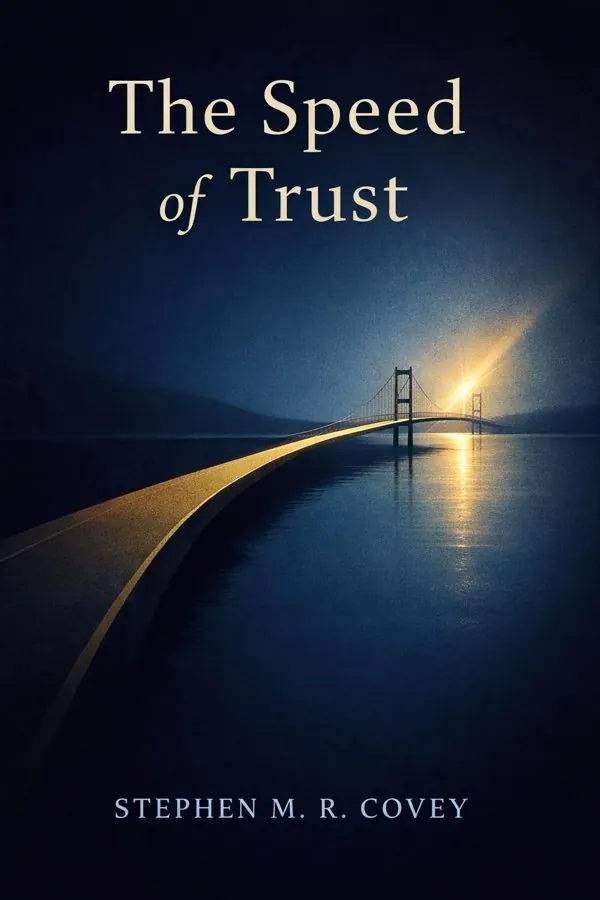
The One Thing
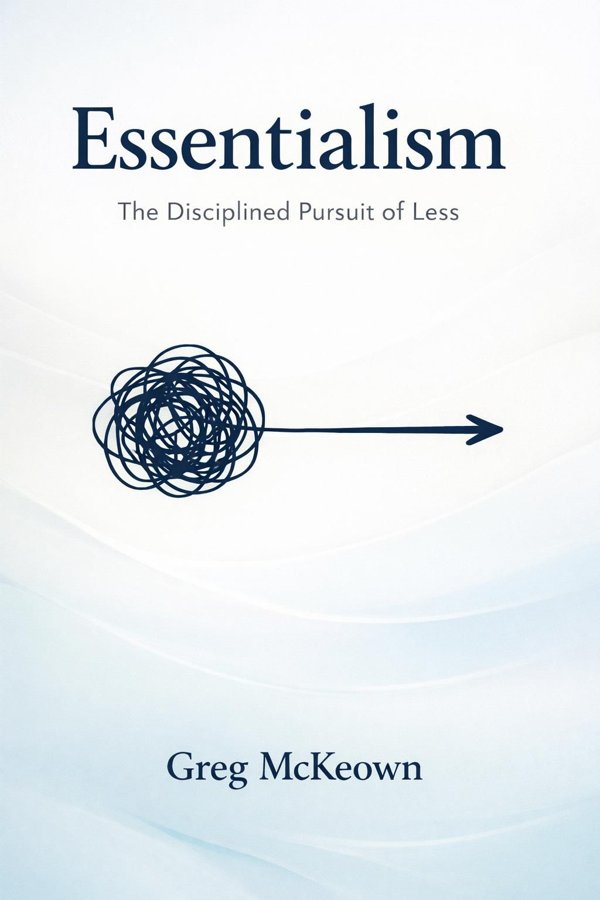
Essentialism
In-Depth Analysis
At first glance, "The One Thing" and "Essentialism" appear to belong to the same broad productivity tradition: both promise sharper focus, better outcomes, and relief from modern overload. Yet based on the material provided, they are actually solving different problems. The supplied summary for "The One Thing" does not describe Gary Keller’s well-known focus thesis; it instead outlines Stephen M. R. Covey’s trust framework, especially ideas like the Trust Tax, Trust Dividend, and the Five Waves of Trust. That matters because it shifts the comparison from two books about narrowing attention to a richer contrast between interpersonal effectiveness and personal selectivity.
The trust-centered "The One Thing" begins from the premise that outcomes are not merely a function of strategy or effort but of relational credibility. In practical terms, if a team trusts one another, decisions move faster, meetings shorten, mistakes surface earlier, and coordination costs decline. Covey’s language of a Trust Tax and Trust Dividend is especially powerful because it translates a moral concept into operational terms. Distrust is no longer just unpleasant; it becomes expensive. Imagine two product teams with equal talent. In one, people hedge language, document every small exchange defensively, and second-guess motives. In the other, people are candid, keep commitments, and assume good faith. The second team does not merely feel better; it moves with less friction. That is the book’s central insight.
"Essentialism," by contrast, starts from the experience of overextension. McKeown argues that many people are not suffering from lack of effort but from undirected effort. Instead of asking how to do more efficiently, he asks what is truly essential and what can be removed. This is why his framework feels so resonant for overloaded knowledge workers. Chapters on trade-offs, on creating space for exploration, and on the value of sleep and play all reinforce the same principle: clarity and excellence come from disciplined exclusion. If Covey says, in effect, "your system fails when trust erodes," McKeown says, "your life fragments when priorities blur."
The most important difference between the books lies in the unit of analysis. The trust-oriented "The One Thing" examines the self in relation to others. Its Five Waves of Trust move outward from self-trust to relationship trust to organizational trust, suggesting that individual credibility is the foundation for wider social effectiveness. This layered model is especially useful for leaders because it prevents shallow fixes. A company cannot simply announce a trust initiative if managers routinely miss commitments or punish dissent. Trust must be built from behavior and alignment.
"Essentialism" uses a more individual unit of analysis. Even when McKeown discusses teams or institutions, his enduring question is whether a person has the courage to choose deliberately. His emphasis on saying no, protecting time, and building buffers makes the book highly usable for people who feel captured by other people’s agendas. A manager reading McKeown may redesign meetings, narrow project scope, or reserve deep-work hours. A manager reading Covey may instead focus on whether employees believe leadership is credible, whether incentives align with stated values, and whether interpersonal behaviors signal respect.
This also creates a difference in emotional tone. The trust framework often speaks to frustration with bureaucracy, politics, or relational damage. It names a common but hard-to-measure pain: the drag created by suspicion. Readers who have endured low-trust workplaces will likely find its analysis validating, because it explains why apparently small credibility failures create large organizational slowdowns. "Essentialism" produces a different emotional response: relief. McKeown gives readers permission to stop equating busyness with importance. His best passages work because they attack a deeply internalized fear—that saying no will make us seem selfish, lazy, or dispensable.
In terms of actionability, both books are strong, but in different domains. The trust book is stronger diagnostically in collaborative environments. If a project is stalled, its framework helps identify whether the issue is self-trust, relationship behavior, or organizational alignment. For example, repeated rework on a team may not reflect incompetence at all; it may reflect low trust, causing people to withhold concerns until late in the process. "Essentialism" is more immediately actionable for personal systems. A reader can use its principles today by declining one low-value request, scheduling thinking time, or reducing commitments by applying stricter criteria.
A subtle but significant distinction is that Covey’s framework is additive in one sense: it asks readers to build trust capacities, habits, and credibility over time. McKeown’s is subtractive: remove, eliminate, reduce, decline. One helps improve the quality of interaction; the other improves the quality of attention. Ideally, they can complement one another. A leader who practices Essentialism without trust may become personally efficient but organizationally brittle. A leader who builds trust without Essentialism may create a healthy culture that is still overcommitted and strategically scattered.
For beginners in productivity, "Essentialism" is likely easier to absorb because its central message is simple, universal, and instantly felt: not everything matters equally. The trust-focused "The One Thing" may be more transformative for readers already working within teams, where performance depends less on individual discipline and more on the speed and integrity of relationships. Ultimately, these books are not competing answers to the exact same question. One asks what deserves your effort. The other asks what makes collective effort effective. Read together, they form a compelling two-part philosophy: choose less, and build the trust needed to execute what remains.
Side-by-Side Comparison
| Aspect | The One Thing | Essentialism |
|---|---|---|
| Core Philosophy | Despite the title, the supplied description for "The One Thing" actually summarizes Stephen M. R. Covey’s trust-centered framework: trust as a measurable driver of speed, cost, and effectiveness. Its philosophy is relational and organizational, arguing that credibility and aligned behavior create outsized results. | "Essentialism" argues that success comes from disciplined subtraction rather than addition. McKeown’s philosophy centers on discerning the vital few, rejecting the trivial many, and reclaiming agency through conscious choice. |
| Writing Style | The tone is executive-oriented and framework-heavy, built around concepts like the Trust Tax, Trust Dividend, and the Five Waves of Trust. It reads like a leadership manual meant to persuade managers that soft skills have hard economic consequences. | McKeown writes in a cleaner, more reflective style, using memorable contrasts such as "less but better" and stories about overcommitment, burnout, and strategic elimination. The prose is accessible and aphoristic, making key ideas easy to retain. |
| Practical Application | Its applications are strongest in team settings: repairing credibility, improving follow-through, reducing friction in projects, and aligning institutional behavior. Leaders can immediately map the Five Waves of Trust onto hiring, communication, and culture problems. | Its guidance applies both personally and professionally, from saying no to meetings to creating white space for reflection, sleep, and play. Readers can turn its principles into calendar design, decision filters, and clearer personal boundaries. |
| Target Audience | This book is best suited to leaders, managers, entrepreneurs, and professionals working in interdependent environments where execution depends on mutual confidence. It especially speaks to readers concerned with culture, morale, and organizational credibility. | "Essentialism" targets knowledge workers, overwhelmed professionals, students, and anyone chronically stretched too thin. It also resonates with readers seeking a philosophy of intentional living, not just workplace productivity. |
| Scientific Rigor | The trust framework is persuasive and pragmatic, but it is presented more as a business model and behavioral doctrine than a research-heavy academic argument. Its strength lies in conceptual clarity rather than detailed empirical review. | McKeown likewise relies more on synthesis, anecdote, and practical reasoning than on dense scientific citation. However, concepts like sleep, renewal, and decision fatigue align with broader behavioral science, even when the book remains nontechnical. |
| Emotional Impact | Its emotional force comes from showing how distrust corrodes relationships and how restored trust can transform morale and momentum. Readers may feel validated if they have worked in low-trust environments marked by politics and delay. | The book often produces relief and clarity by naming a common modern anxiety: the pressure to do everything. Its strongest emotional effect is liberation, as readers realize they can choose fewer commitments without guilt. |
| Actionability | The Five Waves structure gives readers a staged roadmap: strengthen self-trust, improve relationship behavior, and build organizational alignment. It is highly actionable for diagnosing where trust is breaking down and what kind of intervention is needed. | "Essentialism" is immediately actionable at the individual level through elimination, trade-offs, scheduling buffers, and stricter criteria for yes. Many readers can apply its lessons the same day by declining low-value obligations. |
| Depth of Analysis | It goes deep on one social mechanism—trust—and explores it across personal, relational, and institutional layers. That gives it analytical coherence, though the supplied material suggests a narrower thematic range than a general productivity book. | McKeown offers broader lifestyle analysis, connecting priority, choice, energy, rest, and systems design into one discipline. Its analysis is less organizationally granular than the trust framework but wider in everyday applicability. |
| Readability | The conceptual terminology is clear but somewhat corporate, which may make it feel denser for casual readers. Those interested in leadership development will likely find the structure useful rather than intimidating. | "Essentialism" is the easier and more universally readable book. Its language is simple, its contrasts are vivid, and its chapter ideas—such as the value of space, play, and sleep—translate quickly into lived experience. |
| Long-term Value | Its long-term value is highest for readers whose effectiveness depends on trust-rich collaboration over years, such as executives or team builders. The trust lens remains durable because it can be revisited whenever relationships or institutions begin to fray. | Its long-term value lies in its repeatability as a life filter. Readers often return to it during periods of overload, career transition, or burnout because its central discipline of elimination remains relevant across contexts. |
Key Differences
Primary Problem Addressed
"Essentialism" tackles overcommitment and scattered attention, asking readers to eliminate the nonessential. The supplied "The One Thing" addresses distrust and relational friction, showing how low trust slows projects, raises costs, and damages outcomes.
Unit of Change
McKeown focuses first on the individual chooser: the person who must decide what to keep, what to reject, and how to protect energy. The trust framework focuses on the individual in systems, where self-trust expands into relationship and organizational trust.
Method: Subtraction vs Restoration
"Essentialism" is fundamentally subtractive; its most powerful moves are pruning, narrowing, and declining. The trust book is restorative and developmental, asking readers to build credibility, repair behavior, and align institutions so cooperation becomes easier.
Best Use Case
Use "Essentialism" when your life feels crowded with obligations, meetings, and diffuse goals. Use the trust-focused "The One Thing" when a team is technically capable but execution is slowed by hesitation, defensiveness, or weak confidence in leadership.
Emotional Payoff
"Essentialism" delivers relief and permission; many readers feel lighter simply by accepting that they cannot do everything. The trust framework delivers validation and hope, especially for readers who have felt the hidden drag of low-trust cultures.
Language and Framing
McKeown relies on memorable minimalist phrasing like prioritizing the vital few and embracing trade-offs. The other book uses business concepts such as Trust Tax, Trust Dividend, and Five Waves of Trust, which give it a more executive and organizational tone.
Scope of Applicability
"Essentialism" works across home life, career planning, creative work, and personal boundaries. The trust framework is also broadly relevant, but it is at its strongest in collaborative contexts like leadership, management, and organizational culture.
Who Should Read Which?
The overwhelmed knowledge worker
→ Essentialism
This reader likely suffers from too many inputs, requests, and expectations rather than a lack of ambition. "Essentialism" offers immediate tools for cutting commitments, reclaiming time, and replacing reactive busyness with intentional focus.
The team leader managing low morale or slow execution
→ The One Thing
For this reader, performance depends on trust, credibility, and aligned behavior across a group. The book’s ideas about self-trust, relationship trust, and organizational trust directly address why capable teams can still underperform.
The ambitious professional in career transition
→ Essentialism
A transition period requires sharper criteria about what to pursue and what to decline. McKeown’s framework helps readers avoid taking on every opportunity and instead build a path around what is most meaningful and strategically important.
Which Should You Read First?
For most readers, the best reading order is to start with "Essentialism" and then move to the supplied version of "The One Thing." McKeown gives you the more foundational discipline: deciding what truly matters. Before you can execute well, you need to know what deserves execution at all. His focus on trade-offs, choice, space, and renewal helps clear the mental and structural clutter that keeps people trapped in reactive living. Once that foundation is in place, the trust-centered "The One Thing" becomes more powerful. After narrowing your priorities, you can ask a more advanced question: what conditions allow these priorities to succeed in teams and organizations? That is where concepts like the Trust Tax, Trust Dividend, and Five Waves of Trust become valuable. They help you see why the right goals can still fail if credibility is weak or alignment is broken. The exception is if you already have clear priorities but work in a damaged or political environment. In that case, read the trust book first because trust, not focus, is your real bottleneck.
Want the full summary?
Get instant access to this book summary and 100K+ more with Fizz Moment.
Get Free SummaryAvailable on App Store • Free to download
Frequently Asked Questions
Is The One Thing better than Essentialism for beginners?
For most beginners, "Essentialism" is the easier entry point. Its message is immediate and concrete: identify what matters most, eliminate the rest, and protect your time and energy. Readers can apply it quickly by saying no to nonessential meetings, reducing commitments, or creating more space for reflection and recovery. The supplied version of "The One Thing," however, is really about trust dynamics, using concepts like the Trust Tax and the Five Waves of Trust. That makes it excellent for leadership and team performance, but slightly less intuitive for someone just starting with productivity or personal effectiveness. Beginners usually benefit more from McKeown’s simpler, more universal framework.
Which book is better for overwhelmed professionals who feel stretched too thin: The One Thing or Essentialism?
"Essentialism" is clearly stronger for overwhelmed professionals who feel their calendars and attention are being hijacked. McKeown directly addresses the tendency to say yes too often, confuse activity with value, and neglect rest, sleep, and strategic space. His framework helps readers narrow priorities and build a life around the vital few instead of the trivial many. The trust-based "The One Thing" can still help if the overload comes from dysfunctional collaboration, unclear expectations, or low-trust teamwork. But if the main issue is personal overcommitment rather than relational friction, "Essentialism" will probably deliver faster relief and a more practical first set of changes.
Is Essentialism or The One Thing more useful for managers and leaders?
That depends on the leadership challenge. If a manager is struggling with team friction, delayed execution, weak credibility, or culture problems, the trust-oriented "The One Thing" is more useful. Its ideas about self-trust, relationship trust, and organizational alignment are highly relevant to leaders whose results depend on cooperation. If the manager’s problem is strategic sprawl—too many initiatives, too many meetings, and no real prioritization—then "Essentialism" is the sharper tool. In practice, many leaders need both: McKeown to cut the number of priorities, and Covey’s trust framework to ensure the remaining priorities can be executed smoothly by a healthy, high-confidence team.
Which book has more practical advice: Essentialism vs The One Thing for real-life productivity?
For individual, day-to-day productivity, "Essentialism" feels more immediately practical. Its advice on trade-offs, selective commitment, creating white space, and valuing sleep and play can be translated directly into calendar decisions and daily routines. The trust-centered "The One Thing" is practical in a different way: it helps readers assess why projects bog down, why communication fails, and how credibility affects speed and cost. So if you mean personal productivity habits, "Essentialism" wins. If you mean effectiveness in teams, leadership, or organizations where execution depends on trust, then the practical edge shifts toward the trust framework described in "The One Thing."
Should I read The One Thing or Essentialism first if I want both career growth and better focus?
If your immediate need is better focus, clearer priorities, and relief from overcommitment, read "Essentialism" first. It gives you a clean decision-making lens and helps you stop wasting attention on things that do not matter. Once you have narrowed your priorities, the trust-based "The One Thing" becomes a strong second read because it explains how to execute those priorities with others more effectively. That sequence works especially well for ambitious professionals: first decide what deserves your energy, then learn how trust affects collaboration, credibility, and momentum. If, however, your career problems are mainly political or relational, reversing the order may make more sense.
Does Essentialism overlap with The One Thing, or do they solve different problems?
They overlap in a broad sense because both oppose waste and advocate higher-quality outcomes. But they solve different core problems. "Essentialism" is about discernment: deciding what is truly important and removing the rest. The supplied version of "The One Thing" is about trust as a force multiplier: how credibility, behavior, and alignment reduce friction and improve performance. One improves the allocation of attention; the other improves the conditions of execution. If you are trying to decide between them, ask yourself whether your biggest obstacle is too many commitments or too little trust. That answer will usually tell you which book to start with.
The Verdict
If you want one book for immediate personal clarity, choose "Essentialism." Greg McKeown offers the cleaner, more universally applicable framework: not everything matters equally, and real progress requires saying no, embracing trade-offs, and protecting time for what is vital. It is especially effective for readers drowning in commitments, reacting to other people’s priorities, or trying to build a more intentional life. Its advice on space, sleep, and renewal also makes it broader than a narrow work-efficiency manual. Choose the supplied version of "The One Thing" if your core challenge is not overload but friction—low morale, weak collaboration, political behavior, credibility gaps, or stalled execution inside teams. Its emphasis on the Trust Tax, Trust Dividend, and Five Waves of Trust makes it highly relevant for managers, executives, founders, and anyone leading interdependent work. It is less about reducing inputs and more about improving the quality of relationships that determine whether work gets done well. Overall, "Essentialism" is the better standalone recommendation for most readers, especially beginners. It is easier to read, easier to apply, and more likely to produce an immediate behavioral shift. But for leadership and organizational effectiveness, the trust framework in "The One Thing" may ultimately be more transformative. Best answer: read "Essentialism" for focus, then "The One Thing" for execution through trust.
Related Comparisons
Want to read both books?
Get AI-powered summaries of both The One Thing and Essentialism in just 20 minutes total.