
The Power of Habit: Summary & Key Insights
 10 min13 chapters
Key Takeaways from The Power of Habit
At the heart of behavior change is awareness.
One of the most valuable insights in The Power of Habit is that habits are not destiny.
Habits often survive because they offer relief from discomfort.
The Power of Habit is ultimately about repeated patterns, and that includes the patterns of the mind.
Although habits are often discussed in terms of visible behavior, Duhigg’s ideas also point to the importance of private reflection.
What Is The Power of Habit About?
The Power of Habit by Charles Duhigg is a productivity book published in 2020 spanning 13 pages. Why do some people stick to exercise, build better routines, and transform their lives while others keep falling back into the same patterns? In The Power of Habit, Charles Duhigg explores one of the most practical forces shaping human behavior: habit. His core argument is simple but powerful—much of what we do every day is not the result of deliberate decision-making, but of automatic loops that run quietly in the background. Once we understand those loops, we can begin to change them. This book matters because habits influence nearly everything: productivity, health, relationships, financial decisions, and even how organizations and societies function. Duhigg, an award-winning journalist known for translating complex research into compelling stories, combines psychology, neuroscience, and real-world case studies to show how habits are formed and how they can be reshaped. Rather than offering vague motivation, he provides a framework readers can actually use. If you’ve ever wondered why willpower feels unreliable, why change is so difficult, or how small routines can create massive results over time, The Power of Habit offers a clear, memorable answer—and a roadmap for lasting improvement.
This FizzRead summary covers all 13 key chapters of The Power of Habit in approximately 10 minutes, distilling the most important ideas, arguments, and takeaways from Charles Duhigg's work.
How To Think More Effectively: A Guide To Greater Productivity, Insight And Creativity
Why do some people stick to exercise, build better routines, and transform their lives while others keep falling back into the same patterns? In The Power of Habit, Charles Duhigg explores one of the most practical forces shaping human behavior: habit. His core argument is simple but powerful—much of what we do every day is not the result of deliberate decision-making, but of automatic loops that run quietly in the background. Once we understand those loops, we can begin to change them.
This book matters because habits influence nearly everything: productivity, health, relationships, financial decisions, and even how organizations and societies function. Duhigg, an award-winning journalist known for translating complex research into compelling stories, combines psychology, neuroscience, and real-world case studies to show how habits are formed and how they can be reshaped. Rather than offering vague motivation, he provides a framework readers can actually use.
If you’ve ever wondered why willpower feels unreliable, why change is so difficult, or how small routines can create massive results over time, The Power of Habit offers a clear, memorable answer—and a roadmap for lasting improvement.
Who Should Read The Power of Habit?
This book is perfect for anyone interested in productivity and looking to gain actionable insights in a short read. Whether you're a student, professional, or lifelong learner, the key ideas from The Power of Habit by Charles Duhigg will help you think differently.
- ✓Readers who enjoy productivity and want practical takeaways
- ✓Professionals looking to apply new ideas to their work and life
- ✓Anyone who wants the core insights of The Power of Habit in just 10 minutes
Want the full summary?
Get instant access to this book summary and 100K+ more with Fizz Moment.
Get Free SummaryAvailable on App Store • Free to download
Key Chapters
At the heart of behavior change is awareness. Before we can change a habit, we have to understand what is actually happening in our minds and routines. Duhigg’s work helps readers see that many actions we think of as choices are really automated patterns. In practice, this means our thoughts, cravings, and routines often follow familiar tracks: a trigger appears, a behavior follows, and a reward reinforces the loop. What feels like a personal weakness is often a habit operating exactly as habits are designed to operate.
A useful takeaway here is to become a careful observer of your own behavior rather than an immediate judge of it. If you always reach for a snack at 3 p.m., procrastinate when a difficult task appears, or check your phone whenever you feel bored, the goal is not to shame yourself. The goal is to identify the cue, the routine, and the reward. Ask: What happened right before this behavior? What am I really seeking—energy, distraction, relief, connection, or comfort?
For example, someone who thinks they have a “junk food problem” may discover they’re actually responding to stress or seeking a quick social break. Once thoughts and actions are made visible, change becomes possible. Awareness turns vague frustration into something concrete, measurable, and workable.
One of the most valuable insights in The Power of Habit is that habits are not destiny. They can be changed, but rarely by sheer force of will alone. Duhigg shows that real insight comes from understanding the structure beneath the behavior. When people fail to change, it is often because they try to eliminate a habit outright instead of replacing the routine while keeping the same cue and reward in mind.
This is where the famous habit loop becomes especially useful: cue, routine, reward. The cue triggers the behavior, the routine is the action itself, and the reward satisfies a craving. Insight comes when you can diagnose which part of the loop matters most. For instance, if someone habitually buys a cookie every afternoon, the reward may not be sugar at all. It could be a break from work, stimulation, or a chance to chat with colleagues.
Actionable advice: experiment. Change one variable at a time. Take a walk instead of eating the cookie. Have coffee with a coworker. Eat an apple and step outside. Then ask what reward actually satisfied you. This trial-and-error method is more effective than relying on motivation alone. Duhigg’s larger lesson is that self-knowledge is practical power: the more clearly you understand your loops, the more intelligently you can redesign them.
Habits often survive because they offer relief from discomfort. Anxiety, uncertainty, and fear are powerful cues that drive automatic behavior. Duhigg’s framework helps explain why people scroll endlessly, overeat, avoid hard conversations, or procrastinate on meaningful work: the routine may be unhelpful, but the reward is immediate emotional relief. In that sense, many bad habits are coping strategies that have become deeply ingrained.
To overcome these patterns, the first step is recognizing the emotional trigger without immediately acting on it. A stressful email arrives, and you suddenly feel the urge to check social media. A tough project makes you anxious, and you decide to “clean up first.” These routines reduce tension for a moment, which is why the brain keeps repeating them. The key is not to pretend fear is absent, but to create a different routine that addresses the same emotional need.
A practical approach is to build a replacement plan in advance. For example: when I feel overwhelmed, I will take three deep breaths, write the next tiny task, and work for five minutes. Or: when I feel socially anxious, I will ask one question instead of withdrawing completely. These small substitutions retrain the brain. Duhigg’s message is encouraging: fear does not have to disappear before action begins. New habits can be built even in the presence of discomfort.
The Power of Habit is ultimately about repeated patterns, and that includes the patterns of the mind. Mental habits shape how we interpret setbacks, make decisions, and persist through difficulty. Duhigg’s work suggests that lasting improvement comes from making certain responses automatic—responses like planning ahead, noticing triggers, reviewing outcomes, and repeating behaviors that support long-term goals.
One of the most practical mental habits is reflection. Instead of saying, “I failed again,” ask, “What was the cue? What routine did I follow? What reward was I chasing?” This shifts you from blame to analysis. Another valuable habit is pre-commitment: deciding in advance what you’ll do when temptation appears. For example, laying out workout clothes the night before, blocking distracting websites during deep work, or setting a default grocery list reduces the mental effort required in the moment.
Duhigg also emphasizes consistency over intensity. People often wait for a burst of motivation, but habits are strengthened by repetition, not inspiration. A ten-minute daily walk can matter more than a heroic two-hour workout done once. A daily review of spending can matter more than occasional financial guilt. Strong mental habits create structure, and structure makes good choices easier. In the long run, the routines you repeat shape the person you become.
Although habits are often discussed in terms of visible behavior, Duhigg’s ideas also point to the importance of private reflection. Change becomes much easier when we step back and examine our patterns without distraction. Solitude creates the space needed to notice what keeps happening automatically. Without that pause, habits stay invisible and continue running our lives.
Reflection is especially useful when trying to identify cues. Duhigg recommends observing context: Where are you? What time is it? What emotional state are you in? Who are you with? What action came immediately before the habit? Quiet review helps reveal patterns that are hard to see in the rush of daily life. For example, someone might realize their impulse spending happens late at night when they are tired and alone, or that they lose focus at work after unstructured meetings rather than because they “lack discipline.”
A practical technique is keeping a simple habit journal for one week. Each time the target behavior occurs, write down the context and what you hoped to get from it. This tiny act of reflection often produces big clarity. Solitude doesn’t mean isolation; it means creating mental room to think honestly. In Duhigg’s framework, self-observation is not passive—it is the starting point for intentional change and one of the most effective tools for breaking automatic cycles.
Habits are personal, but they are also social. Duhigg shows that other people can strongly influence whether habits stick, fade, or transform. Families, coworkers, friends, and communities shape expectations and reinforce routines, often without realizing it. This matters because lasting change becomes easier when your environment and relationships support the behavior you want.
One reason groups are powerful is accountability. If you tell someone you plan to walk every morning, prepare healthier meals, or stop checking email during dinner, you increase the odds of following through. Social belief also matters. Duhigg discusses how people often change more successfully when they join communities where new behavior feels normal. If everyone around you treats exercise, focused work, or financial planning as ordinary, those actions require less internal resistance.
The practical lesson is to design your social world intentionally. Join a study group if you want a reading habit. Work beside focused colleagues if you want deeper concentration. Share specific goals rather than vague wishes. Even simple scripts help: “I’m trying a new routine, so I won’t be online after 9 p.m.” or “Let’s do a walking meeting instead of coffee.” Thinking with others turns change into a shared process. We often imagine willpower as solitary strength, but Duhigg makes clear that community can be one of the most effective tools for reshaping behavior.
Changing habits requires more than good intentions; it requires mental organization. Duhigg’s framework works because it gives readers a clear way to sort messy behavior into understandable parts. Instead of saying, “My life feels chaotic,” you can ask targeted questions: What is the cue? What is the routine? What is the reward? This structured thinking turns an emotional problem into a practical one.
Organization also matters when building replacement habits. If your goal is to stop procrastinating, the replacement routine needs to be specific. “Work harder” is too vague. “When I sit down at 9 a.m., I will do 10 minutes on the hardest task before checking messages” is much more effective. The brain responds well to clarity. Ambiguity invites old routines back in.
One useful method is habit mapping. Write one behavior you want to change at the top of a page. Under it, list common cues, your usual routine, and the reward you think you’re seeking. Then write two or three substitute routines to test. For example, if the cue is afternoon fatigue, possible substitutes might be stretching, drinking water, taking a short walk, or eating a planned snack. Organized thinking shortens the distance between insight and action. Duhigg’s strength is showing that when behavior is broken into parts, even stubborn patterns begin to feel manageable.
At first glance, creativity may seem unrelated to habit, but Duhigg’s ideas suggest the opposite: creativity often depends on routines that make experimentation easier. The most productive people do not rely on inspiration alone. They build regular systems that help them start, persist, and revise. In that sense, creativity is often the result of well-designed habits rather than rare flashes of genius.
For example, a writer who sits down at the same time every morning is using habit to reduce friction. A designer who reviews ideas after a daily walk may be linking a cue and routine to a reliable creative reward. Even brainstorming can become more effective when it follows a pattern: capture ideas quickly, review them later, test one small version, and refine. These repeatable processes help bypass perfectionism.
A strong practical lesson here is to focus on the habit of creating, not just the quality of any single output. Decide on a cue—after breakfast, after your commute, at the start of your lunch break—and attach it to a brief creative routine. Sketch for ten minutes, draft one paragraph, record three ideas, or solve one small problem. Duhigg’s broader message is that consistency unlocks capacity. Creative work feels mysterious from the outside, but it often grows from ordinary routines practiced long enough to produce extraordinary results.
Productivity improves when useful actions become automatic. Duhigg argues that habits free up mental energy because the brain no longer has to make every decision from scratch. This is why routines are so powerful in work and personal life: they reduce friction, preserve attention, and make follow-through more likely. Productive thinking is not simply about effort; it is about designing patterns that support focus and progress.
One of the biggest enemies of productivity is decision fatigue. If every morning begins with uncertainty about what to do first, procrastination becomes more likely. A better approach is to create a default sequence: review priorities, begin the highest-value task, then check messages later. The less negotiation you do with yourself, the easier execution becomes. This applies beyond work too—meal prep, budgeting, sleep routines, and exercise all benefit from predefined systems.
A practical example is creating a shutdown ritual at the end of the workday. Spend five minutes listing unfinished tasks, deciding the first priority for tomorrow, and clearing your workspace. That small routine reduces anxiety and makes it easier to restart. Duhigg’s insight is that productivity is not mainly a personality trait. It is the outcome of repeated behaviors shaped by clear cues and meaningful rewards. Build a few strong routines, and better performance follows naturally.
A major strength of Duhigg’s approach is that it recognizes how deeply habits are connected to emotion. We do not repeat behaviors just because they are logical; we repeat them because they satisfy a craving, reduce discomfort, or create a feeling we want more of. That is why emotional intelligence is essential to habit change. If you ignore feelings, you will often misdiagnose the behavior.
Take a common example: someone checks their phone constantly while working. The problem may appear to be distraction, but the underlying driver could be loneliness, anxiety about difficult tasks, or the craving for novelty and reassurance. If the emotional reward is not addressed, simply removing the phone may not solve the issue for long. A better strategy is to ask, “What feeling is this habit helping me regulate?”
From there, you can design smarter replacements. If the craving is relief, take a brief walk or breathe deeply. If it is connection, schedule intentional social breaks instead of random scrolling. If it is accomplishment, break the work into smaller wins. Emotional awareness makes habit change more compassionate and more effective. Duhigg helps readers understand that behavior is rarely random. Beneath every routine is a need, and lasting change comes when we meet that need in a healthier way.
Habits are not only physical actions; they are also patterns of interpretation. Duhigg’s framework helps readers avoid common thinking traps by pushing them to test assumptions rather than trust first impressions. One frequent bias is believing that a bad habit exists because of laziness or lack of character. But once behavior is analyzed through cues, routines, and rewards, the story often changes. What looked like weakness may actually be a predictable response to environment and repetition.
Another bias is overestimating willpower. People often assume they will make good choices in the moment, even when their surroundings are designed to trigger the opposite. Duhigg’s work encourages a more realistic perspective: change the environment, reduce exposure to cues, and prepare replacement routines in advance. This is not pessimism; it is strategic self-awareness.
A practical example is spending. Many people think they overspend because they are irresponsible, when the real issue may be targeted advertising, emotional fatigue, or social pressure. Once those cues are visible, solutions become clearer—unsubscribe from marketing emails, avoid browsing when stressed, or create a 24-hour waiting rule before purchases. By interrupting automatic assumptions, Duhigg helps readers think more accurately about behavior. The result is smarter decisions and more sustainable change.
One reason The Power of Habit resonates so deeply is that it asks readers to admit something uncomfortable: we are often less in control than we imagine. Much of daily life runs on autopilot. But this realization is not meant to make us helpless. Instead, it encourages intellectual humility—the willingness to question our explanations, study our behavior honestly, and accept that change begins with learning rather than ego.
Humility matters because people often cling to oversimplified stories about themselves: “I’m just bad at routines,” “I’ve never had discipline,” or “This is how I am.” Duhigg challenges these fixed identities by showing that behavior is shaped by patterns, and patterns can be changed. That means we do not need to defend our habits; we need to investigate them.
An actionable mindset shift is to replace self-labels with curiosity. Instead of saying, “I’m a procrastinator,” say, “I have a procrastination loop that gets triggered under certain conditions.” That small language change reduces shame and opens the door to experimentation. Intellectual humility also means accepting that the first solution may not work perfectly. You may need to test several replacement routines before finding the one that satisfies the real craving. Progress comes faster when pride gives way to observation.
Long-term change depends on making good habits durable. Duhigg emphasizes that transformation is rarely a one-time breakthrough; it is a continuing process of reinforcement. Once a new routine begins to work, the next challenge is sustaining it through stress, boredom, travel, setbacks, and changing circumstances. Effective thinking means planning for those moments instead of being surprised by them.
One powerful idea is the role of belief. People are more likely to sustain change when they believe improvement is possible and when they have systems that support that belief. Tracking progress, celebrating small wins, and returning quickly after a lapse all strengthen the identity behind the habit. Missing one workout, one writing session, or one budgeting review does not erase progress. What matters is resuming the routine before the old loop fully takes over.
A practical way to sustain change is to create “if-then” plans: if I miss my morning routine, I will do a shorter version at lunch; if I feel the urge to procrastinate, I will work for just five minutes; if I overspend this week, I will review my triggers instead of giving up. Duhigg’s lasting lesson is that effective thinking is not fragile perfection. It is the ability to keep noticing, adjusting, and repeating what works until better behavior becomes second nature.
All Chapters in The Power of Habit
About the Author
Charles Duhigg is the author of The Power of Habit and is widely recognized for making complex ideas about behavior and productivity accessible to everyday readers. His writing is known for blending research, psychology, and memorable real-world examples to explain why people and organizations act the way they do. Duhigg’s work has helped popularize key ideas about habit formation, willpower, and behavior change. In The Power of Habit, he offers a practical framework for understanding routines and reshaping them, making the book especially valuable for readers interested in productivity, self-improvement, and lasting personal change.
Get This Summary in Your Preferred Format
Read or listen to the The Power of Habit summary by Charles Duhigg anytime, anywhere. FizzRead offers multiple formats so you can learn on your terms — all free.
Available formats: App · Audio · PDF · EPUB — All included free with FizzRead
Download The Power of Habit PDF and EPUB Summary
Key Quotes from The Power of Habit
“At the heart of behavior change is awareness.”
“One of the most valuable insights in The Power of Habit is that habits are not destiny.”
“Habits often survive because they offer relief from discomfort.”
“The Power of Habit is ultimately about repeated patterns, and that includes the patterns of the mind.”
“Although habits are often discussed in terms of visible behavior, Duhigg’s ideas also point to the importance of private reflection.”
Frequently Asked Questions about The Power of Habit
The Power of Habit by Charles Duhigg is a productivity book that explores key ideas across 13 chapters. Why do some people stick to exercise, build better routines, and transform their lives while others keep falling back into the same patterns? In The Power of Habit, Charles Duhigg explores one of the most practical forces shaping human behavior: habit. His core argument is simple but powerful—much of what we do every day is not the result of deliberate decision-making, but of automatic loops that run quietly in the background. Once we understand those loops, we can begin to change them. This book matters because habits influence nearly everything: productivity, health, relationships, financial decisions, and even how organizations and societies function. Duhigg, an award-winning journalist known for translating complex research into compelling stories, combines psychology, neuroscience, and real-world case studies to show how habits are formed and how they can be reshaped. Rather than offering vague motivation, he provides a framework readers can actually use. If you’ve ever wondered why willpower feels unreliable, why change is so difficult, or how small routines can create massive results over time, The Power of Habit offers a clear, memorable answer—and a roadmap for lasting improvement.
Compare The Power of Habit


More by Charles Duhigg
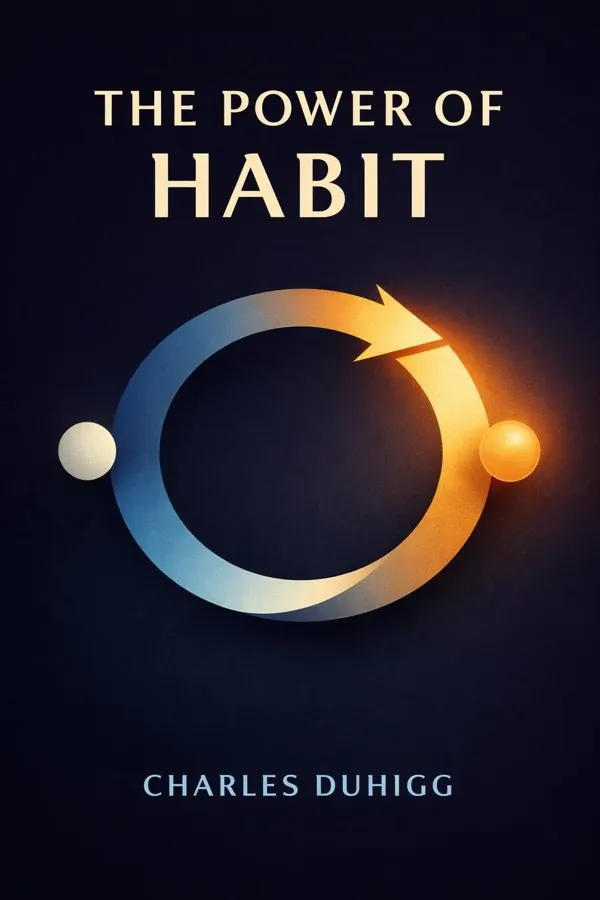
The Power of Habit
Charles Duhigg
10 min
The Power of Habit: Why We Do What We Do in Life and Business
Charles Duhigg
10 min
Smarter Faster Better: The Secrets of Being Productive in Life and Business
Charles Duhigg
10 min
Supercommunicators: How to Unlock the Secret Language of Connection
Charles Duhigg
10 minYou Might Also Like

Browse by Category
Ready to read The Power of Habit?
Get the full summary and 100K+ more books with Fizz Moment.