
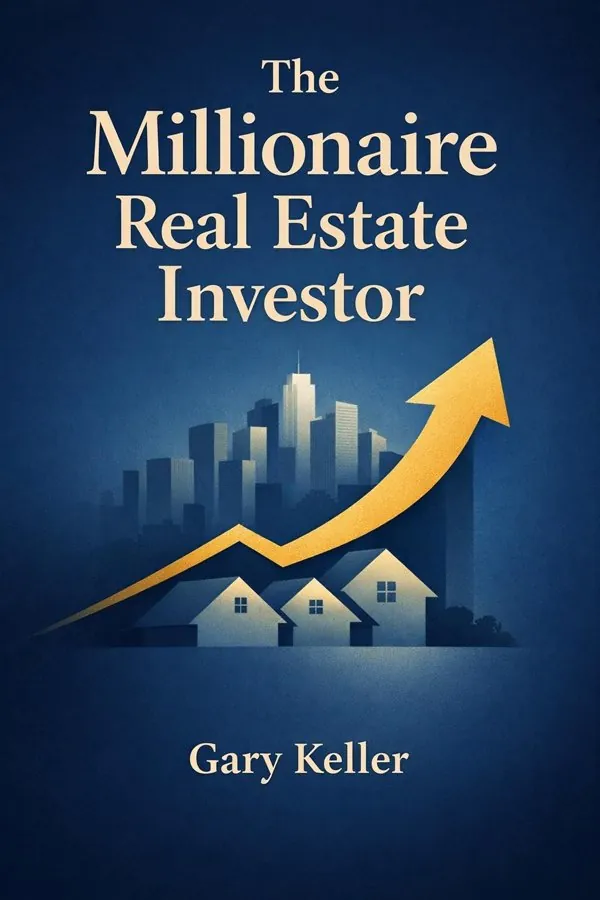
The Millionaire Real Estate Investor: Summary & Key Insights
by Gary Keller
 10 min9 chaptersAudio available
Key Takeaways from The Millionaire Real Estate Investor
Wealth often begins long before the first purchase, because the quality of your investing life is shaped by the quality of your thinking.
Big financial outcomes are rarely the result of one brilliant move; they usually come from following a reliable sequence.
Excitement can make almost any property seem like a good opportunity, but numbers reveal whether a deal builds wealth or drains it.
Great investing is less about buying often and more about buying well.
Many people want the benefits of property ownership without accepting the responsibilities of operating a real estate business.
What Is The Millionaire Real Estate Investor About?
The Millionaire Real Estate Investor by Gary Keller is a finance book spanning 7 pages. The Millionaire Real Estate Investor is a practical blueprint for turning real estate from a vague dream into a disciplined wealth-building strategy. In this book, Gary Keller draws on the experiences, habits, and decision-making frameworks of more than 100 millionaire investors to show that building substantial wealth through property is not reserved for insiders, experts, or the already rich. It is a repeatable process grounded in mindset, math, systems, and patience. Rather than treating real estate as a quick path to easy money, Keller presents it as a business that rewards clarity, consistent action, and long-term ownership. He breaks down how successful investors think, how they evaluate opportunities, how they finance deals, and how they protect themselves from avoidable mistakes. The book matters because it replaces hype with models. Keller’s authority comes not only from his success as the founder of Keller Williams Realty, one of the world’s largest real estate companies, but also from his close study of investors who have actually achieved millionaire status through property. The result is both inspiring and deeply actionable.
This FizzRead summary covers all 9 key chapters of The Millionaire Real Estate Investor in approximately 10 minutes, distilling the most important ideas, arguments, and takeaways from Gary Keller's work. Also available as an audio summary and Key Quotes Podcast.
The Millionaire Real Estate Investor
The Millionaire Real Estate Investor is a practical blueprint for turning real estate from a vague dream into a disciplined wealth-building strategy. In this book, Gary Keller draws on the experiences, habits, and decision-making frameworks of more than 100 millionaire investors to show that building substantial wealth through property is not reserved for insiders, experts, or the already rich. It is a repeatable process grounded in mindset, math, systems, and patience. Rather than treating real estate as a quick path to easy money, Keller presents it as a business that rewards clarity, consistent action, and long-term ownership. He breaks down how successful investors think, how they evaluate opportunities, how they finance deals, and how they protect themselves from avoidable mistakes. The book matters because it replaces hype with models. Keller’s authority comes not only from his success as the founder of Keller Williams Realty, one of the world’s largest real estate companies, but also from his close study of investors who have actually achieved millionaire status through property. The result is both inspiring and deeply actionable.
Who Should Read The Millionaire Real Estate Investor?
This book is perfect for anyone interested in finance and looking to gain actionable insights in a short read. Whether you're a student, professional, or lifelong learner, the key ideas from The Millionaire Real Estate Investor by Gary Keller will help you think differently.
- ✓Readers who enjoy finance and want practical takeaways
- ✓Professionals looking to apply new ideas to their work and life
- ✓Anyone who wants the core insights of The Millionaire Real Estate Investor in just 10 minutes
Want the full summary?
Get instant access to this book summary and 100K+ more with Fizz Moment.
Get Free SummaryAvailable on App Store • Free to download
Key Chapters
Wealth often begins long before the first purchase, because the quality of your investing life is shaped by the quality of your thinking. Keller argues that millionaire investors do not stumble into success by luck or charisma. They cultivate a mindset that sees possibility where others see confusion, and they replace vague wishes with measurable financial goals. This is the essence of what the book calls thinking like a millionaire: deciding that wealth creation is a serious pursuit, not a casual hope.
That mindset includes several shifts. First, you stop asking whether real estate can make you rich and start asking what kind of strategy will get you there. Second, you stop treating setbacks as proof that investing is too risky and start viewing them as signals to improve your knowledge and systems. Third, you take personal responsibility for outcomes. Millionaire investors do not blame markets, agents, or interest rates for every problem. They focus on what they can control: education, due diligence, deal structure, reserves, and discipline.
A practical example is the difference between someone who casually browses listings and someone who defines a five-year net worth target, studies one neighborhood, tracks rents, and builds lending relationships before making an offer. The first person is dreaming. The second is preparing.
Keller’s point is not that optimism alone creates wealth. It is that wealth-building behavior starts when your identity changes from consumer to investor. Once that change happens, your choices become more intentional, your standards rise, and your tolerance for sloppy decision-making falls.
Actionable takeaway: Write down a specific wealth goal tied to real estate, a timeline for reaching it, and the habits you will practice weekly to support that identity.
Big financial outcomes are rarely the result of one brilliant move; they usually come from following a reliable sequence. Keller organizes the journey to wealth into three core models: Think a Million, Buy a Million, and Own a Million. Together, these models turn a broad ambition into a practical roadmap.
Think a Million is about belief, goals, and financial vision. Before you can own meaningful assets, you need to decide what success looks like and commit to learning the game. Buy a Million is where strategy meets execution. It focuses on acquiring investment property with the right economics, not simply buying what looks attractive. Own a Million is perhaps the most overlooked stage. Real wealth is not created just by purchasing assets; it is created by operating, improving, and holding them long enough for cash flow, debt reduction, and appreciation to compound.
These models matter because many new investors jump straight to buying without doing the mental or financial preparation. Others buy a property but manage it poorly, undercapitalize the deal, or sell too soon. Keller’s framework reminds readers that every stage has its own discipline.
For example, an investor might spend six months building savings, improving credit, and studying local cap rates before purchasing a duplex. After the purchase, they may focus on tenant quality, maintenance systems, and refinancing opportunities over several years. That investor is not merely buying real estate. They are moving deliberately through the full wealth-building process.
The power of the three models is their simplicity. They give you a way to assess where you are and what your next move should be.
Actionable takeaway: Identify which stage you are in right now: thinking, buying, or owning, and concentrate your next 90 days on mastering that stage instead of trying to do everything at once.
Excitement can make almost any property seem like a good opportunity, but numbers reveal whether a deal builds wealth or drains it. Keller emphasizes that millionaire investors understand the economics of investing at a granular level. They know income, expenses, financing costs, reserves, and expected returns before they commit capital. In real estate, confidence should come from calculation, not emotion.
This means learning the core financial drivers behind every property. Cash flow tells you whether the asset produces income after paying expenses and debt service. Equity growth reflects how much ownership value you are building over time. Appreciation can increase wealth, but Keller warns against relying on it as the primary reason to buy. Smart investors buy for sound economics first and treat appreciation as an added benefit. They also pay close attention to leverage, because debt can magnify gains but also amplify mistakes.
Consider two rental homes. One appears cheaper but needs heavy repairs, has low rent potential, and thin cash flow after financing. The other costs more upfront but sits in a stronger rental market, has lower maintenance needs, and produces stable monthly income. An inexperienced buyer may choose based on price alone. A disciplined investor looks at total return, risk exposure, and long-term operating performance.
Keller’s broader lesson is that real estate is a math business disguised as a people business. The investors who endure are not the ones who fall in love with properties. They are the ones who can quickly estimate whether a property fits their strategy, meets their return criteria, and leaves room for error.
Actionable takeaway: Before evaluating your next deal, create a simple investment worksheet that includes purchase price, repair costs, rent, vacancy, operating expenses, financing, cash flow, and reserve requirements.
Great investing is less about buying often and more about buying well. Keller makes clear that acquisition is one of the most decisive moments in the entire investing cycle because your profit is influenced heavily by the quality of the purchase. If you overpay, underestimate repairs, or buy in the wrong location, strong management may not be enough to rescue the investment.
Successful investors develop systems for finding opportunities rather than waiting for perfect listings to appear. They study neighborhoods, track market trends, monitor rental demand, and build relationships with agents, brokers, lenders, contractors, and other investors. Over time, this network brings better information and better access. They also define acquisition criteria in advance: property type, target price range, minimum cash flow, desired neighborhood characteristics, and acceptable renovation scope.
Keller stresses that investors should buy for value, not excitement. That may mean targeting distressed properties with hidden upside, underperforming rentals that can be improved, or assets in locations with stable demand and manageable risk. It also means negotiating with discipline. You make money when you buy because your purchase price and terms shape your future options.
Imagine an investor comparing two small multifamily properties. One is beautifully staged and marketed at a premium. The other is less attractive, poorly managed, and priced below market because vacancies are high. With proper analysis, the second may offer more upside through repairs, better tenant screening, and rent optimization. This is the kind of value-oriented thinking Keller encourages.
Buying the right property requires patience. Passing on mediocre deals is not failure. It is often the reason investors still have capital available when the right opportunity arrives.
Actionable takeaway: Define your buy box in writing, including market, asset type, return targets, and maximum renovation risk, and do not make offers outside those rules without a strong, documented reason.
Many people want the benefits of property ownership without accepting the responsibilities of operating a real estate business. Keller argues that this is one of the biggest reasons investors fail. Buying is only the beginning. The real test is ownership: managing tenants, controlling expenses, maintaining the asset, protecting cash flow, and making decisions that support long-term value.
Millionaire investors treat each property as a business unit. They track income and expenses rigorously. They budget for repairs before emergencies happen. They enforce standards with tenants instead of avoiding hard conversations. They know that neglected operations eventually become financial problems. Good management is not glamorous, but it is often the difference between a portfolio that compounds and one that collapses under preventable stress.
Systems are crucial here. That includes written lease processes, rent collection methods, maintenance protocols, vendor lists, inspection routines, and clear bookkeeping. A single property owner may manage these tasks personally at first, but the business mindset remains the same. As the portfolio grows, professional property management or in-house systems become even more important.
For example, an investor with several rentals who tracks delinquency, turnover cost, and maintenance trends can spot problems early and intervene. Another investor who keeps poor records and responds reactively may be surprised by vacancies, legal issues, or cash shortages. The properties may be similar, but the operating discipline is not.
Keller’s deeper point is that ownership creates wealth when you manage for durability. Wealthy investors think in years, not weekends. They build stable operations that can survive friction, because friction is inevitable.
Actionable takeaway: Create a basic property operations checklist covering rent collection, maintenance scheduling, inspections, reserves, bookkeeping, and tenant communication, and review it monthly like a business owner.
Real estate may look like a solo pursuit from the outside, but lasting success is almost always a team achievement. Keller repeatedly shows that millionaire investors surround themselves with skilled people who help them source deals, evaluate risk, execute renovations, manage legal issues, and keep finances in order. The lone-wolf investor can make progress, but the well-supported investor scales faster and makes fewer costly mistakes.
Your team may include a real estate agent, mortgage broker, lender, contractor, accountant, attorney, insurance professional, property manager, and mentor. Each serves a different role, and the value is not merely convenience. A good team improves judgment. Experienced professionals can spot issues in contracts, identify unrealistic repair budgets, flag neighborhood risks, and offer solutions that a beginner might miss.
Keller also highlights that team-building is not passive. You do not simply collect contacts. You interview, test, and refine. Not every agent understands investment math. Not every contractor communicates well or sticks to timelines. Millionaire investors learn to select partners based on competence, integrity, responsiveness, and alignment with their goals.
Suppose you are evaluating a small apartment building. A knowledgeable agent may provide local rent comps, a lender can clarify financing constraints, a contractor can estimate capital improvements, and an accountant can explain tax implications. Together, they help you see the real deal instead of the sales pitch.
A strong team also creates leverage. It frees you to focus on high-value decisions rather than being trapped in every minor task. That is essential if you want to grow beyond one or two properties.
Actionable takeaway: List the five professionals most important to your investing strategy, then begin building relationships now by asking for referrals, interviewing candidates, and selecting people who understand investors rather than owner-occupants.
Every investment contains risk, but the biggest danger in real estate is often unmanaged risk disguised as confidence. Keller does not present risk as something to fear blindly. Instead, he treats it as something to understand, price, and reduce through preparation. Millionaire investors are not reckless gamblers. They are calculated decision-makers who know that survival is the first rule of compounding wealth.
Risk management begins with buying conservatively. That means avoiding deals with razor-thin margins, unrealistic rent assumptions, or financing that leaves no room for setbacks. It also means maintaining reserves. Vacancies, repairs, legal disputes, and economic shifts are not rare anomalies; they are part of the business. Investors who plan for them stay in the game. Those who assume everything will go smoothly often learn expensive lessons.
Diversification can also matter, whether across property types, neighborhoods, or financing structures. So can insurance, legal entity planning, proper inspections, and thorough tenant screening. Keller’s message is simple: hope is not a strategy. Systems are.
Imagine an investor who buys a rental with minimal down payment, no cash reserves, and optimistic projections based on full occupancy. A major plumbing issue appears during the first vacancy. Because there is no financial cushion, the investor is forced into high-interest debt or a rushed sale. A more disciplined investor would have stress-tested the deal, budgeted reserves, and protected downside before closing.
The goal is not to eliminate uncertainty entirely. That is impossible. The goal is to structure deals so that normal setbacks do not become catastrophic.
Actionable takeaway: Before purchasing any property, run a downside scenario that includes vacancy, repairs, slower rent growth, and unexpected expenses, and only proceed if the deal still remains financially survivable.
There is a hidden ceiling in real estate investing: the moment your growth becomes limited by your personal time, memory, and energy. Keller teaches that millionaire investors break through this ceiling by building systems. They do not rely on willpower to remember lease dates, maintenance follow-ups, or financial reviews. They create repeatable processes that make performance more consistent and growth more manageable.
Systems can be simple at first. A spreadsheet for tracking rents, a calendar for inspections, a standard process for screening tenants, a checklist for acquisitions, and a monthly review of each property’s performance are all forms of leverage. As the portfolio expands, more sophisticated tools may be needed, such as property management software, written operating procedures, and delegated responsibilities.
The reason this matters is that scale magnifies both strengths and weaknesses. If you have poor bookkeeping with one property, it is annoying. With ten properties, it can become dangerous. If you choose tenants casually in one unit, you may absorb the mistake. Across multiple units, inconsistency can severely damage returns. Systems protect the investor from disorder.
Keller also shows that scale is not only about acquiring more doors. It is about making each part of the business more efficient. For example, standardizing renovation materials can reduce costs and simplify maintenance. Using the same screening process for every applicant can improve tenant quality. Reviewing each property with the same scorecard can sharpen decision-making.
In essence, systems transform investing from a series of isolated transactions into a durable enterprise. That is how wealth grows without chaos growing faster.
Actionable takeaway: Pick one recurring part of your investing activity, such as deal analysis, tenant screening, or monthly reporting, and turn it into a documented step-by-step process you can repeat every time.
Most investors know that markets rise and fall, but far fewer understand how much emotional instability can damage their results. Keller’s long-term view is one of the book’s strongest contributions: millionaire status in real estate is usually earned through consistency, not drama. Chasing booms, panicking during downturns, or constantly changing strategies based on headlines often weakens returns.
Discipline shows up in several ways. You continue learning even after your first success. You review your numbers instead of relying on intuition. You hold quality assets long enough for debt paydown and appreciation to work in your favor. You resist the temptation to sell simply because the market is noisy, and you resist the temptation to buy simply because everyone else is excited.
This mindset is especially powerful because real estate rewards time. Rents can rise, loans amortize, tax advantages accumulate, and market values often grow over long periods. Investors who remain steady capture these compounding effects. Investors who interrupt the process through impulsive decisions often sacrifice the very benefits they sought.
For instance, a disciplined investor might continue acquiring solid cash-flowing properties during a less fashionable market, while others wait for “perfect timing.” Years later, that patient buyer may own multiple assets with improved rents, reduced loan balances, and substantial equity. Their advantage did not come from predicting everything correctly. It came from staying in motion while others hesitated.
Keller’s message is reassuring: you do not need brilliance on every deal. You need a sound strategy, emotional control, and the willingness to keep improving.
Actionable takeaway: Choose a written investing philosophy, including your buy criteria, hold period, and financial rules, and revisit it whenever market noise tempts you to abandon your plan.
All Chapters in The Millionaire Real Estate Investor
About the Author
Gary Keller is an American entrepreneur, real estate executive, and bestselling author best known as the co-founder of Keller Williams Realty. Under his leadership, Keller Williams grew into one of the largest real estate franchise organizations in the world, recognized for its agent training, culture, and scale. Keller has built his reputation on translating high-level success principles into clear, practical systems that professionals can use to grow businesses and build wealth. In addition to his work in real estate, he is the author of several influential books, including The Millionaire Real Estate Agent and The ONE Thing. His writing often combines strategic thinking, personal discipline, and real-world business experience. In The Millionaire Real Estate Investor, Keller applies that approach to property investing, drawing lessons from investors who have achieved lasting financial success.
Get This Summary in Your Preferred Format
Read or listen to the The Millionaire Real Estate Investor summary by Gary Keller anytime, anywhere. FizzRead offers multiple formats so you can learn on your terms — all free.
Available formats: App · Audio · PDF · EPUB — All included free with FizzRead
Download The Millionaire Real Estate Investor PDF and EPUB Summary
Key Quotes from The Millionaire Real Estate Investor
“Wealth often begins long before the first purchase, because the quality of your investing life is shaped by the quality of your thinking.”
“Big financial outcomes are rarely the result of one brilliant move; they usually come from following a reliable sequence.”
“Excitement can make almost any property seem like a good opportunity, but numbers reveal whether a deal builds wealth or drains it.”
“Great investing is less about buying often and more about buying well.”
“Many people want the benefits of property ownership without accepting the responsibilities of operating a real estate business.”
Frequently Asked Questions about The Millionaire Real Estate Investor
The Millionaire Real Estate Investor by Gary Keller is a finance book that explores key ideas across 9 chapters. The Millionaire Real Estate Investor is a practical blueprint for turning real estate from a vague dream into a disciplined wealth-building strategy. In this book, Gary Keller draws on the experiences, habits, and decision-making frameworks of more than 100 millionaire investors to show that building substantial wealth through property is not reserved for insiders, experts, or the already rich. It is a repeatable process grounded in mindset, math, systems, and patience. Rather than treating real estate as a quick path to easy money, Keller presents it as a business that rewards clarity, consistent action, and long-term ownership. He breaks down how successful investors think, how they evaluate opportunities, how they finance deals, and how they protect themselves from avoidable mistakes. The book matters because it replaces hype with models. Keller’s authority comes not only from his success as the founder of Keller Williams Realty, one of the world’s largest real estate companies, but also from his close study of investors who have actually achieved millionaire status through property. The result is both inspiring and deeply actionable.
More by Gary Keller

The One Thing
Gary Keller
10 min
The ONE Thing: The Surprisingly Simple Truth Behind Extraordinary Results
Gary Keller, Jay Papasan
10 min
The Millionaire Real Estate Agent: It's Not About the Money... It's About Being the Best You Can Be!
Gary Keller, Dave Jenks, Jay Papasan
10 minYou Might Also Like



Browse by Category
Ready to read The Millionaire Real Estate Investor?
Get the full summary and 100K+ more books with Fizz Moment.