
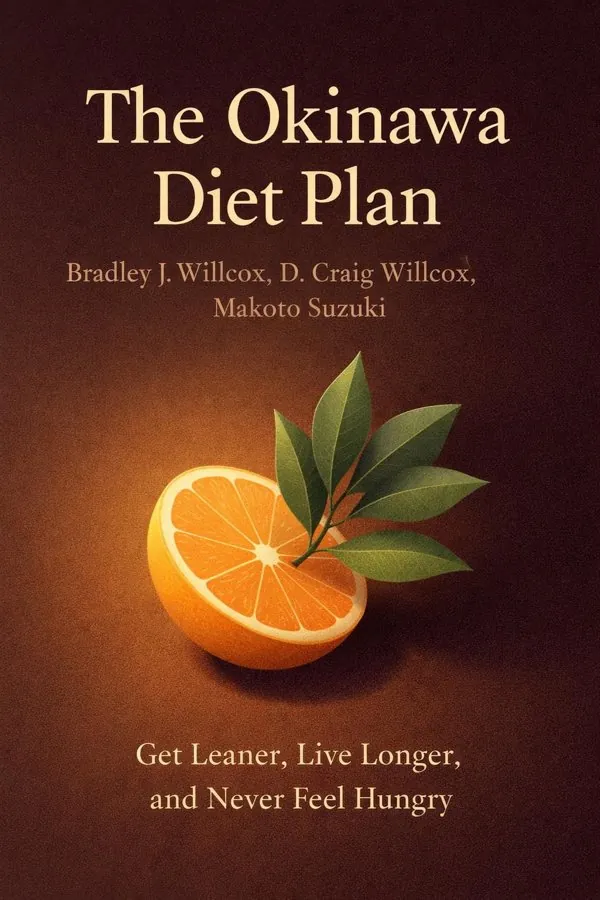
The Okinawa Diet Plan: Get Leaner, Live Longer, and Never Feel Hungry: Summary & Key Insights
by Bradley J. Willcox, D. Craig Willcox, Makoto Suzuki
 10 min4 chaptersAudio available
What Is The Okinawa Diet Plan: Get Leaner, Live Longer, and Never Feel Hungry About?
The Okinawa Diet Plan: Get Leaner, Live Longer, and Never Feel Hungry by Bradley J. Willcox, D. Craig Willcox, Makoto Suzuki is a nutrition book spanning 4 pages. The Okinawa Diet Plan presents the findings of a long-term study of Okinawan centenarians, revealing how their traditional diet and lifestyle contribute to exceptional longevity and health. The book outlines a practical eating plan inspired by Okinawan habits, emphasizing nutrient-dense, low-calorie foods, plant-based meals, and mindful living to promote weight loss and well-being.
This FizzRead summary covers all 4 key chapters of The Okinawa Diet Plan: Get Leaner, Live Longer, and Never Feel Hungry in approximately 10 minutes, distilling the most important ideas, arguments, and takeaways from Bradley J. Willcox, D. Craig Willcox, Makoto Suzuki's work. Also available as an audio summary and Key Quotes Podcast.
The Okinawa Diet Plan: Get Leaner, Live Longer, and Never Feel Hungry
The Okinawa Diet Plan presents the findings of a long-term study of Okinawan centenarians, revealing how their traditional diet and lifestyle contribute to exceptional longevity and health. The book outlines a practical eating plan inspired by Okinawan habits, emphasizing nutrient-dense, low-calorie foods, plant-based meals, and mindful living to promote weight loss and well-being.
Who Should Read The Okinawa Diet Plan: Get Leaner, Live Longer, and Never Feel Hungry?
This book is perfect for anyone interested in nutrition and looking to gain actionable insights in a short read. Whether you're a student, professional, or lifelong learner, the key ideas from The Okinawa Diet Plan: Get Leaner, Live Longer, and Never Feel Hungry by Bradley J. Willcox, D. Craig Willcox, Makoto Suzuki will help you think differently.
- ✓Readers who enjoy nutrition and want practical takeaways
- ✓Professionals looking to apply new ideas to their work and life
- ✓Anyone who wants the core insights of The Okinawa Diet Plan: Get Leaner, Live Longer, and Never Feel Hungry in just 10 minutes
Want the full summary?
Get instant access to this book summary and 100K+ more with Fizz Moment.
Get Free SummaryAvailable on App Store • Free to download
Key Chapters
The Okinawa Centenarian Study began with a simple question: why do so many Okinawans live past one hundred, and not merely survive, but thrive? As researchers, we wanted more than anecdotal answers; we wanted data. What we found amazed us. Compared to Western countries, Okinawans had among the world’s lowest rates of heart disease, stroke, and cancer. Their cholesterol and blood pressure levels were enviably stable. As we measured and analyzed, a pattern emerged that pointed unmistakably toward how they ate and lived.
Okinawa’s demographic profile was unique. Even among Japan’s already long-lived population, Okinawans stood out. Their diet was lower in calories yet denser nutritionally. They consumed vast quantities of colorful vegetables, seaweeds, and soy-based foods like tofu and miso. Sweet potatoes—bright orange and purple—served as a main staple, providing both fiber and antioxidants. Small portions of fish appeared occasionally; meat and dairy were rare treats, not daily indulgences.
But beyond what they ate was how they ate. The rhythm of communal eating, the ritual thanks before a meal—“Itadakimasu”—and the intuitive practice of hara hachi bu instilled a sense of responsibility and mindfulness around food. It is a culture where excess is neither admired nor pursued, and satisfaction lies closer to gratitude than to consumption. These collective behaviors formed the biological foundation of their longevity. We came to see Okinawa not as a mystery but as a living map—a blueprint for living long and well.
To explain the Okinawan way of eating is to describe balance in motion. The first principle, caloric moderation, is deceptively simple but profoundly powerful. On average, Okinawan elders consume about 20 percent fewer calories than Western adults. This restriction doesn’t come from dieting; it comes from natural habits and cultural wisdom. Hara hachi bu is the embodiment of that wisdom. Stopping at 80 percent full not only prevents overeating but exerts biological effects linked to slow aging—lower oxidative stress, reduced levels of insulin and inflammatory markers, and greater cellular resilience.
The second principle is density—getting more nutrients per calorie. An Okinawan meal is a rainbow of plant foods: green and purple sweet potatoes, leafy vegetables, seaweed, bitter melon, and soy. These ingredients offer both macronutrient harmony—moderate proteins, complex carbohydrates, good fats—and a powerful cocktail of phytonutrients. In contrast to typical Western diets that feature energy-dense but nutrient-poor foods, the Okinawan pattern ensures that every calorie counts.
The third principle is variety. The traditional diet includes over two hundred different food items consumed throughout the year, many of them seasonal. This diversity ensures balance across the microbiome and nutrient spectrum. Soy products, such as tofu and miso, serve as the main protein source, providing essential amino acids without excess saturated fat. Fish contributes omega-3s, while greens and tubers add fiber and antioxidants. Salt intake remains low, replaced by natural seasonings and broths rich in umami.
Together, these principles constitute more than a diet—they are a daily practice of moderation and abundance. Food becomes a source of vitality, not disease. The science behind these principles now aligns with what Okinawans have shown us for generations: that the best way to extend life is to live lightly—on both the planet and the body.
+ 2 more chapters — available in the FizzRead app
All Chapters in The Okinawa Diet Plan: Get Leaner, Live Longer, and Never Feel Hungry
About the Authors
Bradley J. Willcox and D. Craig Willcox are researchers specializing in aging and longevity studies. They collaborated with Dr. Makoto Suzuki, a Japanese geriatrician who co-founded the Okinawa Centenarian Study, to explore the secrets of Okinawan longevity and translate them into practical health advice for global readers.
Get This Summary in Your Preferred Format
Read or listen to the The Okinawa Diet Plan: Get Leaner, Live Longer, and Never Feel Hungry summary by Bradley J. Willcox, D. Craig Willcox, Makoto Suzuki anytime, anywhere. FizzRead offers multiple formats so you can learn on your terms — all free.
Available formats: App · Audio · PDF · EPUB — All included free with FizzRead
Download The Okinawa Diet Plan: Get Leaner, Live Longer, and Never Feel Hungry PDF and EPUB Summary
Key Quotes from The Okinawa Diet Plan: Get Leaner, Live Longer, and Never Feel Hungry
“The Okinawa Centenarian Study began with a simple question: why do so many Okinawans live past one hundred, and not merely survive, but thrive?”
“To explain the Okinawan way of eating is to describe balance in motion.”
Frequently Asked Questions about The Okinawa Diet Plan: Get Leaner, Live Longer, and Never Feel Hungry
The Okinawa Diet Plan: Get Leaner, Live Longer, and Never Feel Hungry by Bradley J. Willcox, D. Craig Willcox, Makoto Suzuki is a nutrition book that explores key ideas across 4 chapters. The Okinawa Diet Plan presents the findings of a long-term study of Okinawan centenarians, revealing how their traditional diet and lifestyle contribute to exceptional longevity and health. The book outlines a practical eating plan inspired by Okinawan habits, emphasizing nutrient-dense, low-calorie foods, plant-based meals, and mindful living to promote weight loss and well-being.
More by Bradley J. Willcox, D. Craig Willcox, Makoto Suzuki

Healthy at 100: The Scientifically Proven Secrets of the World's Healthiest and Longest-Lived Peoples
Bradley J. Willcox, D. Craig Willcox, Makoto Suzuki
10 min
The Okinawa Program: How the World's Longest-Lived People Achieve Everlasting Health—And How You Can Too
Bradley J. Willcox, D. Craig Willcox, Makoto Suzuki
10 minYou Might Also Like
Eating by the Seasons Cookbook: Seasonal Produce-Focused Recipes
Clare Foster
10 min
From Crook to Cook: Platinum Recipes from Tha Boss Dogg's Kitchen
Snoop Dogg with Ryan Ford
10 min
Juicing for Beginners: The Essential Guide to Juicing Recipes and Juicing for Weight Loss
Rockridge Press
10 min
The Food Therapist: Break Bad Habits, Eat with Intention, and Indulge Without Worry
Shira Lenchewski
10 min
The Mediterranean Diet Meal Plan: A 4-Week Meal Plan for Optimal Health and Weight Loss
Various Contributors
10 min
The Well Plated Cookbook: Simple, Wholesome Recipes for Everyday Meals
Erin Clarke
10 minBrowse by Category
Ready to read The Okinawa Diet Plan: Get Leaner, Live Longer, and Never Feel Hungry?
Get the full summary and 100K+ more books with Fizz Moment.