
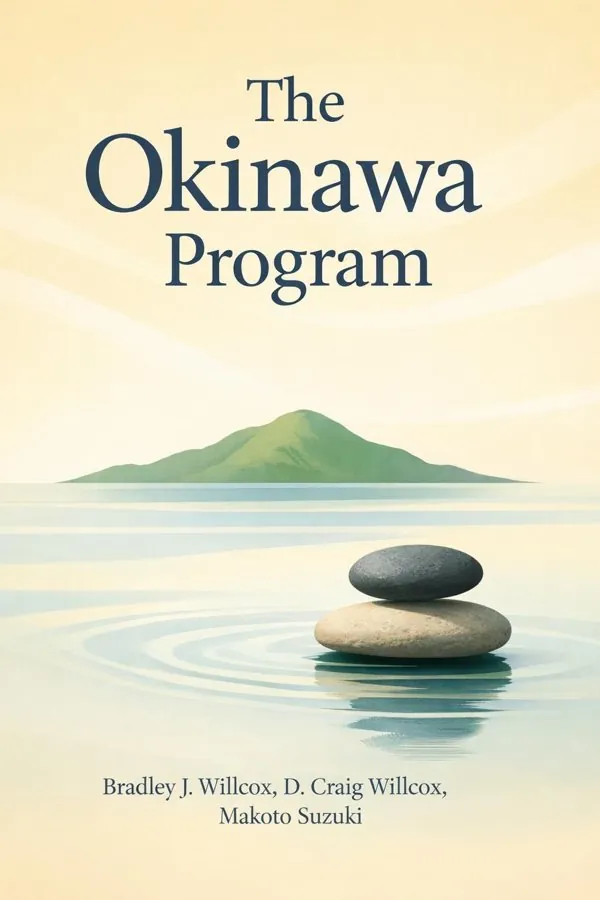
The Okinawa Program: How the World's Longest-Lived People Achieve Everlasting Health—And How You Can Too: Summary & Key Insights
by Bradley J. Willcox, D. Craig Willcox, Makoto Suzuki
 10 min6 chaptersAudio available
What Is The Okinawa Program: How the World's Longest-Lived People Achieve Everlasting Health—And How You Can Too About?
The Okinawa Program: How the World's Longest-Lived People Achieve Everlasting Health—And How You Can Too by Bradley J. Willcox, D. Craig Willcox, Makoto Suzuki is a longevity book spanning 6 pages. This book presents the findings of the Okinawa Centenarian Study, exploring the lifestyle, diet, and social habits of Okinawa's elderly population, known for their exceptional longevity. It offers practical guidance on nutrition, exercise, and mental well-being inspired by the Okinawan way of life.
This FizzRead summary covers all 6 key chapters of The Okinawa Program: How the World's Longest-Lived People Achieve Everlasting Health—And How You Can Too in approximately 10 minutes, distilling the most important ideas, arguments, and takeaways from Bradley J. Willcox, D. Craig Willcox, Makoto Suzuki's work. Also available as an audio summary and Key Quotes Podcast.
The Okinawa Program: How the World's Longest-Lived People Achieve Everlasting Health—And How You Can Too
This book presents the findings of the Okinawa Centenarian Study, exploring the lifestyle, diet, and social habits of Okinawa's elderly population, known for their exceptional longevity. It offers practical guidance on nutrition, exercise, and mental well-being inspired by the Okinawan way of life.
Who Should Read The Okinawa Program: How the World's Longest-Lived People Achieve Everlasting Health—And How You Can Too?
This book is perfect for anyone interested in longevity and looking to gain actionable insights in a short read. Whether you're a student, professional, or lifelong learner, the key ideas from The Okinawa Program: How the World's Longest-Lived People Achieve Everlasting Health—And How You Can Too by Bradley J. Willcox, D. Craig Willcox, Makoto Suzuki will help you think differently.
- ✓Readers who enjoy longevity and want practical takeaways
- ✓Professionals looking to apply new ideas to their work and life
- ✓Anyone who wants the core insights of The Okinawa Program: How the World's Longest-Lived People Achieve Everlasting Health—And How You Can Too in just 10 minutes
Want the full summary?
Get instant access to this book summary and 100K+ more with Fizz Moment.
Get Free SummaryAvailable on App Store • Free to download
Key Chapters
When we began the Okinawa Centenarian Study, the first step was to examine what made these islands unique. Okinawa, though modest in size, displayed an extraordinary demographic profile. The proportion of people living beyond one hundred years was among the highest recorded anywhere, with chronic diseases such as heart disease, cancer, and stroke occurring at dramatically lower rates than in Western nations. As we met centenarians who still tended their gardens, prepared meals from scratch, and joined in community events, we saw a picture of aging that defied modern assumptions.
Our research revealed that Okinawan longevity could be attributed less to modern medicine and more to the sustainable patterns of life—dietary moderation, physical engagement, and spiritual outlook. We compiled decades of medical data: blood lipid profiles, hormone levels, and nutritional intake. Time and again, the same signal rose above the rest—Okinawans lived by principles that kept inflammation and oxidative stress low, insulin sensitivity high, and cellular aging slower. Rather than a single factor, longevity grew from an ecosystem of practices formed by tradition and reinforced by community.
If there is a single pillar upon which the Okinawan secret rests, it is the way they eat. The heart of the diet is hara hachi bu—a Confucian teaching that encourages eating until you are eighty percent full. This simple habit ensures a daily calorie intake around twenty percent lower than in most industrialized societies, yet nutrient density remains high. Meals revolve around vegetables, legumes, whole grains, and soy-based foods such as tofu and miso, with only modest amounts of fish and minimal meat or dairy.
In their kitchens, you will find an astonishing variety of plant foods: sweet potatoes rich in fiber and antioxidants, bitter melon known for its glucose-regulating properties, and marine vegetables that supply trace minerals seldom found elsewhere. Fat sources lean toward monounsaturated and polyunsaturated forms, primarily from fish and plants rather than animals. Scientifically, this combination yields lower LDL cholesterol, reduced arterial inflammation, and a balanced omega-3 to omega-6 ratio. Yet beyond science, the Okinawan meal is an act of mindfulness—each dish colorful, modest, and shared. It is food as nourishment, medicine, and community bonding all at once.
From a modern perspective, translating this approach means reorienting how we view the table. Instead of counting calories mechanically, we learn to focus on satiety, variety, and color. We eat plants first, celebrate local produce, and treat protein as an accent. The result is not a regime but a rhythm—one that sustains without deprivation.
+ 4 more chapters — available in the FizzRead app
All Chapters in The Okinawa Program: How the World's Longest-Lived People Achieve Everlasting Health—And How You Can Too
About the Authors
Bradley J. Willcox and D. Craig Willcox are researchers specializing in aging and longevity, while Makoto Suzuki is a Japanese gerontologist who founded the Okinawa Centenarian Study. Together, they have conducted extensive research on the health and lifestyle factors contributing to Okinawa's remarkable longevity.
Get This Summary in Your Preferred Format
Read or listen to the The Okinawa Program: How the World's Longest-Lived People Achieve Everlasting Health—And How You Can Too summary by Bradley J. Willcox, D. Craig Willcox, Makoto Suzuki anytime, anywhere. FizzRead offers multiple formats so you can learn on your terms — all free.
Available formats: App · Audio · PDF · EPUB — All included free with FizzRead
Download The Okinawa Program: How the World's Longest-Lived People Achieve Everlasting Health—And How You Can Too PDF and EPUB Summary
Key Quotes from The Okinawa Program: How the World's Longest-Lived People Achieve Everlasting Health—And How You Can Too
“When we began the Okinawa Centenarian Study, the first step was to examine what made these islands unique.”
“If there is a single pillar upon which the Okinawan secret rests, it is the way they eat.”
Frequently Asked Questions about The Okinawa Program: How the World's Longest-Lived People Achieve Everlasting Health—And How You Can Too
The Okinawa Program: How the World's Longest-Lived People Achieve Everlasting Health—And How You Can Too by Bradley J. Willcox, D. Craig Willcox, Makoto Suzuki is a longevity book that explores key ideas across 6 chapters. This book presents the findings of the Okinawa Centenarian Study, exploring the lifestyle, diet, and social habits of Okinawa's elderly population, known for their exceptional longevity. It offers practical guidance on nutrition, exercise, and mental well-being inspired by the Okinawan way of life.
More by Bradley J. Willcox, D. Craig Willcox, Makoto Suzuki
The Okinawa Diet Plan: Get Leaner, Live Longer, and Never Feel Hungry
Bradley J. Willcox, D. Craig Willcox, Makoto Suzuki
10 min
Healthy at 100: The Scientifically Proven Secrets of the World's Healthiest and Longest-Lived Peoples
Bradley J. Willcox, D. Craig Willcox, Makoto Suzuki
10 minYou Might Also Like

Age-Proof: Living Longer Without Running Out of Money or Breaking a Hip
Jean Chatzky, Michael F. Roizen
10 min
Ageless Body, Timeless Mind: The Quantum Alternative to Growing Old
Deepak Chopra
10 min
How to Live Forever: The Enduring Power of Connecting the Generations
Marc Freedman
10 min
Outlive: The Science and Art of Longevity
Peter Attia
10 min
The Longevity Formula: How to Live Longer, Stronger, and Healthier
Dr. James DiNicolantonio
10 min
The Longevity Plan: Seven Life-Transforming Lessons from Ancient China
Dr. John D. Day, Dr. Matthew D. LaPlante
10 minBrowse by Category
Ready to read The Okinawa Program: How the World's Longest-Lived People Achieve Everlasting Health—And How You Can Too?
Get the full summary and 100K+ more books with Fizz Moment.