
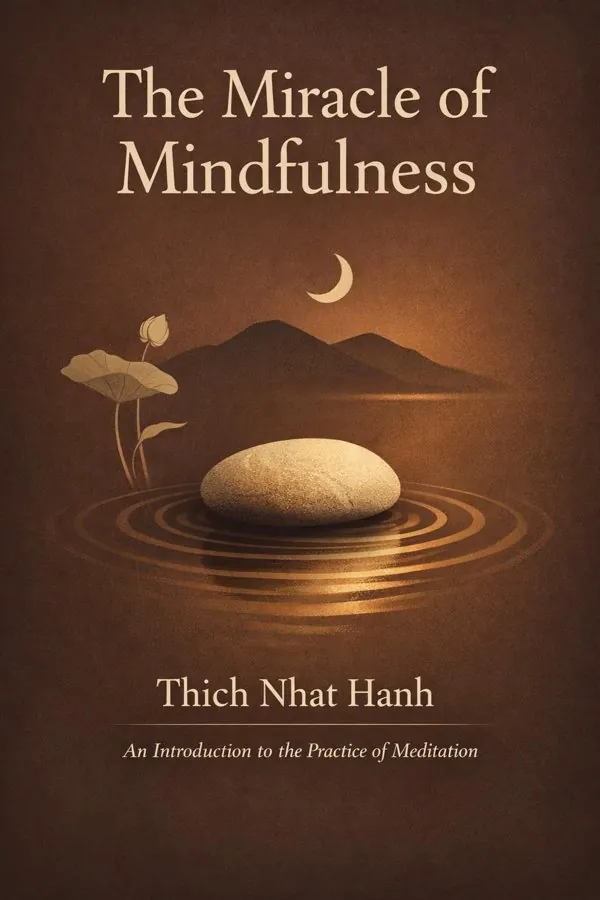
The Miracle of Mindfulness: An Introduction to the Practice of Meditation: Summary & Key Insights
 10 min8 chaptersAudio available
Key Takeaways from The Miracle of Mindfulness: An Introduction to the Practice of Meditation
Most people assume peace belongs to rare moments, yet Thich Nhat Hanh argues that peace is available in the middle of ordinary life.
A single conscious breath can interrupt a day of confusion.
Efficiency often looks like doing many things at once, but inner fragmentation is its hidden cost.
The difference between suffering and freedom often appears in the brief space before we react.
Many people imagine meditation as something separate from normal living, reserved for quiet rooms, cushions, and special hours.
What Is The Miracle of Mindfulness: An Introduction to the Practice of Meditation About?
The Miracle of Mindfulness: An Introduction to the Practice of Meditation by Thich Nhat Hanh is a eastern_wisdom book. The Miracle of Mindfulness is a small book with an outsized impact. Written by Vietnamese Zen master Thich Nhat Hanh, it introduces mindfulness not as an abstract spiritual ideal, but as a practical way of living fully in the present moment. Through gentle instruction, vivid examples, and simple meditation exercises, the book shows how breathing, washing dishes, walking, answering the phone, or drinking tea can become gateways to clarity, calm, and freedom. Its core message is deceptively simple: life is only available now, and attention is the key that lets us truly meet it. What makes this book enduring is its combination of spiritual depth and everyday usefulness. Thich Nhat Hanh does not ask readers to withdraw from life; he teaches them to return to it more completely. His authority comes from decades as a monk, meditation teacher, peace activist, and global voice for engaged Buddhism. He writes with unusual warmth, discipline, and humility, making profound wisdom feel accessible. For anyone overwhelmed by speed, distraction, anxiety, or emotional fragmentation, this book offers a timeless invitation: slow down, breathe, and rediscover the miracle hidden inside ordinary experience.
This FizzRead summary covers all 8 key chapters of The Miracle of Mindfulness: An Introduction to the Practice of Meditation in approximately 10 minutes, distilling the most important ideas, arguments, and takeaways from Thich Nhat Hanh's work. Also available as an audio summary and Key Quotes Podcast.
The Miracle of Mindfulness: An Introduction to the Practice of Meditation
The Miracle of Mindfulness is a small book with an outsized impact. Written by Vietnamese Zen master Thich Nhat Hanh, it introduces mindfulness not as an abstract spiritual ideal, but as a practical way of living fully in the present moment. Through gentle instruction, vivid examples, and simple meditation exercises, the book shows how breathing, washing dishes, walking, answering the phone, or drinking tea can become gateways to clarity, calm, and freedom. Its core message is deceptively simple: life is only available now, and attention is the key that lets us truly meet it.
What makes this book enduring is its combination of spiritual depth and everyday usefulness. Thich Nhat Hanh does not ask readers to withdraw from life; he teaches them to return to it more completely. His authority comes from decades as a monk, meditation teacher, peace activist, and global voice for engaged Buddhism. He writes with unusual warmth, discipline, and humility, making profound wisdom feel accessible. For anyone overwhelmed by speed, distraction, anxiety, or emotional fragmentation, this book offers a timeless invitation: slow down, breathe, and rediscover the miracle hidden inside ordinary experience.
Who Should Read The Miracle of Mindfulness: An Introduction to the Practice of Meditation?
This book is perfect for anyone interested in eastern_wisdom and looking to gain actionable insights in a short read. Whether you're a student, professional, or lifelong learner, the key ideas from The Miracle of Mindfulness: An Introduction to the Practice of Meditation by Thich Nhat Hanh will help you think differently.
- ✓Readers who enjoy eastern_wisdom and want practical takeaways
- ✓Professionals looking to apply new ideas to their work and life
- ✓Anyone who wants the core insights of The Miracle of Mindfulness: An Introduction to the Practice of Meditation in just 10 minutes
Want the full summary?
Get instant access to this book summary and 100K+ more with Fizz Moment.
Get Free SummaryAvailable on App Store • Free to download
Key Chapters
Most people assume peace belongs to rare moments, yet Thich Nhat Hanh argues that peace is available in the middle of ordinary life. The miracle of mindfulness begins with a radical shift: everyday activities are not interruptions to spiritual practice; they are the practice. Washing dishes, making tea, walking to work, or hearing a child laugh can all become moments of awakening when we are fully there for them.
This idea matters because much of modern life is spent elsewhere in the mind. We eat while planning, listen while judging, and rush through one task in order to get to the next. As a result, even pleasant experiences become thin and half-lived. Mindfulness restores depth by unifying body and mind in the present moment. When you wash dishes just to wash dishes, feeling the water, noticing the movement, and breathing calmly, you stop treating life as a means to an end. The task itself becomes whole.
Thich Nhat Hanh does not romanticize routine. Instead, he reveals that attention transforms it. A mindful meal becomes nourishment rather than consumption. A mindful walk becomes contact with life rather than transportation. A mindful conversation becomes genuine presence rather than waiting for your turn to speak. In this way, mindfulness is not escape from daily responsibilities but a way of inhabiting them with grace.
A practical application is to choose one routine activity each day and do it with complete awareness. That could be brushing your teeth, drinking coffee, or opening your laptop. Notice sensations, movements, and breath without hurrying ahead mentally. Actionable takeaway: pick one ordinary activity today and perform it without multitasking, letting full attention reveal its quiet richness.
A single conscious breath can interrupt a day of confusion. In Thich Nhat Hanh’s teaching, the breath is the simplest and most reliable bridge back to the present moment. Because breathing is always happening, it offers an immediate anchor when the mind is scattered by worry, regret, anger, or haste.
Mindfulness of breathing is not complicated. It begins with noticing: I am breathing in; I am breathing out. This simple recognition gathers attention and settles mental fragmentation. Instead of chasing thoughts, you return to something intimate and steady. Over time, the breath becomes a refuge, a way to calm the nervous system, soften emotional reactivity, and create space before speech or action.
The power of this practice lies in repetition. You do not need a silent retreat or ideal conditions. You can breathe mindfully while standing in line, before answering an email, after hearing stressful news, or during conflict. Even a few slow breaths can reduce impulsiveness and restore clarity. For example, before entering a difficult meeting, pause and follow three in-breaths and out-breaths. This small act can prevent you from carrying agitation into the room. Parents can use mindful breathing before responding to a child’s tantrum. Students can use it before an exam. Professionals can use it between tasks to reset attention.
Breathing also teaches gentleness. You are not trying to conquer the mind but to accompany it with compassion. Each time you notice distraction and return to the breath, you are practicing patience and presence. Actionable takeaway: build a habit of taking three conscious breaths whenever you transition between activities, using the breath as your home base throughout the day.
Efficiency often looks like doing many things at once, but inner fragmentation is its hidden cost. One of the book’s clearest lessons is that mindfulness means being fully with what is in front of you. When you try to split attention across multiple tasks, your mind becomes shallow, hurried, and restless. Doing one thing at a time is not laziness or inefficiency; it is a way to recover integrity.
Thich Nhat Hanh illustrates that if you are drinking tea, then drink tea. If you are walking, then walk. This sounds obvious, yet most people rarely do it. They drink while scrolling, walk while rehearsing conversations, and listen while composing replies. The result is a constant sense of incompletion. Mindfulness counters this by bringing undivided attention to a single activity.
This principle has profound practical value. In work, monotasking improves quality and reduces cognitive fatigue. Writing one thoughtful email is usually better than juggling five unfinished ones. In relationships, listening without checking your phone communicates care. In rest, resting without guilt allows the body and mind to recover. Even brief periods of single-task awareness can change the emotional texture of a day.
There is also a moral dimension. When attention is scattered, people become means to your next objective. When attention is whole, the person or task before you regains dignity. A conversation is no longer something to get through. A meal is no longer fuel for later. Life stops becoming a hallway leading elsewhere.
Try this with meals: eat the first five bites without any screen, reading, or planning. Notice texture, temperature, and flavor. Let the meal be the meal. Actionable takeaway: choose one part of your day to protect from multitasking and treat focused attention as a form of respect for life.
The difference between suffering and freedom often appears in the brief space before we react. Thich Nhat Hanh teaches that mindfulness allows us to recognize emotions as they arise instead of being swept away by them. Anger, fear, irritation, and sadness become objects of awareness rather than forces that completely define us.
This is powerful because most emotional suffering is intensified by unconscious habit. Someone criticizes you, and the body tenses. A rude message arrives, and you instantly retaliate. An old fear is triggered, and your mind spirals into stories. Mindfulness interrupts this chain. By recognizing, “Anger is here,” or “Anxiety is here,” you stop fusing entirely with the feeling. Awareness does not suppress emotion; it holds it carefully, like a mother holding a crying child.
In practical terms, this means learning to pause. Notice the bodily signs of emotion: clenched jaw, tight chest, faster breathing, heat in the face. Return to the breath and let awareness embrace the feeling. This often reduces the impulse to lash out or collapse. For example, if you receive a frustrating email, do not answer immediately. Take a short mindful walk or breathe for one minute before responding. If conflict arises at home, silently recognize your state before speaking.
Over time, this practice builds emotional intelligence and compassion. You begin to understand your triggers without shame. You also become less likely to spread suffering to others. Mindfulness does not remove difficult emotions, but it changes your relationship with them. They are weather passing through awareness, not your permanent identity. Actionable takeaway: the next time a strong emotion appears, name it gently, breathe with it for at least thirty seconds, and delay reaction until awareness returns.
Many people imagine meditation as something separate from normal living, reserved for quiet rooms, cushions, and special hours. Thich Nhat Hanh breaks down this barrier by presenting meditation as a way of being, not merely a technique. Formal sitting matters, but its purpose is to deepen awareness so that mindfulness can continue into walking, working, eating, speaking, and resting.
This integrated approach is one reason the book remains so accessible. It welcomes people who cannot devote long periods to secluded practice. A parent caring for children, a nurse in a busy hospital, or a student moving between classes can still cultivate mindfulness. Every activity offers an opportunity to return to the present. Walking meditation turns a commute or corridor into practice. Mindful eating transforms lunch into a pause of gratitude. Conscious breathing during chores turns obligation into steadiness.
The deeper insight is that there is no need to wait for ideal circumstances in order to begin living attentively. If mindfulness depends on perfect silence, it remains fragile. But if it can accompany dishwashing, phone calls, deadlines, and conversations, then it becomes resilient and humane. This is also why the book resonates beyond explicitly religious readers. It frames meditation as a practical discipline for inhabiting life more fully.
A useful application is to attach mindfulness to existing routines rather than creating an entirely separate spiritual schedule. Breathe while the kettle boils. Walk mindfully from your car to your office. Pause before meals. Feel your hands while washing dishes. These micro-practices create continuity. Actionable takeaway: identify three daily routines you already do and insert thirty seconds of mindful breathing or bodily awareness into each one.
One of the quiet truths of the book is that mindfulness is never only personal. When you are not truly present, other people feel it. When your attention is partial, your relationships become thinner, more reactive, and less compassionate. Thich Nhat Hanh shows that mindfulness improves not just inner calm but the quality of human contact.
To be mindful with others means listening without rushing, speaking with care, and recognizing the humanity of the person in front of you. This kind of presence is increasingly rare in a distracted culture. Many conversations are exchanges of interruption, projection, and self-defense. Mindfulness slows this process. It helps you hear not just words, but suffering, hope, fear, and need beneath them.
This has practical implications in families, friendships, workplaces, and communities. A mindful parent kneels, breathes, and listens before correcting a child. A partner pauses before responding defensively in an argument. A manager gives full attention during a one-on-one meeting instead of glancing at a screen. Even small acts of grounded presence can reduce conflict and build trust.
Mindfulness also fosters compassion because when you are calm enough to observe your own suffering, you become more capable of recognizing suffering in others. You begin to see that harsh speech often comes from pain, impatience from overwhelm, and silence from fear. This understanding does not excuse harmful behavior, but it changes the quality of your response.
A helpful practice is mindful listening: during one conversation today, focus entirely on hearing the other person without planning your reply. Notice your breathing and let your body remain relaxed. Actionable takeaway: offer one person five uninterrupted minutes of full presence today, treating attentive listening as an act of love.
The book’s genius lies in showing that deep transformation does not always require dramatic methods. Thich Nhat Hanh repeatedly returns to simple practices because they cut through complexity. A conscious breath, a mindful step, a deliberate smile, a quiet cup of tea, or full awareness while washing hands can reveal a form of freedom that is already available.
Why do such modest actions matter? Because suffering is often maintained by unconscious momentum. We move too quickly to notice our own lives. Simple mindfulness practices interrupt that momentum. They slow perception, restore contact with the body, and make room for gratitude. In that space, life appears less as a burden to manage and more as a reality to inhabit.
Importantly, this freedom is not based on controlling external conditions. You may still have deadlines, grief, uncertainty, or difficult relationships. Mindfulness does not erase life’s challenges. What it changes is your way of meeting them. A simple practice can help you stop feeding unnecessary agitation. For example, before picking up your phone in the morning, sit up and take five conscious breaths. Before bed, feel the body lying down and release the day. While walking outdoors, match attention with each step and the surrounding sounds.
The accessibility of these methods makes the book enduringly useful. You do not need to master philosophy before benefiting. Practice comes first, insight follows. By honoring the small, you discover the profound. Actionable takeaway: choose one two-minute mindfulness ritual for morning and one for evening, and repeat them daily for a week to experience how small practices reshape your state of mind.
Mindfulness is often misunderstood as either strict self-control or passive relaxation. Thich Nhat Hanh offers a more balanced vision: real practice requires both discipline and gentleness. Without discipline, mindfulness remains a nice idea that disappears under pressure. Without gentleness, it becomes rigid, self-critical, and unsustainable.
Discipline means remembering to return. You keep coming back to the breath, the body, the present task, and the intention to be awake. This repetition matters because the mind is habitually restless. It wanders into memory, fantasy, judgment, and fear. Practice asks for steady effort. But that effort is never supposed to become violence against yourself.
Gentleness enters when you notice distraction without condemnation. You do not scold yourself for drifting; you simply begin again. This attitude is essential. Harshness creates more agitation, while kind awareness makes continuity possible. The same principle applies when meeting emotional pain. Instead of demanding instant calm, you breathe, acknowledge what is present, and allow awareness to hold it.
In daily life, this balance can be applied to routines and goals. You may set a clear intention to meditate every morning for ten minutes, but if one day goes badly, you resume the next day without self-punishment. If you lose presence during a conflict, you can apologize and return rather than deciding you have failed. Practice matures through consistency, not perfection.
A useful reminder is that every return is success. The moment you notice you are no longer mindful is already the moment mindfulness has reappeared. Actionable takeaway: create one realistic mindfulness commitment this week, and when you inevitably forget or drift, restart immediately with kindness instead of criticism.
All Chapters in The Miracle of Mindfulness: An Introduction to the Practice of Meditation
About the Author
Thich Nhat Hanh was a Vietnamese Zen Buddhist monk, author, poet, and peace activist widely regarded as one of the most influential spiritual teachers of the modern era. Born in 1926, he entered the monastery as a young man and later became a global advocate for mindfulness, compassion, and engaged Buddhism, a practice that joins inner awareness with social responsibility. During the Vietnam War, he worked for peace and humanitarian relief, which led to his exile from Vietnam for many years. He later founded Plum Village in France, a major mindfulness practice center that attracted students from around the world. Through his teachings and more than 100 books, Thich Nhat Hanh helped bring meditation into mainstream culture with rare clarity, gentleness, and practical wisdom.
Get This Summary in Your Preferred Format
Read or listen to the The Miracle of Mindfulness: An Introduction to the Practice of Meditation summary by Thich Nhat Hanh anytime, anywhere. FizzRead offers multiple formats so you can learn on your terms — all free.
Available formats: App · Audio · PDF · EPUB — All included free with FizzRead
Download The Miracle of Mindfulness: An Introduction to the Practice of Meditation PDF and EPUB Summary
Key Quotes from The Miracle of Mindfulness: An Introduction to the Practice of Meditation
“Most people assume peace belongs to rare moments, yet Thich Nhat Hanh argues that peace is available in the middle of ordinary life.”
“A single conscious breath can interrupt a day of confusion.”
“Efficiency often looks like doing many things at once, but inner fragmentation is its hidden cost.”
“The difference between suffering and freedom often appears in the brief space before we react.”
“Many people imagine meditation as something separate from normal living, reserved for quiet rooms, cushions, and special hours.”
Frequently Asked Questions about The Miracle of Mindfulness: An Introduction to the Practice of Meditation
The Miracle of Mindfulness: An Introduction to the Practice of Meditation by Thich Nhat Hanh is a eastern_wisdom book that explores key ideas across 8 chapters. The Miracle of Mindfulness is a small book with an outsized impact. Written by Vietnamese Zen master Thich Nhat Hanh, it introduces mindfulness not as an abstract spiritual ideal, but as a practical way of living fully in the present moment. Through gentle instruction, vivid examples, and simple meditation exercises, the book shows how breathing, washing dishes, walking, answering the phone, or drinking tea can become gateways to clarity, calm, and freedom. Its core message is deceptively simple: life is only available now, and attention is the key that lets us truly meet it. What makes this book enduring is its combination of spiritual depth and everyday usefulness. Thich Nhat Hanh does not ask readers to withdraw from life; he teaches them to return to it more completely. His authority comes from decades as a monk, meditation teacher, peace activist, and global voice for engaged Buddhism. He writes with unusual warmth, discipline, and humility, making profound wisdom feel accessible. For anyone overwhelmed by speed, distraction, anxiety, or emotional fragmentation, this book offers a timeless invitation: slow down, breathe, and rediscover the miracle hidden inside ordinary experience.
More by Thich Nhat Hanh
The Heart of Understanding: Commentaries on the Prajñāpāramitā Heart Sutra
Thich Nhat Hanh
10 min
Anger: Wisdom for Cooling the Flames
Thich Nhat Hanh
10 min
Savor: Mindful Eating, Mindful Life
Thich Nhat Hanh, Lilian Cheung
10 min
Living Buddha, Living Christ
Thich Nhat Hanh
10 minYou Might Also Like
A New Earth
Eckhart Tolle
10 min
The Daily Stoic
Ryan Holiday, Stephen Hanselman
10 min
Buddhism: Plain and Simple
Steve Hagen
10 min
Enchiridion
Epictetus
10 min
The Book of Tea
Kakuzō Okakura
10 min
The Light We Give: How Sikh Wisdom Can Transform Your Life
Simran Jeet Singh
10 minBrowse by Category
Ready to read The Miracle of Mindfulness: An Introduction to the Practice of Meditation?
Get the full summary and 100K+ more books with Fizz Moment.