
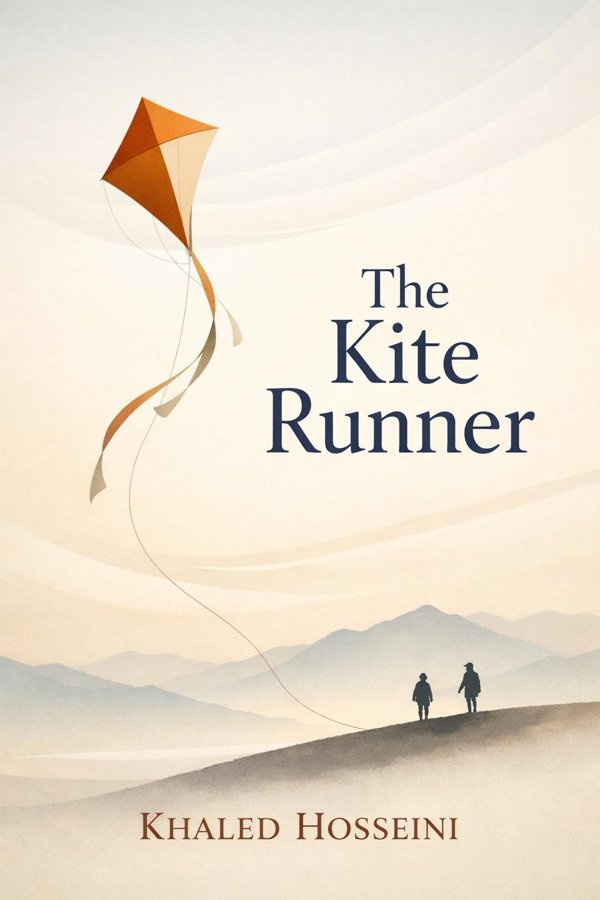
The Kite Runner: Summary & Key Insights
 10 min10 chaptersAudio available
Key Takeaways from The Kite Runner
The novel begins in a Kabul that feels vibrant, ordinary, and full of possibility before war transforms it.
The winter kite tournament is one of the novel’s most powerful sequences because it brings triumph and moral collapse together in a single day.
After the assault, Amir’s inner world begins to unravel.
The Soviet invasion changes everything.
America offers Amir something Afghanistan never fully did: the possibility of self-reinvention.
What Is The Kite Runner About?
The Kite Runner by Khaled Hosseini is a fiction book published in 2003 spanning 10 pages. What does it take to live with a betrayal you can never forget? The Kite Runner answers that question with unusual emotional force, tracing one boy’s mistake across decades of war, exile, silence, and painful self-reckoning. Set first in a peaceful 1970s Kabul and then against the upheavals that remake Afghanistan, Khaled Hosseini’s bestselling novel is both an intimate coming-of-age story and a sweeping portrait of a country in crisis. At its center is Amir, a privileged Pashtun boy, and Hassan, the loyal Hazara child raised in the same household yet never treated as an equal. Their bond is tender, complicated, and ultimately shattered by fear. What makes the novel so unforgettable is that it never reduces redemption to easy forgiveness. Instead, it shows how guilt lingers, how class and ethnicity shape lives, and how courage often arrives late. Hosseini, an Afghan-American novelist and physician born in Kabul, writes with deep feeling about displacement, memory, and family. The result is a story that stays with readers long after the final page, reminding us that the past is never truly past.
This FizzRead summary covers all 10 key chapters of The Kite Runner in approximately 10 minutes, distilling the most important ideas, arguments, and takeaways from Khaled Hosseini's work. Also available as an audio summary and Key Quotes Podcast.
The Kite Runner
What does it take to live with a betrayal you can never forget? The Kite Runner answers that question with unusual emotional force, tracing one boy’s mistake across decades of war, exile, silence, and painful self-reckoning. Set first in a peaceful 1970s Kabul and then against the upheavals that remake Afghanistan, Khaled Hosseini’s bestselling novel is both an intimate coming-of-age story and a sweeping portrait of a country in crisis. At its center is Amir, a privileged Pashtun boy, and Hassan, the loyal Hazara child raised in the same household yet never treated as an equal. Their bond is tender, complicated, and ultimately shattered by fear. What makes the novel so unforgettable is that it never reduces redemption to easy forgiveness. Instead, it shows how guilt lingers, how class and ethnicity shape lives, and how courage often arrives late. Hosseini, an Afghan-American novelist and physician born in Kabul, writes with deep feeling about displacement, memory, and family. The result is a story that stays with readers long after the final page, reminding us that the past is never truly past.
Who Should Read The Kite Runner?
This book is perfect for anyone interested in fiction and looking to gain actionable insights in a short read. Whether you're a student, professional, or lifelong learner, the key ideas from The Kite Runner by Khaled Hosseini will help you think differently.
- ✓Readers who enjoy fiction and want practical takeaways
- ✓Professionals looking to apply new ideas to their work and life
- ✓Anyone who wants the core insights of The Kite Runner in just 10 minutes
Want the full summary?
Get instant access to this book summary and 100K+ more with Fizz Moment.
Get Free SummaryAvailable on App Store • Free to download
Key Chapters
The novel begins in a Kabul that feels vibrant, ordinary, and full of possibility before war transforms it. Hosseini takes time to build this world because the beauty of what is lost matters just as much as the pain that follows. Amir grows up in comfort as the son of Baba, a wealthy, commanding man admired by many. Hassan, the son of Baba’s servant Ali, grows up in the same household but under very different social expectations. The boys share games, stories, and the thrill of kite running, yet their friendship is never truly equal. Amir is a Pashtun and Hassan is a Hazara, and that ethnic divide quietly shapes every interaction.
This section matters because it shows how affection can exist alongside injustice. Hassan’s loyalty is absolute, captured in the unforgettable line, “For you, a thousand times over.” Amir loves Hassan, but he also absorbs the prejudices of the world around him and craves Baba’s approval more than moral clarity. The annual kite tournament becomes more than a game: it represents status, manhood, and the chance for Amir to finally feel seen. A useful insight for readers is to notice how early emotional wounds form under ordinary conditions. Long before tragedy strikes, Amir is already torn between love, envy, class privilege, and the fear of not being enough.
The winter kite tournament is one of the novel’s most powerful sequences because it brings triumph and moral collapse together in a single day. Amir finally wins the contest, and for a brief moment he gets what he has always wanted: Baba’s pride. The victory feels like proof that he is worthy. But that joy depends on Hassan retrieving the last fallen kite, the blue kite that will serve as Amir’s prize. When Hassan runs to get it, he steps into an alley where Assef and his friends corner him. Amir witnesses the assault and does nothing.
This is the defining betrayal of the novel, not only because Amir fails Hassan, but because he chooses safety and approval over courage. Hosseini refuses to soften the moment. Amir’s silence is deliberate, and that makes the guilt enduring. He gets the kite, the praise, and the celebration he longed for, yet the victory instantly becomes poisoned. An important lesson here is that moral failure often happens in moments when we tell ourselves we are helpless, even when we still have a choice. Readers can connect this to everyday life: staying silent when someone is humiliated, excluded, or harmed also carries consequences. The novel asks a difficult question: what kind of success is worth having if it costs your integrity?
After the assault, Amir’s inner world begins to unravel. He cannot undo what he witnessed, and instead of confessing or comforting Hassan, he pushes him away. This is one of the most psychologically honest parts of the novel. Amir is not simply haunted by guilt; he is irritated by Hassan’s continued goodness because it reflects his own weakness back at him. Hassan’s loyalty becomes unbearable. Rather than seek reconciliation, Amir chooses distance and eventually frames Hassan for theft, hoping to force a separation he cannot openly ask for.
This estrangement reveals how guilt can become destructive when it is hidden. Instead of leading to repentance, Amir’s shame first produces cruelty. Baba’s response to the accusation also deepens the moral complexity. When Baba forgives Hassan despite the supposed theft, readers see that mercy is possible—but Amir is not yet ready to receive or practice it honestly. A practical takeaway is that unresolved shame rarely stays private; it spills into relationships, avoidance, and self-sabotage. The novel shows that when people refuse to face their worst actions, they often wound others again in the process. Estrangement, then, is not just physical separation. It is the emotional distance created when truth becomes too painful to name.
The Soviet invasion changes everything. The private drama of Amir and Hassan is suddenly set inside national collapse, and Hosseini makes clear that personal guilt and historical violence can never be neatly separated. Amir and Baba flee Afghanistan, leaving behind the house, social standing, and familiar rhythms of Kabul. Their escape is tense and dangerous, reminding readers that exile is not a romantic new beginning but a traumatic uprooting. For Baba especially, the loss is profound. A man once powerful and respected must now survive in a country where his old identity means little.
This section expands the novel beyond one boy’s conscience into the experience of displacement. Exile strips away illusions. In America, Baba can no longer command the same authority, and Amir sees him in a new light—not as an unreachable giant, but as a man carrying grief and pride. The contrast between old life and refugee life underscores how war remakes families. One useful insight here is that migration often involves invisible losses: language, status, memory, belonging, and the ability to explain yourself fully. Hosseini also suggests that leaving a country does not mean escaping its hold. Afghanistan remains present in memory, in shame, and in unfinished emotional business.
America offers Amir something Afghanistan never fully did: the possibility of self-reinvention. He grows up, studies, begins writing, and gradually builds an adult life less dominated by Baba’s expectations. Yet Hosseini is careful not to present this as a simple success story. Amir’s outward progress does not erase his inner burden. He can function, marry, and pursue his ambitions, but the past remains active beneath the surface. This contrast between external achievement and internal unrest is one of the novel’s central truths.
Baba’s adjustment in America is equally important. He works hard, lives modestly, and holds tightly to dignity even when circumstances humble him. Through these scenes, the novel explores generational differences in exile: Amir gains new opportunities, while Baba loses the world in which he knew who he was. Amir’s marriage to Soraya also adds depth. Their relationship introduces themes of confession, acceptance, and emotional honesty. Soraya reveals parts of her past, while Amir still keeps his deepest secret hidden. An actionable insight for readers is that growth requires more than changed surroundings. You can move cities, careers, or identities, but unresolved guilt often follows. Real maturity begins when a person stops managing appearances and starts telling the truth.
When Rahim Khan contacts Amir years later and tells him, “There is a way to be good again,” the novel pivots from memory to action. This call matters because it names what Amir has spent years avoiding: redemption is possible, but only if he is willing to return to the source of his shame. Rahim Khan has long served as a gentler counterpoint to Baba—a man who sees Amir’s sensitivity and encourages his writing. His request carries moral authority because he understands both Amir’s past and the unfinished debt he owes.
The phrase “a way to be good again” is not a promise of erasure. It does not mean the past can be undone. Instead, it suggests that while guilt cannot be deleted, it can be answered through sacrifice, truth, and responsibility. This distinction is powerful. Many readers think of redemption as emotional relief, but Hosseini portrays it as costly action. Amir must leave the relative safety of his American life and face both the ruined landscape of Afghanistan and the ruined parts of himself. A practical lesson here is that healing often begins with a difficult invitation. The moment we stop asking, “How do I feel better?” and start asking, “What must I repair?” we begin moving toward integrity.
One of the novel’s most painful revelations is that Hassan was Baba’s son, making him Amir’s half-brother. This truth reshapes nearly everything that came before. What looked like unusual affection from Baba toward Hassan now carries the weight of hidden fatherhood, guilt, and hypocrisy. Baba, who preached morality and condemned theft, had himself committed profound betrayals: he wronged Ali, concealed Hassan’s identity, and stole from both boys the truth about who they were. The revelation broadens the novel’s theme by showing that moral failure is not limited to Amir. Silence and deception run through generations.
This twist also reframes Amir’s childhood jealousy. Part of what he sensed but could never fully explain was real: Baba’s attention to Hassan came from a buried bond. Yet the revelation does not excuse Amir’s actions. Instead, it deepens the tragedy by showing how secrecy damages everyone involved. Hassan lived and died without public acknowledgment of his place in the family. An important takeaway is that family myths can preserve appearances while quietly producing long-term emotional harm. Hosseini suggests that truth, however painful, is kinder than a lie that structures an entire life. Readers are invited to ask what hidden histories shape identity, loyalty, and shame in their own families and communities.
Amir’s return to Taliban-controlled Afghanistan is the novel’s most visible act of courage. The country he reenters is scarred by brutality, fear, and ruin, a stark contrast to the Kabul of his childhood. But the external danger mirrors the internal journey he must make. He goes back to rescue Sohrab, Hassan’s son, and in doing so finally chooses responsibility over avoidance. This mission is not heroic in a clean, triumphant sense. Amir is frightened, unprepared, and emotionally overwhelmed. That is precisely why it matters. Redemption in The Kite Runner is not about becoming fearless; it is about acting despite fear.
His confrontation with Assef crystallizes this theme. Years earlier, Amir abandoned Hassan to violence. Now he suffers violence himself while trying to save Hassan’s child. The scene carries symbolic force because Amir finally endures pain in the service of another person. For perhaps the first time, he stops protecting his self-image and starts paying the cost of love. A strong practical insight here is that atonement usually requires more than apology. It demands changed behavior, restitution where possible, and a willingness to accept consequences. Hosseini does not pretend that one brave act balances a lifetime of regret, but he does show that moral transformation begins when action replaces excuse.
Sohrab is not simply a child to be rescued; he is one of the novel’s deepest portrayals of trauma. Having endured devastating loss and abuse, he carries pain that cannot be repaired by a single act of kindness. Hosseini treats this with sobering realism. Sohrab’s silence, withdrawal, and despair remind readers that survival is not the same as healing. Amir wants to save him, but good intentions are not enough to restore trust in a child whose world has repeatedly taught him that adults fail, abandon, and exploit.
This section is essential because it prevents the novel from becoming too neat. Redemption for Amir does not automatically mean recovery for Sohrab. Their relationship develops slowly and painfully, shaped by fear, broken promises, and emotional distance. When Sohrab falls into silence, the novel underscores how trauma often resists language. A useful takeaway for readers is to understand healing as patient, non-linear, and deeply relational. People who have suffered may not respond with gratitude, openness, or quick transformation. They may need steadiness more than speeches. Hosseini’s message here is compassionate and mature: love is not proven by dramatic rescue alone, but by staying present when repair is slow, uncertain, and heartbreaking.
By the end of the novel, the kite returns as a symbol transformed. In childhood, kite flying was tied to competition, approval, and the event that shattered Amir’s innocence. In the closing scenes, the kite becomes linked instead to tenderness, hope, and the possibility of connection. When Amir runs a kite for Sohrab, he echoes Hassan’s old devotion with the words, “For you, a thousand times over.” This reversal is emotionally powerful because it does not erase history; it reclaims its symbol for a different purpose.
The ending is deliberately restrained. Sohrab does not suddenly recover, and Amir does not receive full absolution. What he receives is smaller and perhaps more believable: a flicker of response, a beginning, a moment of shared attention in a life marked by wounds. That modest hope is exactly what gives the ending its strength. It suggests that redemption is not a grand finish but a continuing practice of care. An actionable insight here is that healing often starts with repeated, humble gestures rather than dramatic declarations. A smile, a promise kept, a patient act of presence—these may seem small, yet they can reopen the door to trust. The kite’s return reminds us that symbols of pain can, over time, become symbols of repair.
All Chapters in The Kite Runner
About the Author
Khaled Hosseini is an Afghan-American novelist and physician born in Kabul in 1965. He emigrated to the United States in 1980 and rose to international prominence with his debut novel, The Kite Runner, published in 2003. His writing is widely known for its emotional depth and its focus on family, displacement, memory, and the Afghan diaspora. Hosseini’s background gives his fiction a strong sense of cultural detail and historical feeling, especially in stories connected to Afghanistan and exile. He remains one of the most recognized contemporary authors writing about identity, loss, and the lasting pull of home.
Get This Summary in Your Preferred Format
Read or listen to the The Kite Runner summary by Khaled Hosseini anytime, anywhere. FizzRead offers multiple formats so you can learn on your terms — all free.
Available formats: App · Audio · PDF · EPUB — All included free with FizzRead
Download The Kite Runner PDF and EPUB Summary
Key Quotes from The Kite Runner
“The novel begins in a Kabul that feels vibrant, ordinary, and full of possibility before war transforms it.”
“The winter kite tournament is one of the novel’s most powerful sequences because it brings triumph and moral collapse together in a single day.”
“After the assault, Amir’s inner world begins to unravel.”
“The private drama of Amir and Hassan is suddenly set inside national collapse, and Hosseini makes clear that personal guilt and historical violence can never be neatly separated.”
“America offers Amir something Afghanistan never fully did: the possibility of self-reinvention.”
Frequently Asked Questions about The Kite Runner
The Kite Runner by Khaled Hosseini is a fiction book that explores key ideas across 10 chapters. What does it take to live with a betrayal you can never forget? The Kite Runner answers that question with unusual emotional force, tracing one boy’s mistake across decades of war, exile, silence, and painful self-reckoning. Set first in a peaceful 1970s Kabul and then against the upheavals that remake Afghanistan, Khaled Hosseini’s bestselling novel is both an intimate coming-of-age story and a sweeping portrait of a country in crisis. At its center is Amir, a privileged Pashtun boy, and Hassan, the loyal Hazara child raised in the same household yet never treated as an equal. Their bond is tender, complicated, and ultimately shattered by fear. What makes the novel so unforgettable is that it never reduces redemption to easy forgiveness. Instead, it shows how guilt lingers, how class and ethnicity shape lives, and how courage often arrives late. Hosseini, an Afghan-American novelist and physician born in Kabul, writes with deep feeling about displacement, memory, and family. The result is a story that stays with readers long after the final page, reminding us that the past is never truly past.
Compare The Kite Runner
More by Khaled Hosseini
You Might Also Like

Where the Crawdads Sing
Delia Owens
10 min
The Midnight Library
Matt Haig
10 min
A Man Called Ove
Fredrik Backman
10 min
Lessons in Chemistry
Bonnie Garmus
10 min
The Death of Ivan Ilyich
Leo Tolstoy
10 min
The Curious Incident of the Dog in the Night-Time
Mark Haddon
10 minFeatured In
Browse by Category
Ready to read The Kite Runner?
Get the full summary and 100K+ more books with Fizz Moment.