
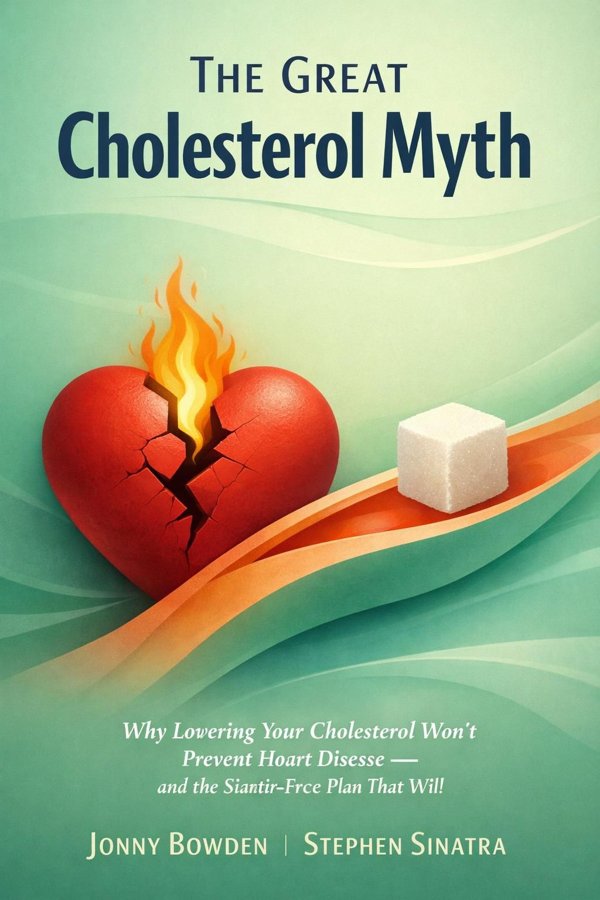
The Great Cholesterol Myth: Summary & Key Insights
by Jonny Bowden
 10 min9 chaptersAudio available
Key Takeaways from The Great Cholesterol Myth
Medical myths often gain power not because they are fully proven, but because they are simple, memorable, and easy to repeat.
A number on a lab report can feel definitive, but Bowden and Sinatra argue that total cholesterol tells us far less than most people think.
A drug can be helpful and still be oversold.
Fire causes more destruction than smoke, and in the authors’ view, inflammation is the fire behind heart disease.
Cholesterol, according to Bowden and Sinatra, becomes more threatening when it is damaged.
What Is The Great Cholesterol Myth About?
The Great Cholesterol Myth by Jonny Bowden is a health book published in 2012 spanning 11 pages. For decades, the public has been told a simple story: high cholesterol causes heart disease, saturated fat raises cholesterol, and lowering cholesterol—especially with medication—is the smartest path to a healthy heart. In The Great Cholesterol Myth, nutritionist Jonny Bowden and cardiologist Stephen Sinatra argue that this story is far too simplistic and, in many cases, misleading. They contend that the true drivers of cardiovascular disease are chronic inflammation, oxidative damage, insulin resistance, excess sugar intake, and lifestyle habits that quietly wear down the body over time. What makes this book matter is not just its contrarian stance, but the combination of expertise behind it. Bowden brings a deep background in nutrition science, while Sinatra contributes decades of clinical experience as a heart specialist with an integrative approach. Together, they challenge conventional wisdom, question the evidence behind widespread statin use, and offer a broader, more practical framework for protecting cardiovascular health. Whether you agree with every claim or not, the book forces readers to rethink what actually keeps the heart strong and what modern medicine may have overlooked.
This FizzRead summary covers all 9 key chapters of The Great Cholesterol Myth in approximately 10 minutes, distilling the most important ideas, arguments, and takeaways from Jonny Bowden's work. Also available as an audio summary and Key Quotes Podcast.
The Great Cholesterol Myth
For decades, the public has been told a simple story: high cholesterol causes heart disease, saturated fat raises cholesterol, and lowering cholesterol—especially with medication—is the smartest path to a healthy heart. In The Great Cholesterol Myth, nutritionist Jonny Bowden and cardiologist Stephen Sinatra argue that this story is far too simplistic and, in many cases, misleading. They contend that the true drivers of cardiovascular disease are chronic inflammation, oxidative damage, insulin resistance, excess sugar intake, and lifestyle habits that quietly wear down the body over time.
What makes this book matter is not just its contrarian stance, but the combination of expertise behind it. Bowden brings a deep background in nutrition science, while Sinatra contributes decades of clinical experience as a heart specialist with an integrative approach. Together, they challenge conventional wisdom, question the evidence behind widespread statin use, and offer a broader, more practical framework for protecting cardiovascular health. Whether you agree with every claim or not, the book forces readers to rethink what actually keeps the heart strong and what modern medicine may have overlooked.
Who Should Read The Great Cholesterol Myth?
This book is perfect for anyone interested in health and looking to gain actionable insights in a short read. Whether you're a student, professional, or lifelong learner, the key ideas from The Great Cholesterol Myth by Jonny Bowden will help you think differently.
- ✓Readers who enjoy health and want practical takeaways
- ✓Professionals looking to apply new ideas to their work and life
- ✓Anyone who wants the core insights of The Great Cholesterol Myth in just 10 minutes
Want the full summary?
Get instant access to this book summary and 100K+ more with Fizz Moment.
Get Free SummaryAvailable on App Store • Free to download
Key Chapters
Medical myths often gain power not because they are fully proven, but because they are simple, memorable, and easy to repeat. Bowden and Sinatra begin by tracing how cholesterol became the central villain in the story of heart disease. In the mid-20th century, researchers and policymakers were searching for a clear explanation for rising cardiac deaths. The diet-heart hypothesis, which linked saturated fat, cholesterol, and heart disease, offered a neat answer. Over time, that theory hardened into public health doctrine.
The authors argue that this happened before the science was as settled as the public was led to believe. Early observational studies, such as those comparing dietary patterns across countries, were influential, but they did not prove direct causation. At the same time, dissenting evidence was often ignored or minimized. Once institutions, guidelines, food companies, and pharmaceutical strategies aligned around the cholesterol model, it became extremely difficult to question.
This historical lens matters because it explains why many people still assume cholesterol is the primary cause of heart disease, even when newer research paints a more complicated picture. The low-fat era, for example, encouraged people to avoid eggs and butter while eating more processed “heart-healthy” products loaded with sugar and refined carbohydrates. That shift may have worsened metabolic health rather than improved it.
The broader lesson is that scientific consensus can be shaped by politics, commercial interests, and the need for clear public messaging. Bowden and Sinatra want readers to become more skeptical of oversimplified health narratives, especially when those narratives drive national dietary advice.
Actionable takeaway: Question one-factor explanations for complex diseases and evaluate heart-health advice in the wider context of metabolism, inflammation, and lifestyle—not cholesterol alone.
A number on a lab report can feel definitive, but Bowden and Sinatra argue that total cholesterol tells us far less than most people think. Their central critique is not that cholesterol is irrelevant, but that the traditional cholesterol hypothesis exaggerates its role and treats a complex disease as if it had a single cause.
The book reviews evidence suggesting that many people with heart attacks have normal cholesterol levels, while many people with elevated cholesterol never develop heart disease. That inconsistency raises an obvious question: if cholesterol were the main driver, why are outcomes so mixed? The authors point out that cholesterol is a waxy, vital substance involved in hormone production, cell membrane integrity, brain function, and vitamin D synthesis. The body manufactures it for good reason.
They also stress that standard lipid panels can be misleading. Two people may have the same total LDL number but very different levels of risk depending on particle size, triglycerides, HDL, blood sugar control, and inflammation markers. Small, dense LDL particles are presented as more problematic than large, buoyant ones, especially in the presence of high sugar intake and insulin resistance.
In practical terms, this means a person eating a low-fat diet but struggling with abdominal obesity, high triglycerides, low HDL, and elevated fasting insulin may be at greater cardiovascular risk than someone with higher cholesterol but low inflammation and good metabolic health. The authors use this contrast to challenge the idea that lowering cholesterol should automatically be the primary treatment goal.
Their larger point is that risk assessment should be nuanced, personalized, and rooted in the whole clinical picture. Heart disease emerges from multiple interacting processes, not from cholesterol floating harmlessly through the bloodstream.
Actionable takeaway: Ask for a fuller cardiovascular assessment—including triglycerides, HDL, blood sugar, and inflammatory markers—rather than judging your heart health by total cholesterol alone.
A drug can be helpful and still be oversold. That is the position Bowden and Sinatra take on statins, the widely prescribed medications designed to lower cholesterol. They do not deny that statins can benefit certain high-risk patients, especially some people with established cardiovascular disease. Their criticism is aimed at the broad, routine use of these drugs as a default preventive strategy for millions of people.
The authors argue that the benefits of statins are often presented in relative terms rather than absolute ones, making the improvement seem more dramatic than it is for lower-risk populations. They encourage readers to look carefully at actual risk reduction, not just marketing language. A modest statistical benefit may not justify medication for everyone, particularly when side effects can affect quality of life.
Those side effects, as described in the book, may include muscle pain, fatigue, memory issues, and reduced levels of CoQ10, a nutrient important for cellular energy production and heart function. This concern is especially important because the heart is an energy-demanding muscle. If a patient takes a statin and then experiences weakness or exhaustion, the trade-off deserves serious consideration.
The book’s larger message is that medicine should be individualized. A patient with familial hypercholesterolemia or a history of cardiovascular events may make a very different decision from someone prescribed a statin solely because of a mildly elevated lab value. Bowden and Sinatra urge readers to discuss risk profiles, benefits, alternatives, and side effects openly with their doctors.
This section is less about rejecting medication outright and more about rejecting automatic, one-size-fits-all prescribing. The goal should be better outcomes, not merely lower numbers.
Actionable takeaway: If you are taking or considering a statin, discuss absolute risk reduction, side effects, and supportive strategies like CoQ10 supplementation with a qualified healthcare professional.
Fire causes more destruction than smoke, and in the authors’ view, inflammation is the fire behind heart disease. Bowden and Sinatra argue that cholesterol has been blamed for damage that is more accurately linked to chronic inflammatory processes inside the body. Inflammation is part of normal healing, but when it becomes persistent and systemic, it can irritate artery walls, disrupt endothelial function, and create conditions where plaque is more likely to form and become unstable.
This reframing changes how we think about prevention. Instead of focusing only on lowering lipids, the book emphasizes reducing the triggers of chronic inflammation: processed foods, excess sugar, smoking, unmanaged stress, sleep deprivation, sedentary living, and hidden infections or health conditions. The authors also highlight markers such as C-reactive protein as potentially more revealing than cholesterol alone in some cases.
A practical example makes the idea easier to grasp. Imagine two people with similar LDL levels. One eats whole foods, exercises regularly, sleeps well, and has low inflammatory markers. The other lives on refined carbohydrates, experiences chronic stress, barely sleeps, and shows metabolic dysfunction. Their cardiovascular risks may be very different, even if their cholesterol appears comparable.
This perspective also explains why anti-inflammatory eating patterns—rich in vegetables, omega-3 fats, nuts, olive oil, and minimally processed foods—are repeatedly associated with better heart outcomes. The target is not just “less fat” or “lower cholesterol,” but a calmer internal environment.
By treating inflammation as central rather than secondary, the book broadens heart health into something deeply connected with the immune system, hormonal regulation, and daily habits. It turns cardiovascular prevention into a whole-body project.
Actionable takeaway: Focus on lowering chronic inflammation through food quality, sleep, stress management, and movement, rather than assuming cholesterol reduction alone is enough.
Cholesterol, according to Bowden and Sinatra, becomes more threatening when it is damaged. That damage often comes from oxidative stress—the biological wear and tear caused by excess free radicals overwhelming the body’s antioxidant defenses. In this framework, oxidized LDL is far more concerning than LDL by itself, because oxidation can make particles more likely to contribute to arterial injury and plaque development.
This distinction helps explain why cholesterol cannot be understood in isolation. The body is constantly balancing oxidation and repair. Poor diet, smoking, pollution, chronic stress, uncontrolled blood sugar, and nutrient deficiencies can all tip that balance in the wrong direction. If a person consumes a diet heavy in processed foods and industrial seed oils while lacking antioxidant-rich vegetables, berries, and healthy fats, their internal environment may become more vulnerable to oxidative damage.
The book uses this concept to build a more realistic model of heart disease. Cholesterol is not the criminal mastermind; it is more like a participant in a damaged biological setting. When arteries are inflamed and lipoproteins are oxidized, cardiovascular trouble becomes more likely.
This is why the authors support a nutrient-dense diet rich in natural antioxidants and protective compounds. Foods like leafy greens, colorful vegetables, extra virgin olive oil, wild fish, nuts, and herbs help the body resist oxidative stress. The same logic extends to lifestyle choices: exercise in moderation, quality sleep, and avoiding smoking all reduce oxidative burden.
Readers do not need to memorize biochemical pathways to use this insight. The practical message is simple: protect the body from damage before trying to medicate away the downstream effects. Better maintenance creates better outcomes.
Actionable takeaway: Reduce oxidative stress by prioritizing antioxidant-rich whole foods, controlling blood sugar, avoiding smoking, and supporting recovery with sleep and balanced exercise.
The foods marketed as healthy can sometimes be the ones doing the most damage. One of the book’s strongest arguments is that sugar and refined carbohydrates, not natural dietary fat, are major drivers of heart disease. Bowden and Sinatra contend that when people followed low-fat advice, many replaced nourishing fats with cereal, bread, pasta, snack bars, fruit juice, and other processed carbohydrates. The result was a metabolic disaster for many individuals.
Excess sugar intake can raise triglycerides, lower HDL, promote insulin resistance, increase abdominal fat, and contribute to inflammation. Refined carbohydrates also trigger repeated blood sugar spikes, which can damage blood vessels and worsen oxidative stress. Over time, this pattern creates conditions strongly associated with cardiovascular disease.
The authors encourage readers to notice how different foods affect appetite and energy. A sugary breakfast may cause a quick burst followed by cravings and fatigue, while a breakfast built around protein and healthy fat often produces steadier energy and fewer hunger swings. In daily life, this might mean swapping orange juice and toast for eggs, avocado, and berries, or replacing low-fat flavored yogurt with unsweetened yogurt and nuts.
This section also challenges a common assumption: not all calories affect the body the same way. The hormonal consequences of food matter. Frequent insulin spikes can influence fat storage, inflammation, and vascular health, making refined carbohydrates more problematic than their calorie count alone suggests.
For readers trying to improve heart health, this chapter provides a direct and practical place to start. Instead of obsessing over avoiding egg yolks or butter, it may be more effective to eliminate sugary drinks, desserts, white flour products, and ultra-processed snacks.
Actionable takeaway: Cut back sharply on sugar and refined carbohydrates, and build meals around protein, vegetables, and healthy fats to improve metabolic and cardiovascular health.
One of the most liberating ideas in the book is that natural fats are not automatically the enemy. Bowden and Sinatra argue that the blanket condemnation of saturated fat and cholesterol-rich foods has led many people away from nutrient-dense staples and toward processed alternatives. Eggs, meat, butter, coconut, cheese, and full-fat dairy have long been treated with suspicion, yet the authors contend that their role in heart disease has been overstated.
Their argument is based on two distinctions. First, eating cholesterol does not necessarily translate directly into dangerous blood cholesterol levels, because the body regulates cholesterol production in complex ways. Second, whole-food fats behave differently from industrially processed foods that combine refined starches, sugars, and unhealthy oils.
The authors do not suggest that every high-fat food is beneficial or that all individuals respond identically. Rather, they emphasize food quality and context. A breakfast of eggs and vegetables cooked in butter is not nutritionally equivalent to a pastry and sweetened coffee, even if the latter is labeled low-fat. Similarly, a salad with olive oil, salmon, and nuts may support heart health more effectively than fat-free dressing over processed croutons and sweetened toppings.
This section encourages readers to move beyond outdated fear. Healthy fats can improve satiety, stabilize energy, support hormones, and make it easier to reduce dependence on sugar. Many people find that once they stop fearing fat, they naturally eat fewer processed carbohydrates and feel better overall.
The deeper lesson is that nutrition should be judged by biological impact, not by old dietary slogans. Whole foods deserve a more prominent place in heart-health conversations than they often get.
Actionable takeaway: Replace low-fat processed foods with whole-food sources of healthy fat, and evaluate meals based on nutrient quality and metabolic effects rather than fat content alone.
Protecting the heart is less about following one rigid diet and more about creating a biologically supportive way of eating. Bowden and Sinatra present a nutritional strategy centered on real food, blood sugar stability, anti-inflammatory choices, and nutrient density. Rather than counting every gram of fat or chasing cholesterol targets, they recommend eating in a way that lowers inflammation and supports metabolic health.
In practice, this means building meals around high-quality protein, non-starchy vegetables, healthy fats, nuts, seeds, and low-sugar fruits. Fish rich in omega-3s, olive oil, avocados, eggs, pasture-raised meats, and colorful produce feature prominently. At the same time, the book advises minimizing foods that disrupt metabolism: sugar, white flour, highly processed snacks, and many packaged “diet” products.
The authors also discuss the value of individualized eating. Some people may thrive with moderate carbohydrate intake from whole-food sources, while others with insulin resistance may benefit from more restriction. The common denominator is paying attention to how food affects blood sugar, weight, energy, hunger, and inflammation.
Beyond what to eat, the book emphasizes nutrient adequacy. Magnesium, omega-3 fats, antioxidants, and other micronutrients help regulate cardiovascular function. This perspective is useful because a heart-healthy diet is not just about avoiding harmful substances; it is about supplying the body with what it needs to repair, regulate, and perform well.
A simple application could be planning plates that include protein, a generous serving of vegetables, and a satisfying healthy fat source. That structure often leads to more stable appetite and fewer cravings than carb-heavy meals.
Actionable takeaway: Create meals from whole, minimally processed foods that steady blood sugar, reduce inflammation, and provide the nutrients your cardiovascular system needs.
No diet can fully protect a body living in constant stress, poor sleep, and inactivity. One of the book’s most valuable contributions is its insistence that heart health is broader than food and broader than cholesterol. Bowden and Sinatra outline an integrative plan that includes movement, stress reduction, restorative sleep, targeted supplementation, and attention to emotional wellbeing.
Exercise is presented not as punishment for eating, but as a regulator of blood sugar, circulation, inflammation, mood, and vascular resilience. Walking, strength training, and moderate aerobic activity can all support cardiovascular health. Stress management matters just as much. Chronic stress raises cortisol and sympathetic nervous system activity, which may worsen blood pressure, inflammation, and metabolic dysfunction. Practices such as meditation, breathing exercises, prayer, time in nature, or simply better boundaries can therefore be part of a heart-care plan.
The book also highlights several supplements commonly used in integrative cardiology, including omega-3 fatty acids, magnesium, CoQ10, vitamin D, and certain antioxidants. The authors view these as tools to support energy production, rhythm stability, inflammation control, and overall cardiovascular function, especially when diet or medication use creates gaps.
Importantly, supplementation is not treated as a shortcut. A person cannot out-supplement a junk-food diet and a chaotic lifestyle. But in the context of a strong foundation, specific nutrients may provide meaningful support. For example, someone on statins might ask their clinician about CoQ10, while a person eating little fatty fish may consider omega-3s.
The book closes the gap between conventional prevention and everyday living. It reminds readers that the heart responds to patterns, not isolated fixes.
Actionable takeaway: Pair nutrition changes with regular movement, better sleep, stress management, and clinician-guided supplements to create a complete heart-health strategy.
All Chapters in The Great Cholesterol Myth
About the Author
Jonny Bowden is a board-certified nutritionist, health expert, and bestselling author known for translating complex nutrition research into practical advice for everyday readers. Trained in both psychology and nutritional science, he has built a reputation as a sharp critic of outdated dietary dogma, especially low-fat orthodoxy and oversimplified views of weight and disease. Bowden has written widely on metabolism, sugar, whole-food eating, and functional approaches to health, often challenging mainstream assumptions with a mix of scientific analysis and plainspoken clarity. His books and media appearances have made him a prominent voice in the fields of nutrition and wellness. In The Great Cholesterol Myth, Bowden teams up with cardiologist Stephen Sinatra to question conventional thinking about cholesterol and promote a broader, more integrative model of heart health.
Get This Summary in Your Preferred Format
Read or listen to the The Great Cholesterol Myth summary by Jonny Bowden anytime, anywhere. FizzRead offers multiple formats so you can learn on your terms — all free.
Available formats: App · Audio · PDF · EPUB — All included free with FizzRead
Download The Great Cholesterol Myth PDF and EPUB Summary
Key Quotes from The Great Cholesterol Myth
“Medical myths often gain power not because they are fully proven, but because they are simple, memorable, and easy to repeat.”
“A number on a lab report can feel definitive, but Bowden and Sinatra argue that total cholesterol tells us far less than most people think.”
“A drug can be helpful and still be oversold.”
“Fire causes more destruction than smoke, and in the authors’ view, inflammation is the fire behind heart disease.”
“Cholesterol, according to Bowden and Sinatra, becomes more threatening when it is damaged.”
Frequently Asked Questions about The Great Cholesterol Myth
The Great Cholesterol Myth by Jonny Bowden is a health book that explores key ideas across 9 chapters. For decades, the public has been told a simple story: high cholesterol causes heart disease, saturated fat raises cholesterol, and lowering cholesterol—especially with medication—is the smartest path to a healthy heart. In The Great Cholesterol Myth, nutritionist Jonny Bowden and cardiologist Stephen Sinatra argue that this story is far too simplistic and, in many cases, misleading. They contend that the true drivers of cardiovascular disease are chronic inflammation, oxidative damage, insulin resistance, excess sugar intake, and lifestyle habits that quietly wear down the body over time. What makes this book matter is not just its contrarian stance, but the combination of expertise behind it. Bowden brings a deep background in nutrition science, while Sinatra contributes decades of clinical experience as a heart specialist with an integrative approach. Together, they challenge conventional wisdom, question the evidence behind widespread statin use, and offer a broader, more practical framework for protecting cardiovascular health. Whether you agree with every claim or not, the book forces readers to rethink what actually keeps the heart strong and what modern medicine may have overlooked.
You Might Also Like


Featured In
Browse by Category
Ready to read The Great Cholesterol Myth?
Get the full summary and 100K+ more books with Fizz Moment.