
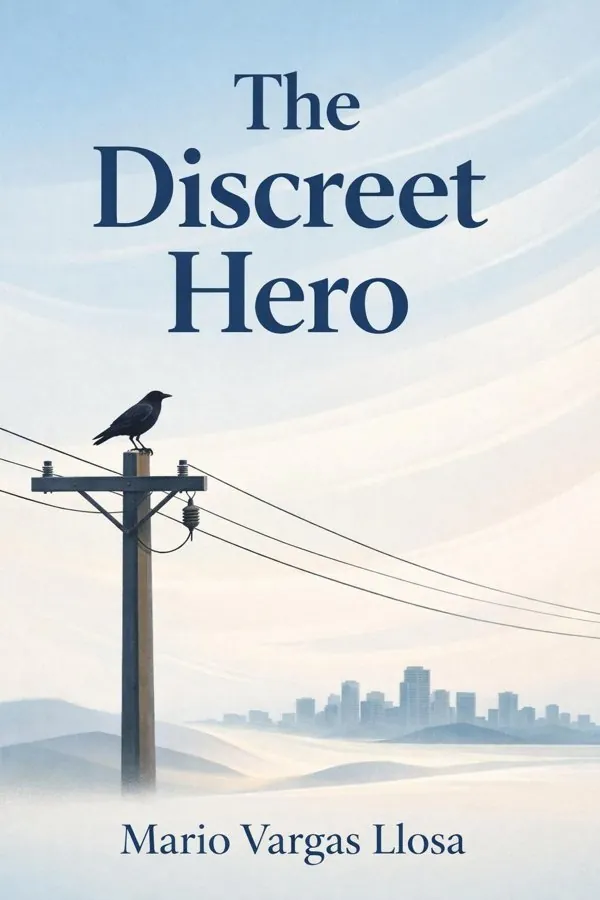
The Discreet Hero: Summary & Key Insights
 10 min9 chaptersAudio available
Key Takeaways from The Discreet Hero
Most people discover their principles only when fear puts a price on them.
A carefully ordered life can hide how fragile our sense of control really is.
Saying no to injustice may be morally clear, but it is rarely simple.
Families often become battlegrounds where money exposes feelings that politeness has long concealed.
The novel’s title points to one of its central claims: true heroism is often discreet.
What Is The Discreet Hero About?
The Discreet Hero by Mario Vargas Llosa is a bestsellers book spanning 5 pages. What does heroism look like in everyday life? In The Discreet Hero, Mario Vargas Llosa answers that question not with soldiers, saints, or revolutionaries, but with ordinary men who refuse to surrender their dignity. The novel follows two parallel stories set in contemporary Peru. In Piura, Felícito Yanaqué, a self-made transport businessman, receives a threatening extortion letter and decides he will not submit. In Lima, Don Rigoberto, a cultivated executive devoted to order, beauty, and family, finds his carefully arranged life disrupted by a shocking personal and professional crisis. As these narratives unfold, Vargas Llosa explores corruption, loyalty, class mobility, desire, family conflict, and the quiet moral courage required to remain decent in a compromised world. What makes the novel matter is its insistence that ethical resistance is not abstract; it happens in offices, homes, businesses, and private choices. Vargas Llosa, Nobel Prize winner and one of Latin America’s most important novelists, brings sharp psychological insight, social observation, and narrative elegance to a story that turns the small acts of principled people into something profound.
This FizzRead summary covers all 9 key chapters of The Discreet Hero in approximately 10 minutes, distilling the most important ideas, arguments, and takeaways from Mario Vargas Llosa's work. Also available as an audio summary and Key Quotes Podcast.
The Discreet Hero
What does heroism look like in everyday life? In The Discreet Hero, Mario Vargas Llosa answers that question not with soldiers, saints, or revolutionaries, but with ordinary men who refuse to surrender their dignity. The novel follows two parallel stories set in contemporary Peru. In Piura, Felícito Yanaqué, a self-made transport businessman, receives a threatening extortion letter and decides he will not submit. In Lima, Don Rigoberto, a cultivated executive devoted to order, beauty, and family, finds his carefully arranged life disrupted by a shocking personal and professional crisis. As these narratives unfold, Vargas Llosa explores corruption, loyalty, class mobility, desire, family conflict, and the quiet moral courage required to remain decent in a compromised world. What makes the novel matter is its insistence that ethical resistance is not abstract; it happens in offices, homes, businesses, and private choices. Vargas Llosa, Nobel Prize winner and one of Latin America’s most important novelists, brings sharp psychological insight, social observation, and narrative elegance to a story that turns the small acts of principled people into something profound.
Who Should Read The Discreet Hero?
This book is perfect for anyone interested in bestsellers and looking to gain actionable insights in a short read. Whether you're a student, professional, or lifelong learner, the key ideas from The Discreet Hero by Mario Vargas Llosa will help you think differently.
- ✓Readers who enjoy bestsellers and want practical takeaways
- ✓Professionals looking to apply new ideas to their work and life
- ✓Anyone who wants the core insights of The Discreet Hero in just 10 minutes
Want the full summary?
Get instant access to this book summary and 100K+ more with Fizz Moment.
Get Free SummaryAvailable on App Store • Free to download
Key Chapters
Most people discover their principles only when fear puts a price on them. Felícito Yanaqué’s story begins with exactly that test. A modest but respected transport businessman in Piura, he receives a blackmail letter demanding payment in exchange for “protection.” Many would treat this as a practical problem: pay the extortion, avoid conflict, and preserve the business. Felícito chooses the harder path. He refuses, not because he is reckless, but because he sees surrender as a betrayal of everything he has built through work, discipline, and self-respect.
This decision matters because Vargas Llosa presents courage not as dramatic bravado but as moral consistency. Felícito comes from poverty and has earned his position through sacrifice. He remembers his mother’s lessons about decency and endurance, and these values become stronger than the threats against him. His refusal sets off consequences: danger, public attention, and strain on his private life. Yet the novel suggests that a person who accepts humiliation for convenience slowly loses something more essential than comfort.
In practical terms, Felícito’s stand mirrors situations many readers recognize. A small business owner may be pressured into dishonest arrangements. An employee may be asked to cover up misconduct. A family member may be expected to tolerate manipulation to “keep the peace.” In each case, the immediate compromise may seem minor, but it normalizes future abuse. Felícito reminds us that boundaries are meaningful only when enforced under pressure.
The deeper lesson is that dignity is not a slogan. It is a habit of saying no when submission seems easier. Actionable takeaway: identify one non-negotiable value in your work or personal life, and decide in advance what you will refuse, even if resistance carries a cost.
A carefully ordered life can hide how fragile our sense of control really is. Don Rigoberto, living in Lima, is a man of refined habits, intellectual tastes, and almost ritual devotion to structure. He values art, privacy, manners, and domestic harmony. His world is designed to keep vulgarity and chaos at bay. Yet when an unexpected family and corporate upheaval disturbs this balance, he must confront a painful truth: order is easy to cherish when nothing threatens it.
Vargas Llosa uses Don Rigoberto to explore a different kind of heroism from Felícito’s. Felícito resists external extortion; Rigoberto faces emotional, familial, and ethical confusion. His challenge is not simply whether to fight, but how to remain loyal without becoming blind, bitter, or dishonest. He must navigate relationships shaped by old wounds, social appearances, and conflicting duties. The result is a portrait of a civilized man forced to test whether his cultivated values have substance beyond aesthetics.
This idea applies widely. Many people create routines, professional identities, or intellectual frameworks that help them feel secure. But life eventually interrupts every system: a family conflict, workplace betrayal, illness, or scandal. In those moments, taste and intelligence are not enough. What matters is whether discipline can become moral steadiness. Rigoberto shows that refinement without courage collapses under stress, while true composure requires adaptability.
Readers can also see in his story the challenge of loyalty. Supporting loved ones or colleagues does not mean approving everything they do. Ethical loyalty involves honesty, patience, and the willingness to endure discomfort rather than retreat into silence. Actionable takeaway: examine one area of your life that depends too heavily on control, and ask how you would respond if that control disappeared tomorrow.
Saying no to injustice may be morally clear, but it is rarely simple. One of the novel’s strongest insights is that defiance does not end with the brave decision itself. In Felícito’s case, his refusal to bow to extortion leads to escalating tension, fear, scrutiny, and collateral damage. Vargas Llosa refuses to romanticize resistance. Courage creates consequences, and those consequences often fall not only on the individual but also on family members, employees, and associates.
This is what makes the novel psychologically credible. Too often, stories about integrity imply that the righteous choice automatically produces triumph. Here, resistance invites uncertainty. Felícito must deal with suspicion, danger, and the emotional burden of asking whether his principles are costing others too much. That tension is central to the book’s realism. Ethical decisions are rarely isolated; they ripple outward through networks of dependence and affection.
This lesson is especially relevant in modern institutions. Consider a whistleblower who reports fraud, a manager who rejects corrupt pressure, or a citizen who challenges abuse in local politics. The act itself may be admirable, but the aftermath often includes retaliation, social isolation, and practical hardship. The novel suggests that mature courage includes preparing for the long aftermath, not merely the dramatic first step.
At the same time, the book shows that hardship can deepen self-knowledge. By enduring the effects of his defiance, Felícito becomes more conscious of what truly matters to him. Pressure reveals character, but it also shapes it. If we avoid every costly confrontation, we may preserve comfort while losing moral clarity.
Actionable takeaway: when making a principled decision, do not prepare only your argument; prepare for the consequences, identify who may be affected, and build support before the pressure arrives.
Families often become battlegrounds where money exposes feelings that politeness has long concealed. In The Discreet Hero, inheritance and succession are not merely legal matters; they are moral tests. Questions of who deserves recognition, who belongs, who is owed loyalty, and who may rightfully inherit become charged with resentment, vanity, guilt, and ambition. Vargas Llosa shows how financial arrangements can reveal emotional truths that family narratives prefer to hide.
This theme matters because inheritance is never only about assets. It carries symbolic meaning: acknowledgment, legitimacy, status, revenge, and the desire to rewrite family history. Characters are forced to confront the difference between biological ties and earned trust, between social appearances and genuine responsibility. A decision about property becomes a referendum on love and justice. This is especially sharp in societies where class, respectability, and lineage still strongly shape identity.
The novel’s treatment of inheritance also broadens its critique of corruption. Corruption is not limited to criminal extortion or public misconduct; it can also appear inside the home when people use money to manipulate, reward obedience, or erase uncomfortable truths. Families may repeat the same abuses found in politics and business: secrecy, favoritism, opportunism, and moral bargaining.
Readers can apply this insight beyond estates or wills. In any group, formal decisions often conceal deeper emotional struggles. Promotions in a family business, division of responsibilities among siblings, or even choices about caregiving can trigger buried conflicts. The lesson is to recognize both the practical and symbolic dimensions of such decisions.
Actionable takeaway: whenever money and family intersect, clarify not only the legal terms but also the emotional meanings involved, because unresolved symbolic grievances can become more destructive than the financial dispute itself.
The novel’s title points to one of its central claims: true heroism is often discreet. Vargas Llosa is not interested in spectacular, public acts of grandeur. He focuses instead on people who continue to act decently amid pressure, confusion, vanity, and corruption. Felícito and Don Rigoberto are not perfect men, nor are they conventionally heroic. They are flawed, anxious, proud, and at times contradictory. Yet they matter because they keep trying to preserve self-respect and ethical coherence in a world that rewards compromise.
This is a powerful corrective to modern assumptions about heroism. Public culture often celebrates visibility: the loudest protest, the biggest success, the most dramatic narrative. But social life is actually sustained by quieter forms of courage. A person who refuses a bribe, tells an uncomfortable truth, fulfills a duty, protects another’s dignity, or resists pressure without applause contributes more to moral life than many symbolic gestures.
Vargas Llosa’s insight is practical and democratic. It suggests that heroism is available to ordinary people because it lies in conduct, not status. You do not need extraordinary power to become morally significant. You need consistency, self-command, and a willingness to absorb discomfort rather than betray your convictions.
This perspective can change how readers understand their own lives. The teacher who remains fair, the shop owner who does not cheat, the employee who documents wrongdoing, the parent who sets a principled example, all participate in this discreet heroism. Their acts may never become famous, but they shape the moral atmosphere around them.
Actionable takeaway: stop measuring integrity by public recognition; instead, ask whether your everyday choices make life around you more honest, more dignified, and less fearful.
Economic progress does not automatically produce moral progress. One of the novel’s richest achievements is its portrait of contemporary Peru as a society in motion: modernizing, commercially active, socially mobile, and increasingly connected, yet still deeply marked by old patterns of corruption, hierarchy, and opportunism. Vargas Llosa does not present corruption as an isolated criminal phenomenon. He shows it as a social climate that reaches business, family, bureaucracy, and personal relations.
This broader view is important. Extortion in Piura and intrigue in Lima are not separate anomalies; they are symptoms of a culture in which informal power often competes with law, and appearances often matter more than principle. Even respectable spaces are vulnerable. Progress creates new opportunities, but it also creates new temptations for manipulation and moral compromise. The result is a society where honest people must fight not one villain, but a system of expectations that encourages submission.
The novel therefore becomes more than a personal drama. It is also a civic reflection on what kind of nation modern Peru is becoming. Vargas Llosa suggests that development without ethical citizenship remains incomplete. Roads, businesses, and wealth may increase, but if institutions are weak and people normalize abuse, public life remains fragile.
This insight travels far beyond Peru. Many readers will recognize similar tensions in their own countries: growing prosperity coexisting with institutional distrust, civic fatigue, and normalized petty corruption. The book encourages us to ask whether modernization is changing surfaces more than habits.
Actionable takeaway: whenever you celebrate progress in your community or workplace, also ask what ethical norms sustain it, because prosperity without integrity creates a more sophisticated form of disorder.
People rarely destroy their judgment through evil alone; more often, they do it through vanity, fantasy, and self-deception. Throughout The Discreet Hero, Vargas Llosa shows how desire complicates moral life. Characters do not act only from principle or necessity. They are also driven by erotic impulses, pride, resentment, insecurity, and the need to feel admired or exceptional. These forces make ethical clarity much harder than abstract moral theories suggest.
This is one reason the novel feels so alive. Human beings are not tidy embodiments of ideas. A decent man may still be foolish. A disciplined person may become blind where desire is involved. A family conflict may intensify because someone cannot bear humiliation more than because they seek justice. By giving these motives room, Vargas Llosa avoids simplistic moral categories. He asks readers to understand how corruption can begin in private weakness before it appears as public wrongdoing.
This has practical value. Many bad decisions in work and relationships emerge not from deliberate malice but from unexamined ego needs. A leader may protect a failing project to avoid embarrassment. A spouse may hide the truth to preserve self-image. An executive may indulge flattery and become manipulable. Desire, in this sense, is not only sexual; it is any craving that makes us rewrite reality in our favor.
The antidote is not cold repression, but honest self-observation. The more clearly we can name our cravings and vanities, the less power they have to masquerade as reason. The novel warns that intelligence alone does not save us; some highly cultivated people are especially skilled at rationalizing their impulses.
Actionable takeaway: before defending an important decision, ask yourself what personal desire or vanity might be shaping your judgment, and write down one uncomfortable possibility you would rather ignore.
No one becomes honorable in a single grand moment. The novel repeatedly suggests that what we call character is the accumulation of many smaller choices made over time. Felícito’s resistance to blackmail is persuasive because it grows from a lifetime of work, sacrifice, and habits of self-respect. Don Rigoberto’s ethical struggles matter because they test a worldview built through years of discipline, taste, and restraint. In both cases, crisis reveals patterns that already existed.
This view is both sobering and hopeful. It is sobering because it means we cannot rely on sudden courage if we have trained ourselves in convenience, avoidance, and rationalization. Under pressure, people often become more of what they already are. But it is hopeful because ordinary daily conduct is not trivial; it is preparation. The way we speak, keep promises, handle money, respond to temptation, and treat less powerful people is slowly constructing the self that will later face real tests.
Vargas Llosa’s emphasis on the everyday gives the novel durable relevance. Readers do not need to wait for a dramatic crisis to practice integrity. A small lie, a delayed accountability, a tolerated abuse, or a habit of moral passivity may seem insignificant, yet these are the building blocks of future compromise. Likewise, small acts of discipline and honesty create reserves of moral strength.
In professional life, this may mean documenting decisions carefully, refusing casual dishonesty, or treating subordinates fairly. In family life, it may mean consistent truthfulness and reliability. Character is less about self-image than about repeated behavior.
Actionable takeaway: choose one small daily habit that reflects the person you want to be under pressure, and practice it consistently, because crises do not create character from nothing; they reveal what routine has already formed.
All Chapters in The Discreet Hero
About the Author
Mario Vargas Llosa, born in Arequipa, Peru, in 1936, is one of the most influential writers in modern world literature. A novelist, essayist, journalist, and playwright, he emerged as a leading figure of the Latin American Boom alongside authors such as Gabriel García Márquez and Julio Cortázar. His fiction is known for its political intelligence, narrative experimentation, and sharp exploration of power, corruption, desire, and freedom. Major works include The Time of the Hero, Conversation in the Cathedral, The War of the End of the World, and The Feast of the Goat. In 2010, he received the Nobel Prize in Literature for his cartography of structures of power and his vivid images of individual resistance, revolt, and defeat. His writing remains central to understanding modern Latin American fiction.
Get This Summary in Your Preferred Format
Read or listen to the The Discreet Hero summary by Mario Vargas Llosa anytime, anywhere. FizzRead offers multiple formats so you can learn on your terms — all free.
Available formats: App · Audio · PDF · EPUB — All included free with FizzRead
Download The Discreet Hero PDF and EPUB Summary
Key Quotes from The Discreet Hero
“Most people discover their principles only when fear puts a price on them.”
“A carefully ordered life can hide how fragile our sense of control really is.”
“Saying no to injustice may be morally clear, but it is rarely simple.”
“Families often become battlegrounds where money exposes feelings that politeness has long concealed.”
“The novel’s title points to one of its central claims: true heroism is often discreet.”
Frequently Asked Questions about The Discreet Hero
The Discreet Hero by Mario Vargas Llosa is a bestsellers book that explores key ideas across 9 chapters. What does heroism look like in everyday life? In The Discreet Hero, Mario Vargas Llosa answers that question not with soldiers, saints, or revolutionaries, but with ordinary men who refuse to surrender their dignity. The novel follows two parallel stories set in contemporary Peru. In Piura, Felícito Yanaqué, a self-made transport businessman, receives a threatening extortion letter and decides he will not submit. In Lima, Don Rigoberto, a cultivated executive devoted to order, beauty, and family, finds his carefully arranged life disrupted by a shocking personal and professional crisis. As these narratives unfold, Vargas Llosa explores corruption, loyalty, class mobility, desire, family conflict, and the quiet moral courage required to remain decent in a compromised world. What makes the novel matter is its insistence that ethical resistance is not abstract; it happens in offices, homes, businesses, and private choices. Vargas Llosa, Nobel Prize winner and one of Latin America’s most important novelists, brings sharp psychological insight, social observation, and narrative elegance to a story that turns the small acts of principled people into something profound.
More by Mario Vargas Llosa
You Might Also Like
The Godfather
Mario Puzo
10 min
The Handmaid's Tale
Margaret Atwood
10 min
The Hunger Games
Suzanne Collins
10 min
The Nightingale
Kristin Hannah
10 min
The Seven Husbands of Evelyn Hugo
Taylor Jenkins Reid
10 min
Backwater Justice
Fern Michaels
10 minBrowse by Category
Ready to read The Discreet Hero?
Get the full summary and 100K+ more books with Fizz Moment.