
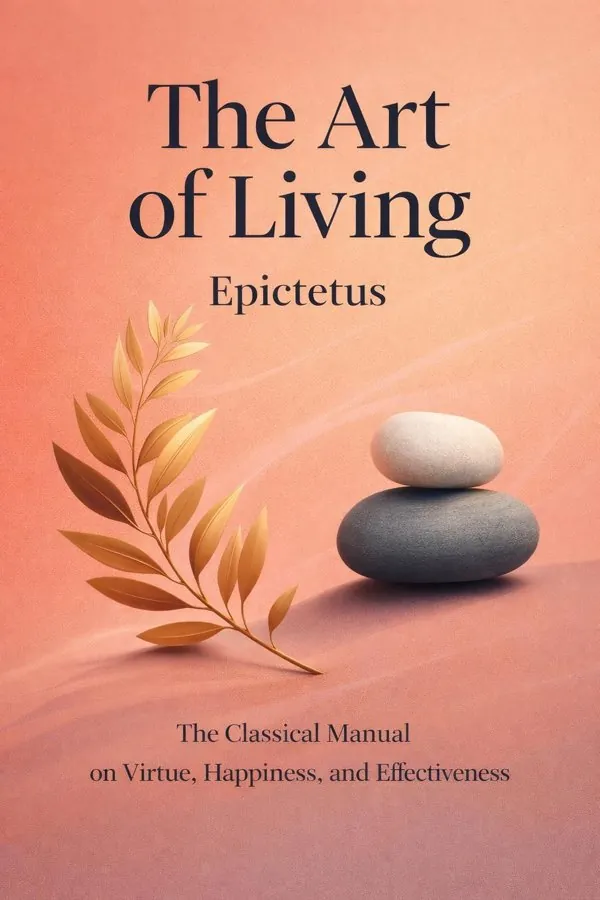
The Art of Living: The Classical Manual on Virtue, Happiness, and Effectiveness: Summary & Key Insights
by Epictetus
 10 min9 chaptersAudio available
What Is The Art of Living: The Classical Manual on Virtue, Happiness, and Effectiveness About?
The Art of Living: The Classical Manual on Virtue, Happiness, and Effectiveness by Epictetus is a western_phil book spanning 9 pages. The Art of Living: The Classical Manual on Virtue, Happiness, and Effectiveness is a modern interpretation of the Stoic teachings of Epictetus, adapted by Sharon Lebell. It presents timeless wisdom on how to live a virtuous, self-disciplined, and fulfilling life. Through concise and practical guidance, the book encourages readers to cultivate inner freedom, self-mastery, and acceptance of what lies beyond their control.
This FizzRead summary covers all 9 key chapters of The Art of Living: The Classical Manual on Virtue, Happiness, and Effectiveness in approximately 10 minutes, distilling the most important ideas, arguments, and takeaways from Epictetus's work. Also available as an audio summary and Key Quotes Podcast.
The Art of Living: The Classical Manual on Virtue, Happiness, and Effectiveness
The Art of Living: The Classical Manual on Virtue, Happiness, and Effectiveness is a modern interpretation of the Stoic teachings of Epictetus, adapted by Sharon Lebell. It presents timeless wisdom on how to live a virtuous, self-disciplined, and fulfilling life. Through concise and practical guidance, the book encourages readers to cultivate inner freedom, self-mastery, and acceptance of what lies beyond their control.
Who Should Read The Art of Living: The Classical Manual on Virtue, Happiness, and Effectiveness?
This book is perfect for anyone interested in western_phil and looking to gain actionable insights in a short read. Whether you're a student, professional, or lifelong learner, the key ideas from The Art of Living: The Classical Manual on Virtue, Happiness, and Effectiveness by Epictetus will help you think differently.
- ✓Readers who enjoy western_phil and want practical takeaways
- ✓Professionals looking to apply new ideas to their work and life
- ✓Anyone who wants the core insights of The Art of Living: The Classical Manual on Virtue, Happiness, and Effectiveness in just 10 minutes
Want the full summary?
Get instant access to this book summary and 100K+ more with Fizz Moment.
Get Free SummaryAvailable on App Store • Free to download
Key Chapters
This distinction is the cornerstone of Stoic ethics. All turmoil begins when we confuse what belongs to us with what does not. Within our control lie our opinions, impulses, desires, and aversions. Outside it lie everything else—property, reputation, health, death, and the behavior of others.
Imagine a traveler beset by storms. He cannot change the weather, but he can choose his attitude toward it. Similarly, you cannot dictate how others treat you, but you can govern your response. The wise do not lament the loss of things never truly theirs; they turn inward, tending the garden of the soul with care and mastery.
When we accept this truth, a marvelous calm arises. Anger fades, anxiety dissolves, and resentment loses its meaning. Every moment becomes a lesson in discernment. The art of living, then, begins with steady awareness: what belongs to me, and what does not? Choose well, and you free yourself from endless suffering born of confusion.
The Stoic path is one of self-command. You may not govern the world, but you can govern your mind. As a philosopher once enslaved, I came to understand that freedom is not granted by circumstance—it is earned through reason.
Mastery of thought begins with attention. Observe what thoughts enter, which appetites stir, which fears reign. Then, examine them. Are they grounded in truth? Do they serve virtue? The disciplined mind does not chase every impulse; it chooses deliberately. To desire wisely is to want only what is good and within your power. To avoid wisely is to avoid vice, not discomfort.
When desire and aversion serve reason, you become unharmed by chaos. You cease to be a captive of passions and instead live by choice, not accident. This inner freedom is not indifference—it is courage. It lets you meet the world with open eyes yet steady heart. True mastery is not domination over others; it is sovereignty over oneself.
+ 7 more chapters — available in the FizzRead app
All Chapters in The Art of Living: The Classical Manual on Virtue, Happiness, and Effectiveness
About the Author
Get This Summary in Your Preferred Format
Read or listen to the The Art of Living: The Classical Manual on Virtue, Happiness, and Effectiveness summary by Epictetus anytime, anywhere. FizzRead offers multiple formats so you can learn on your terms — all free.
Available formats: App · Audio · PDF · EPUB — All included free with FizzRead
Download The Art of Living: The Classical Manual on Virtue, Happiness, and Effectiveness PDF and EPUB Summary
Key Quotes from The Art of Living: The Classical Manual on Virtue, Happiness, and Effectiveness
“This distinction is the cornerstone of Stoic ethics.”
“You may not govern the world, but you can govern your mind.”
Frequently Asked Questions about The Art of Living: The Classical Manual on Virtue, Happiness, and Effectiveness
The Art of Living: The Classical Manual on Virtue, Happiness, and Effectiveness by Epictetus is a western_phil book that explores key ideas across 9 chapters. The Art of Living: The Classical Manual on Virtue, Happiness, and Effectiveness is a modern interpretation of the Stoic teachings of Epictetus, adapted by Sharon Lebell. It presents timeless wisdom on how to live a virtuous, self-disciplined, and fulfilling life. Through concise and practical guidance, the book encourages readers to cultivate inner freedom, self-mastery, and acceptance of what lies beyond their control.
More by Epictetus
You Might Also Like
A Little History of Philosophy
Nigel Warburton
10 min
Areopagitica
John Milton
10 min
How To Think Like A Philosopher: Essential Principles For Clear Thinking
Peter Cave
10 min
Language, Truth and Logic
A. J. Ayer
10 min
The Age of Reason
Thomas Paine
10 min
The Essays
Michel De Montaigne
10 minBrowse by Category
Ready to read The Art of Living: The Classical Manual on Virtue, Happiness, and Effectiveness?
Get the full summary and 100K+ more books with Fizz Moment.