
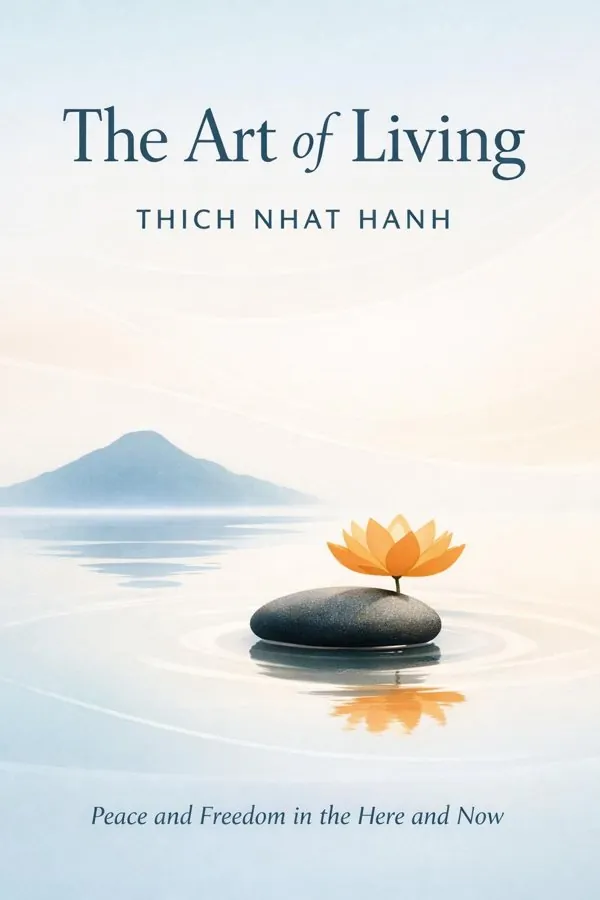
The Art of Living: Peace and Freedom in the Here and Now: Summary & Key Insights
 10 min6 chaptersAudio available
What Is The Art of Living: Peace and Freedom in the Here and Now About?
The Art of Living: Peace and Freedom in the Here and Now by Thich Nhat Hanh is a eastern_wisdom book spanning 6 pages. In this book, Zen master Thich Nhat Hanh offers profound teachings on mindfulness, presence, and the art of living fully in each moment. Drawing from Buddhist wisdom, he guides readers to cultivate peace, compassion, and freedom through simple yet transformative practices of awareness and breathing.
This FizzRead summary covers all 6 key chapters of The Art of Living: Peace and Freedom in the Here and Now in approximately 10 minutes, distilling the most important ideas, arguments, and takeaways from Thich Nhat Hanh's work. Also available as an audio summary and Key Quotes Podcast.
The Art of Living: Peace and Freedom in the Here and Now
In this book, Zen master Thich Nhat Hanh offers profound teachings on mindfulness, presence, and the art of living fully in each moment. Drawing from Buddhist wisdom, he guides readers to cultivate peace, compassion, and freedom through simple yet transformative practices of awareness and breathing.
Who Should Read The Art of Living: Peace and Freedom in the Here and Now?
This book is perfect for anyone interested in eastern_wisdom and looking to gain actionable insights in a short read. Whether you're a student, professional, or lifelong learner, the key ideas from The Art of Living: Peace and Freedom in the Here and Now by Thich Nhat Hanh will help you think differently.
- ✓Readers who enjoy eastern_wisdom and want practical takeaways
- ✓Professionals looking to apply new ideas to their work and life
- ✓Anyone who wants the core insights of The Art of Living: Peace and Freedom in the Here and Now in just 10 minutes
Want the full summary?
Get instant access to this book summary and 100K+ more with Fizz Moment.
Get Free SummaryAvailable on App Store • Free to download
Key Chapters
When we look deeply into life, we begin to see that nothing exists in isolation. A flower is made of non-flower elements—the soil, the rain, the sunlight, the gardener’s care. In this way, we realize that to say a flower ‘is’ means it inter-is. This insight of interbeing is the foundation of the Buddhist understanding of reality, and it changes how we see ourselves and the world.
Our tendency is to view life through the lens of separation: I am here, and the world is out there. Yet mindfulness reveals that this division is an illusion. When I breathe in, I take in not just air but the living presence of trees and clouds. When I smile to another person, I share my inner world with theirs. Recognizing interbeing dissolves fear and loneliness because we see that we are part of a vast web of life. This understanding also transforms suffering—when you suffer, you can look deeply and see that your pain is connected to the collective pain of humanity. That insight allows compassion to arise.
Interbeing does not mean losing individuality; it means understanding that individuality cannot exist without relationship. Just as a wave cannot exist apart from the ocean, each of us manifests the totality of life in every moment. To live with awareness of interbeing is to live with reverence. Our words, actions, and thoughts are no longer trivial—they affect the whole. This realization gives rise to responsibility and freedom. Each mindful breath can bring healing not only to ourselves but to all beings.
When we perceive the interconnected nature of reality, we stop grasping at permanence. We understand that change is the essence of life. This insight is not pessimistic; it is liberating. It frees us from clinging to what cannot stay and opens the heart to embrace whatever is present. The practice of mindfulness trains the mind to observe without judging, to rest in awareness rather than reaction. Through interbeing, we begin to see the world not as fragmented but as luminous, interwoven with meaning and compassion.
Our body is a living temple, yet we often forget it. Caught up in thoughts and anxieties, we treat the body merely as a means to achieve something or as an obstacle to our ambitions. In mindfulness practice, the body becomes our first home—the place where we reunite with life. Breathing in, I am aware of my body; breathing out, I smile to my body. This simple awareness can transform restlessness into peace.
Mindfulness of the body means learning to honor it, not as a possession but as a manifestation of life itself. Each cell of your body contains the wisdom of generations—your ancestors, the food you’ve eaten, the air you breathe. When you walk mindfully, each step touches the Earth as a mother. You become grounded and stable. This is why in Plum Village we practice walking meditation, eating meditation, and mindful movements. These are not exercises in control; they are ways to return to yourself.
When we listen to our body, we also listen to our suffering. Physical tension often hides emotional pain. To release it, we practice with tenderness, not punishment. As you breathe consciously, you create space for the body to relax, for the mind to calm, and for healing to occur naturally. Mindfulness of the body also means knowing its impermanent nature. Aging and change are natural. There is beauty in tenderness and fragility. When we accept our body wholeheartedly, we can live freshly and spontaneously, without fear.
Through mindful breathing, you discover a refuge within yourself. You no longer chase comfort outside, because the body—when attended to with awareness—becomes a garden of presence. Peace is accessible at any moment. When the body and mind come together through mindfulness, you embody the art of living fully.
+ 4 more chapters — available in the FizzRead app
All Chapters in The Art of Living: Peace and Freedom in the Here and Now
About the Author
Thich Nhat Hanh (1926–2022) was a Vietnamese Buddhist monk, teacher, poet, and peace activist. He founded the Plum Village tradition and was internationally recognized for his teachings on mindfulness, peace, and engaged Buddhism.
Get This Summary in Your Preferred Format
Read or listen to the The Art of Living: Peace and Freedom in the Here and Now summary by Thich Nhat Hanh anytime, anywhere. FizzRead offers multiple formats so you can learn on your terms — all free.
Available formats: App · Audio · PDF · EPUB — All included free with FizzRead
Download The Art of Living: Peace and Freedom in the Here and Now PDF and EPUB Summary
Key Quotes from The Art of Living: Peace and Freedom in the Here and Now
“When we look deeply into life, we begin to see that nothing exists in isolation.”
“Our body is a living temple, yet we often forget it.”
Frequently Asked Questions about The Art of Living: Peace and Freedom in the Here and Now
The Art of Living: Peace and Freedom in the Here and Now by Thich Nhat Hanh is a eastern_wisdom book that explores key ideas across 6 chapters. In this book, Zen master Thich Nhat Hanh offers profound teachings on mindfulness, presence, and the art of living fully in each moment. Drawing from Buddhist wisdom, he guides readers to cultivate peace, compassion, and freedom through simple yet transformative practices of awareness and breathing.
More by Thich Nhat Hanh
The Miracle of Mindfulness: An Introduction to the Practice of Meditation
Thich Nhat Hanh
10 min
The Heart of Understanding: Commentaries on the Prajñāpāramitā Heart Sutra
Thich Nhat Hanh
10 min
Anger: Wisdom for Cooling the Flames
Thich Nhat Hanh
10 min
Savor: Mindful Eating, Mindful Life
Thich Nhat Hanh, Lilian Cheung
10 minYou Might Also Like
A New Earth
Eckhart Tolle
10 min
The Daily Stoic
Ryan Holiday, Stephen Hanselman
10 min
Buddhism: Plain and Simple
Steve Hagen
10 min
Enchiridion
Epictetus
10 min
The Book of Tea
Kakuzō Okakura
10 min
The Light We Give: How Sikh Wisdom Can Transform Your Life
Simran Jeet Singh
10 minBrowse by Category
Ready to read The Art of Living: Peace and Freedom in the Here and Now?
Get the full summary and 100K+ more books with Fizz Moment.