
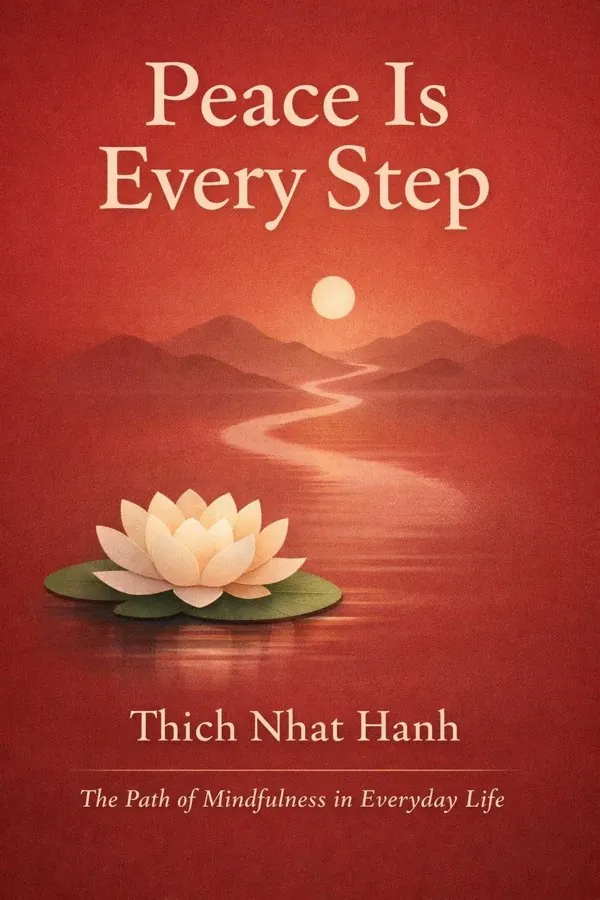
Peace Is Every Step: The Path of Mindfulness in Everyday Life: Summary & Key Insights
 10 min9 chaptersAudio available
Key Takeaways from Peace Is Every Step: The Path of Mindfulness in Everyday Life
The most overlooked miracle in daily life is the breath we are already taking.
Many people imagine mindfulness as something separate from real life, but Thich Nhat Hanh turns that assumption upside down.
We often walk as if our destination matters more than our life, hurrying physically while rushing mentally toward the next task.
Negative emotions do not become less dangerous when they are ignored.
One of the book’s most profound insights is that nothing exists independently.
What Is Peace Is Every Step: The Path of Mindfulness in Everyday Life About?
Peace Is Every Step: The Path of Mindfulness in Everyday Life by Thich Nhat Hanh is a eastern_wisdom book spanning 6 pages. Peace Is Every Step: The Path of Mindfulness in Everyday Life is Thich Nhat Hanh’s gentle but radical invitation to rediscover peace in the middle of ordinary life. Rather than presenting mindfulness as an abstract philosophy or a practice reserved for monasteries, the book shows how calm, awareness, and compassion can be cultivated while breathing, walking, eating, working, or even washing dishes. Its central promise is simple yet transformative: peace is not something to chase in the future; it is available now, in the way we meet each moment. What makes this book so enduring is its combination of spiritual depth and practical simplicity. Thich Nhat Hanh writes with warmth, clarity, and humility, using short reflections, stories, and exercises that make profound Buddhist insights feel immediately usable. As a Vietnamese Zen master, poet, peace activist, and founder of Plum Village, he speaks with rare authority about suffering, reconciliation, and mindful living. For readers overwhelmed by speed, stress, or emotional reactivity, this book offers a path back to presence. It reminds us that mindful awareness is not an escape from life, but a more loving way to live it.
This FizzRead summary covers all 9 key chapters of Peace Is Every Step: The Path of Mindfulness in Everyday Life in approximately 10 minutes, distilling the most important ideas, arguments, and takeaways from Thich Nhat Hanh's work. Also available as an audio summary and Key Quotes Podcast.
Peace Is Every Step: The Path of Mindfulness in Everyday Life
Peace Is Every Step: The Path of Mindfulness in Everyday Life is Thich Nhat Hanh’s gentle but radical invitation to rediscover peace in the middle of ordinary life. Rather than presenting mindfulness as an abstract philosophy or a practice reserved for monasteries, the book shows how calm, awareness, and compassion can be cultivated while breathing, walking, eating, working, or even washing dishes. Its central promise is simple yet transformative: peace is not something to chase in the future; it is available now, in the way we meet each moment.
What makes this book so enduring is its combination of spiritual depth and practical simplicity. Thich Nhat Hanh writes with warmth, clarity, and humility, using short reflections, stories, and exercises that make profound Buddhist insights feel immediately usable. As a Vietnamese Zen master, poet, peace activist, and founder of Plum Village, he speaks with rare authority about suffering, reconciliation, and mindful living. For readers overwhelmed by speed, stress, or emotional reactivity, this book offers a path back to presence. It reminds us that mindful awareness is not an escape from life, but a more loving way to live it.
Who Should Read Peace Is Every Step: The Path of Mindfulness in Everyday Life?
This book is perfect for anyone interested in eastern_wisdom and looking to gain actionable insights in a short read. Whether you're a student, professional, or lifelong learner, the key ideas from Peace Is Every Step: The Path of Mindfulness in Everyday Life by Thich Nhat Hanh will help you think differently.
- ✓Readers who enjoy eastern_wisdom and want practical takeaways
- ✓Professionals looking to apply new ideas to their work and life
- ✓Anyone who wants the core insights of Peace Is Every Step: The Path of Mindfulness in Everyday Life in just 10 minutes
Want the full summary?
Get instant access to this book summary and 100K+ more with Fizz Moment.
Get Free SummaryAvailable on App Store • Free to download
Key Chapters
The most overlooked miracle in daily life is the breath we are already taking. Thich Nhat Hanh begins with this deceptively simple truth because breathing is the easiest doorway back to presence. We spend much of life carried away by plans, worries, regrets, and reactions, as if our minds live everywhere except where our bodies are. Conscious breathing reunites body and mind. It interrupts the momentum of distraction and reminds us that we are alive now, not later.
In the book, breathing is not treated as a technique for self-improvement alone, but as an act of awakening. To breathe in and know you are breathing in is to recognize life directly. To breathe out and release tension is to create space around your thoughts and emotions. This small shift has profound consequences. Instead of becoming trapped in stress, you can pause, settle, and see more clearly.
The practice is intentionally accessible. You do not need incense, silence, or a meditation hall. You can breathe consciously in traffic, before answering an email, while waiting in line, or after hearing upsetting news. A few mindful breaths can keep irritation from turning into anger, or anxiety from hardening into panic. Thich Nhat Hanh often pairs breath with short phrases such as, “Breathing in, I calm my body. Breathing out, I smile.” These phrases guide attention and soften the nervous system.
The deeper lesson is that awareness begins with what is already here. We do not need to create a special moment to begin practicing. Each breath is a new beginning.
Actionable takeaway: Several times a day, stop for three conscious breaths and silently say, “In, I arrive. Out, I am here.”
Many people imagine mindfulness as something separate from real life, but Thich Nhat Hanh turns that assumption upside down. The point of mindfulness is not to withdraw from the world; it is to be fully present within it. Meditation is not confined to a cushion or a retreat center. It can happen while peeling an orange, answering the phone, drinking tea, or opening a door. The ordinary moment is not an obstacle to spiritual life. It is spiritual life.
This idea is one of the book’s most liberating contributions. If awareness can be practiced anywhere, then every part of the day becomes meaningful. Washing dishes can be more than a chore if you feel the warm water, notice your movements, and avoid rushing mentally toward what comes next. Drinking tea can become an act of deep enjoyment if you truly taste it instead of consuming it while checking messages. Walking from the car to the office can become a meditation when you feel each step rather than rehearsing problems.
Thich Nhat Hanh does not romanticize daily tasks; he transforms our relationship to them. When we are absent from what we are doing, life passes in fragments. When we are present, even simple acts carry peace and dignity. Mindfulness helps us stop sacrificing the present for a future that never quite arrives.
Practically, this means choosing anchors in the day. A ringing phone can remind you to breathe before speaking. A red light can remind you to relax your shoulders. Mealtime can become a pause for gratitude. Over time, everyday routines stop being empty intervals and become opportunities to cultivate steadiness.
Actionable takeaway: Pick one daily activity—such as brushing your teeth or making coffee—and do it with full attention for one week.
We often walk as if our destination matters more than our life, hurrying physically while rushing mentally toward the next task. Thich Nhat Hanh offers walking meditation as a powerful correction to this habit. To walk mindfully is to reclaim each step as an arrival rather than a means to an end. The ground beneath your feet becomes a source of stability, and movement becomes an expression of freedom instead of urgency.
In the book, walking meditation is more than a calming exercise. It is a lesson in how to inhabit life without aggression. Every step can be taken with awareness, gentleness, and gratitude. You may synchronize your breathing with your steps, or silently repeat phrases like, “I have arrived, I am home.” The point is not speed or performance, but contact with the present moment. When body and mind move together, restlessness begins to settle.
This practice is especially helpful in modern life because walking is built into the day. You can practice it in a hallway, on a sidewalk, in a park, or between meetings. Imagine leaving your desk after a stressful conversation. Instead of carrying tension into the next interaction, you slow your pace slightly, feel your foot touch the ground, and let each step dissolve the residue of stress. Even one mindful minute can shift your whole state.
Walking meditation also has symbolic power. It teaches that peace is not a reward at the finish line. Peace is present in the way we travel. If we walk in agitation, we reinforce agitation. If we walk in presence, we nourish presence.
Actionable takeaway: Once a day, take a five-minute walk with no phone, no agenda, and your attention resting fully on your steps and breath.
Negative emotions do not become less dangerous when they are ignored. One of Thich Nhat Hanh’s most compassionate teachings is that emotions such as anger, fear, jealousy, and sadness should not be suppressed or indulged, but recognized and held with mindfulness. Awareness acts like a caring parent embracing a crying child. The goal is not to fight the emotion, but to meet it so gently and clearly that it begins to change.
This is a crucial distinction. Many people either explode with emotion or pretend they are fine. Thich Nhat Hanh offers a third way: presence without violence. When anger arises, for example, you can say inwardly, “Hello, my anger. I know you are there.” This naming creates distance without denial. Breathing consciously while feeling the body prevents the mind from feeding the emotion with stories and blame. In time, what seemed overwhelming becomes workable.
He also emphasizes that emotions are not enemies; they are signals. Anger may point to hurt, fear, unmet needs, or inherited suffering. Mindfulness allows us to investigate before we act. Instead of sending a harsh message or escalating a conflict, we can pause, breathe, walk, or write down what we feel. This protects both ourselves and others from unnecessary harm.
The practical power of this teaching is enormous. In family life, it can stop arguments from spiraling. At work, it can reduce reactive decisions. Internally, it develops self-compassion. We learn that difficult feelings are part of being human, not proof that we are failing.
Actionable takeaway: The next time a strong emotion appears, pause and name it gently—“anger is here” or “fear is here”—then stay with ten slow breaths before doing anything else.
One of the book’s most profound insights is that nothing exists independently. Thich Nhat Hanh calls this “interbeing,” a term that expresses the deep interconnectedness of all life. A sheet of paper contains sunshine, rain, logger, soil, time, and countless conditions. A human being, too, is made of relationships: ancestors, culture, food, air, education, society, and the natural world. We are not isolated units moving through life alone; we are made of everything that supports our existence.
This insight is not merely philosophical. It changes how we see ourselves and others. When we believe we are separate, we become defensive, competitive, and lonely. When we understand interbeing, compassion arises naturally. The suffering of another person no longer feels entirely foreign, because we recognize our shared conditions. Their happiness also matters more, because our lives are intertwined.
Interbeing can reshape everyday behavior. You may eat more gratefully when you recognize the labor and ecology behind your meal. You may speak more carefully when you see that your words affect the emotional climate of your home or workplace. You may care more deeply for the environment when you understand that nature is not outside you; it is in your lungs, blood, and future.
Thich Nhat Hanh’s teaching here is both mystical and practical. It asks us to look deeply until separation softens. This does not erase individuality, but it places individuality within a larger web of life. With that shift comes humility, reverence, and responsibility.
Actionable takeaway: Once each day, choose one ordinary object—your breakfast, a notebook, a shirt—and reflect for one minute on all the people and elements that made it possible.
Much of human suffering persists because we do not know how to stop and care for it. In the sections on transformation and healing, Thich Nhat Hanh teaches that genuine healing begins not with fixing ourselves aggressively, but with becoming present enough to listen inwardly. Mindfulness creates the conditions for this listening. When we slow down and breathe, hidden pain that was buried under busyness can finally be acknowledged.
This teaching is especially important in a culture that rewards constant productivity. Many people use activity, entertainment, or achievement to avoid discomfort. Yet what is avoided does not disappear. It waits in the body, the mind, and our relationships. Thich Nhat Hanh suggests that stillness is not emptiness; it is a chance to recognize what needs care. Healing requires tenderness, patience, and honesty.
He often links personal healing with embodied awareness. Tension in the shoulders, tightness in the stomach, or a racing heart can be invitations to pause rather than symptoms to push past automatically. By breathing into the body and smiling gently to areas of tension, we begin to rebuild trust with ourselves. Mindful rest, walking, eating, and listening all become medicine.
Healing also includes reconciliation. We may need to understand our suffering in the context of family, history, or inherited wounds. Awareness helps us stop transmitting unresolved pain to others. It opens the possibility of responding differently.
The core message is hopeful: transformation does not require dramatic breakthroughs. Small moments of mindful care, practiced consistently, can gradually reshape our inner life.
Actionable takeaway: At least once a day, pause for two minutes to scan your body, notice where tension lives, and breathe kindness into that area without trying to force it away.
Inner peace cannot remain private for long; it expresses itself in how we speak and listen. Thich Nhat Hanh repeatedly shows that many conflicts are sustained not only by anger, but by the inability to communicate with understanding. Words can wound, divide, and inflame, but they can also heal. Mindfulness brings awareness to the space between feeling and speech, allowing compassion to shape our communication.
A central insight in the book is that listening is an act of love. Most people listen while preparing a defense, a correction, or a reply. Deep listening asks something else: to be fully present so the other person feels seen. This does not mean agreeing with everything they say. It means suspending immediate judgment long enough to understand their suffering. When people feel heard, hostility often softens.
Mindful speech works the same way. Before speaking, we can ask: Is what I am about to say true? Is it necessary? Is it kind? This simple pause prevents reactive language that leaves lasting damage. In families, it can interrupt patterns of blame. In professional settings, it can lower defensiveness and increase trust. In social conflict, it can create openings where polarization would otherwise harden.
Thich Nhat Hanh’s broader point is that peace is relational. If we want a more peaceful world, we must learn to speak from awareness rather than agitation. Every conversation becomes a field of practice. This is demanding work, but it is also deeply practical.
Actionable takeaway: In your next difficult conversation, spend at least one full minute listening without interrupting, and take one conscious breath before responding.
Small gestures often have more spiritual power than dramatic resolutions. Thich Nhat Hanh gives surprising importance to smiling, not as denial or forced positivity, but as a conscious act of softening. A gentle smile can relax the face, calm the nervous system, and signal friendliness toward ourselves and life. In moments of strain, this small physical shift can transform the quality of our awareness.
This teaching may seem almost too simple, yet it reflects a deep understanding of mind-body connection. Our mental states shape the body, but the body also influences the mind. When the face tightens and the jaw clenches, stress intensifies. When we soften and smile lightly, we interrupt that pattern. The smile becomes a form of embodied mindfulness.
Importantly, Thich Nhat Hanh does not ask us to smile to hide pain. He asks us to smile as a way of making room for life as it is. You can smile to your breath, to a difficult feeling, to the morning sky, or to your own imperfection. This changes the emotional climate from resistance to receptivity.
In practical life, the effect is immediate. Smiling before entering a meeting can make you less defensive. Smiling while breathing through frustration can reduce escalation. Smiling at another person with genuine presence can create connection beyond words. Over time, this practice supports resilience by reminding us that awareness can be warm, not harsh.
The larger lesson is that peace is often built through micro-practices. We do not always need a major intervention; sometimes we need a kinder posture toward the moment.
Actionable takeaway: Pair a soft smile with three mindful breaths whenever you notice stress building in your face, jaw, or shoulders.
A peaceful society cannot be built by agitated individuals. One of the book’s most powerful themes is that personal mindfulness and social peace are inseparable. Thich Nhat Hanh, shaped by war and activism, refuses the idea that inner peace is selfish withdrawal. Instead, he argues that without clarity, stability, and compassion within ourselves, our attempts to help the world may reproduce the very fear and hostility we oppose.
This is a corrective to both extremes: spiritual practice that ignores injustice, and activism that burns itself out in rage. Mindfulness helps us engage suffering without becoming consumed by it. When we are grounded in breath and presence, we can respond more wisely to conflict, inequality, and violence. We are less likely to dehumanize opponents, spread panic, or act from reactivity.
The book suggests that peace begins in concrete places: a family dinner, a workplace conversation, a city street, a social movement. If we bring mindful attention into these spaces, we create islands of sanity in a hurried and fractured world. This may seem modest, but Thich Nhat Hanh sees it as foundational. Collective transformation grows from the quality of human presence in everyday interactions.
For modern readers, this means that mindfulness is not just stress reduction. It is ethical training. It helps us consume more carefully, communicate more responsibly, and participate in society without losing our humanity. Peace is not passive. It is an active way of being.
Actionable takeaway: Before engaging in news, activism, or a difficult social issue, take a brief pause to ground yourself in breath so your response comes from steadiness rather than reactivity.
All Chapters in Peace Is Every Step: The Path of Mindfulness in Everyday Life
About the Author
Thich Nhat Hanh was a Vietnamese Zen Buddhist monk, teacher, poet, and peace activist widely regarded as one of the most influential spiritual figures of the modern era. Born in 1926, he entered monastic life at a young age and later became a leading voice for what he called “engaged Buddhism,” a form of practice that brings mindfulness and compassion into social and political life. During the Vietnam War, he advocated for peace and humanitarian relief, earning international recognition and a Nobel Peace Prize nomination from Martin Luther King Jr. He later founded Plum Village in France, which became a global center for mindfulness practice. Through his many books, talks, and retreats, Thich Nhat Hanh introduced millions of readers to accessible, practical mindfulness grounded in deep Buddhist wisdom.
Get This Summary in Your Preferred Format
Read or listen to the Peace Is Every Step: The Path of Mindfulness in Everyday Life summary by Thich Nhat Hanh anytime, anywhere. FizzRead offers multiple formats so you can learn on your terms — all free.
Available formats: App · Audio · PDF · EPUB — All included free with FizzRead
Download Peace Is Every Step: The Path of Mindfulness in Everyday Life PDF and EPUB Summary
Key Quotes from Peace Is Every Step: The Path of Mindfulness in Everyday Life
“The most overlooked miracle in daily life is the breath we are already taking.”
“Many people imagine mindfulness as something separate from real life, but Thich Nhat Hanh turns that assumption upside down.”
“We often walk as if our destination matters more than our life, hurrying physically while rushing mentally toward the next task.”
“Negative emotions do not become less dangerous when they are ignored.”
“One of the book’s most profound insights is that nothing exists independently.”
Frequently Asked Questions about Peace Is Every Step: The Path of Mindfulness in Everyday Life
Peace Is Every Step: The Path of Mindfulness in Everyday Life by Thich Nhat Hanh is a eastern_wisdom book that explores key ideas across 9 chapters. Peace Is Every Step: The Path of Mindfulness in Everyday Life is Thich Nhat Hanh’s gentle but radical invitation to rediscover peace in the middle of ordinary life. Rather than presenting mindfulness as an abstract philosophy or a practice reserved for monasteries, the book shows how calm, awareness, and compassion can be cultivated while breathing, walking, eating, working, or even washing dishes. Its central promise is simple yet transformative: peace is not something to chase in the future; it is available now, in the way we meet each moment. What makes this book so enduring is its combination of spiritual depth and practical simplicity. Thich Nhat Hanh writes with warmth, clarity, and humility, using short reflections, stories, and exercises that make profound Buddhist insights feel immediately usable. As a Vietnamese Zen master, poet, peace activist, and founder of Plum Village, he speaks with rare authority about suffering, reconciliation, and mindful living. For readers overwhelmed by speed, stress, or emotional reactivity, this book offers a path back to presence. It reminds us that mindful awareness is not an escape from life, but a more loving way to live it.
More by Thich Nhat Hanh
The Miracle of Mindfulness: An Introduction to the Practice of Meditation
Thich Nhat Hanh
10 min
The Heart of Understanding: Commentaries on the Prajñāpāramitā Heart Sutra
Thich Nhat Hanh
10 min
Anger: Wisdom for Cooling the Flames
Thich Nhat Hanh
10 min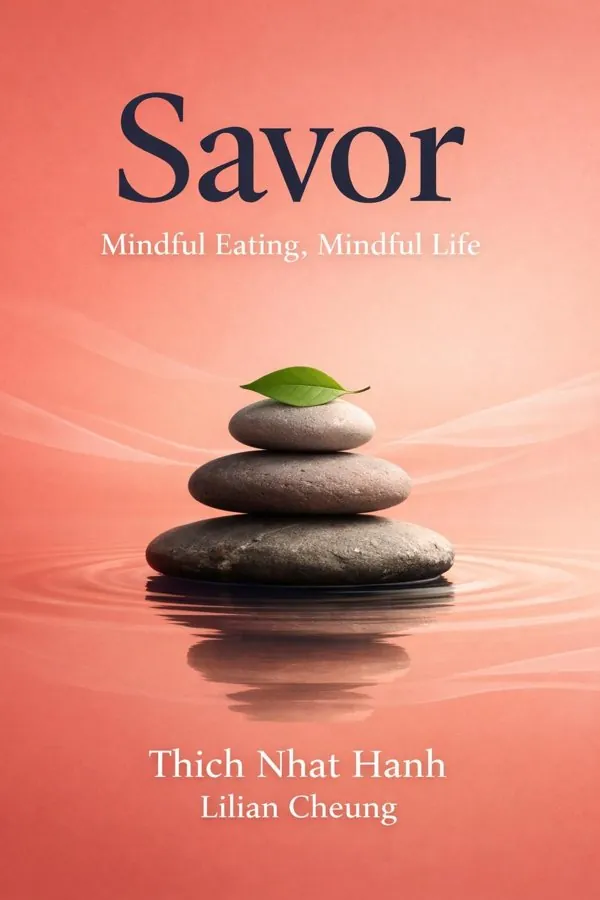
Savor: Mindful Eating, Mindful Life
Thich Nhat Hanh, Lilian Cheung
10 minYou Might Also Like
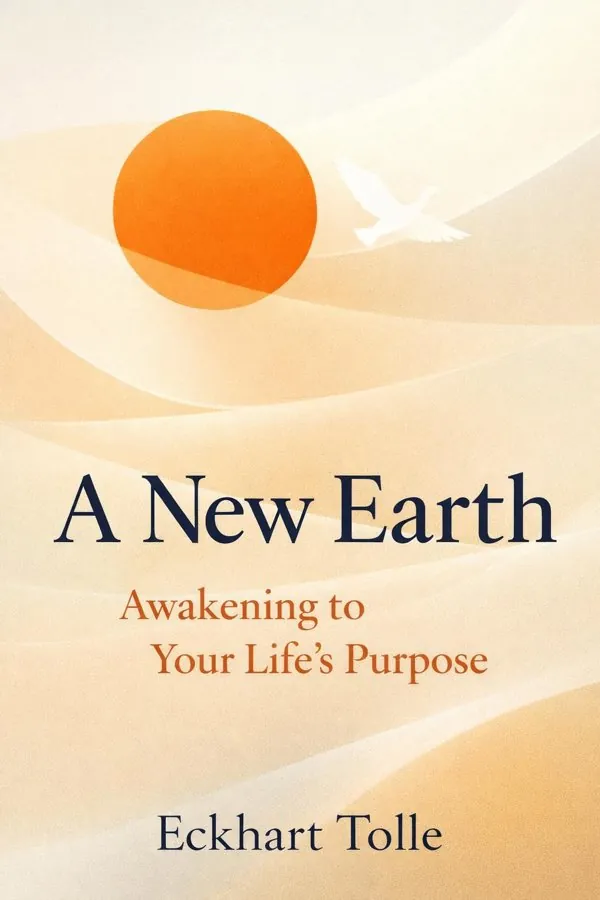
A New Earth
Eckhart Tolle
10 min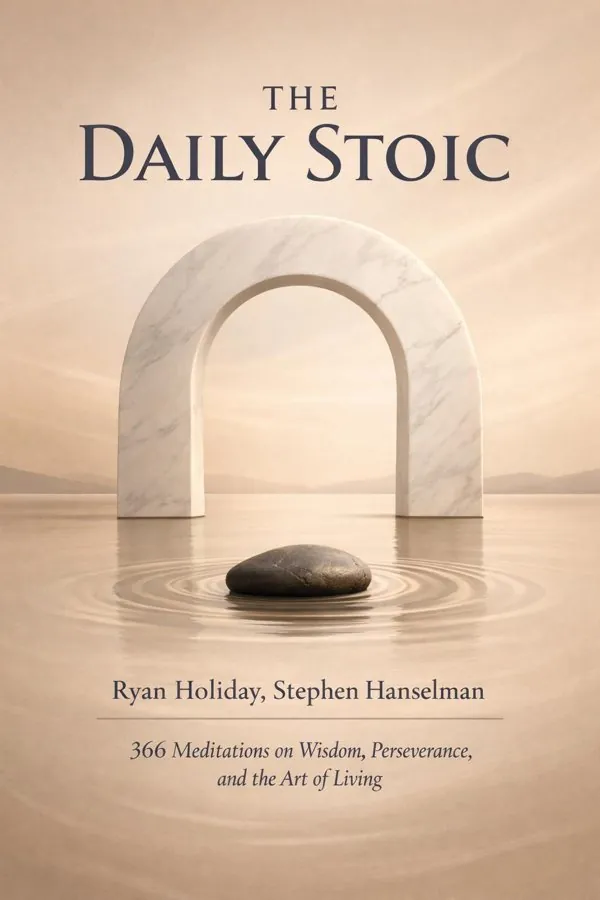
The Daily Stoic
Ryan Holiday, Stephen Hanselman
10 min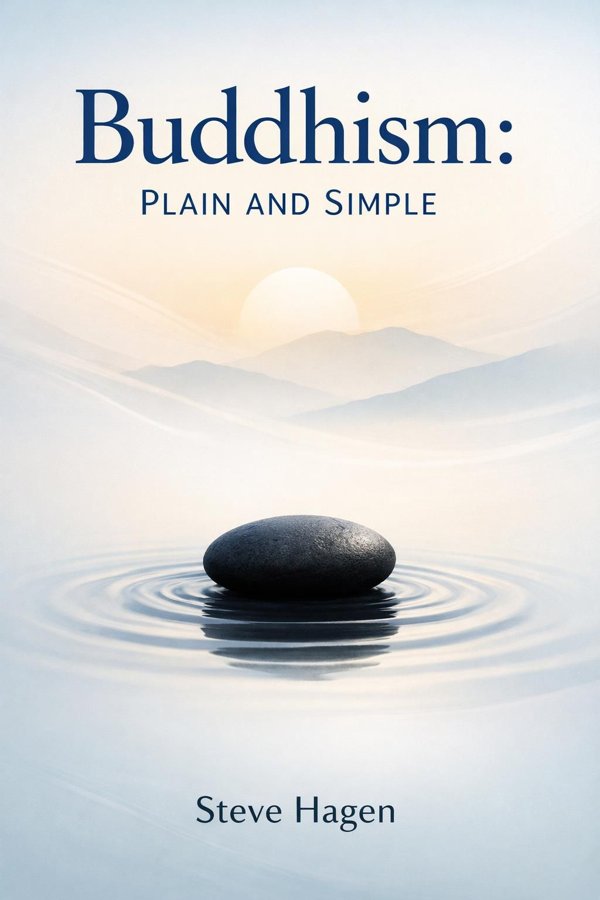
Buddhism: Plain and Simple
Steve Hagen
10 min
Enchiridion
Epictetus
10 min
The Book of Tea
Kakuzō Okakura
10 min
The Light We Give: How Sikh Wisdom Can Transform Your Life
Simran Jeet Singh
10 minBrowse by Category
Ready to read Peace Is Every Step: The Path of Mindfulness in Everyday Life?
Get the full summary and 100K+ more books with Fizz Moment.