
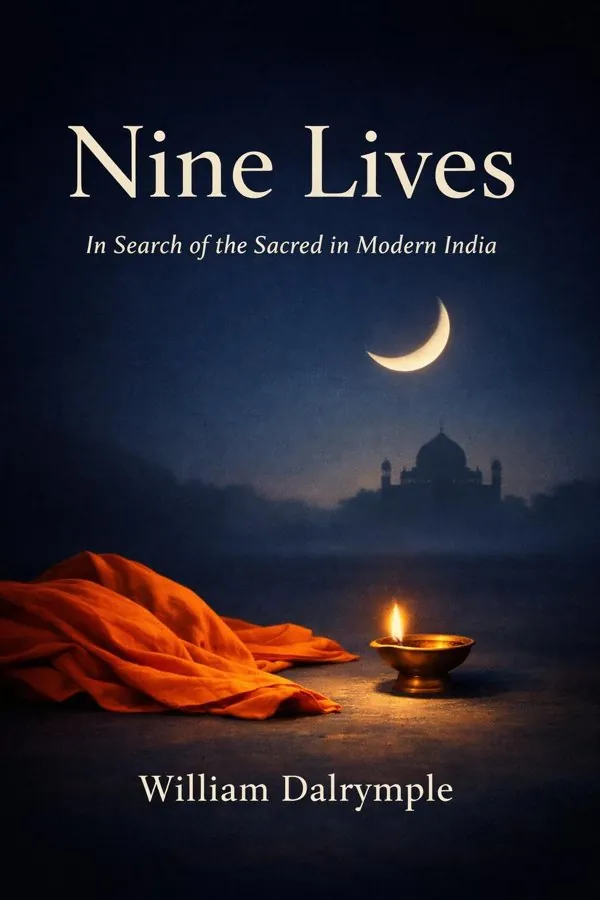
Nine Lives: In Search of the Sacred in Modern India: Summary & Key Insights
 10 min8 chaptersAudio available
What Is Nine Lives: In Search of the Sacred in Modern India About?
Nine Lives: In Search of the Sacred in Modern India by William Dalrymple is a world_history book spanning 8 pages. Nine Lives: In Search of the Sacred in Modern India is a 2009 travel book by Scottish writer and journalist William Dalrymple. Through nine portraits of individuals from different religious traditions—from Jain monks to devadasis and Sufi singers—Dalrymple explores how ancient forms of spiritual life survive and transform in contemporary India. The work combines ethnographic observation, historical narrative, and personal reflection on faith and modernity.
This FizzRead summary covers all 8 key chapters of Nine Lives: In Search of the Sacred in Modern India in approximately 10 minutes, distilling the most important ideas, arguments, and takeaways from William Dalrymple's work. Also available as an audio summary and Key Quotes Podcast.
Nine Lives: In Search of the Sacred in Modern India
Nine Lives: In Search of the Sacred in Modern India is a 2009 travel book by Scottish writer and journalist William Dalrymple. Through nine portraits of individuals from different religious traditions—from Jain monks to devadasis and Sufi singers—Dalrymple explores how ancient forms of spiritual life survive and transform in contemporary India. The work combines ethnographic observation, historical narrative, and personal reflection on faith and modernity.
Who Should Read Nine Lives: In Search of the Sacred in Modern India?
This book is perfect for anyone interested in world_history and looking to gain actionable insights in a short read. Whether you're a student, professional, or lifelong learner, the key ideas from Nine Lives: In Search of the Sacred in Modern India by William Dalrymple will help you think differently.
- ✓Readers who enjoy world_history and want practical takeaways
- ✓Professionals looking to apply new ideas to their work and life
- ✓Anyone who wants the core insights of Nine Lives: In Search of the Sacred in Modern India in just 10 minutes
Want the full summary?
Get instant access to this book summary and 100K+ more with Fizz Moment.
Get Free SummaryAvailable on App Store • Free to download
Key Chapters
She walks barefoot across the dust, a tiny figure draped in white, her face covered by a small cloth so as not to inhale an unseen insect. To witness her journey is to confront one of the most extreme expressions of human nonviolence. The Jain nun embodies the radical purity of the Jain path—renouncing not merely possessions but the physical world in its entirety. Jain spirituality calls for a life of *ahimsa*, nonharm, extending compassion even to microbes. Yet beneath this outward severity lies an extraordinary gentleness—a profound conviction that liberation lies not in conquest but in stillness.
When I met her, she spoke softly of the vows that guided her life: the refusal to own or desire, the discipline of fasting, the willingness to face death with calm acceptance. Jain cosmology sees existence as a ceaseless journey of the soul toward release from karmic bondage. Every attachment—material, emotional, even intellectual—is a chain to be dissolved. Her voice carried an unearthly serenity, but behind it was the memory of pain: she had once been a mother, a wife. In renouncing those identities, she believed she was opening the path for the infinite within her to shine through.
Modern India surrounds her with contradiction—roads humming with traffic, televisions glowing with color. And yet, she continues her pilgrimage across this landscape untouched by it. Her presence reveals something essential about India itself: that amid economic expansion and cultural flux, there remains space for those who choose silence over speed, simplicity over accumulation. In her, Jain asceticism becomes not an escape from the world but an act of radical resistance to its excesses.
In the far south, in Kerala’s lush villages, I found myself drawn into the surreal world of Theyyam—the ritual dance in which men, from modest backgrounds, transform into gods for a fleeting moment. The dancer of Kannur spoke to me of this metamorphosis, how before dawn he paints his face, dons ancestral colors, and yields himself entirely to the deity he channels. When the drums begin, he ceases to be mortal; the villagers bow, even those once his social superiors. In that hour, the universe inverts: the marginalized becomes divine.
Theyyam encapsulates Kerala’s ancient cosmology, where art and faith intertwine inseparably. Its roots lie in folk traditions predating Brahminical Hinduism, expressing a fierce sense of justice against oppression and inequality. Listening to him, I understood that the dance is both performance and prophecy—a living theater of rebellion, a spiritual democracy enacted on village soil. For him, modernity is not an enemy but a backdrop; he works as a mechanic during the week and as a god on weekends. Yet the divine still demands its due: rigorous fasting, precise ritual, and the burning of ego.
Watching his dance was mesmerizing. Sweat mingled with ash as he moved, his voice issuing proclamations of blessing and vengeance. At the heart of the spectacle lies the question of identity—how far can one merge with divinity without losing humanity? The dancer’s story spoke of a faith that does not retreat from the world but reimagines it, transforming art into transcendence. In his movement, the ancient breathed flawlessly within the present, reminding me that sacredness in India is often performed, embodied, and shared—not locked away in temples but lived in rhythm and color.
+ 6 more chapters — available in the FizzRead app
All Chapters in Nine Lives: In Search of the Sacred in Modern India
About the Author
William Dalrymple is a Scottish historian, writer, and journalist born in 1965. Known for his works on the history and culture of the Indian subcontinent, he has received numerous literary awards. His notable books include 'City of Djinns', 'The Last Mughal', and 'Return of a King'. He divides his time between the United Kingdom and India.
Get This Summary in Your Preferred Format
Read or listen to the Nine Lives: In Search of the Sacred in Modern India summary by William Dalrymple anytime, anywhere. FizzRead offers multiple formats so you can learn on your terms — all free.
Available formats: App · Audio · PDF · EPUB — All included free with FizzRead
Download Nine Lives: In Search of the Sacred in Modern India PDF and EPUB Summary
Key Quotes from Nine Lives: In Search of the Sacred in Modern India
“She walks barefoot across the dust, a tiny figure draped in white, her face covered by a small cloth so as not to inhale an unseen insect.”
“In the far south, in Kerala’s lush villages, I found myself drawn into the surreal world of Theyyam—the ritual dance in which men, from modest backgrounds, transform into gods for a fleeting moment.”
Frequently Asked Questions about Nine Lives: In Search of the Sacred in Modern India
Nine Lives: In Search of the Sacred in Modern India by William Dalrymple is a world_history book that explores key ideas across 8 chapters. Nine Lives: In Search of the Sacred in Modern India is a 2009 travel book by Scottish writer and journalist William Dalrymple. Through nine portraits of individuals from different religious traditions—from Jain monks to devadasis and Sufi singers—Dalrymple explores how ancient forms of spiritual life survive and transform in contemporary India. The work combines ethnographic observation, historical narrative, and personal reflection on faith and modernity.
More by William Dalrymple
City Of Djinns: A Year In Delhi
William Dalrymple
10 min
The Anarchy: The Relentless Rise of the East India Company
William Dalrymple
10 min
In Xanadu: A Quest
William Dalrymple
10 min
White Mughals: Love and Betrayal in Eighteenth-Century India
William Dalrymple
10 minYou Might Also Like
The Age of Capital
Eric Hobsbawm
10 min
The Gulag Archipelago
Aleksandr Solzhenitsyn
10 min
Jerusalem: The Biography
Simon Sebag Montefiore
10 min
The Anglo-Saxons
James Campbell
10 min
The Boer War
Thomas Pakenham
10 min
The Industrial Revolutionaries: The Making of the Modern World 1776–1914
Gavin Weightman
10 minBrowse by Category
Ready to read Nine Lives: In Search of the Sacred in Modern India?
Get the full summary and 100K+ more books with Fizz Moment.