
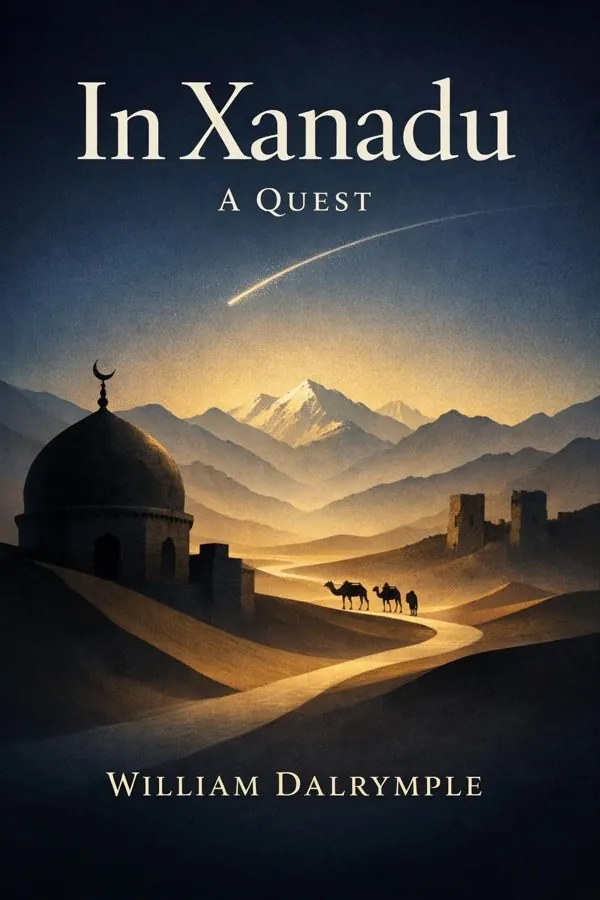
In Xanadu: A Quest: Summary & Key Insights
 10 min9 chaptersAudio available
Key Takeaways from In Xanadu: A Quest
Every great journey begins with a place already crowded by other journeys.
Some landscapes do not replace the past; they write over it imperfectly.
Trade routes do more than move goods; they create mental maps of possibility.
Empires may collapse, but their habits of beauty often outlive their power.
The romance of adventure changes when risk becomes real.
What Is In Xanadu: A Quest About?
In Xanadu: A Quest by William Dalrymple is a travel book spanning 8 pages. In Xanadu: A Quest is both a travel book and a literary pilgrimage. Written when William Dalrymple was only twenty-two, it follows his ambitious attempt to retrace Marco Polo’s route from Jerusalem to the site of Kubla Khan’s legendary summer capital, Xanadu. What begins as a youthful adventure quickly becomes something richer: an encounter with the living remains of the Silk Road, where religions, empires, and languages have met, clashed, and blended for centuries. Dalrymple moves through Jerusalem, Syria, Turkey, Iran, Pakistan, China, and beyond with a sharp eye for absurdity, a historian’s fascination with ruins, and a traveler’s openness to danger, hospitality, and surprise. The book matters because it turns distant history into something immediate and human. Instead of treating the past as a museum display, Dalrymple shows how it lingers in architecture, rituals, politics, and memory. His authority comes not from academic distance alone, but from firsthand immersion: buses, border crossings, remote roads, and conversations with people who inhabit these ancient crossroads. The result is an unusually vivid meditation on travel, empire, faith, and the stubborn endurance of place.
This FizzRead summary covers all 9 key chapters of In Xanadu: A Quest in approximately 10 minutes, distilling the most important ideas, arguments, and takeaways from William Dalrymple's work. Also available as an audio summary and Key Quotes Podcast.
In Xanadu: A Quest
In Xanadu: A Quest is both a travel book and a literary pilgrimage. Written when William Dalrymple was only twenty-two, it follows his ambitious attempt to retrace Marco Polo’s route from Jerusalem to the site of Kubla Khan’s legendary summer capital, Xanadu. What begins as a youthful adventure quickly becomes something richer: an encounter with the living remains of the Silk Road, where religions, empires, and languages have met, clashed, and blended for centuries. Dalrymple moves through Jerusalem, Syria, Turkey, Iran, Pakistan, China, and beyond with a sharp eye for absurdity, a historian’s fascination with ruins, and a traveler’s openness to danger, hospitality, and surprise. The book matters because it turns distant history into something immediate and human. Instead of treating the past as a museum display, Dalrymple shows how it lingers in architecture, rituals, politics, and memory. His authority comes not from academic distance alone, but from firsthand immersion: buses, border crossings, remote roads, and conversations with people who inhabit these ancient crossroads. The result is an unusually vivid meditation on travel, empire, faith, and the stubborn endurance of place.
Who Should Read In Xanadu: A Quest?
This book is perfect for anyone interested in travel and looking to gain actionable insights in a short read. Whether you're a student, professional, or lifelong learner, the key ideas from In Xanadu: A Quest by William Dalrymple will help you think differently.
- ✓Readers who enjoy travel and want practical takeaways
- ✓Professionals looking to apply new ideas to their work and life
- ✓Anyone who wants the core insights of In Xanadu: A Quest in just 10 minutes
Want the full summary?
Get instant access to this book summary and 100K+ more with Fizz Moment.
Get Free SummaryAvailable on App Store • Free to download
Key Chapters
Every great journey begins with a place already crowded by other journeys. Dalrymple starts in Jerusalem, a city where faith, conquest, memory, and longing overlap so intensely that no traveler can remain a neutral observer. By beginning here, he frames his trip not simply as tourism or adventure, but as a modern pilgrimage layered on top of older ones. Marco Polo passed through a world in which sacred geography mattered deeply, and Dalrymple discovers that this has not changed. In Jerusalem, shrines are not just monuments; they are active theaters of belief, rivalry, and devotion.
What makes this opening so powerful is the way Dalrymple connects the city’s physical landscape to its historical weight. Streets, churches, and walls seem to compress centuries into a few walkable miles. The traveler is constantly reminded that history is not abstract. It is embodied in contested spaces, in rituals repeated over generations, and in the emotional intensity of those who come seeking meaning. Dalrymple’s humor and self-awareness prevent the scene from becoming solemnly overblown, yet he never loses sight of Jerusalem’s gravity.
For readers, this chapter suggests an important principle: where you begin a journey shapes everything that follows. A meaningful trip often starts by asking what earlier travelers, pilgrims, merchants, or conquerors sought in the same place. If you approach a destination with historical curiosity, even familiar landmarks become newly alive. In practical terms, this means reading before you travel, visiting religious and historical sites at slower pace, and paying attention to the stories locals attach to them.
Actionable takeaway: On your next trip, choose one landmark and learn its layered religious, political, and cultural history before visiting. Let that deeper context guide how you experience the place.
Some landscapes do not replace the past; they write over it imperfectly. As Dalrymple moves north through Syria and into Turkey, he encounters societies that resemble palimpsests, where each age leaves traces beneath the next. Roman ruins coexist with Islamic architecture, Byzantine memories persist under modern political realities, and village life unfolds in the shadow of fallen empires. This layered world is central to the book’s appeal because it reveals travel as an act of reading as much as moving.
Dalrymple’s gift is his ability to notice how history survives in fragments: a cracked stone arch, a half-forgotten local legend, a church converted into a mosque, or a caravan route transformed into a highway. Rather than romanticizing ruins, he asks what they mean in the present. Who claims them? Who ignores them? Who still lives among them? In doing so, he shows that the Middle East and Anatolia are not frozen relics of civilization, but dynamic places in which old inheritances remain politically and culturally active.
This idea has practical value for modern readers. We often divide places into neat categories such as ancient, medieval, modern, Eastern, or Western. Dalrymple’s journey challenges that simplification. The more useful approach is to see regions as accumulations of influence. When you do that, you become more attentive to complexity and less vulnerable to stereotypes. A modern city can still contain Crusader echoes; a village custom can preserve something older than the nation-state around it.
Actionable takeaway: When visiting a historically rich place, ask three questions: what stood here before, what changed it, and what from the older world still survives? Those questions will transform sightseeing into real understanding.
Trade routes do more than move goods; they create mental maps of possibility. In Anatolia, Dalrymple enters territory shaped by the Silk Road, and with it comes one of the book’s most important insights: roads of exchange also become roads of imagination. Merchants carry silk, spices, horses, and precious stones, but they also carry myths, artistic styles, religious ideas, technologies, and stories about distant worlds. To follow Marco Polo is therefore to follow not just a path on land, but a corridor of cultural transmission.
Dalrymple helps readers see how travel once depended on caravanserais, mountain passes, market towns, and local guides. Movement was slow, uncertain, and vulnerable to weather, war, and politics. Yet that difficulty gave the journey texture. Distances were felt physically. Borders were experienced through language shifts, costume changes, and food traditions. Today, by contrast, rapid transit can flatten our awareness of transitions. Dalrymple reminds us of what is lost when movement becomes too easy: we stop noticing how one world shades into another.
This section also speaks to our own globalized moment. The Silk Road was an early form of interconnectedness, but unlike modern digital networks, it forced people into direct encounter. The practical lesson is that meaningful travel involves accepting friction. Long bus rides, unfamiliar customs, and logistical confusion are not always inconveniences to eliminate; they can be the very experiences that reveal a place’s character.
Actionable takeaway: Build some slowness into your travels. Choose at least one overland segment, local market, or old trade route experience where you can feel how geography shapes culture rather than skipping straight to the destination.
Empires may collapse, but their habits of beauty often outlive their power. In Iran, Dalrymple enters a civilization marked by immense historical continuity, where Persian imperial culture still radiates through poetry, architecture, etiquette, and urban form. Rather than treating empire solely as military domination, he notices its subtler afterlives: the aesthetic standards it leaves behind, the administrative traditions it normalizes, and the cultural self-confidence it instills. Iran becomes, in his account, a place where grandeur remains legible even when politics have changed dramatically.
What stands out is Dalrymple’s sensitivity to contradiction. Iran is both ancient and contemporary, sophisticated and tightly controlled, hospitable and politically tense. He recognizes that travelers can be tempted to reduce such a place either to headlines or to romantic nostalgia. The richer response is to hold both truths at once. The Persian past is real, but so is the complexity of the present. This balance is one reason the book remains rewarding: Dalrymple is curious enough to admire without idealizing.
For readers, Iran illustrates how civilizational depth shapes modern identity. Countries with long imperial histories often see themselves through a larger historical lens than outsiders expect. That has practical implications for how we interpret politics, diplomacy, and culture. To understand the present, we often need to grasp the historical narratives people inherit about greatness, loss, and continuity.
Actionable takeaway: When learning about a country with an imperial past, do not stop at current events. Read one poem, study one historic city, and learn one foundational dynasty or era. That deeper frame will sharpen your view of the present.
The romance of adventure changes when risk becomes real. In Afghanistan, Dalrymple’s quest moves into territory where travel is shaped by instability, fear, and political violence. This is not danger as a decorative feature of storytelling, but as a condition that alters perception. Roads become uncertain, checkpoints matter, strangers are judged more quickly, and hospitality acquires a sharper emotional force because it exists alongside menace. Dalrymple’s writing here reveals one of the book’s central tensions: the desire to follow history’s pathways collides with the realities of a fractured modern world.
Importantly, Dalrymple does not treat conflict zones merely as exotic backdrops. He notices the human texture within insecurity: ordinary routines persisting, local kindnesses, bureaucratic absurdities, and the resilience of communities caught between larger forces. This keeps the narrative from slipping into spectacle. The reader is reminded that places associated with war are still inhabited by people whose daily lives cannot be reduced to the conflicts reported from afar.
There is also a broader lesson about travel writing itself. Good travel literature does not celebrate recklessness for its own sake. Instead, it reflects on judgment, vulnerability, and the ethics of movement. Why are we drawn to difficult places? What do we owe the people who live there permanently, rather than pass through briefly? Dalrymple never turns these questions into lectures, but they linger beneath the narrative.
Actionable takeaway: If a place interests you because it is politically fraught, educate yourself beyond the thrill factor. Read local voices, understand the risks realistically, and ask whether your curiosity is matched by humility and responsibility.
Borderlands are where civilizations reveal how porous they really are. As Dalrymple passes through Pakistan, he encounters a region shaped by trade, conquest, migration, and faith, a place where Central Asian, Persian, Indian, and Islamic influences intersect. This crossing matters because it complicates simplistic ideas of national identity. Pakistan appears not as a sealed cultural unit, but as a zone of overlap, inheritance, and exchange. Its landscapes and cities bear the marks of many worlds at once.
Dalrymple is especially effective when showing how these intersections survive in everyday life: in architecture, food, language, dress, and local memory. Such details reveal that culture is rarely pure. What people call tradition is often the result of centuries of borrowing and adaptation. This insight is central to the Silk Road theme. The route did not just connect different civilizations; it produced hybrid ones. Pakistan exemplifies that process vividly.
For modern readers, this has practical significance. We live in an era when identities are often presented as fixed and oppositional. Dalrymple’s journey suggests a more truthful model: cultures are built at crossroads. Recognizing that can make us less dogmatic and more observant. Instead of asking whether a place belongs to one world or another, we can ask how multiple worlds have shaped it.
This perspective also enriches travel itself. A meal, a shrine, or a local phrase may contain historical layers extending far beyond modern borders. Travel becomes more rewarding when we trace those layers instead of settling for surface impressions.
Actionable takeaway: In any unfamiliar place, look for signs of cultural mixture rather than purity. Notice borrowed words, blended cuisines, and architectural fusion. Those details often tell the deepest story.
The end of a long journey often reveals how much the world has changed since the journey first became legendary. As Dalrymple enters China’s western frontier and heads toward Inner Mongolia, he confronts the final transformation of Marco Polo’s route. Here the old Silk Road imagination meets the reality of a modern state, vast distances, ethnic complexity, and regions where memory, mythology, and administration collide. The approach to Xanadu is not a seamless drift into fantasy, but a confrontation with how history is preserved, repurposed, or forgotten.
Dalrymple’s writing captures the unsettling experience of nearing a symbolic destination only to find that the landscape around it is shaped by forces very different from those of the past. The traveler expects revelation, but often receives ambiguity instead. This is one of the most mature insights in the book. The closer we get to a dream, the more clearly we see that dreams are partly made of projection. Marco Polo’s world cannot be recovered intact; it can only be pursued through fragments, documents, ruins, and imagination.
Yet this does not make the journey meaningless. On the contrary, the mismatch between expectation and reality becomes the lesson. Travel is not valuable because it confirms myths, but because it tests them. In practical terms, this encourages readers to approach famous destinations with curiosity rather than script-driven expectation. The real discovery may lie in what resists the story you hoped to find.
Actionable takeaway: When nearing a bucket-list destination, write down your assumptions beforehand. Then, during the visit, look specifically for what contradicts them. That gap between expectation and reality is often where the deepest insight appears.
Some places matter less for what they are than for what they have come to symbolize. Xanadu is the clearest example in Dalrymple’s book. Thanks to Marco Polo, Coleridge, and centuries of Western fascination, it exists in the imagination as a site of splendor, mystery, and impossible distance. Dalrymple’s arrival therefore completes more than a route. It tests a myth. Can a real place survive the weight of all the fantasies attached to it?
The answer is subtle. Xanadu does not emerge as a simple triumph of discovery, nor as a cheap debunking of romantic legend. Instead, Dalrymple shows that symbolic destinations are powerful precisely because they combine ruin and reverie. The actual site may be diminished, fragmentary, or underwhelming in material terms, but its imaginative force remains. What the traveler reaches is not pure historical recovery, but a conversation between text and terrain, memory and evidence, desire and disappointment.
This idea extends beyond this particular journey. Many of the places we long to see are loaded with inherited meanings from books, films, family stories, or national myths. Dalrymple demonstrates that one of travel’s deepest pleasures is discovering how these meanings endure, mutate, or collapse in contact with reality. That encounter can be more valuable than simple fulfillment.
For readers, Xanadu becomes a metaphor for all quests: we pursue external destinations, but often arrive at a better understanding of our own expectations. The destination matters, yet the interpretation matters more.
Actionable takeaway: Before visiting a place you have long idealized, ask yourself what story you have attached to it. During and after the trip, separate the real place from the private myth. The comparison will teach you as much about yourself as about the destination.
One reason In Xanadu feels so alive is that it is powered by two energies that do not always coexist: youthful recklessness and serious historical curiosity. Dalrymple is young enough to embrace discomfort, improvisation, and occasional absurdity, yet intellectually ambitious enough to connect each stage of his journey to larger civilizational questions. The result is a travel narrative that avoids two common traps. It is not merely an academic reconstruction of Marco Polo’s route, and it is not merely a backpacker’s string of anecdotes. It is both scholarship and adventure in motion.
This blend matters because it models a richer way of engaging with the world. Curiosity is strongest when it has both appetite and discipline. The appetite sends you onto the road; the discipline helps you interpret what you find there. Dalrymple can joke about mishaps and eccentric encounters, but he also notices architecture, chronicles, sacred traditions, and imperial afterlives. That combination gives the book its enduring charm.
For readers, there is a practical lesson here about how to travel well. Preparation need not kill spontaneity. In fact, historical reading, maps, memoirs, and background study often make surprise more meaningful because they give you a framework for recognizing what is unusual or significant. The best journeys are often those in which knowledge sharpens wonder rather than replacing it.
Actionable takeaway: Before your next major trip, pair one practical guidebook with one historical work or memoir about the region. Use the first to get around and the second to deepen what you notice once you arrive.
All Chapters in In Xanadu: A Quest
About the Author
William Dalrymple is a Scottish historian, travel writer, and broadcaster celebrated for his vivid books on Asia, the Middle East, and the Indian subcontinent. Born in 1965, he first came to prominence with In Xanadu, written in his early twenties, which revealed his gift for combining literary travel narrative with historical insight. He later built a distinguished career through acclaimed works such as City of Djinns, White Mughals, The Last Mughal, Return of a King, and The Anarchy. Dalrymple is especially known for making complex imperial and cultural histories accessible to general readers without sacrificing depth. Much of his life and work has been centered in India, and he is also a co-founder and co-director of the Jaipur Literature Festival, one of the world’s best-known literary events.
Get This Summary in Your Preferred Format
Read or listen to the In Xanadu: A Quest summary by William Dalrymple anytime, anywhere. FizzRead offers multiple formats so you can learn on your terms — all free.
Available formats: App · Audio · PDF · EPUB — All included free with FizzRead
Download In Xanadu: A Quest PDF and EPUB Summary
Key Quotes from In Xanadu: A Quest
“Every great journey begins with a place already crowded by other journeys.”
“Some landscapes do not replace the past; they write over it imperfectly.”
“Trade routes do more than move goods; they create mental maps of possibility.”
“Empires may collapse, but their habits of beauty often outlive their power.”
“The romance of adventure changes when risk becomes real.”
Frequently Asked Questions about In Xanadu: A Quest
In Xanadu: A Quest by William Dalrymple is a travel book that explores key ideas across 9 chapters. In Xanadu: A Quest is both a travel book and a literary pilgrimage. Written when William Dalrymple was only twenty-two, it follows his ambitious attempt to retrace Marco Polo’s route from Jerusalem to the site of Kubla Khan’s legendary summer capital, Xanadu. What begins as a youthful adventure quickly becomes something richer: an encounter with the living remains of the Silk Road, where religions, empires, and languages have met, clashed, and blended for centuries. Dalrymple moves through Jerusalem, Syria, Turkey, Iran, Pakistan, China, and beyond with a sharp eye for absurdity, a historian’s fascination with ruins, and a traveler’s openness to danger, hospitality, and surprise. The book matters because it turns distant history into something immediate and human. Instead of treating the past as a museum display, Dalrymple shows how it lingers in architecture, rituals, politics, and memory. His authority comes not from academic distance alone, but from firsthand immersion: buses, border crossings, remote roads, and conversations with people who inhabit these ancient crossroads. The result is an unusually vivid meditation on travel, empire, faith, and the stubborn endurance of place.
More by William Dalrymple
City Of Djinns: A Year In Delhi
William Dalrymple
10 min
Nine Lives: In Search of the Sacred in Modern India
William Dalrymple
10 min
The Anarchy: The Relentless Rise of the East India Company
William Dalrymple
10 min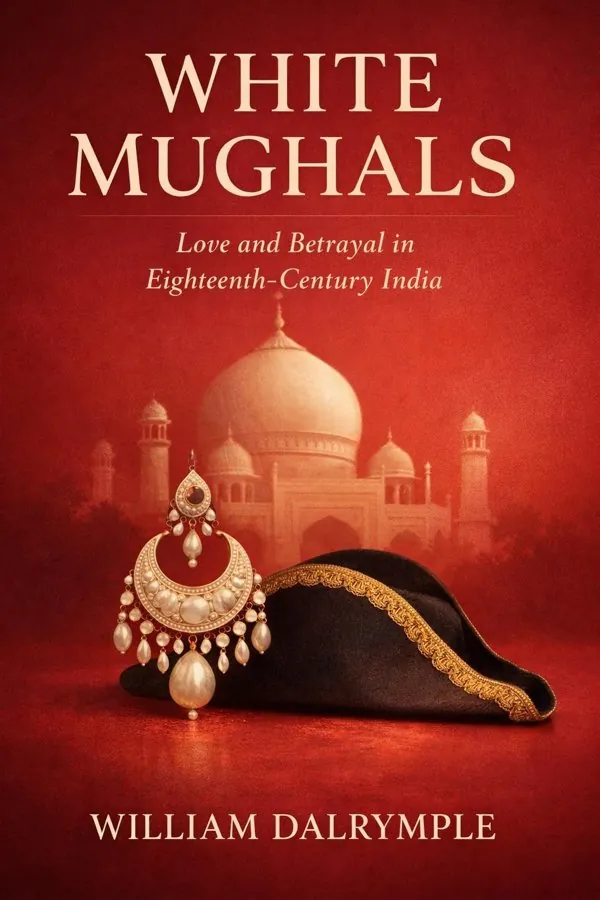
White Mughals: Love and Betrayal in Eighteenth-Century India
William Dalrymple
10 minYou Might Also Like
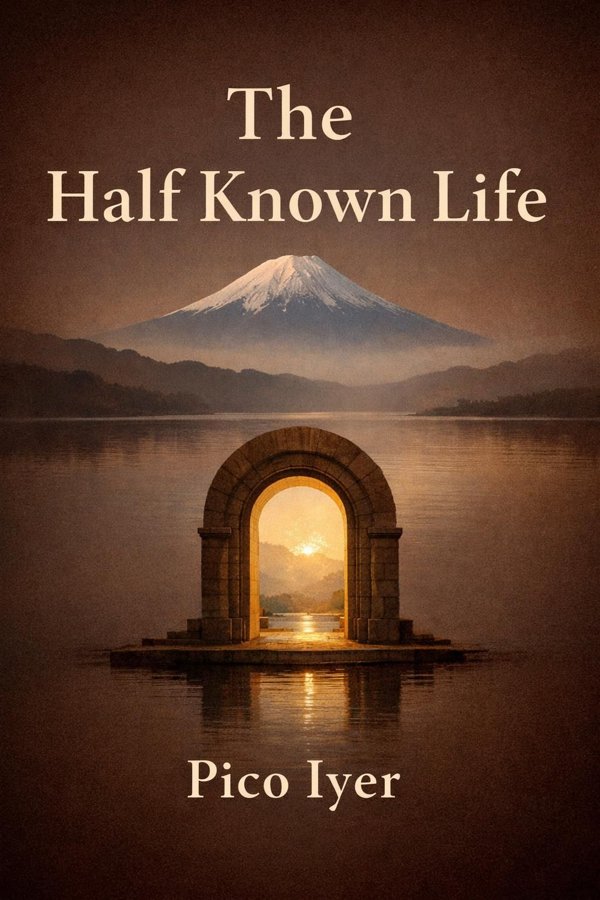
The Half Known Life: In Search of Paradise
Pico Iyer
10 min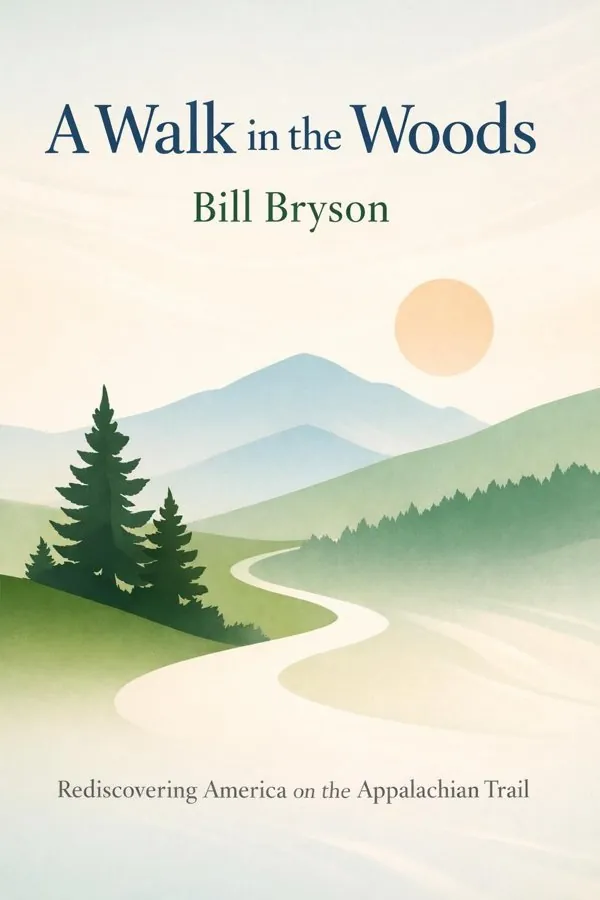
A Walk in the Woods: Rediscovering America on the Appalachian Trail
Bill Bryson
10 min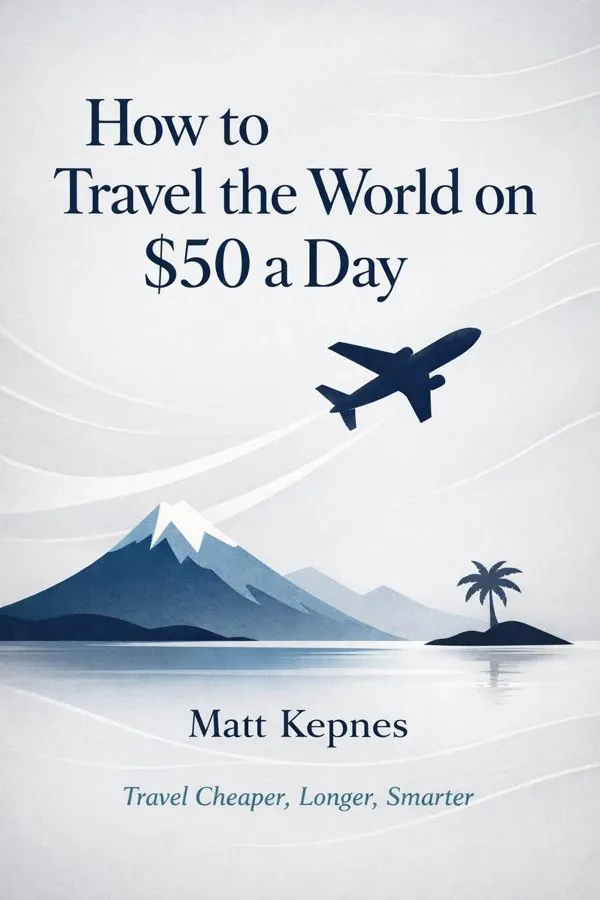
How to Travel the World on $50 a Day: Travel Cheaper, Longer, Smarter
Matt Kepnes
10 min
In a Sunburned Country
Bill Bryson
10 min
Notes From A Small Island
Bill Bryson
10 min
The Art of Travel
Alain De Botton
10 minBrowse by Category
Ready to read In Xanadu: A Quest?
Get the full summary and 100K+ more books with Fizz Moment.