
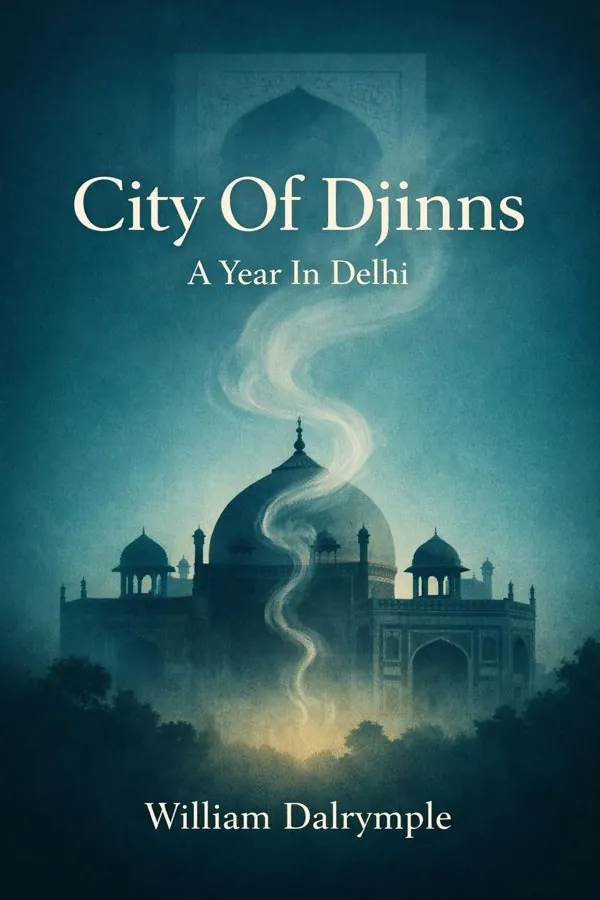
City Of Djinns: A Year In Delhi: Summary & Key Insights
 10 min8 chaptersAudio available
What Is City Of Djinns: A Year In Delhi About?
City Of Djinns: A Year In Delhi by William Dalrymple is a world_history book spanning 8 pages. City of Djinns: A Year in Delhi is a travel memoir by William Dalrymple that explores the history, culture, and everyday life of Delhi. Through encounters with locals and historical research, Dalrymple uncovers layers of the city’s past—from Mughal grandeur to British colonialism and modern urban chaos—revealing how the spirit of Delhi endures through centuries of transformation.
This FizzRead summary covers all 8 key chapters of City Of Djinns: A Year In Delhi in approximately 10 minutes, distilling the most important ideas, arguments, and takeaways from William Dalrymple's work. Also available as an audio summary and Key Quotes Podcast.
City Of Djinns: A Year In Delhi
City of Djinns: A Year in Delhi is a travel memoir by William Dalrymple that explores the history, culture, and everyday life of Delhi. Through encounters with locals and historical research, Dalrymple uncovers layers of the city’s past—from Mughal grandeur to British colonialism and modern urban chaos—revealing how the spirit of Delhi endures through centuries of transformation.
Who Should Read City Of Djinns: A Year In Delhi?
This book is perfect for anyone interested in world_history and looking to gain actionable insights in a short read. Whether you're a student, professional, or lifelong learner, the key ideas from City Of Djinns: A Year In Delhi by William Dalrymple will help you think differently.
- ✓Readers who enjoy world_history and want practical takeaways
- ✓Professionals looking to apply new ideas to their work and life
- ✓Anyone who wants the core insights of City Of Djinns: A Year In Delhi in just 10 minutes
Want the full summary?
Get instant access to this book summary and 100K+ more with Fizz Moment.
Get Free SummaryAvailable on App Store • Free to download
Key Chapters
When I landed in Delhi, my sense was of stepping into a place that defied linear history. The airport and the cacophony of traffic were modern enough, but everywhere I turned, ancientness pressed through the cracks. I rented a flat from Mrs. Puri, a spirited and outspoken widow, and her husband, who lived mostly in memory. Their home in the older part of Delhi was a microcosm of what the city had become after Partition—indignant yet proud, wounded yet determined.
Through them, I began to understand that post-Partition Delhi was not a simple continuation of its Mughal or British past—it had been forcibly reborn. Families like the Puris had fled from Lahore or Karachi, rebuilding their lives on the rubble of a city that itself had been dismembered. In their stories, I heard echoes of displacement and survival. Mrs. Puri’s fierce attachment to ritual and respectability reminded me that the Partition had not only redrawn borders but had redefined identities.
Delhi’s charisma lies in its contradictions. The refined Urdu-speaking elite who once recited ghazals by candlelight now shared pavement space with refugees selling peanuts by the roadside. And amidst this disorder, there was laughter and pride—a testimony to the city’s refusal to die. I realized that this coexistence of decay and vitality would become my main theme: that Delhi, beneath its visible chaos, hides an invisible continuity, kept alive by those who inhabit its streets and ruins.
As I roamed through the ruins of Feroz Shah Kotla and Humayun’s Tomb, I could feel the presence of the city’s past rulers—ghosts of the Mughals who once called this place paradise on earth. The Mughal period marked Delhi’s golden age. Shah Jahan’s creation of Shahjahanabad was both an architectural triumph and a statement of imperial grandeur. Though centuries had since passed, I could still hear in the call to prayer and the poetry of Mir Taqi Mir the rhythm of a city that once lived by art and grace.
Yet even amidst the beauty, there was melancholy. The Mughal empire's decline brought devastation to Delhi—plunder, massacre, and abandonment. The ruins themselves seemed to mourn. I spent days among historians and caretakers who told me stories about how every stone of Delhi has been reused, every wall painted over by yet another dynasty. Walking through those spaces felt like reading a manuscript with seventeen layers of ink. Beneath British rationality and modern disorder, the Mughal pulse still beat. Its influence lived on in the Urdu language, in the delicacy of manners, and in the belief that culture survives authority.
In these explorations, I encountered not just history but spiritual continuity. The Sufi shrines, especially that of Nizamuddin Auliya, formed the hidden arteries of the city’s soul. People came there seeking blessings not only for worldly success but for solace. It struck me that through all Delhi’s transformations, one truth remained—the human need for transcendence.
+ 6 more chapters — available in the FizzRead app
All Chapters in City Of Djinns: A Year In Delhi
About the Author
William Dalrymple is a Scottish historian and writer known for his works on India and the Islamic world. His books combine travel writing with historical scholarship, earning him numerous literary awards and recognition as one of the leading contemporary historians of South Asia.
Get This Summary in Your Preferred Format
Read or listen to the City Of Djinns: A Year In Delhi summary by William Dalrymple anytime, anywhere. FizzRead offers multiple formats so you can learn on your terms — all free.
Available formats: App · Audio · PDF · EPUB — All included free with FizzRead
Download City Of Djinns: A Year In Delhi PDF and EPUB Summary
Key Quotes from City Of Djinns: A Year In Delhi
“When I landed in Delhi, my sense was of stepping into a place that defied linear history.”
“As I roamed through the ruins of Feroz Shah Kotla and Humayun’s Tomb, I could feel the presence of the city’s past rulers—ghosts of the Mughals who once called this place paradise on earth.”
Frequently Asked Questions about City Of Djinns: A Year In Delhi
City Of Djinns: A Year In Delhi by William Dalrymple is a world_history book that explores key ideas across 8 chapters. City of Djinns: A Year in Delhi is a travel memoir by William Dalrymple that explores the history, culture, and everyday life of Delhi. Through encounters with locals and historical research, Dalrymple uncovers layers of the city’s past—from Mughal grandeur to British colonialism and modern urban chaos—revealing how the spirit of Delhi endures through centuries of transformation.
More by William Dalrymple
Nine Lives: In Search of the Sacred in Modern India
William Dalrymple
10 min
The Anarchy: The Relentless Rise of the East India Company
William Dalrymple
10 min
In Xanadu: A Quest
William Dalrymple
10 min
White Mughals: Love and Betrayal in Eighteenth-Century India
William Dalrymple
10 minYou Might Also Like
The Age of Capital
Eric Hobsbawm
10 min
The Gulag Archipelago
Aleksandr Solzhenitsyn
10 min
Jerusalem: The Biography
Simon Sebag Montefiore
10 min
The Anglo-Saxons
James Campbell
10 min
The Boer War
Thomas Pakenham
10 min
The Industrial Revolutionaries: The Making of the Modern World 1776–1914
Gavin Weightman
10 minBrowse by Category
Ready to read City Of Djinns: A Year In Delhi?
Get the full summary and 100K+ more books with Fizz Moment.