
Must-Read Books Before You Die — The Essential List
If you only read a handful of books, make it these. This list spans genres and centuries to bring you the absolute essentials of human thought and storytelling.
 10 min read
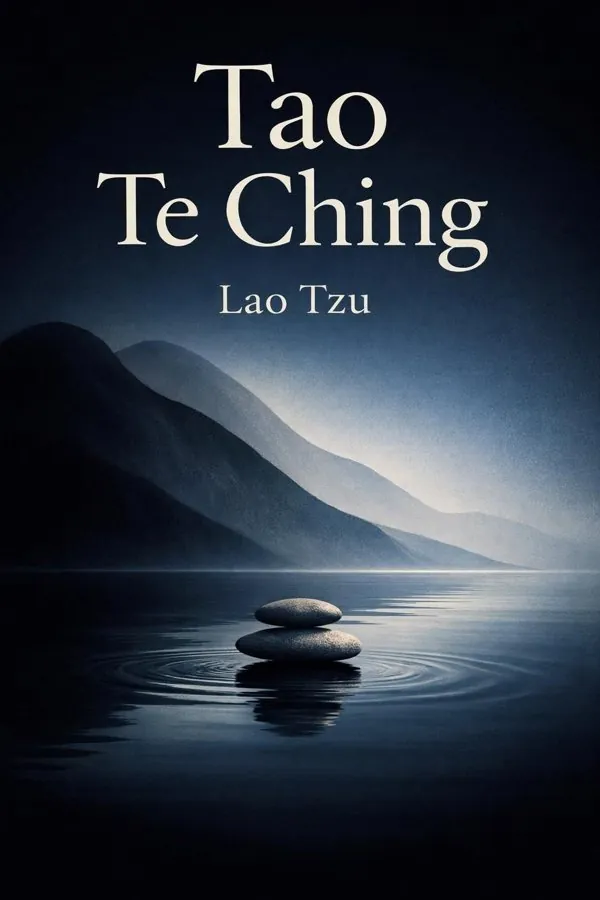
Tao Te Ching
by Lao Tzu
Few books have shaped spiritual thought, leadership, and personal reflection as deeply as the Tao Te Ching. Though brief in length, this ancient classic opens a surprisingly vast way of seeing life: one that values stillness over strain, humility over ego, and alignment over force. At a time when modern life often rewards speed, control, and constant self-assertion, the Tao Te Ching offers a radically different path. It suggests that the most effective way to live is not by pushing harder, but by moving in harmony with the deeper patterns of existence. Attributed to Lao Tzu, the revered sage traditionally associated with the founding of Daoism, this text has endured for more than two millennia because it speaks to timeless human struggles: how to lead without dominating, act without exhausting yourself, and find peace in a world of change. Divided into reflections on the Tao, or the Way, and Te, often translated as virtue or inner power, the book blends poetic paradox with practical wisdom. Its teachings on non-action, simplicity, and natural balance continue to influence philosophy, politics, spirituality, and self-development around the world.
Key Takeaways
- 1Introduction to the Tao — The Tao is the starting point of the entire book, yet Lao Tzu immediately tells us it cannot be fully captured in langua…
- 2The Nature of the Tao — Lao Tzu describes the Tao through paradox because ordinary logic cannot contain it. It is empty, yet never used up. It i…
- 3Wu Wei (Non-Action) — Wu wei is one of the most misunderstood ideas in the Tao Te Ching. It does not mean laziness, passivity, or refusing to …
 10 min read
Beyond Good and Evil
by Friedrich Nietzsche
Beyond Good and Evil is Friedrich Nietzsche’s bold attack on the moral certainties, philosophical habits, and spiritual comforts that have shaped Western thought for centuries. First published in 1886, the book asks a disturbing question: what if our highest ideals—truth, humility, equality, selflessness, even morality itself—are not eternal facts but human inventions shaped by fear, instinct, and the struggle for power? Rather than offering a tidy system, Nietzsche tests inherited beliefs and exposes the motives hidden beneath them. He challenges philosophers for pretending to be objective while smuggling in their own values, and he calls for a new kind of thinker strong enough to create values instead of merely obeying them. The book matters because it pushes readers to examine not only what they believe, but why they believe it. Nietzsche wrote as a trained classical scholar, brilliant stylist, and fearless critic of culture. His influence extends across philosophy, psychology, literature, politics, and modern self-understanding. Beyond Good and Evil remains one of his sharpest and most provocative works.
Key Takeaways
- 1The Hidden Prejudices of Philosophers — Every philosophy begins with a confession, even when it pretends to be pure reason. Nietzsche opens Beyond Good and Evil…
- 2The Courage of the Free Spirit — Freedom begins when a person can live without the shelter of comforting illusions. Nietzsche’s “free spirit” is not simp…
- 3Religion as Psychology and Discipline — Religious belief is never just a doctrine; it is also a training of the human soul. In his reflections on religion, Niet…
 10 min read
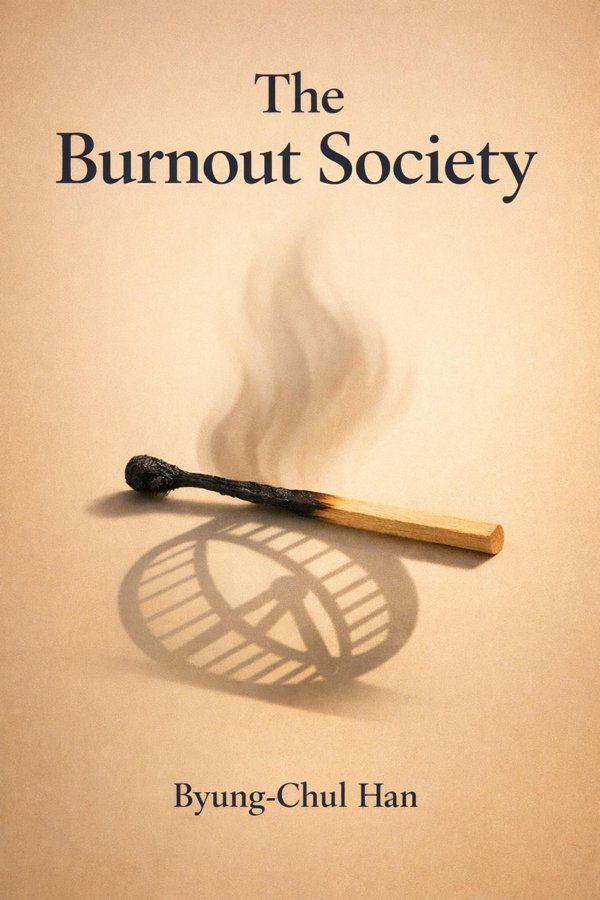
The Burnout Society
by Byung-Chul Han
In The Burnout Society, Byung-Chul Han offers a sharp, unsettling diagnosis of modern life: we no longer live mainly under repression, but under the pressure to perform, improve, and optimize ourselves without end. Instead of being disciplined by external authority, we are driven by internalized demands to become more productive, more visible, more resilient, and more successful. What looks like freedom, Han argues, often turns into a subtler form of coercion—self-exploitation. The result is a society marked not by obedience, but by exhaustion, anxiety, depression, and burnout. Though brief, the book is remarkably influential because it gives language to experiences many people already feel but struggle to explain. Han connects work culture, digital communication, attention fragmentation, and the loss of contemplation into a broader philosophical critique of neoliberal life. As a South Korean–German philosopher known for his incisive cultural analysis, Han writes with unusual clarity and force. This book matters because it helps readers see that burnout is not merely a personal failure or productivity problem. It is a social condition rooted in the very ideals our era celebrates.
Key Takeaways
- 1From Discipline to Performance — A society can oppress people not only by saying “no,” but also by relentlessly saying “you can.” Han’s central claim is …
- 2The Achievement Subject Exploits Itself — The most efficient system of control is one in which people believe they are acting freely while carrying out the system…
- 3Burnout, Depression, and Invisible Violence — Not all violence is loud, direct, or visible; some forms appear as overstimulation, overexposure, and excessive positivi…
 10 min read
Walden
by Henry David Thoreau
Walden is Henry David Thoreau’s enduring meditation on how to live with clarity, freedom, and purpose in a noisy world. Drawn from the two years, two months, and two days he spent in a small cabin near Walden Pond in Concord, Massachusetts, the book is far more than a nature journal or memoir of rustic living. It is a philosophical challenge to the habits of modern society: endless work, needless consumption, social conformity, and the mistaken belief that a busy life is a meaningful one. Thoreau asks what remains when we strip life down to its essentials—and whether simplicity might reveal a richer kind of wealth. What makes Walden still powerful is that Thoreau does not merely preach; he experiments. He grows beans, tracks his expenses, observes animals and seasons, and turns daily life into a test of values. As a writer, naturalist, and moral thinker, he speaks with unusual authority because he lived the questions he posed. For readers feeling overwhelmed by speed, distraction, and material pressure, Walden offers a radical but practical invitation: live deliberately, notice deeply, and measure success by consciousness rather than accumulation.
Key Takeaways
- 1Living Deliberately Gives Life Its Shape — Most people do not choose their lives so much as inherit them. They absorb routines, ambitions, and anxieties from the c…
- 2Economy Reveals the True Cost of Living — A price tag never tells the whole price. One of Walden’s most important insights appears in its opening chapter, “Econom…
- 3Solitude Deepens Rather Than Diminishes Life — Loneliness is not the same as solitude. Thoreau’s time at Walden challenges the fear that being alone means being depriv…
 10 min read
Being and Nothingness
by Jean-Paul Sartre
Originally published in French in 1943, Being and Nothingness is Jean-Paul Sartre’s most ambitious philosophical work and one of the defining texts of existentialism. In this demanding but rewarding book, Sartre asks what it means to exist as a human being in a world that simply is. He distinguishes between the being of things, which are fixed and complete, and the being of human consciousness, which is open, self-questioning, and never fully settled. From that distinction, he develops his most influential ideas: freedom, anguish, bad faith, responsibility, the body, the gaze of others, and the difficulty of living authentically. What makes the book endure is not only its originality but its unsettling honesty. Sartre argues that we are not born with a ready-made essence or destiny; instead, we are constantly making ourselves through our choices. That insight has shaped philosophy, psychology, literature, and political thought for decades. As a leading French philosopher, novelist, and public intellectual, Sartre brought extraordinary range and authority to this project. Being and Nothingness remains essential reading for anyone interested in consciousness, freedom, identity, and the burdens of human existence.
Key Takeaways
- 1Nothingness Opens Human Freedom — The most unsettling truth in Sartre’s philosophy is that human freedom begins with a gap. The world of objects appears f…
- 2Consciousness Is Always Beyond Itself — A powerful insight runs through the whole book: consciousness is never a sealed container filled with inner contents. It…
- 3Being-for-Itself Means Radical Openness — Human existence is defined less by what it is than by what it is not yet. Sartre calls human consciousness being-for-its…
 10 min read
The Secret Teachings of All Ages
by Manly P. Hall
The Secret Teachings of All Ages is an ambitious tour through the symbolic, philosophical, and mystical traditions that have shaped human civilization. In this sweeping work, Manly P. Hall explores ancient religions, sacred myths, secret societies, alchemy, astrology, Pythagorean thought, Hermetic philosophy, and the hidden meanings encoded in art, architecture, and ritual. Rather than presenting history as a dry sequence of events, Hall invites readers to see it as a layered drama of ideas in which wisdom has often been preserved in symbols, allegories, and initiatory teachings. What makes the book enduringly compelling is its central claim: that beneath the world’s many traditions lies a common search for truth, self-knowledge, and spiritual transformation. Hall does not simply catalog esoteric lore; he argues that symbols are tools for awakening deeper perception. His authority comes not from academic specialization in one narrow field, but from his extraordinary breadth as a philosopher, lecturer, and interpreter of comparative religion and symbolism. For readers drawn to philosophy, mythology, religion, or the history of ideas, this book remains a fascinating invitation to think more deeply about how ancient wisdom continues to shape modern consciousness.
Key Takeaways
- 1Wisdom Often Hides in Symbols — The most powerful truths are often not stated directly. One of Manly P. Hall’s central insights is that ancient wisdom t…
- 2Ancient Traditions Share Common Principles — Civilizations may differ in language, geography, and customs, yet Hall argues that their deepest teachings often converg…
- 3Myth Is a Map of Human Nature — Myths survive for centuries not because people mistake them for newspaper reports, but because they tell the truth in a …
 10 min read
The Fifth Agreement
by Don Miguel Ruiz
The Fifth Agreement es una guía espiritual que amplía las enseñanzas de 'Los Cuatro Acuerdos'. Don Miguel Ruiz y su hijo Don José Ruiz invitan al lector a profundizar en la sabiduría tolteca, explorando cómo la percepción y la verdad personal pueden liberar la mente de creencias limitantes. El quinto acuerdo —sé escéptico, pero aprende a escuchar— ofrece una nueva perspectiva para alcanzar la libertad y la autenticidad.
Key Takeaways
- 1Review of the Four Agreements and the Foundation of Self-Mastery — When we first introduced 'The Four Agreements,' they served as the pillars of a new way of living—simple sentences that …
- 2The Fifth Agreement: Be Skeptical, but Learn to Listen — The Fifth Agreement is a bridge between knowledge and wisdom. 'Be skeptical' means you must question everything you hear…
- 3Perception, The Dream, and the Nature of Truth
 10 min read
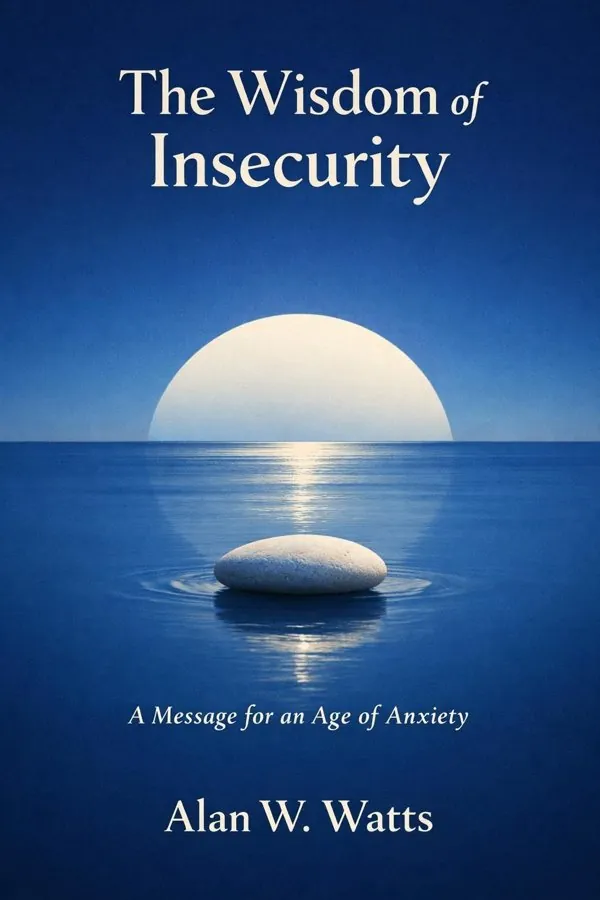
The Wisdom of Insecurity
by Alan Watts
What if the very thing you keep chasing—security—is the source of your unease? In The Wisdom of Insecurity, Alan Watts examines one of the deepest contradictions of modern life: our attempt to create lasting psychological safety in a world defined by change. We pursue certainty through money, beliefs, routines, relationships, ambition, and self-improvement, yet the harder we cling, the more fragile and anxious we become. Watts argues that peace does not come from controlling life but from participating in it fully, without demanding guarantees it cannot give. First published in 1951, this brief but profound work remains strikingly relevant in an age of burnout, constant comparison, and future-focused worry. Drawing on Zen Buddhism, Taoism, Christian mysticism, and modern psychology, Watts translates complex spiritual insights into clear, accessible language for Western readers. He is not offering a productivity system or a doctrine to believe in. Instead, he invites us to see how fear is amplified by our resistance to uncertainty, and how freedom begins when we stop living for tomorrow and awaken to the only reality we ever truly have: the present moment.
Key Takeaways
- 1The Problem of Chasing Security — The more desperately we seek psychological security, the more insecure we tend to feel. Watts begins with a paradox: hum…
- 2Impermanence Is the Shape of Life — Much of our suffering comes from treating passing things as if they should stay. Watts argues that impermanence is not a…
- 3The Self We Defend Is Unstable — One of Watts’s most radical claims is that the self we constantly protect may be more imagined than real. We usually thi…
 10 min read
The Ethics of Ambiguity
by Simone de Beauvoir
Originally published in 1947, The Ethics of Ambiguity is Simone de Beauvoir’s bold attempt to answer one of philosophy’s oldest questions: how should we live if there is no fixed moral order handed down from above? Drawing on existentialism, de Beauvoir argues that the human condition is fundamentally ambiguous. We are free, yet limited; self-conscious, yet embodied; individual, yet always entangled with other people. Rather than seeing this tension as a problem to escape, she treats it as the starting point of an honest ethics. What makes this book endure is its refusal of comforting simplifications. De Beauvoir rejects both moral absolutism and cynical relativism, showing instead that freedom becomes meaningful only when it seeks its realization in a world shared with others. Ethics, then, is not obedience to rules but a difficult practice of responsibility, commitment, and liberation. As one of the twentieth century’s major philosophers and a central figure in existentialism, de Beauvoir writes with unusual authority and urgency. This book remains essential for readers interested in freedom, politics, morality, and what it means to live authentically among other human beings.
Key Takeaways
- 1Ambiguity Is the Truth of Existence — The most honest ethics begins by admitting that human life cannot be reduced to a neat formula. De Beauvoir’s central cl…
- 2Freedom Emerges Through Human Consciousness — Freedom does not mean floating above reality; it begins the moment consciousness recognizes that it is not identical wit…
- 3Bad Faith Hides from Responsibility — One of the easiest ways to avoid freedom is to pretend we do not have it. De Beauvoir explores several attitudes through…
 10 min read
1984
by George Orwell
George Orwell’s 1984 is one of the defining novels of the modern age: a bleak, brilliant portrait of a society in which power seeks not only to control people’s actions, but to colonize their minds. Set in Oceania, a totalitarian superstate ruled by the ever-watchful figure of Big Brother, the story follows Winston Smith, a minor Party employee whose job is to falsify history so the regime always appears infallible. As Winston begins to doubt the Party’s version of reality, he embarks on a dangerous search for truth, memory, love, and freedom. What makes 1984 endure is not only its gripping story, but its deep insight into propaganda, surveillance, censorship, political language, and the fragility of objective truth. Orwell wrote with unusual authority, having witnessed imperialism, ideological extremism, war, and the manipulation of public opinion firsthand. The result is not merely a dystopian novel, but a lasting warning: when language is twisted, history rewritten, and fear normalized, human dignity itself is at risk.
Key Takeaways
- 1Oceania and Permanent War — A society is easiest to control when fear feels normal. Orwell opens 1984 by placing readers in a world divided into thr…
- 2Winston’s Job: Rewriting Reality — Who controls the past gains enormous power over the present. Winston Smith works at the Ministry of Truth, where his tas…
- 3Surveillance, Language, and Thought Control — The most effective prison is the one people carry inside themselves. In Oceania, control operates through more than poli…
 10 min read
Beloved
by Toni Morrison
What does freedom mean when the past refuses to stay buried? In Beloved, Toni Morrison answers that question with one of the most powerful novels in American literature. Set after the Civil War, the story follows Sethe, an escaped enslaved woman living at 124 Bluestone Road with her daughter Denver, in a house haunted by the spirit of the child she lost. When a mysterious young woman named Beloved appears, the family is forced to confront memories too painful to name and too deep to escape. Morrison transforms history into living emotional experience, showing how slavery scars not only bodies but memory, motherhood, intimacy, language, and community. This is not simply a historical novel; it is an inquiry into what trauma does to the self and how healing requires witness, love, and collective reckoning. Morrison writes with unmatched poetic force and moral clarity. Awarded the Pulitzer Prize and later central to her Nobel-winning legacy, Beloved endures because it makes history intimate and unforgettable. It asks readers not just to remember the past, but to feel its afterlife in the present.
Key Takeaways
- 1124 Bluestone Road and Living Hauntings — Some homes do not shelter pain; they preserve it. Morrison opens Beloved with a house that is already a character: 124 B…
- 2Paul D Returns with Buried Memory — The past often reenters our lives through people who remember who we were before we learned to survive. Paul D’s arrival…
- 3Beloved as Memory Made Flesh — Some memories are so powerful they seem to step into the room. When the young woman called Beloved appears near 124, Mor…
 10 min read
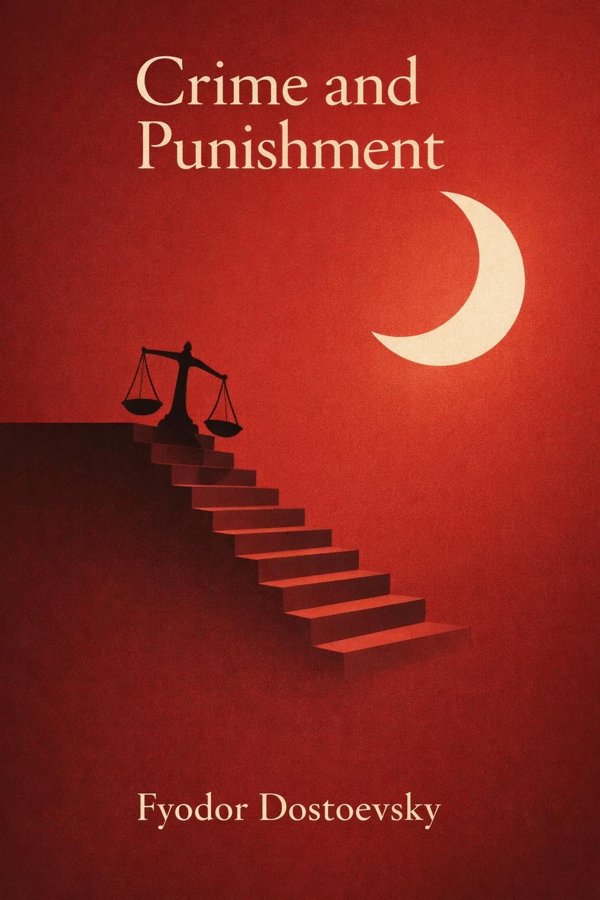
Crime and Punishment
by Fyodor Dostoevsky
Crime and Punishment is one of the most penetrating novels ever written about guilt, morality, and the hidden motives that drive human behavior. Set in the oppressive heat and poverty of St. Petersburg, the story follows Rodion Raskolnikov, a former student who convinces himself that extraordinary people may step beyond ordinary moral laws. Acting on this idea, he commits a brutal crime and then discovers that intellectual justification offers no protection against conscience, fear, and spiritual collapse. What begins as a murder story becomes a profound psychological investigation into suffering, pride, alienation, and the possibility of redemption. Fyodor Dostoevsky matters because few writers have understood the contradictions of the human soul so deeply. Drawing on his own experiences with poverty, imprisonment, political persecution, and religious struggle, he created a novel that still feels startlingly modern. Crime and Punishment remains essential not only as a literary classic, but as a timeless study of how people rationalize wrongdoing, how guilt reshapes identity, and how truth can become the first step toward renewal.
Key Takeaways
- 1Ideas Can Become Dangerous Actions — A destructive act often begins long before the act itself, in the quiet acceptance of a dangerous idea. In Crime and Pun…
- 2Guilt Punishes Before Any Court — The most relentless punishment is often internal rather than legal. After the murder, Raskolnikov does not become triump…
- 3Pride Is a Form of Isolation — Pride does not always look like confidence; sometimes it looks like withdrawal, contempt, and a refusal to need anyone. …
 10 min read
Ordinary Men
by Christopher Browning
Ordinary Men by historian Christopher R. Browning is one of the most unsettling and important works ever written about the Holocaust. First published in 1992 and based largely on postwar testimonies and archival records, the book examines Reserve Police Battalion 101, a unit of middle-aged, working- and lower-middle-class German men who were not elite Nazi fanatics, yet became participants in mass shootings, deportations, and genocide in Nazi-occupied Poland. Browning’s central question is profoundly disturbing: how did seemingly ordinary people become killers? Rather than offering easy moral distance, he reconstructs the social pressures, career incentives, ideological conditioning, fear, conformity, and gradual moral erosion that made atrocity possible. The book matters because it shifts the focus from monstrous exceptions to human vulnerability under systems of power. Browning writes with scholarly restraint, moral seriousness, and deep archival rigor, making his argument both credible and devastating. Ordinary Men is not simply a history of one battalion; it is a warning about obedience, group loyalty, bureaucratic violence, and the terrifying capacity for evil embedded in everyday human behavior.
Key Takeaways
- 1Ordinary People Can Become Perpetrators — One of the most frightening truths in history is that mass murder is often carried out not by obvious monsters, but by p…
- 2The First Kill Is the Hardest — Atrocity often begins not with enthusiasm, but with a threshold crossing. Browning pays close attention to the battalion…
- 3Peer Pressure Can Overpower Conscience — People like to believe they would stand alone against wrongdoing, but Browning shows how rare and difficult that can be.…
 10 min read
Siddhartha
by Hermann Hesse
Siddhartha is Hermann Hesse’s luminous 1922 novel about a young man’s search for enlightenment in ancient India, during the era of the Buddha. What begins as the story of a gifted Brahmin’s son quickly becomes a universal exploration of dissatisfaction, desire, suffering, love, loss, and inner awakening. Siddhartha is not content to inherit wisdom secondhand. He wants truth that is lived, not merely taught, and that longing drives him through extreme asceticism, sensual pleasure, wealth, despair, and finally a quiet, profound reconciliation with life itself. The novel matters because it speaks to a question that remains urgent today: how do we find meaning in a world full of advice, ideologies, and distractions? Hesse’s answer is subtle and enduring. Real understanding cannot be borrowed from doctrines alone; it must be discovered through experience, reflection, and attention. Drawing on Indian spiritual traditions while writing for a modern Western audience, Hesse created a work that bridges cultures without losing psychological depth. A Nobel Prize-winning author celebrated for his insight into self-realization, Hesse makes Siddhartha both a spiritual parable and a deeply human coming-of-age story.
Key Takeaways
- 1The Dissatisfied Brahmin — A privileged life can still feel empty when the soul remains unanswered. At the beginning of Siddhartha, we meet a brill…
- 2Learning Through Self-Denial’s Limits — Escaping the world is not the same as understanding it. After leaving home, Siddhartha joins the Samanas, wandering asce…
- 3The Buddha Cannot Be Imitated — Even perfect teaching cannot spare us from having to live our own path. One of the most memorable moments in Siddhartha …
 10 min read
Structures: Or Why Things Don"t Fall Down
by J.E. Gordon
Why does a bridge remain standing under thousands of passing cars, while a small flaw can bring down a whole machine? In Structures: Or Why Things Don"t Fall Down, J.E. Gordon answers these questions with unusual clarity, wit, and humanity. Rather than treating engineering as a dry technical subject, he reveals it as a way of seeing the world: a practical science of forces, materials, shape, and failure. From cathedrals and ships to bones, trees, and aircraft, Gordon shows that all structures live under stress and survive only by managing it well. What makes this book enduring is its ability to turn intimidating ideas—stress, strain, compression, bending, fracture, safety factors, scaling—into vivid, memorable insights. Gordon was not only a distinguished materials scientist and engineer, but also one of the rare experts who could explain difficult principles to general readers without oversimplifying them. His examples are concrete, his humor is dry and charming, and his lessons remain relevant in an age of megastructures, lightweight materials, and ambitious design. This is a classic popular science book because it teaches more than engineering: it teaches how the physical world really works.
Key Takeaways
- 1Forces, Stresses, and Strains Everywhere — A structure does not fail because it exists; it fails because forces are asking more of it than it can give. That simple…
- 2Tension and Compression Shape Destiny — Materials do not suffer all forces equally, and the difference between being pulled and being squeezed can determine whe…
- 3Shear, Bending, and Torsion Matter Too — Structures rarely enjoy the simplicity of pure pulling or pure crushing; most real failures happen in the messy middle. …
 10 min read
Team of Rivals
by Doris Kearns Goodwin
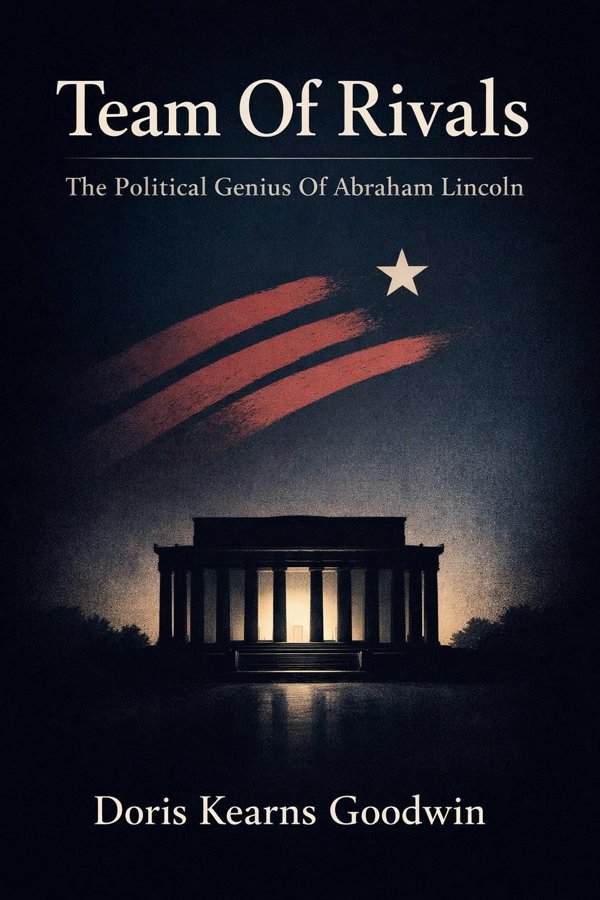
Team of Rivals by Doris Kearns Goodwin is a sweeping historical biography that examines how Abraham Lincoln rose from relative obscurity to become one of America’s greatest presidents by surrounding himself with strong-willed political opponents. Rather than choosing comfort, loyalty, or flattery, Lincoln built a cabinet that included the very men he had defeated for the Republican nomination in 1860. Goodwin shows how this unusual decision became one of his greatest strengths during the nation’s darkest crisis: the Civil War. The book is not only a portrait of Lincoln’s leadership, but also an exploration of ambition, ego, conflict, persuasion, and moral growth in public life. It matters because it reveals that effective leadership is rarely about dominating others; it is often about understanding them, channeling their talents, and holding a fractured coalition together under extreme pressure. Goodwin brings exceptional authority to the subject as a Pulitzer Prize-winning historian known for making complex political history vivid, human, and deeply relevant. Her account turns a familiar president into a living example of emotional intelligence, humility, and strategic courage.
Key Takeaways
- 1Great leaders welcome powerful rivals — A weak leader collects admirers; a strong leader recruits competitors. One of the most striking insights in Team of Riva…
- 2Emotional intelligence can outweigh pedigree — Brilliance opens doors, but emotional balance determines what happens after you enter. Goodwin contrasts Lincoln with ma…
- 3Ambition must be harnessed, not erased — Ambition is dangerous only when it has no worthy outlet. Team of Rivals presents a political world overflowing with ego,…
 10 min read
The Age of Capital
by Eric Hobsbawm
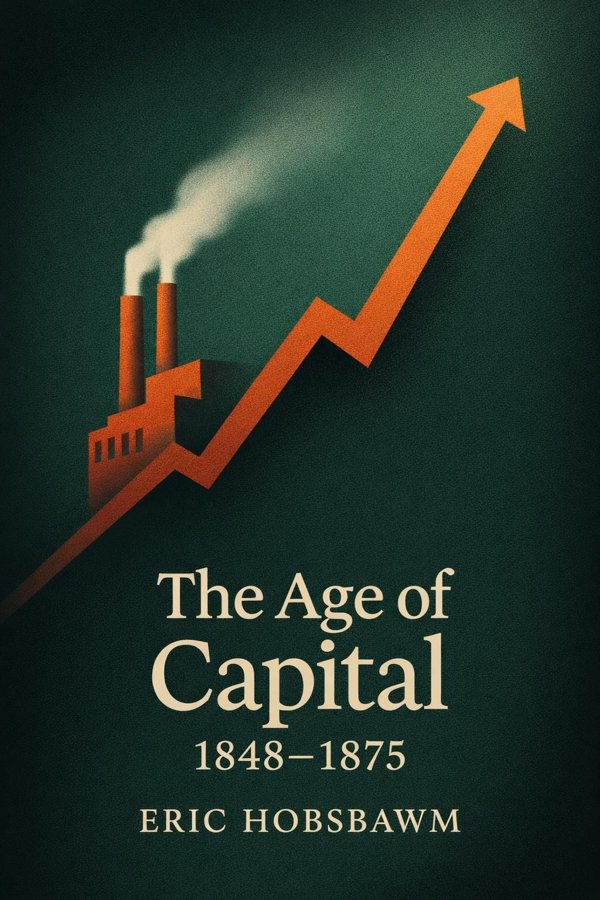
The Age of Capital: 1848–1875 is Eric Hobsbawm’s sweeping account of the decades in which capitalism moved from disruptive force to organizing principle of the modern world. Beginning in the aftermath of the failed revolutions of 1848, Hobsbawm shows how political instability gave way to a new kind of order—one shaped by industrial growth, bourgeois confidence, expanding markets, and the belief that progress was both inevitable and desirable. This was the era of railways, free trade, finance, urbanization, scientific optimism, and middle-class ascendancy, but it was also a period marked by class conflict, inequality, colonial expansion, and the sharpening contradictions of liberal society. What makes the book so powerful is that Hobsbawm never treats economics, politics, and culture as separate stories. He reveals how they formed a single historical system. As one of the twentieth century’s most influential historians, Hobsbawm brings extraordinary range and clarity to this period, making the book essential for anyone who wants to understand how the modern capitalist world was built—and why its promises were always entangled with tension and crisis.
Key Takeaways
- 1Order Replaced the Spirit of Revolution — History often advances not only through victories, but through the consequences of defeat. Hobsbawm argues that the revo…
- 2Industrial Capitalism Entered Its Heroic Age — Prosperity can feel natural in retrospect, but Hobsbawm reminds us that the mid-nineteenth century witnessed an extraord…
- 3The Bourgeoisie Became Society’s Ruling Class — A class truly rules when its values become common sense. One of Hobsbawm’s central insights is that the age was not defi…
 10 min read
The Bell Jar
by Sylvia Plath
Sylvia Plath’s The Bell Jar is one of the most haunting and enduring novels of the twentieth century because it captures a crisis that feels both deeply personal and painfully universal: what happens when a gifted young woman can no longer live inside the roles the world has prepared for her. First published in 1963 under the pseudonym Victoria Lucas and later recognized as a semi-autobiographical work, the novel follows Esther Greenwood, a brilliant college student whose prestigious summer internship in New York should mark the beginning of a dazzling future. Instead, it exposes the emptiness beneath glamour, success, and social approval. As Esther returns home and spirals into depression, the novel becomes an intimate portrait of mental illness, alienation, and the struggle to claim an authentic self in a culture obsessed with female conformity. The Bell Jar matters not only as a literary classic, but as an unusually honest exploration of psychological suffering long before public conversations about mental health became common. Plath’s authority comes from the precision of her language, the sharpness of her social observation, and her unmatched ability to transform inner turmoil into unforgettable art.
Key Takeaways
- 1Glamour Can Deepen Alienation — Success does not always feel like arrival; sometimes it feels like exile in elegant clothing. At the start of The Bell J…
- 2Expectation Can Fracture Identity — A person can begin to disappear when every path forward feels chosen by someone else. After New York, Esther returns hom…
- 3Love Exposes the Gender Trap — Romance becomes dangerous when it is built on unequal freedom. In The Bell Jar, Esther’s relationships with men do not o…
 10 min read
The Brothers Karamazov
by Fyodor Dostoevsky
Few novels ask larger questions than The Brothers Karamazov. On its surface, Fyodor Dostoevsky’s final masterpiece is a family drama: a violent, greedy father is hated by his sons, rivalries intensify, and a murder shatters what little order remains. But beneath that gripping plot lies one of literature’s deepest explorations of faith, doubt, justice, guilt, freedom, morality, and the possibility of redemption. Through the contrasting personalities of Dmitri, Ivan, and Alyosha Karamazov, Dostoevsky turns one broken family into a portrait of the human soul itself. First published in 1880, the novel remains astonishingly modern because it confronts questions that still unsettle us: If God is absent, what guides our choices? Can reason alone sustain morality? Why do innocent people suffer? Are we responsible only for our own actions, or also for the pain we ignore in others? Dostoevsky writes with unusual authority because his own life was marked by political persecution, exile, poverty, illness, and profound spiritual struggle. The result is not merely a great Russian novel, but a timeless investigation into what it means to be human when love, desire, intellect, and conscience pull in different directions.
Key Takeaways
- 1A Family as a Moral Battlefield — Sometimes a family reveals more about human nature than any philosophy textbook. In The Brothers Karamazov, Dostoevsky b…
- 2Freedom Without Morality Becomes Chaos — Human beings often demand freedom, but Dostoevsky asks a harder question: freedom for what? One of the central tensions …
- 3Suffering Challenges Faith and Reason — It is easy to discuss morality in the abstract; it is much harder to defend meaning in the face of innocent suffering. O…
 10 min read
The Color Purple
by Alice Walker
Some novels tell a story; The Color Purple changes the way you hear a human voice. Alice Walker’s landmark 1982 novel is an epistolary work set in the early 20th-century American South, where letters become the fragile yet powerful thread holding together a life marked by violence, separation, racism, and silence. At its center is Celie, a Black woman whose early years are shaped by abuse and forced submission, but whose spirit slowly transforms through love, friendship, work, and self-discovery. As the novel unfolds, Walker reveals not only Celie’s suffering, but also her astonishing capacity to grow into freedom. The book matters because it does more than portray oppression; it insists on the possibility of healing without denying the depth of the wounds. Through Celie, Nettie, Shug Avery, Sofia, and others, Walker explores gender, power, race, sexuality, faith, and the meaning of dignity. Walker’s authority comes not only from her literary brilliance, which earned her the Pulitzer Prize and National Book Award, but from her lifelong commitment to telling the truth about Black women’s lives with tenderness, courage, and moral clarity.
Key Takeaways
- 1Celie’s Early Letters: Silence and Survival — Sometimes the first act of freedom is simply finding a place to speak, even if no one answers. At the beginning of The C…
- 2Life with Mr.___: The Cage of Servitude — Oppression often becomes most dangerous when it is mistaken for ordinary life. When Celie is forced into marriage with M…
- 3Shug Avery and the Awakening — Transformation often begins when someone sees in us what we have never been allowed to see in ourselves. Shug Avery ente…
Want the full summary?
Get instant access to this book summary and 100K+ more with Fizz Moment.
Get Free SummaryAvailable on App Store • Free to download
About This List
If you only read a handful of books, make it these. This list spans genres and centuries to bring you the absolute essentials of human thought and storytelling.
This list features 20 carefully selected books. With FizzRead, you can read AI-powered summaries of each book in just 15 minutes. Get the key takeaways and start applying the insights immediately.
Ready to start reading?
Get instant access to all 20 book summaries and 100K+ more with FizzRead.