
David Sinclair Books
David A. Sinclair is an Australian biologist and professor of genetics at Harvard Medical School, known for his research on aging and longevity.
Known for: Lifespan
Books by David Sinclair
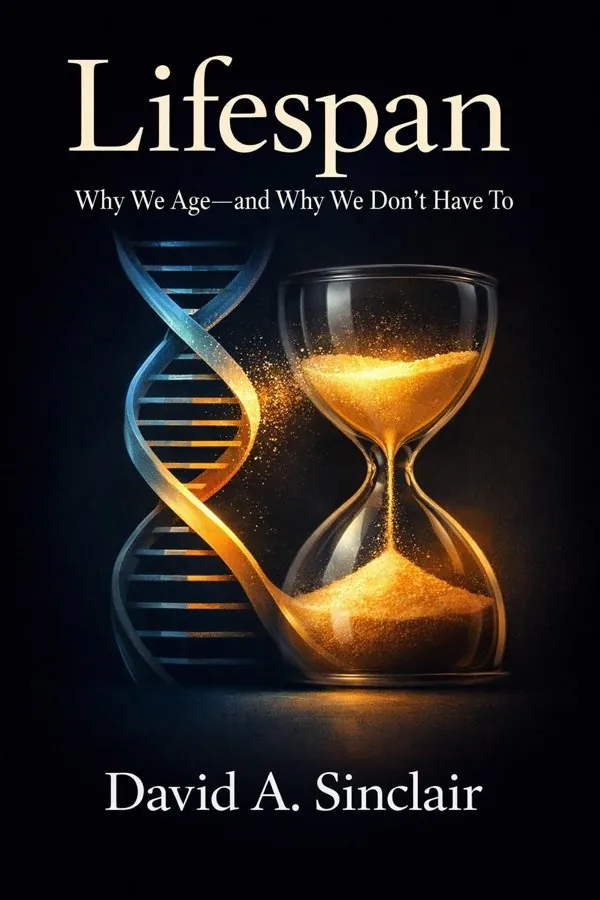
Lifespan
In Lifespan, Harvard geneticist David A. Sinclair makes a bold argument: aging is not simply an unavoidable part of life but a biological process that can be understood, slowed, and potentially reversed. Rather than treating heart disease, cancer, dementia, and diabetes as separate problems, Sinclair asks a more fundamental question: what if aging itself is the root cause behind many of them? Drawing on decades of laboratory research, personal experience, and the history of longevity science, he explains how our cells lose vital information over time and why that decline may be more malleable than we once believed. What makes the book so compelling is its mix of frontier science and practical relevance. Sinclair introduces readers to sirtuins, NAD+, epigenetics, fasting, exercise, and emerging technologies that may reshape medicine in the coming decades. He also explores the social and ethical consequences of longer lives, from healthcare to inequality. As a professor of genetics at Harvard Medical School and one of the world’s best-known aging researchers, Sinclair writes with authority, urgency, and optimism. Lifespan is both a scientific manifesto and a provocative invitation to rethink what it means to grow old.
Read SummaryKey Insights from David Sinclair
Aging Is a Treatable Process
The most disruptive idea in Lifespan is also its simplest: aging should be viewed not as destiny, but as a condition that can be targeted. Sinclair argues that what we call aging is the underlying driver behind many of the diseases that kill us. Instead of seeing cancer, Alzheimer’s, cardiovascular ...
From Lifespan
The Information Theory of Aging
Sinclair’s central scientific idea is that aging happens because cells lose information about how to function correctly. He compares the body to an orchestra: when young, every musician plays in coordination, but over time the conductor’s instructions become scrambled. The DNA itself may remain larg...
From Lifespan
Sirtuins Guard the Cell’s Survival
One of Sinclair’s earliest and most influential research interests is a family of genes and proteins called sirtuins. He presents them as ancient survival tools, preserved across species because they help organisms endure adversity. When food is scarce or cells are under stress, sirtuins help regula...
From Lifespan
NAD+ Fuels Repair and Resilience
Aging is not just about time passing; it is also about energy management. Sinclair emphasizes the importance of NAD+, a molecule essential for metabolism, DNA repair, and the activity of proteins like sirtuins. When we are young, NAD+ levels are relatively abundant. As we age, they decline, and many...
From Lifespan
Epigenetic Reprogramming May Reset Age
Perhaps the most futuristic idea in Lifespan is that aging may one day be reversed by resetting cells to a more youthful state. Sinclair discusses work on epigenetic reprogramming, a process that uses specific factors to restore cells’ lost instructions without changing their DNA sequence. If aging ...
From Lifespan
Lifestyle Stress Can Activate Longevity Pathways
One of Sinclair’s most useful contributions is showing that longevity science is not only about future drugs. Many of the same pathways studied in the lab respond to how we live now. He argues that the modern environment often works against our biology: constant food, little movement, comfortable te...
From Lifespan
About David Sinclair
David A. Sinclair is an Australian biologist and professor of genetics at Harvard Medical School, known for his research on aging and longevity. He is co-director of the Paul F. Glenn Center for Biology of Aging Research and has been recognized as one of Time magazine’s 100 most influential people i...
Read more
David A. Sinclair is an Australian biologist and professor of genetics at Harvard Medical School, known for his research on aging and longevity. He is co-director of the Paul F. Glenn Center for Biology of Aging Research and has been recognized as one of Time magazine’s 100 most influential people i...
David A. Sinclair is an Australian biologist and professor of genetics at Harvard Medical School, known for his research on aging and longevity. He is co-director of the Paul F. Glenn Center for Biology of Aging Research and has been recognized as one of Time magazine’s 100 most influential people in the world.


Frequently Asked Questions
David A. Sinclair is an Australian biologist and professor of genetics at Harvard Medical School, known for his research on aging and longevity.
Read David Sinclair's books in 15 minutes
Get AI-powered summaries with key insights from 1 book by David Sinclair.