
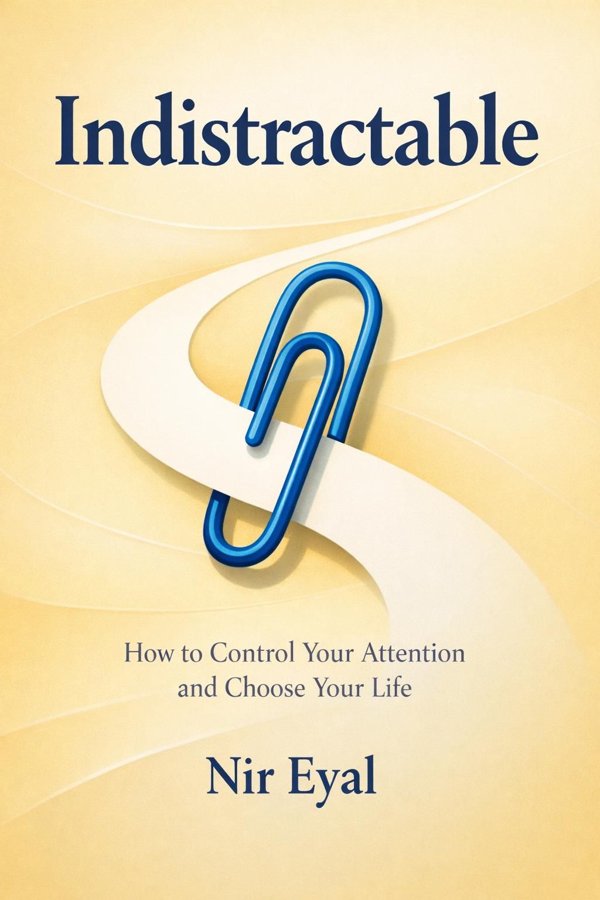
Indistractable: Summary & Key Insights
by Nir Eyal
 10 min9 chaptersAudio available
What Is Indistractable About?
Indistractable by Nir Eyal is a productivity book published in 2019 spanning 9 pages. Indistractable explains how to regain control over your attention and make deliberate choices about how you spend your time. Drawing on behavioral psychology and practical strategies, Nir Eyal shows readers how to identify internal and external triggers, manage distractions, and build habits that align with their values and goals.
This FizzRead summary covers all 9 key chapters of Indistractable in approximately 10 minutes, distilling the most important ideas, arguments, and takeaways from Nir Eyal's work. Also available as an audio summary and Key Quotes Podcast.
Indistractable: How to Control Your Attention and Choose Your Life
Indistractable explains how to regain control over your attention and make deliberate choices about how you spend your time. Drawing on behavioral psychology and practical strategies, Nir Eyal shows readers how to identify internal and external triggers, manage distractions, and build habits that align with their values and goals.
Who Should Read Indistractable?
This book is perfect for anyone interested in productivity and looking to gain actionable insights in a short read. Whether you're a student, professional, or lifelong learner, the key ideas from Indistractable by Nir Eyal will help you think differently.
- ✓Readers who enjoy productivity and want practical takeaways
- ✓Professionals looking to apply new ideas to their work and life
- ✓Anyone who wants the core insights of Indistractable in just 10 minutes
Want the full summary?
Get instant access to this book summary and 100K+ more with Fizz Moment.
Get Free SummaryAvailable on App Store • Free to download
Key Chapters
To understand how distraction works, we first need to explore the emotional engine beneath it. Many people assume they get distracted because their surroundings are too noisy or because they lack discipline. Yet the culprit lies deeper—in what I call internal triggers. These triggers are uncomfortable emotional states that drive us to seek relief, often through external means.
Think of the last time you mindlessly scrolled through social media or checked your email compulsively. Chances are, you weren’t just bored—you were avoiding something. Maybe uncertainty about an upcoming project, maybe stress, maybe loneliness. Distraction is rarely about the thing we do; it’s about the emotion we’re trying not to feel.
Psychologists have long understood that human behavior is motivated by two forces: the pursuit of pleasure and the avoidance of pain. However, as research shows, pain avoidance dominates. We act to escape discomfort far more often than to obtain enjoyment. Distraction, therefore, becomes a coping mechanism.
Modern technology amplifies this dynamic because it offers instant, effortless comfort—what behavior scientists call variable rewards, the same principle that keeps gamblers glued to slot machines. But technology isn’t inherently evil; it’s merely a convenient outlet for our discomfort.
Once we accept that distraction is a symptom of internal triggers, we shift our focus from blaming external temptations to investigating our inner experiences. The question becomes not “How do I get rid of distractions?” but “What discomfort am I trying to soothe?” That shift marks the beginning of liberation from reactive behavior.
When I learned to notice my own emotional triggers, I discovered a powerful truth: it’s not discomfort that causes distraction—it’s our relationship with discomfort. The goal isn’t to suppress or escape it, but to change how we respond. In *Indistractable*, I teach readers to approach these feelings with curiosity rather than contempt.
Start by identifying the urge itself. When you feel the itch to check your phone or browse the web aimlessly, pause. Ask yourself: What am I feeling right now? Describe it. Restlessness? Anxiety? Uncertainty? Naming the emotion creates distance—it shifts you from actor to observer.
Next comes acceptance through curiosity. Instead of judging yourself for the impulse, become interested in it. What prompted it? What pattern usually follows? Neuroscience demonstrates that observing our emotions reduces their intensity, making it easier to choose a different response.
I often use a method called surfing the urge. Like a wave, each impulse rises, peaks, and eventually fades. The key is to notice it unfold without immediately reacting. This practice, borrowed from acceptance and commitment therapy, trains the mind to sit with unease until it passes.
Over time, you begin to see internal triggers not as enemies but as valuable signals. They tell you what needs attention: a tough conversation to have, a decision you’ve delayed, or simply the need to rest. Mastering internal triggers means transforming discomfort into insight.
Once this skill becomes habitual, the power dynamics shift. Distraction no longer hijacks your behavior—you choose when, how, and whether to act.
+ 7 more chapters — available in the FizzRead app
All Chapters in Indistractable
About the Author
Get This Summary in Your Preferred Format
Read or listen to the Indistractable summary by Nir Eyal anytime, anywhere. FizzRead offers multiple formats so you can learn on your terms — all free.
Available formats: App · Audio · PDF · EPUB — All included free with FizzRead
Download Indistractable PDF and EPUB Summary
Key Quotes from Indistractable
“To understand how distraction works, we first need to explore the emotional engine beneath it.”
“When I learned to notice my own emotional triggers, I discovered a powerful truth: it’s not discomfort that causes distraction—it’s our relationship with discomfort.”
Frequently Asked Questions about Indistractable
Indistractable by Nir Eyal is a productivity book that explores key ideas across 9 chapters. Indistractable explains how to regain control over your attention and make deliberate choices about how you spend your time. Drawing on behavioral psychology and practical strategies, Nir Eyal shows readers how to identify internal and external triggers, manage distractions, and build habits that align with their values and goals.
More by Nir Eyal
You Might Also Like


Browse by Category
Ready to read Indistractable?
Get the full summary and 100K+ more books with Fizz Moment.