
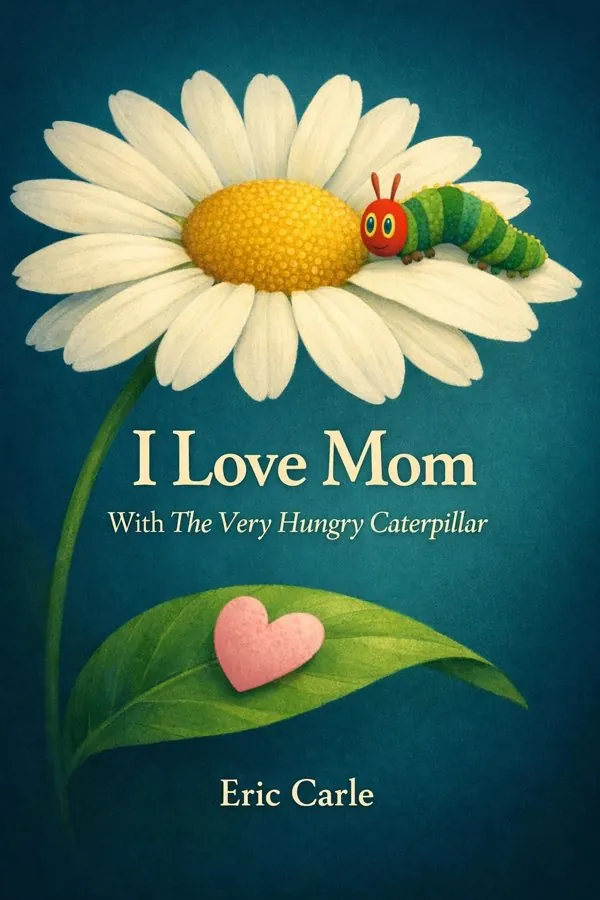
I Love Mom With The Very Hungry Caterpillar: Summary & Key Insights
by Eric Carle
 10 min8 chaptersAudio available
Key Takeaways from I Love Mom With The Very Hungry Caterpillar
One of the quiet truths of childhood is that love is often understood before it is explained.
Patience is one of the least dramatic and most transformative forms of love.
Children do not only need affection; they need direction delivered in a form they can receive.
Many children feel deep love for their mothers long before they know how to express it clearly.
Eric Carle’s work has always understood that children encounter meaning through the natural world, and this book uses that gift beautifully.
What Is I Love Mom With The Very Hungry Caterpillar About?
I Love Mom With The Very Hungry Caterpillar by Eric Carle is a parenting book spanning 6 pages. I Love Mom With The Very Hungry Caterpillar is a short, affectionate picture book that turns a beloved children’s character into a tribute to one of the most important relationships in a child’s life: the bond with a mother. Through gentle words and Eric Carle’s instantly recognizable collage illustrations, the book celebrates what moms so often provide every day—comfort, safety, encouragement, patience, and love. Though only a few pages long, it captures feelings that are much bigger than its size, making it ideal for Mother’s Day, bedtime reading, or any moment when a child wants to say, “I love you.” What makes this book meaningful is its simplicity. Rather than teaching through complex plot or heavy lessons, it uses warm imagery from nature to connect maternal love with growth, care, and belonging. That approach makes the message accessible even to very young readers while still resonating with parents and gift-givers. Eric Carle’s authority comes from decades of creating emotionally rich picture books that speak directly to children’s sense of wonder. As the creator of The Very Hungry Caterpillar, he knew how to make small stories feel timeless, tender, and deeply memorable.
This FizzRead summary covers all 8 key chapters of I Love Mom With The Very Hungry Caterpillar in approximately 10 minutes, distilling the most important ideas, arguments, and takeaways from Eric Carle's work. Also available as an audio summary and Key Quotes Podcast.
I Love Mom With The Very Hungry Caterpillar
I Love Mom With The Very Hungry Caterpillar is a short, affectionate picture book that turns a beloved children’s character into a tribute to one of the most important relationships in a child’s life: the bond with a mother. Through gentle words and Eric Carle’s instantly recognizable collage illustrations, the book celebrates what moms so often provide every day—comfort, safety, encouragement, patience, and love. Though only a few pages long, it captures feelings that are much bigger than its size, making it ideal for Mother’s Day, bedtime reading, or any moment when a child wants to say, “I love you.”
What makes this book meaningful is its simplicity. Rather than teaching through complex plot or heavy lessons, it uses warm imagery from nature to connect maternal love with growth, care, and belonging. That approach makes the message accessible even to very young readers while still resonating with parents and gift-givers. Eric Carle’s authority comes from decades of creating emotionally rich picture books that speak directly to children’s sense of wonder. As the creator of The Very Hungry Caterpillar, he knew how to make small stories feel timeless, tender, and deeply memorable.
Who Should Read I Love Mom With The Very Hungry Caterpillar?
This book is perfect for anyone interested in parenting and looking to gain actionable insights in a short read. Whether you're a student, professional, or lifelong learner, the key ideas from I Love Mom With The Very Hungry Caterpillar by Eric Carle will help you think differently.
- ✓Readers who enjoy parenting and want practical takeaways
- ✓Professionals looking to apply new ideas to their work and life
- ✓Anyone who wants the core insights of I Love Mom With The Very Hungry Caterpillar in just 10 minutes
Want the full summary?
Get instant access to this book summary and 100K+ more with Fizz Moment.
Get Free SummaryAvailable on App Store • Free to download
Key Chapters
One of the quiet truths of childhood is that love is often understood before it is explained. In I Love Mom With The Very Hungry Caterpillar, that truth appears through bright imagery, gentle language, and the familiar presence of the caterpillar moving through a lively natural world. The book suggests that a mother’s love is not merely a feeling spoken aloud; it is the atmosphere in which a child grows. Leaves, flowers, color, and softness all become symbols of care, showing that love is something a child experiences with the whole body and imagination.
This idea matters because young children do not typically define love in abstract terms. They recognize it through patterns: being held, being noticed, being guided, being welcomed back. The book reflects that developmental reality. It invites adults to see that appreciation for mothers can be expressed simply and visually, without requiring long explanations. A child pointing to a picture and saying, “That’s my mom,” is already participating in emotional literacy.
In daily life, this can inspire parents and caregivers to think less about grand gestures and more about consistency. Reading together, preparing food, listening attentively, and creating predictable routines all communicate, “You are safe with me.” For families, the book can become a conversation starter: What does love look like in our home? How do we show it? Even classrooms can use it to help children identify loving relationships through art and storytelling.
Actionable takeaway: Use the book as a prompt to name three simple ways love is shown at home, so children learn to recognize and appreciate care in everyday moments.
Patience is one of the least dramatic and most transformative forms of love. In this book, the caterpillar’s gentle movement through the world suggests a child’s natural rhythm of curiosity, distraction, return, and reassurance. That rhythm mirrors real family life. Children wander emotionally and physically—they ask repeated questions, test limits, and shift quickly from independence to dependence. A mother’s patience helps make those shifts feel manageable rather than frightening.
The book honors this quality without turning it into a lecture. Its calm tone implies that maternal care is steady, not hurried. That steadiness teaches an important lesson: children thrive when adults do not expect perfection from them. Patience allows room for mess, learning, wonder, and mistakes. It communicates, “You are still loved while you grow.”
For parents, this message can be both comforting and challenging. Many caregivers feel pressure to respond perfectly at all times, but the book points toward something more realistic: what children need most is not flawless parenting but reliable warmth. Waiting through a tantrum, answering one more “why,” or helping a child try again after frustration are all examples of this patient love in action.
In practical terms, families can use the book to reinforce routines that support calm connection. A short reading ritual before bed, a pause before reacting to difficult behavior, or a habit of reconnecting after conflict can all strengthen trust. Children who experience patient responses are more likely to develop confidence, self-regulation, and resilience.
Actionable takeaway: Choose one recurring stressful moment each day—such as getting dressed or bedtime—and replace rushing with a calmer, more predictable response that communicates patient love.
Children do not only need affection; they need direction delivered in a form they can receive. One of the book’s most meaningful themes is that comfort and guidance are not opposites. A mother can soothe and lead at the same time. Through the caterpillar’s journey across a vibrant world, the story evokes a pattern common in childhood: explore, return, receive reassurance, then venture out again. This cycle is foundational to healthy development.
The beauty of the book is that it treats guidance as relational rather than controlling. The mother figure is not presented as a distant authority issuing rules from above. Instead, maternal care is implied as a supportive presence that helps the child meet the world with confidence. This distinction matters. Children learn best when they feel emotionally anchored. Advice is more effective when it comes from someone who has first made them feel seen and safe.
This principle applies far beyond early childhood. A parent helping a toddler try a new food, a preschooler navigate fear, or an older child recover from disappointment is doing both jobs at once: comforting and guiding. Even simple phrases like “I’m here” and “Let’s try together” combine emotional support with forward movement.
The book also offers adults a subtle reminder that guidance does not need to be loud to be powerful. Gentle repetition, consistent presence, and warm encouragement often teach more effectively than correction alone. Reading this story together can help parents reflect on whether their child experiences advice as connection or pressure.
Actionable takeaway: The next time a child is struggling, begin with comfort before instruction—first acknowledge the feeling, then offer one clear step forward.
Many children feel deep love for their mothers long before they know how to express it clearly. One of the book’s strongest contributions is that it gives young readers a language of gratitude through simple, affectionate imagery. It helps transform a feeling into words, and that is no small task. Emotional expression is a learned skill, and books like this provide some of the earliest models.
Rather than framing gratitude as obligation, the story presents it as delight. Appreciation emerges naturally from noticing what a mother means in a child’s life. This is important because gratitude is most powerful when it grows from awareness, not performance. A child who learns to say “I love Mom” because they feel warmth, care, and joy is developing genuine relational understanding.
Parents and educators can build on this message in practical ways. After reading, children can be invited to complete simple sentences such as “I love Mom because…” or “Mom helps me when….” Younger children can draw pictures; older ones can dictate or write a note. These exercises strengthen emotional vocabulary and help children connect experiences with feelings.
The idea also applies to adults. Sometimes caregivers do so much unseen labor that appreciation becomes delayed or assumed. This book creates a pause to notice that work. It becomes not just a child’s tribute, but a family ritual of recognition. Gratitude, when practiced regularly, deepens closeness and reduces the tendency to take everyday care for granted.
Actionable takeaway: After reading, help a child express one specific thank-you to their mother or caregiver, focusing on a real everyday act rather than a general compliment.
Eric Carle’s work has always understood that children encounter meaning through the natural world, and this book uses that gift beautifully. Flowers, leaves, color, movement, and growth are not just decorative elements; they form a visual language for motherhood itself. Nature becomes a mirror for maternal love—nurturing, steady, life-giving, and full of quiet transformation.
This connection matters because children often grasp emotional truths more readily through images than abstractions. A blooming flower or a bright green leaf can communicate care, safety, and growth in a way that lectures cannot. By placing maternal love within a living landscape, the book suggests that care is part of the order of life. To be nurtured is natural. To grow under loving attention is natural.
For families, this theme opens meaningful activities beyond reading. A child might plant a flower for Mother’s Day, collect leaves on a walk, or talk about how sunlight and water help plants grow just as kindness and attention help people thrive. These concrete associations make the message memorable. In classrooms, the book can support discussions about life cycles, caregiving, and the ways all living things depend on nurture.
The natural imagery also softens the emotional tone, making the book comforting rather than sentimental. It invites appreciation without pressure. In a world where family life can feel rushed and digital, the story gently returns attention to simple living things and simple affections.
Actionable takeaway: Pair the book with one nature-based ritual—such as planting, walking, or observing flowers—to help children connect the idea of love with growth and care.
Even secure relationships benefit from being named. One of the book’s core messages is that love becomes especially powerful when it is affirmed. Children need repeated reassurance that the bond they rely on is real, enduring, and joyful. I Love Mom With The Very Hungry Caterpillar serves that purpose by turning affection into a ritual of recognition. It says plainly, in child-friendly terms, that the mother-child connection matters.
This kind of affirmation is not emotionally excessive; it is developmentally helpful. Young children build internal security through repetition. Hearing loving words, seeing warm images, and participating in shared reading all reinforce the belief that they belong. That sense of belonging supports emotional regulation, confidence, and social trust.
The book can be especially meaningful during transitions—starting school, welcoming a sibling, recovering from illness, or adjusting after time apart. In such moments, a short and gentle story can reassure a child more effectively than a long explanation. It reminds them that connection remains steady even as circumstances change.
Affirmation also benefits mothers and caregivers. Parenting often involves invisible labor, fatigue, and self-doubt. A simple book that celebrates maternal presence can feel deeply validating. Shared reading becomes a two-way exchange: the child feels secure, and the parent feels seen.
Families can turn this theme into practice through small rituals—saying “I love you” at pickup time, creating a bedtime phrase, or keeping a favorite appreciation book in regular rotation. Repeated gestures are what make belonging tangible.
Actionable takeaway: Create one recurring phrase or ritual that affirms your bond, such as a daily “I’m glad you’re my child” or “I love being your mom.”
A common mistake adults make is assuming that emotional depth requires complexity. This book proves the opposite. With very few words and a familiar character, it delivers a message of affection, gratitude, and belonging that many longer books struggle to communicate. Its brevity is not a limitation; it is part of its strength. Young children often process big feelings best when they are presented simply, repeatedly, and visually.
Eric Carle’s artistic approach supports this beautifully. His collage illustrations invite lingering attention, and the sparse text leaves room for parent and child to fill in the emotional meaning together. That shared participation is part of the reading experience. Adults can elaborate, point, ask questions, and relate the images to their own family life.
In practice, this means short books like this one are ideal for emotionally significant moments: a Mother’s Day gift, a quick cuddle before daycare, a bedtime reset after a hard day, or a grandparent helping a child make a card for Mom. The book’s accessibility also makes it useful for early readers who are beginning to connect printed words with personal meaning.
The larger lesson for parents and educators is to avoid underestimating picture books. They are not just stepping stones to “real” reading; they are often a child’s first emotional literature. Through repetition, image, and rhythm, they help children understand relationships long before they can analyze them.
Actionable takeaway: Revisit short, emotionally rich picture books regularly instead of treating them as one-time reads; repetition helps children absorb and express big feelings.
Families are shaped not only by what they endure but by what they celebrate. This book works as more than a story—it is a ritual object, a small tool for honoring mothers and highlighting family affection. By centering appreciation, it helps create a household culture where care is noticed and spoken aloud. That matters because emotional climates are built through repetition. What families celebrate becomes part of what children learn to value.
The book’s gift-like quality makes it especially suitable for occasions such as Mother’s Day, birthdays, or everyday gratitude moments. Yet its deeper value lies in normalizing appreciation outside formal holidays. When children learn that love can be celebrated in ordinary time, they become more attentive to everyday kindness.
This idea can be applied in practical family traditions. A child can pair the book with a handmade card, a drawing, a flower picked on a walk, or a spoken message at breakfast. Siblings can take turns naming what they love about their mother or caregiver. Teachers can use it in class to help children honor mothers, grandmothers, adoptive parents, or other nurturing figures.
The wider lesson is that emotional culture does not require elaborate planning. Small, repeated celebrations make relationships feel visible. They tell children that tenderness belongs in family life and that expressing affection is both safe and valued.
Actionable takeaway: Use the book to start a simple appreciation tradition, such as sharing one thing you are thankful for about a caregiver during a weekly meal or bedtime routine.
All Chapters in I Love Mom With The Very Hungry Caterpillar
About the Author
Eric Carle (1929–2021) was an American author, illustrator, and designer whose work became a cornerstone of modern children’s literature. He is best known for The Very Hungry Caterpillar, first published in 1969, which has delighted generations of readers around the world. Carle’s signature style combined hand-painted tissue-paper collage with simple, rhythmic text, creating books that were visually striking and easy for children to love. His stories often explored nature, growth, discovery, and early learning, making them favorites in homes, classrooms, and libraries. Over the course of his career, he created or illustrated dozens of books that helped young readers connect language, emotion, and imagination. I Love Mom With The Very Hungry Caterpillar reflects his enduring ability to turn simple ideas into warm, memorable reading experiences.
Get This Summary in Your Preferred Format
Read or listen to the I Love Mom With The Very Hungry Caterpillar summary by Eric Carle anytime, anywhere. FizzRead offers multiple formats so you can learn on your terms — all free.
Available formats: App · Audio · PDF · EPUB — All included free with FizzRead
Download I Love Mom With The Very Hungry Caterpillar PDF and EPUB Summary
Key Quotes from I Love Mom With The Very Hungry Caterpillar
“One of the quiet truths of childhood is that love is often understood before it is explained.”
“Patience is one of the least dramatic and most transformative forms of love.”
“Children do not only need affection; they need direction delivered in a form they can receive.”
“Many children feel deep love for their mothers long before they know how to express it clearly.”
“Eric Carle’s work has always understood that children encounter meaning through the natural world, and this book uses that gift beautifully.”
Frequently Asked Questions about I Love Mom With The Very Hungry Caterpillar
I Love Mom With The Very Hungry Caterpillar by Eric Carle is a parenting book that explores key ideas across 8 chapters. I Love Mom With The Very Hungry Caterpillar is a short, affectionate picture book that turns a beloved children’s character into a tribute to one of the most important relationships in a child’s life: the bond with a mother. Through gentle words and Eric Carle’s instantly recognizable collage illustrations, the book celebrates what moms so often provide every day—comfort, safety, encouragement, patience, and love. Though only a few pages long, it captures feelings that are much bigger than its size, making it ideal for Mother’s Day, bedtime reading, or any moment when a child wants to say, “I love you.” What makes this book meaningful is its simplicity. Rather than teaching through complex plot or heavy lessons, it uses warm imagery from nature to connect maternal love with growth, care, and belonging. That approach makes the message accessible even to very young readers while still resonating with parents and gift-givers. Eric Carle’s authority comes from decades of creating emotionally rich picture books that speak directly to children’s sense of wonder. As the creator of The Very Hungry Caterpillar, he knew how to make small stories feel timeless, tender, and deeply memorable.
More by Eric Carle
You Might Also Like
Never Enough
Jennifer Breheny Wallace
10 min
Bluey: Sleepytime
Joe Brumm
10 min
In My Heart: A Book of Feelings
Jo Witek
10 min
Love From The Crayons
Drew Daywalt, Oliver Jeffers
10 min
Pete The Cat: Big Easter Adventure
James Dean, Kimberly Dean
10 min
Smart Money Smart Kids: Raising the Next Generation to Win with Money
Dave Ramsey, Rachel Cruze
10 minBrowse by Category
Ready to read I Love Mom With The Very Hungry Caterpillar?
Get the full summary and 100K+ more books with Fizz Moment.