
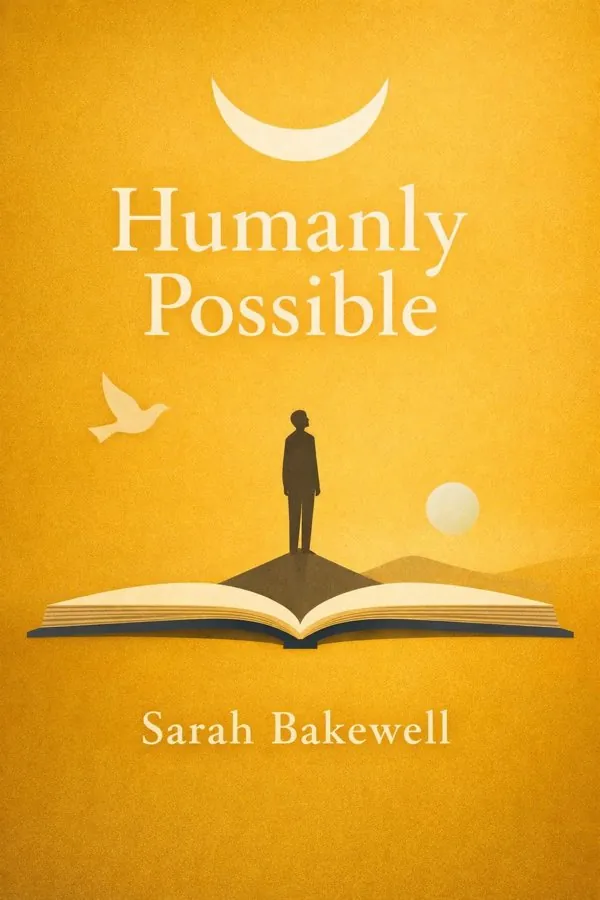
Humanly Possible: 700 Years of Humanist Freethinking, Inquiry, and Hope: Summary & Key Insights
 10 min10 chaptersAudio available
What Is Humanly Possible: 700 Years of Humanist Freethinking, Inquiry, and Hope About?
Humanly Possible: 700 Years of Humanist Freethinking, Inquiry, and Hope by Sarah Bakewell is a civilization book spanning 10 pages. This book explores the history of humanism from its medieval origins to the present day, highlighting thinkers, artists, and scientists who championed freedom of thought, curiosity, and human dignity. Sarah Bakewell presents a sweeping account of seven centuries of humanist ideas, showing how they shaped Western culture and remain relevant in times of uncertainty.
This FizzRead summary covers all 10 key chapters of Humanly Possible: 700 Years of Humanist Freethinking, Inquiry, and Hope in approximately 10 minutes, distilling the most important ideas, arguments, and takeaways from Sarah Bakewell's work. Also available as an audio summary and Key Quotes Podcast.
Humanly Possible: 700 Years of Humanist Freethinking, Inquiry, and Hope
This book explores the history of humanism from its medieval origins to the present day, highlighting thinkers, artists, and scientists who championed freedom of thought, curiosity, and human dignity. Sarah Bakewell presents a sweeping account of seven centuries of humanist ideas, showing how they shaped Western culture and remain relevant in times of uncertainty.
Who Should Read Humanly Possible: 700 Years of Humanist Freethinking, Inquiry, and Hope?
This book is perfect for anyone interested in civilization and looking to gain actionable insights in a short read. Whether you're a student, professional, or lifelong learner, the key ideas from Humanly Possible: 700 Years of Humanist Freethinking, Inquiry, and Hope by Sarah Bakewell will help you think differently.
- ✓Readers who enjoy civilization and want practical takeaways
- ✓Professionals looking to apply new ideas to their work and life
- ✓Anyone who wants the core insights of Humanly Possible: 700 Years of Humanist Freethinking, Inquiry, and Hope in just 10 minutes
Want the full summary?
Get instant access to this book summary and 100K+ more with Fizz Moment.
Get Free SummaryAvailable on App Store • Free to download
Key Chapters
Humanism did not arrive fully formed in Florence’s libraries; it began in the shadowed academies and scriptoria of the Middle Ages. Before we could claim liberty of thought, scholars had to learn how to read anew. I start this journey with figures such as Thomas Aquinas and William of Ockham—men who straddled the line between faith and reason. Their careful inquiries into theology and logic laid the groundwork for a more human-oriented worldview, even as they worked within the boundaries of religious orthodoxy.
The rediscovery of ancient writers—Cicero, Seneca, Aristotle—sparked what was often called a ‘renaissance’ long before the Renaissance proper. These manuscripts became touchstones for scholars who believed that knowledge should illuminate the human condition, not only divine mysteries. They imagined that studying grammar, rhetoric, and ethics could make us better thinkers and citizens.
Even in monasteries, the humanist impulse arose: to value the texture of lived experience, the nuance of words, and the dignity of learning itself. It was a quiet revolution—a recovery of the idea that reason and faith could coexist, and that the pursuit of understanding was itself a sacred act. This medieval prelude reminds us that humanism’s origins lie not in opposition to belief, but in the desire to bring thought closer to life, and life closer to meaning.
When Francesco Petrarch looked upon the ruins of Rome, he felt both grief and awe. He was mourning a civilization forgotten and awakening to the idea that we could reclaim its grandeur through words. This was the dawn of Renaissance humanism—a belief that the study of classical antiquity could renew not only scholarship but the soul itself.
In my narrative, figures such as Erasmus of Rotterdam, Pico della Mirandola, and Leonardo Bruni stand as vivid embodiments of the humanist ideal. They translated, debated, and wrote with a conviction that human beings possess an innate dignity simply by virtue of thinking and feeling. Petrarch’s letters reveal the struggle to reconcile spiritual devotion with earthly passion; Erasmus’s essays brim with moral irony and faith in education. Both celebrated the human capacity for self-cultivation. To be educated was not merely to know—it was to refine one’s moral being.
These Renaissance scholars turned reading into a form of self-discovery. They believed that by understanding Cicero’s eloquence or Plato’s vision, we could cultivate wisdom fit for civic life. Humanism was thus never a withdrawal from politics; it was a renewal of citizenship grounded in virtue and dialogue. In Florence, in Rome, in Antwerp, they proved that the mind’s freedom could reshape the world’s fabric, beginning with language and learning.
+ 8 more chapters — available in the FizzRead app
All Chapters in Humanly Possible: 700 Years of Humanist Freethinking, Inquiry, and Hope
About the Author
Sarah Bakewell is a British writer known for her nonfiction works exploring philosophy and intellectual history. She is the author of award-winning books such as 'How to Live: A Life of Montaigne' and 'At the Existentialist Café'. Her work combines rigorous research with engaging storytelling, making philosophical themes accessible to a broad audience.
Get This Summary in Your Preferred Format
Read or listen to the Humanly Possible: 700 Years of Humanist Freethinking, Inquiry, and Hope summary by Sarah Bakewell anytime, anywhere. FizzRead offers multiple formats so you can learn on your terms — all free.
Available formats: App · Audio · PDF · EPUB — All included free with FizzRead
Download Humanly Possible: 700 Years of Humanist Freethinking, Inquiry, and Hope PDF and EPUB Summary
Key Quotes from Humanly Possible: 700 Years of Humanist Freethinking, Inquiry, and Hope
“Humanism did not arrive fully formed in Florence’s libraries; it began in the shadowed academies and scriptoria of the Middle Ages.”
“When Francesco Petrarch looked upon the ruins of Rome, he felt both grief and awe.”
Frequently Asked Questions about Humanly Possible: 700 Years of Humanist Freethinking, Inquiry, and Hope
Humanly Possible: 700 Years of Humanist Freethinking, Inquiry, and Hope by Sarah Bakewell is a civilization book that explores key ideas across 10 chapters. This book explores the history of humanism from its medieval origins to the present day, highlighting thinkers, artists, and scientists who championed freedom of thought, curiosity, and human dignity. Sarah Bakewell presents a sweeping account of seven centuries of humanist ideas, showing how they shaped Western culture and remain relevant in times of uncertainty.
More by Sarah Bakewell

You Might Also Like
The Structure of Scientific Revolutions
Thomas S. Kuhn
10 min
Genius
Harold Bloom
10 min
A Cultural History of the Medieval Age
Various Editors
10 min
A History of God: The 4,000-Year Quest of Judaism, Christianity and Islam
Karen Armstrong
10 min
A History of the World in 10½ Chapters
Julian Barnes
10 min
A Short History of Progress
Ronald Wright
10 minBrowse by Category
Ready to read Humanly Possible: 700 Years of Humanist Freethinking, Inquiry, and Hope?
Get the full summary and 100K+ more books with Fizz Moment.