
Sarah Bakewell Books
Sarah Bakewell is a British author and biographer known for her works on philosophy and intellectual history. She gained international recognition for her book 'How to Live: A Life of Montaigne,' which won several literary awards.
Known for: At The Existentialist Café: Freedom, Being, And Apricot Cocktails, How to Live: Or A Life of Montaigne in One Question and Twenty Attempts at an Answer, Humanly Possible: 700 Years of Humanist Freethinking, Inquiry, and Hope
Books by Sarah Bakewell
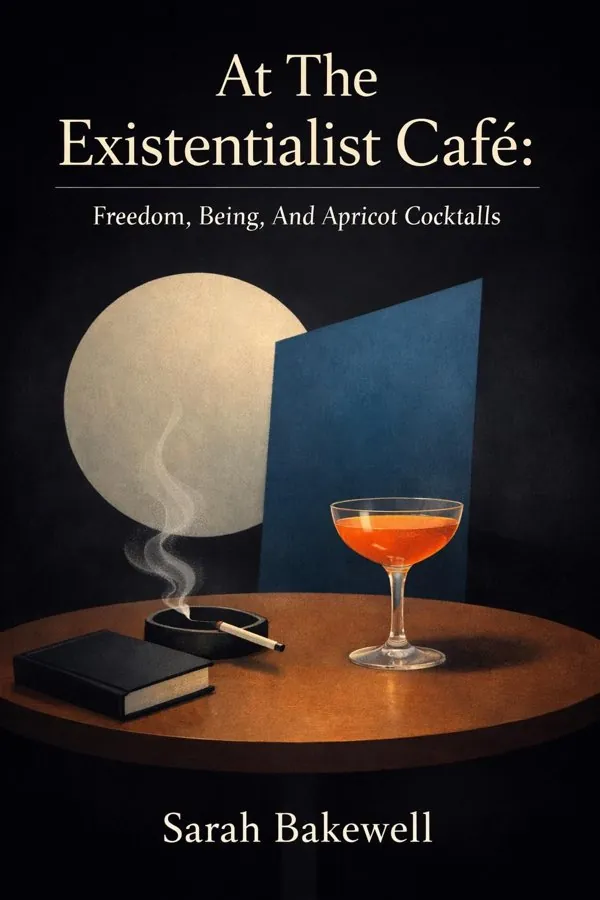
At The Existentialist Café: Freedom, Being, And Apricot Cocktails
At The Existentialist Café is a lively intellectual history of existentialism told through the lives, friendships, rivalries, and political entanglements of the thinkers who shaped it. Sarah Bakewell ...

How to Live: Or A Life of Montaigne in One Question and Twenty Attempts at an Answer
This book explores the life and philosophy of Michel de Montaigne, the 16th-century French essayist, through twenty thematic chapters that each address the question of how to live. Sarah Bakewell comb...

Humanly Possible: 700 Years of Humanist Freethinking, Inquiry, and Hope
This book explores the history of humanism from its medieval origins to the present day, highlighting thinkers, artists, and scientists who championed freedom of thought, curiosity, and human dignity....
Key Insights from Sarah Bakewell
Phenomenology Begins With Lived Experience
A revolution in philosophy began with a simple question: what if we started not with abstract theories, but with how the world actually appears to us? Sarah Bakewell shows that the roots of existentialism lie in Edmund Husserl’s phenomenology, a method that tried to describe experience before it was...
From At The Existentialist Café: Freedom, Being, And Apricot Cocktails
Heidegger Turned Philosophy Toward Being
Human life becomes more urgent when we realize it is finite. Bakewell presents Martin Heidegger as the thinker who transformed Husserl’s phenomenology into a more radical inquiry: not just how things appear, but what it means to be. In Being and Time, Heidegger argued that philosophers had forgotten...
From At The Existentialist Café: Freedom, Being, And Apricot Cocktails
Existentialism Was Born In Conversation
Big ideas often begin not in solitude, but in charged encounters between people. One of Bakewell’s most memorable contributions is showing that existentialism emerged through friendships, seductions, arguments, and shared experiments in living. The famous café scene with Sartre, Simone de Beauvoir, ...
From At The Existentialist Café: Freedom, Being, And Apricot Cocktails
Freedom Is Burden As Much As Gift
The unsettling heart of existentialism is this: you are freer than you want to admit. Bakewell shows how Jean-Paul Sartre turned this insight into one of the most provocative philosophies of the twentieth century. For Sartre, human beings are not fixed by essence, destiny, or role. We first exist, a...
From At The Existentialist Café: Freedom, Being, And Apricot Cocktails
War Made Philosophy A Moral Emergency
Ideas about freedom become sharper when freedom is threatened. Bakewell traces how war, occupation, exile, and totalitarianism forced existentialist thinkers to test their philosophies in real conditions of danger. The Second World War was not background scenery for existentialism; it was a crucible...
From At The Existentialist Café: Freedom, Being, And Apricot Cocktails
Embodiment Changes How We Understand Selfhood
We do not merely have bodies; we live through them. One of Bakewell’s great strengths is showing that existentialism did not remain confined to abstract freedom or solitary anxiety. Through Maurice Merleau-Ponty, it became a philosophy of embodiment and perception. Merleau-Ponty argued that the body...
From At The Existentialist Café: Freedom, Being, And Apricot Cocktails
About Sarah Bakewell
Sarah Bakewell is a British author and biographer known for her works on philosophy and intellectual history. She gained international recognition for her book 'How to Live: A Life of Montaigne,' which won several literary awards. Bakewell’s writing is celebrated for making complex philosophical ide...
Read more
Sarah Bakewell is a British author and biographer known for her works on philosophy and intellectual history. She gained international recognition for her book 'How to Live: A Life of Montaigne,' which won several literary awards. Bakewell’s writing is celebrated for making complex philosophical ide...
Sarah Bakewell is a British author and biographer known for her works on philosophy and intellectual history. She gained international recognition for her book 'How to Live: A Life of Montaigne,' which won several literary awards. Bakewell’s writing is celebrated for making complex philosophical ideas accessible and engaging to general readers.


Frequently Asked Questions
Sarah Bakewell is a British author and biographer known for her works on philosophy and intellectual history. She gained international recognition for her book 'How to Live: A Life of Montaigne,' which won several literary awards.
Read Sarah Bakewell's books in 15 minutes
Get AI-powered summaries with key insights from 3 books by Sarah Bakewell.