
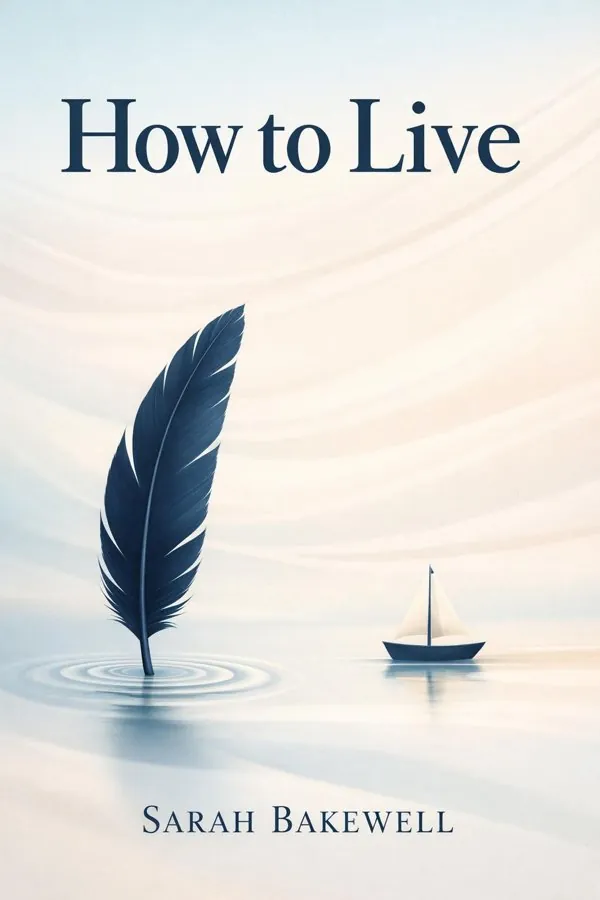
How to Live: Or A Life of Montaigne in One Question and Twenty Attempts at an Answer: Summary & Key Insights
 10 min13 chaptersAudio available
What Is How to Live: Or A Life of Montaigne in One Question and Twenty Attempts at an Answer About?
How to Live: Or A Life of Montaigne in One Question and Twenty Attempts at an Answer by Sarah Bakewell is a biographies book spanning 13 pages. This book explores the life and philosophy of Michel de Montaigne, the 16th-century French essayist, through twenty thematic chapters that each address the question of how to live. Sarah Bakewell combines biography, history, and philosophy to show how Montaigne’s ideas on curiosity, friendship, freedom, and self-reflection remain relevant today.
This FizzRead summary covers all 13 key chapters of How to Live: Or A Life of Montaigne in One Question and Twenty Attempts at an Answer in approximately 10 minutes, distilling the most important ideas, arguments, and takeaways from Sarah Bakewell's work. Also available as an audio summary and Key Quotes Podcast.
How to Live: Or A Life of Montaigne in One Question and Twenty Attempts at an Answer
This book explores the life and philosophy of Michel de Montaigne, the 16th-century French essayist, through twenty thematic chapters that each address the question of how to live. Sarah Bakewell combines biography, history, and philosophy to show how Montaigne’s ideas on curiosity, friendship, freedom, and self-reflection remain relevant today.
Who Should Read How to Live: Or A Life of Montaigne in One Question and Twenty Attempts at an Answer?
This book is perfect for anyone interested in biographies and looking to gain actionable insights in a short read. Whether you're a student, professional, or lifelong learner, the key ideas from How to Live: Or A Life of Montaigne in One Question and Twenty Attempts at an Answer by Sarah Bakewell will help you think differently.
- ✓Readers who enjoy biographies and want practical takeaways
- ✓Professionals looking to apply new ideas to their work and life
- ✓Anyone who wants the core insights of How to Live: Or A Life of Montaigne in One Question and Twenty Attempts at an Answer in just 10 minutes
Want the full summary?
Get instant access to this book summary and 100K+ more with Fizz Moment.
Get Free SummaryAvailable on App Store • Free to download
Key Chapters
To understand Montaigne’s essays, we must walk briefly into sixteenth-century France, a world shaken by the Wars of Religion. Montaigne was born into privilege in 1533, yet his life unfolded amidst uncertainty. Humanism was flourishing—the study of classical texts had rekindled interest in the dignity of the human mind—but it stood beside superstition and dogma, and violence tore through the countryside. Amid such contradiction, Montaigne found refuge in the pragmatic wisdom of the ancients: Seneca’s stoicism, Plutarch’s moral inquiry, and Cicero’s balance of civic virtue and personal reflection.
The Renaissance mindset taught that truth was not a fixed temple but a field of dialogue. Montaigne embodied that principle with his Essays: they are conversations between past and present, between self and world. His culture valued eloquence and rhetoric, but Montaigne preferred candor—he wrote as if chatting with a friend by the fire. His simplicity was revolutionary: he shifted the focus of philosophy from cosmic order to individual experience. What system could survive the collapse of political certainties? For Montaigne, only a flexible, humane awareness could. His tower became a place where thought itself was redefined—no longer an instrument for perfection but a means of understanding imperfection without fear.
After years in public service, worn out by politics, Montaigne retreated to his family estate in 1571. In his library tower, surrounded by inscriptions from classical authors carved into the beams, he began to write. His purpose was not literary ambition but personal restoration. Writing became his conversation with the world and with himself. He allowed his mind to wander, taking notes on everything—pain, friendship, memory, governance, horses. Each passage reflected his conviction that life itself could be the subject of philosophy.
What makes the Essays remarkable is their openness. Montaigne redefined truth as movement: his thoughts evolved as he wrote, revisiting earlier essays to add new reflections. There was no fixed doctrine, only continuity between living and writing. He observed that no one is ever the same person twice; we change even between sentences. That insight became a method: to write oneself honestly is to capture human nature in its fluidity. His tower was not a fortress of isolation, but an observatory of experience. From there, Montaigne built a philosophy of intimacy and curiosity that transcended mere scholarship. He discovered that to write about oneself authentically was to touch the common pulse of humanity.
+ 11 more chapters — available in the FizzRead app
All Chapters in How to Live: Or A Life of Montaigne in One Question and Twenty Attempts at an Answer
About the Author
Sarah Bakewell is a British author and biographer known for her works on philosophy and literature. She has written acclaimed books on Montaigne and existentialism, blending historical scholarship with accessible storytelling.
Get This Summary in Your Preferred Format
Read or listen to the How to Live: Or A Life of Montaigne in One Question and Twenty Attempts at an Answer summary by Sarah Bakewell anytime, anywhere. FizzRead offers multiple formats so you can learn on your terms — all free.
Available formats: App · Audio · PDF · EPUB — All included free with FizzRead
Download How to Live: Or A Life of Montaigne in One Question and Twenty Attempts at an Answer PDF and EPUB Summary
Key Quotes from How to Live: Or A Life of Montaigne in One Question and Twenty Attempts at an Answer
“To understand Montaigne’s essays, we must walk briefly into sixteenth-century France, a world shaken by the Wars of Religion.”
“After years in public service, worn out by politics, Montaigne retreated to his family estate in 1571.”
Frequently Asked Questions about How to Live: Or A Life of Montaigne in One Question and Twenty Attempts at an Answer
How to Live: Or A Life of Montaigne in One Question and Twenty Attempts at an Answer by Sarah Bakewell is a biographies book that explores key ideas across 13 chapters. This book explores the life and philosophy of Michel de Montaigne, the 16th-century French essayist, through twenty thematic chapters that each address the question of how to live. Sarah Bakewell combines biography, history, and philosophy to show how Montaigne’s ideas on curiosity, friendship, freedom, and self-reflection remain relevant today.
More by Sarah Bakewell
You Might Also Like

An American Marriage
Tayari Jones
10 min
Benjamin Franklin: An American Life
Walter Isaacson
10 min
I Know Why The Caged Bird Sings
Maya Angelou
10 min
Long Walk to Freedom
Nelson Mandela
10 min
Persepolis
Marjane Satrapi
10 min
Surely You're Joking, Mr. Feynman!
Richard P. Feynman
10 minBrowse by Category
Ready to read How to Live: Or A Life of Montaigne in One Question and Twenty Attempts at an Answer?
Get the full summary and 100K+ more books with Fizz Moment.