
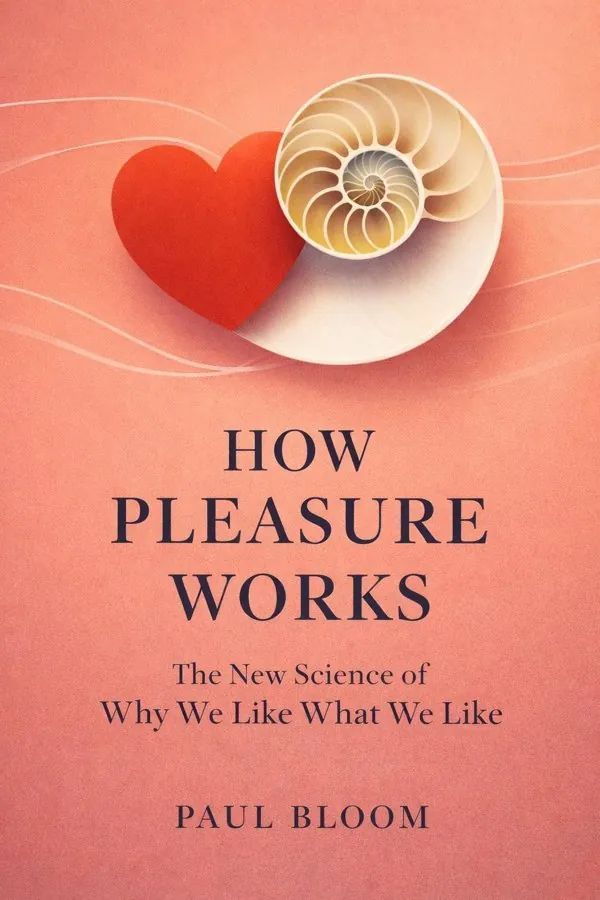
How Pleasure Works: The New Science of Why We Like What We Like: Summary & Key Insights
by Paul Bloom
 10 min9 chaptersAudio available
What Is How Pleasure Works: The New Science of Why We Like What We Like About?
How Pleasure Works: The New Science of Why We Like What We Like by Paul Bloom is a cognition book spanning 9 pages. In this engaging exploration, Yale psychologist Paul Bloom examines the origins and nature of human pleasure. Drawing on research from psychology, neuroscience, philosophy, and behavioral economics, Bloom argues that our enjoyment of art, food, sex, and other experiences stems from deep evolutionary and cognitive roots. He reveals how our sense of pleasure is shaped by beliefs about the essence and history of things, offering insights into why we value authenticity and meaning in what we love.
This FizzRead summary covers all 9 key chapters of How Pleasure Works: The New Science of Why We Like What We Like in approximately 10 minutes, distilling the most important ideas, arguments, and takeaways from Paul Bloom's work. Also available as an audio summary and Key Quotes Podcast.
How Pleasure Works: The New Science of Why We Like What We Like
In this engaging exploration, Yale psychologist Paul Bloom examines the origins and nature of human pleasure. Drawing on research from psychology, neuroscience, philosophy, and behavioral economics, Bloom argues that our enjoyment of art, food, sex, and other experiences stems from deep evolutionary and cognitive roots. He reveals how our sense of pleasure is shaped by beliefs about the essence and history of things, offering insights into why we value authenticity and meaning in what we love.
Who Should Read How Pleasure Works: The New Science of Why We Like What We Like?
This book is perfect for anyone interested in cognition and looking to gain actionable insights in a short read. Whether you're a student, professional, or lifelong learner, the key ideas from How Pleasure Works: The New Science of Why We Like What We Like by Paul Bloom will help you think differently.
- ✓Readers who enjoy cognition and want practical takeaways
- ✓Professionals looking to apply new ideas to their work and life
- ✓Anyone who wants the core insights of How Pleasure Works: The New Science of Why We Like What We Like in just 10 minutes
Want the full summary?
Get instant access to this book summary and 100K+ more with Fizz Moment.
Get Free SummaryAvailable on App Store • Free to download
Key Chapters
At the core of my argument is psychological essentialism—the belief that every object, person, or experience contains an invisible essence that makes it unique. This idea is not confined to philosophers; it is an intuition shared by children and adults alike, across cultures. Essentialism makes us see intrinsic value in certain things simply because of where they came from or what they represent.
Consider a favorite example: a sweater that once belonged to a beloved grandparent or a celebrity. Even if an identical copy existed, most of us would still prefer the original. That preference reveals how our minds imbue material objects with immaterial significance. The essence, in our minds, has fused with the object itself. This belief system is so deeply wired that even young children exhibit it—they often reject a perfect replica of their cherished toy, insisting the original has a unique, irreplaceable identity.
Essentialism forms the foundation of many pleasures. It explains why people seek authentic artworks, why fans treasure autographs, and why we attribute emotional weight to heirlooms. Our brains seem designed not merely to consume sensation but to perceive invisible histories. The pleasure we derive from authenticity is proof that we are not hedonistic animals responding automatically to stimuli; we are interpretive creatures, finding delight in stories, origins, and essences.
Human pleasure is never purely sensory—it is belief-driven. The taste of a wine, for instance, changes when we believe it is expensive, even if it is not. Neuroscientific studies confirm that our knowledge of a wine’s price alters the brain’s activity in regions associated with pleasure. In other words, expectations and beliefs actively shape our sensory experiences.
When I first encountered such findings, I was struck by how dramatically belief transforms pleasure. Think about music. A song you hear on the radio might sound pleasant enough, but if you learn the performer’s tragic life story or understand the creative effort behind the piece, your appreciation often deepens. Belief constructs emotional resonance. The same goes for food, relationships, and moral satisfaction—what we think something *is* changes how it feels.
Even sexual pleasure, that most visceral of experiences, is not free from belief. Desire, attraction, and arousal are filtered through layers of context and meaning. The way someone moves, speaks, or reveals vulnerability can heighten experience beyond the tactile. We respond not to surface sensations but to stories—the identity and intentions of the person we engage with. This intertwining of thought and sensation defines the human flavor of pleasure: pleasure with a mind.
+ 7 more chapters — available in the FizzRead app
All Chapters in How Pleasure Works: The New Science of Why We Like What We Like
About the Author
Paul Bloom is a professor of psychology at Yale University, known for his research on morality, pleasure, and the origins of human understanding. His work bridges cognitive science and philosophy, and he has authored several influential books on the psychology of human nature.
Get This Summary in Your Preferred Format
Read or listen to the How Pleasure Works: The New Science of Why We Like What We Like summary by Paul Bloom anytime, anywhere. FizzRead offers multiple formats so you can learn on your terms — all free.
Available formats: App · Audio · PDF · EPUB — All included free with FizzRead
Download How Pleasure Works: The New Science of Why We Like What We Like PDF and EPUB Summary
Key Quotes from How Pleasure Works: The New Science of Why We Like What We Like
“At the core of my argument is psychological essentialism—the belief that every object, person, or experience contains an invisible essence that makes it unique.”
“Human pleasure is never purely sensory—it is belief-driven.”
Frequently Asked Questions about How Pleasure Works: The New Science of Why We Like What We Like
How Pleasure Works: The New Science of Why We Like What We Like by Paul Bloom is a cognition book that explores key ideas across 9 chapters. In this engaging exploration, Yale psychologist Paul Bloom examines the origins and nature of human pleasure. Drawing on research from psychology, neuroscience, philosophy, and behavioral economics, Bloom argues that our enjoyment of art, food, sex, and other experiences stems from deep evolutionary and cognitive roots. He reveals how our sense of pleasure is shaped by beliefs about the essence and history of things, offering insights into why we value authenticity and meaning in what we love.
More by Paul Bloom




You Might Also Like

A Field Guide to Lies: Critical Thinking in the Information Age
Daniel J. Levitin
10 min
A Theory of Cognitive Dissonance
Leon Festinger
10 min
Black-And-White Thinking: The Burden of a Binary Brain in a Complex World
Kevin Dutton
10 min
Born Liars: Why We Can’t Live Without Deceit
Ian Leslie
10 min
Collective Illusions: Conformity, Complicity, and the Science of Why We Make Bad Decisions
Todd Rose
10 min
Concrete Mathematics: A Foundation for Computer Science
Ronald L. Graham, Donald E. Knuth, Oren Patashnik
10 minBrowse by Category
Ready to read How Pleasure Works: The New Science of Why We Like What We Like?
Get the full summary and 100K+ more books with Fizz Moment.