
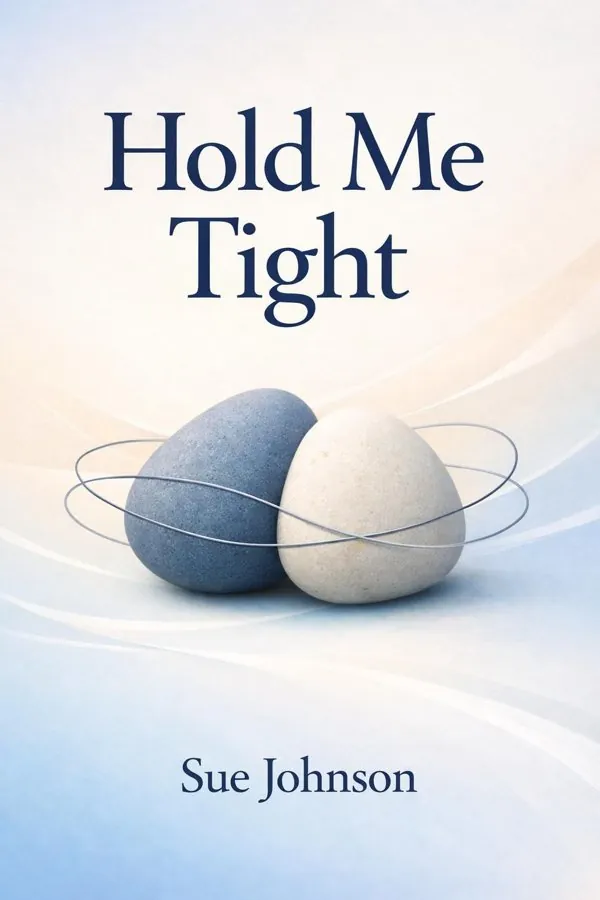
Hold Me Tight: Summary & Key Insights
by Sue Johnson
 10 min9 chaptersAudio available
Key Takeaways from Hold Me Tight
One of the most radical ideas in Hold Me Tight is also one of the most comforting: adult love is not irrational weakness, but a biologically wired need for secure connection.
Johnson observes that troubled couples often feel trapped by conversations that seem to repeat on their own.
People rarely overreact for no reason.
Not all relationship turning points happen in major betrayals.
At the heart of the book is the conversation that gives it its title: the vulnerable exchange in which partners openly ask for emotional connection and offer it in return.
What Is Hold Me Tight About?
Hold Me Tight by Sue Johnson is a relationships book published in 2008 spanning 10 pages. What if the conflicts that exhaust couples are not really about chores, sex, money, or tone of voice, but about a deeper question: “Are you there for me when I need you?” In Hold Me Tight, clinical psychologist Dr. Sue Johnson argues that lasting love is not built on perfect communication techniques or endless compromise alone. It is built on emotional responsiveness, secure attachment, and the ability to reach for one another in moments of fear, hurt, and loneliness. Drawing on decades of clinical work and the science of attachment, Johnson introduces Emotionally Focused Therapy, or EFT, a widely researched approach that helps couples understand their negative patterns, heal relational wounds, and rebuild trust. The book is organized around seven essential conversations that move partners from blame and distance toward safety and connection. Clear, practical, and deeply compassionate, Hold Me Tight matters because it reframes relationship distress as a cry for connection rather than evidence of failure. For anyone who wants to love better, repair more effectively, and feel truly close again, Johnson offers both a map and a message of hope.
This FizzRead summary covers all 9 key chapters of Hold Me Tight in approximately 10 minutes, distilling the most important ideas, arguments, and takeaways from Sue Johnson's work. Also available as an audio summary and Key Quotes Podcast.
Hold Me Tight
What if the conflicts that exhaust couples are not really about chores, sex, money, or tone of voice, but about a deeper question: “Are you there for me when I need you?” In Hold Me Tight, clinical psychologist Dr. Sue Johnson argues that lasting love is not built on perfect communication techniques or endless compromise alone. It is built on emotional responsiveness, secure attachment, and the ability to reach for one another in moments of fear, hurt, and loneliness. Drawing on decades of clinical work and the science of attachment, Johnson introduces Emotionally Focused Therapy, or EFT, a widely researched approach that helps couples understand their negative patterns, heal relational wounds, and rebuild trust. The book is organized around seven essential conversations that move partners from blame and distance toward safety and connection. Clear, practical, and deeply compassionate, Hold Me Tight matters because it reframes relationship distress as a cry for connection rather than evidence of failure. For anyone who wants to love better, repair more effectively, and feel truly close again, Johnson offers both a map and a message of hope.
Who Should Read Hold Me Tight?
This book is perfect for anyone interested in relationships and looking to gain actionable insights in a short read. Whether you're a student, professional, or lifelong learner, the key ideas from Hold Me Tight by Sue Johnson will help you think differently.
- ✓Readers who enjoy relationships and want practical takeaways
- ✓Professionals looking to apply new ideas to their work and life
- ✓Anyone who wants the core insights of Hold Me Tight in just 10 minutes
Want the full summary?
Get instant access to this book summary and 100K+ more with Fizz Moment.
Get Free SummaryAvailable on App Store • Free to download
Key Chapters
One of the most radical ideas in Hold Me Tight is also one of the most comforting: adult love is not irrational weakness, but a biologically wired need for secure connection. Sue Johnson builds her work on attachment theory, which originally explained how infants depend on caregivers for safety. Her key insight is that these needs do not disappear in adulthood. We still long for a dependable emotional bond, especially with a romantic partner. When that bond feels secure, we are calmer, more resilient, and more open. When it feels threatened, we protest, panic, withdraw, or lash out.
This perspective changes how we interpret relationship conflict. A partner who becomes angry may not simply be controlling; they may be terrified of disconnection. A partner who shuts down may not be cold; they may feel overwhelmed and hopeless. Underneath many arguments lies the same question: “Can I count on you?” Johnson shows that healthy relationships are not defined by constant harmony, but by emotional accessibility, responsiveness, and engagement.
In practice, this means couples benefit from looking beneath surface disagreements. A fight about lateness may really be about feeling unimportant. Tension around sex may reflect fears of rejection. Instead of debating the facts endlessly, partners can ask what deeper need is being activated.
A useful application is to pause during conflict and name the attachment signal underneath your reaction. For example: “When you turn away, I feel alone and scared, and I need reassurance.” That shift moves the conversation from accusation to connection.
Actionable takeaway: When conflict appears, ask yourself and your partner, “What fear or need for connection is underneath this moment?”
Johnson observes that troubled couples often feel trapped by conversations that seem to repeat on their own. She calls these patterns the Demon Dialogues because once they begin, both partners get pulled into familiar roles and neither feels heard. The content may change, but the dance stays the same. One criticizes, the other retreats. One demands closeness, the other becomes defensive. Both end up more alone than before.
She identifies common cycles such as Find the Bad Guy, where partners blame each other; Protest Polka, where one pursues and the other withdraws; and Freeze and Flee, where both become emotionally distant. The crucial insight is that the cycle is the enemy, not the partner. Most couples believe the problem is the other person’s personality or behavior. EFT reframes the issue: the destructive pattern itself is what must be recognized and interrupted.
This matters because people become less reactive when they can see the cycle clearly. Instead of saying, “You never listen,” a partner might say, “We’re getting pulled into our usual pursue-withdraw pattern again.” That language lowers shame and creates teamwork. It also helps couples understand why conflict escalates so quickly. Each person is reacting not just to the present event, but to the old meaning they attach to it.
A practical exercise is to map your recurring fight. What starts it? Who protests? Who distances? What emotions hide underneath the visible reactions? Writing the sequence down often reveals how predictable it is.
Actionable takeaway: Name your recurring conflict pattern together and start treating the cycle, not each other, as the shared problem.
People rarely overreact for no reason. Johnson explains that explosive arguments are often triggered by raw spots, emotional sensitivities shaped by past hurts, attachment injuries, and personal history. A raw spot is an area where a person feels especially vulnerable to rejection, abandonment, criticism, failure, or inadequacy. When touched, the nervous system responds rapidly, and a seemingly small moment can feel enormous.
This idea deepens compassion in relationships. A partner who is devastated when texts go unanswered may carry an old wound of being ignored. Someone who bristles at criticism may have grown up feeling they were never good enough. Raw spots do not excuse harmful behavior, but they help explain why certain interactions feel so charged. The present moment activates older pain.
Johnson encourages couples to identify these vulnerabilities openly. Rather than just describing behavior, partners learn to describe the emotional meaning behind it. For example: “When you dismiss my concern, it touches the part of me that fears I don’t matter.” That kind of disclosure invites empathy rather than counterattack.
In everyday life, recognizing raw spots helps couples avoid accidental escalation. If one partner knows that public correction deeply embarrasses the other, they can choose a gentler setting. If one knows silence after conflict is especially painful, they can offer a brief reassurance even before the full conversation happens.
A helpful practice is to share one personal sensitivity and its story: what activates it, where it may come from, and what response helps. This turns hidden triggers into understandable needs.
Actionable takeaway: Identify one raw spot in yourself and one in your partner, then discuss how you can respond with more care when those vulnerabilities are activated.
Not all relationship turning points happen in major betrayals. Sometimes a single painful interaction becomes a defining memory because it captures what each partner fears most. Johnson calls couples to revisit these rocky moments carefully, not to relive them as evidence against one another, but to uncover the emotional truth buried inside them. When examined with honesty and safety, a painful memory can become a doorway to healing.
The key is to slow the moment down. What happened first? What did each person see, hear, and assume? What emotion rose immediately? What deeper meaning did the event carry? A partner who forgot an anniversary may remember being overwhelmed at work, while the other remembers feeling abandoned and unimportant. The event itself matters, but the emotional interpretation often matters more.
By revisiting the moment in a more connected way, couples can replace accusation with understanding. Johnson’s method helps each partner reveal what was happening internally at the time. This allows the injured person to feel seen and the other person to grasp the impact of their behavior without collapsing into defensiveness. New meaning gets created: “We were not enemies. We were scared, disconnected, and unable to reach each other.”
In practical terms, couples can choose one recurring sore point and agree to explore it when calm. Use simple prompts such as, “What did this moment mean to you?” and “What were you most needing from me then?” The goal is not legal proof. The goal is emotional clarity.
Actionable takeaway: Pick one painful relationship moment and revisit it slowly, focusing on feelings, meanings, and unmet needs rather than on proving who was right.
At the heart of the book is the conversation that gives it its title: the vulnerable exchange in which partners openly ask for emotional connection and offer it in return. Johnson argues that strong relationships are built when people can say, in essence, “Here is my fear. Here is my need. Can you come close?” This is not sentimental language. It is a courageous act of emotional risk-taking that reshapes trust.
Many couples never have this conversation directly. Instead, they pursue reassurance through criticism, withdrawal, sarcasm, or silence. The longing is real, but the strategy is ineffective. The Hold Me Tight conversation invites a different approach. Partners learn to express softer emotions hidden beneath anger, such as sadness, fear, loneliness, and shame. They also learn to respond in ways that convey accessibility and care.
For example, rather than saying, “You never prioritize me,” a partner might say, “When we go days without really talking, I start to worry that I don’t matter to you. I miss you and need to feel close.” The other partner, instead of defending, might reply, “I didn’t realize how alone you felt. I do care, and I want to be more present.” In moments like this, a new bond forms.
This conversation is useful not only during crisis but also in ordinary life. Couples can ask each other simple attachment questions: “When do you feel closest to me?” “What makes you feel alone?” “How can I reach you when you’re upset?” Such exchanges build a secure base before problems intensify.
Actionable takeaway: Practice one direct, vulnerable request for connection this week, using feelings and needs rather than blame or protest.
Forgiveness in intimate relationships is often misunderstood as moving on quickly or choosing to forget. Johnson offers a more demanding and more hopeful view. Real forgiveness becomes possible when an injury is fully acknowledged, emotionally understood, and answered with responsive repair. Whether the wound involves betrayal, abandonment in a moment of crisis, harsh criticism, or repeated emotional neglect, healing requires more than an apology. It requires a new experience of safety.
The injured partner needs space to tell the story of what happened and how it affected their sense of trust, worth, and connection. The partner who caused the injury must stay emotionally present long enough to hear that pain and respond without minimizing it. This is difficult because shame often pushes people toward excuses or withdrawal. But unless the impact is received, the injury remains alive.
Johnson emphasizes that couples must move through several stages: naming the injury, expressing the pain, hearing and validating that pain, and creating moments of genuine comfort and accountability. Over time, repeated responsiveness helps the injured partner believe that the relationship is changing, not simply being patched over.
A practical example might involve one partner failing to show up during a medical emergency. Years later, the injured partner may still react strongly during smaller moments of absence. The solution is not to say, “That was long ago.” The solution is to revisit the wound, understand why it still carries so much weight, and create consistent responses that restore reliability.
Actionable takeaway: If a major hurt still lives in your relationship, stop debating whether it should matter and start creating a repair process built on acknowledgment, empathy, and dependable follow-through.
Johnson treats sex not as a separate performance issue but as an expression of emotional connection. One of her most important contributions is showing that sexual problems in long-term relationships are often tied to attachment insecurity. When partners feel criticized, rejected, unseen, or emotionally distant, sex can become loaded with fear, pressure, or avoidance. Conversely, when the bond feels safe, sexual intimacy is more likely to be playful, mutual, and deeply satisfying.
This does not mean emotional closeness automatically solves every sexual challenge, but it does mean that many couples focus on the wrong level of the problem. They talk about frequency, technique, or desire mismatch without addressing the emotional climate in which sex is happening. A partner who avoids sex may be protecting themselves from feeling inadequate or unwanted. A partner who pushes for sex may be seeking reassurance that they are loved and desired.
Johnson encourages couples to discuss touch and sexuality in the language of attachment. What does sex mean to each partner? Is it comfort, celebration, proof of desirability, a bid for closeness, or a place of vulnerability? These conversations reduce shame and help couples move away from demand and refusal dynamics.
Practical application can begin small. Couples may rebuild nonsexual touch first, such as holding hands, hugging longer, or sitting close without pressure. They can also talk after intimate moments about what helped them feel connected or disconnected. Emotional safety often grows through these gentle, honest exchanges.
Actionable takeaway: Talk about what sex and touch emotionally mean to each of you, and build more pressure-free affection to strengthen safety before trying to solve everything through performance.
Secure relationships do not maintain themselves automatically. Johnson stresses that lasting love depends on repeated moments of emotional engagement. Couples often assume that once a major crisis is resolved, the relationship will run on autopilot. But bonds stay strong when partners keep turning toward one another, responding to bids for connection, and repairing small ruptures before they harden into distance.
This is the maintenance side of attachment. Everyday responsiveness matters: greeting each other warmly, noticing stress, checking in after conflict, and protecting time for meaningful conversation. These habits may sound simple, but they communicate a powerful message: “You matter. I see you. I am here.” Over time, such moments create a secure base that makes future challenges easier to navigate.
Johnson also reminds readers that life events continuously test attachment bonds. Career changes, parenthood, illness, financial stress, aging, and grief can all reactivate insecurity. Couples who stay emotionally current are better able to face these transitions together. Rather than waiting until resentment builds, they revisit the core questions regularly: Are we accessible to each other? Do we know what the other is feeling? Are we making room for closeness?
A useful ritual is a weekly connection conversation. This is not a logistics meeting about groceries or schedules. It is a check-in about emotional climate: What felt good between us this week? Where did we miss each other? What do we each need more of right now? Such rituals normalize maintenance rather than making it a sign that something is wrong.
Actionable takeaway: Create a weekly 20-minute ritual devoted solely to emotional check-in, appreciation, and one request for deeper connection.
Perhaps the most encouraging idea in Hold Me Tight is that distressed relationships are often more changeable than they seem. Johnson’s Emotionally Focused Therapy offers a structured, evidence-based path for helping couples move from reactivity to secure bonding. Rather than teaching surface-level negotiation skills alone, EFT helps partners identify their cycle, access underlying emotions, and create new experiences of emotional responsiveness. The focus is transformation at the bond level.
Johnson supports her model with clinical examples that show how dramatic change can occur when couples stop fighting about content and begin addressing attachment needs. A pair locked in constant criticism and withdrawal can become allies once they understand the fear beneath their moves. A partner who seemed detached can become reachable. A partner who appeared controlling can reveal deep panic about being unwanted. These shifts are powerful because they alter not just what couples say, but how safe they feel with one another.
This makes the book useful both as a self-help guide and as a framework for therapy. Couples can practice the conversations on their own, but many will also benefit from a trained EFT therapist, especially when trauma, betrayal, or entrenched patterns are present. Johnson does not promise a conflict-free relationship. She offers something better: a way to make conflict less threatening because the bond becomes stronger.
For readers, the broader lesson is that relationship pain is not always proof of incompatibility. Often it is a sign of disconnection in a bond that still matters deeply. With the right map, couples can find their way back.
Actionable takeaway: If your relationship feels stuck, do not assume love is gone; consider using the EFT framework or working with an EFT-trained therapist to rebuild safety and responsiveness.
All Chapters in Hold Me Tight
About the Author
Dr. Sue Johnson was a clinical psychologist, researcher, speaker, and the primary developer of Emotionally Focused Therapy, one of the most respected approaches to couples counseling. Her work helped bring attachment theory into the mainstream conversation about adult love, showing that romantic relationships are shaped by deep needs for security, responsiveness, and emotional connection. Johnson served as a professor, trained therapists around the world, and co-founded the International Centre for Excellence in Emotionally Focused Therapy. Through her books, research, and clinical teaching, she became one of the leading authorities on relationship science. Hold Me Tight remains her most widely known work, praised for making complex psychological ideas practical, compassionate, and accessible to couples seeking lasting change.
Get This Summary in Your Preferred Format
Read or listen to the Hold Me Tight summary by Sue Johnson anytime, anywhere. FizzRead offers multiple formats so you can learn on your terms — all free.
Available formats: App · Audio · PDF · EPUB — All included free with FizzRead
Download Hold Me Tight PDF and EPUB Summary
Key Quotes from Hold Me Tight
“One of the most radical ideas in Hold Me Tight is also one of the most comforting: adult love is not irrational weakness, but a biologically wired need for secure connection.”
“Johnson observes that troubled couples often feel trapped by conversations that seem to repeat on their own.”
“Johnson explains that explosive arguments are often triggered by raw spots, emotional sensitivities shaped by past hurts, attachment injuries, and personal history.”
“Not all relationship turning points happen in major betrayals.”
“At the heart of the book is the conversation that gives it its title: the vulnerable exchange in which partners openly ask for emotional connection and offer it in return.”
Frequently Asked Questions about Hold Me Tight
Hold Me Tight by Sue Johnson is a relationships book that explores key ideas across 9 chapters. What if the conflicts that exhaust couples are not really about chores, sex, money, or tone of voice, but about a deeper question: “Are you there for me when I need you?” In Hold Me Tight, clinical psychologist Dr. Sue Johnson argues that lasting love is not built on perfect communication techniques or endless compromise alone. It is built on emotional responsiveness, secure attachment, and the ability to reach for one another in moments of fear, hurt, and loneliness. Drawing on decades of clinical work and the science of attachment, Johnson introduces Emotionally Focused Therapy, or EFT, a widely researched approach that helps couples understand their negative patterns, heal relational wounds, and rebuild trust. The book is organized around seven essential conversations that move partners from blame and distance toward safety and connection. Clear, practical, and deeply compassionate, Hold Me Tight matters because it reframes relationship distress as a cry for connection rather than evidence of failure. For anyone who wants to love better, repair more effectively, and feel truly close again, Johnson offers both a map and a message of hope.
Compare Hold Me Tight
More by Sue Johnson
You Might Also Like
The 5 Love Languages
Gary Chapman
10 min
Men Are from Mars, Women Are from Venus
John Gray
10 min
She Comes First
Ian Kerner
10 min
No More Mr Nice Guy
Robert Glover
10 min
Mating in Captivity
Esther Perel
10 min
Women Who Love Too Much
Robin Norwood
10 minFeatured In
Browse by Category
Ready to read Hold Me Tight?
Get the full summary and 100K+ more books with Fizz Moment.