
She Comes First vs Hold Me Tight: Which Should You Read?
A detailed comparison of She Comes First by Ian Kerner and Hold Me Tight by Sue Johnson. Discover the key differences, strengths, and which book is right for you.

She Comes First
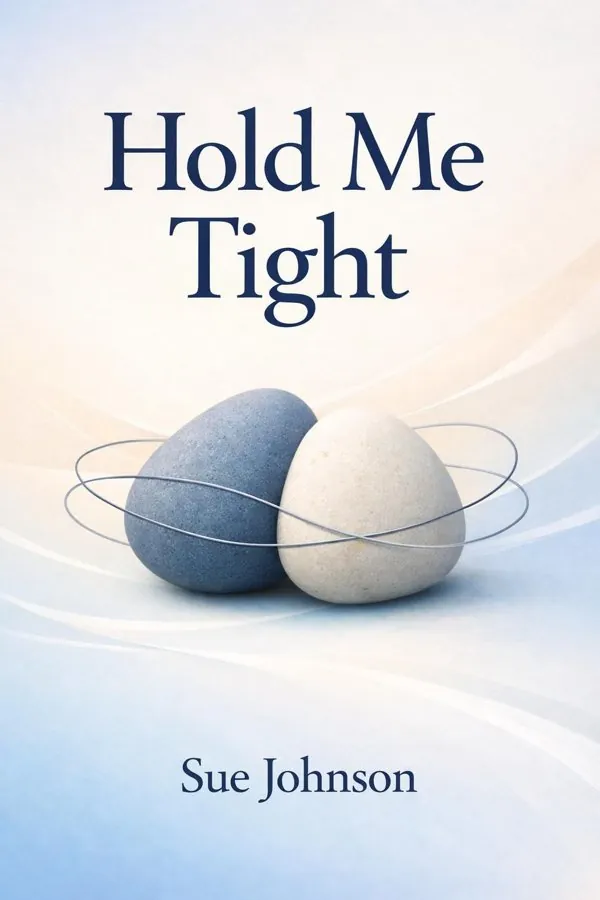
Hold Me Tight
In-Depth Analysis
At first glance, "She Comes First" and "Hold Me Tight" appear to belong to the same broad category because both are labeled "relationships." But based on the material provided, this comparison is actually between H. Rider Haggard’s 1887 novel "She" and Sue Johnson’s modern attachment-based relationship guide "Hold Me Tight." That mismatch is not a trivial cataloging error; it changes the comparison completely. One book is a classic adventure romance about obsession, immortality, and destructive idealization. The other is a clinically oriented manual for repairing adult emotional bonds. Comparing them in depth reveals two radically different ways books can address love: one through myth and narrative, the other through psychological explanation and guided practice.
The most important difference lies in purpose. "She" is not trying to improve the reader’s relationship skills. Its opening image of a sealed inheritance and the "promise of the iron box" establishes a narrative of fate and buried history, not practical advice. Horace Holly begins as a skeptical scholar, grounded in evidence, but the novel steadily pushes him into a world where rational explanation cannot fully contain what he witnesses. By the time the travelers move through danger into Kôr, the journey becomes symbolic: civilization, certainty, and ordinary identity are stripped away. Love in this world is not safe attachment; it is an overwhelming force tied to possession, memory across centuries, and a fantasy of transcending death.
"Hold Me Tight," by contrast, demystifies love in order to make it repairable. Johnson’s central move is to reframe romantic conflict through attachment theory. Instead of seeing repeated fights as signs of incompatibility or moral failure, she treats them as protests against disconnection. Her concept of the "Demon Dialogues" is especially useful because it names the repetitive cycles couples fall into: attack/defend, pursue/withdraw, freeze/flee. This is almost the opposite of Haggard’s approach. In "She," desire intensifies mystery. In Johnson, understanding patterns reduces chaos.
Their treatment of power also differs sharply. In "She," Ayesha is the magnetic center of the novel because she fuses erotic power, political power, and supernatural power. Her beauty is not merely attractive; it destabilizes judgment. Haggard makes her both majestic and terrifying, and her own story about survival across centuries deepens the tragedy. She is morally compromised not because the novel gives a neat lesson, but because immortality has warped love into fixation. The final exposure of "immortality’s price" is crucial: the fantasy of permanent beauty and invulnerability cannot hold. What looked like transcendence collapses into horror. In that sense, the novel critiques idealization itself.
Johnson’s view of power is subtler and more therapeutic. She is less interested in dominance than in emotional leverage created by insecurity. A partner who criticizes relentlessly may look controlling, but in EFT terms that person is often protesting abandonment. A withdrawing partner may seem cold, but is often overwhelmed and protecting against failure or shame. Johnson’s great strength is that she teaches readers to decode behavior beneath the behavior. Where Haggard dramatizes what happens when love merges with mythic domination, Johnson asks what happens when fear silently governs ordinary exchanges in kitchens, bedrooms, and living rooms.
Stylistically, the books almost reverse each other’s strengths. "She" gains force through atmosphere, suspense, and symbolic excess. The settings, revelations, and narrative frame create a sense of uncanny inevitability. Ayesha’s presence works because the prose builds her as an event before she fully becomes a person. This produces immense emotional and imaginative power, but not clarity. Readers must infer the meaning of the novel from tensions within it: reason versus wonder, devotion versus enslavement, beauty versus decay.
"Hold Me Tight" sacrifices that kind of ambiguity for usability. Johnson repeats core principles intentionally so readers can apply them under stress. The chapters on recognizing the Demon Dialogues, finding raw spots, and revisiting a rocky moment are designed to move from insight to action. If a couple recognizes that one partner’s anger masks fear of not mattering, while the other’s silence masks fear of failing and being attacked, the emotional system changes. This is not as aesthetically rich as Haggard’s storytelling, but it is far more immediately useful.
In terms of emotional impact, both books can be powerful, but they move in different directions. "She" produces fascination, dread, and tragic awe. Its emotional logic is operatic: ancient vows, forbidden desire, catastrophic reversal. It lingers because it taps into fears and fantasies larger than everyday life. "Hold Me Tight" works through recognition. Its strongest moments occur when readers see themselves in the pattern Johnson describes and realize the enemy is not the partner but the cycle. That shift can feel transformative because it turns blame into shared vulnerability.
For modern readers seeking relationship help, "Hold Me Tight" is clearly the more actionable and empirically grounded choice. Its claims are tied to attachment science and a defined therapeutic model. Yet "She" should not be dismissed simply because it is not practical. It offers a different kind of truth: love can become entangled with projection, grief, entitlement, and the wish to conquer time. Ayesha embodies the danger of being loved as an idea rather than encountered as a human being. Johnson would likely say that secure love depends on responsiveness and emotional safety; Haggard shows what happens when love becomes worship, obsession, and power.
Ultimately, these books do not compete so much as reveal different vocabularies for intimate life. "Hold Me Tight" explains how bonds break and how they can heal. "She" imagines what happens when longing escapes the human scale altogether. One belongs beside therapy, the other beside literary analysis. If readers understand that distinction, both books can be valuable—but for profoundly different reasons.
Side-by-Side Comparison
| Aspect | She Comes First | Hold Me Tight |
|---|---|---|
| Core Philosophy | Despite the title metadata, the provided content describes H. Rider Haggard’s "She," not Ian Kerner’s sexual relationships guide. Its core philosophy is literary rather than therapeutic: desire, power, destiny, and immortality are seductive but corrosive forces that expose human fragility. | "Hold Me Tight" argues that adult love is fundamentally an attachment bond. Sue Johnson’s central claim is that relationship distress is less about surface conflict and more about threatened emotional connection, which can be repaired through structured conversations. |
| Writing Style | "She" uses ornate Victorian prose, a framed narrative, expedition structure, and dramatic revelation. Its style is atmospheric and symbolic, moving from the rational puzzle of the iron box to the uncanny grandeur of Kôr and the theatrical presence of Ayesha. | Johnson writes in a clear, explanatory, clinician-teacher voice. She combines accessible psychology, case studies, and step-by-step guidance, aiming for emotional clarity rather than literary mystery. |
| Practical Application | "She" offers no direct relationship methodology; any lessons are interpretive, such as how obsession distorts love or how idealization becomes dangerous. Readers must extract meaning indirectly from plot, character, and theme. | "Hold Me Tight" is explicitly practical, built around seven conversations couples can use to identify patterns, express vulnerability, and rebuild security. Its purpose is intervention, not reflection alone. |
| Target Audience | This book suits readers interested in classic adventure fiction, imperial romance, and the psychology of obsession. It is best for literary readers willing to engage with dated sensibilities and symbolic storytelling. | This book is aimed at couples, therapists, and general readers seeking relationship repair tools. It especially fits readers who want a research-informed framework without having to read academic psychology. |
| Scientific Rigor | "She" has none in the modern self-help sense; its value lies in cultural and literary insight. Holly’s rationalism is part of the story, but the novel ultimately stages a mythic confrontation with the limits of reason. | "Hold Me Tight" is grounded in attachment theory and Emotionally Focused Therapy, both tied to clinical research. While it simplifies for broad readers, it still rests on a more evidence-based foundation than most relationship guides. |
| Emotional Impact | The emotional effect comes from awe, dread, fascination, and tragic inevitability. Ayesha’s longing, Leo’s entanglement, and the collapse of immortal fantasy give the book a haunting intensity rather than a healing tone. | Johnson aims for recognition and relief: readers often feel seen when she names recurring conflict cycles like the 'Demon Dialogues.' The emotional arc is toward hope, safety, and reconnection. |
| Actionability | Actionability is low because the book is not prescriptive. Its insights are metaphorical, useful for discussion about love, control, projection, and fear, but not as concrete behavioral guidance. | Actionability is high because each major section pushes readers toward identifiable emotional tasks. Concepts like recognizing protest behavior, finding 'raw spots,' and revisiting painful moments can be implemented in real conversations. |
| Depth of Analysis | "She" invites deep analysis through layered themes: colonial encounter, gendered power, fatal beauty, and the fantasy of conquering death. Much of its richness lies in ambiguity, especially in how Ayesha is both victim and tyrant. | "Hold Me Tight" offers depth of analysis in a psychological sense, tracing how attachment panic fuels criticism, withdrawal, and escalation. Its analysis is narrower than a novel’s thematic range but stronger in diagnostic usefulness. |
| Readability | Readability depends on tolerance for nineteenth-century pacing and diction. Some readers will relish the immersive style, while others may find the descriptive passages and imperial-era framing slow or dated. | Johnson is generally easy to read, with straightforward chapter aims and repeated core concepts. The book is more immediately accessible, especially for readers accustomed to contemporary nonfiction. |
| Long-term Value | "She" endures as a foundational text in adventure fiction and as a source for long-term literary reflection. Its ideas keep opening up on reread, especially around obsession, mortality, and fantasy. | "Hold Me Tight" has durable value because couples can revisit its conversations at different stages of a relationship. Its long-term usefulness is practical: it can become a framework for ongoing emotional maintenance. |
Key Differences
Relationship Manual vs Literary Narrative
"Hold Me Tight" is explicitly designed to help couples change how they relate. "She" works through story rather than instruction, using the iron box, the African expedition, and Ayesha’s revelations to dramatize themes rather than teach techniques.
Attachment Repair vs Obsessive Desire
Johnson treats love as a bond that requires emotional accessibility, responsiveness, and engagement. Haggard presents love as potentially obsessive and destabilizing, especially in Ayesha’s centuries-long fixation and the dangerous idealization surrounding her.
Evidence-Based Framework vs Mythic Speculation
"Hold Me Tight" rests on attachment theory and EFT, giving readers concepts like protest, withdrawal, and negative cycles. "She" is driven by atmosphere, ancient mystery, and supernatural possibility, where meaning emerges through symbolism rather than research.
Immediate Usefulness vs Interpretive Value
A couple can read a chapter of "Hold Me Tight" and apply it to a conflict that same day by naming a Demon Dialogue or exploring a raw spot. "She" offers insight more indirectly, for example by prompting reflection on how idealized love can become controlling or destructive.
Contemporary Accessibility vs Victorian Distance
Johnson writes in a modern, plainspoken style with case examples that feel familiar to present-day readers. Haggard’s Victorian prose, imperial setting, and slower descriptive pacing may feel rewarding to some readers but alienating to others.
Healing Arc vs Tragic Arc
"Hold Me Tight" is structured toward reconnection and hope, guiding readers toward safer emotional contact. "She" moves toward revelation and collapse, exposing the instability beneath fantasies of beauty, destiny, and immortality.
Everyday Conflict vs Extreme Symbolic Stakes
Johnson focuses on common relational problems such as feeling abandoned, criticized, unseen, or emotionally shut out. Haggard raises the stakes to the mythic level: lost civilizations, immortal rulers, prophetic longing, and bodily transformation become vehicles for exploring love and power.
Who Should Read Which?
A couple stuck in repeating arguments and emotional disconnection
→ Hold Me Tight
This reader needs practical language and guided interventions, not metaphor. Johnson’s model helps couples identify destructive cycles, uncover vulnerable feelings underneath anger or withdrawal, and create more secure conversations.
A literary reader interested in obsession, beauty, and the darker fantasies of love
→ She Comes First
Given the supplied content, this means Haggard’s "She," which is far richer for symbolic and historical analysis. Ayesha, Kôr, and the Flame of Life offer a compelling study of desire fused with power, myth, and decay.
A therapist, counselor-in-training, or psychology-minded reader seeking a conceptual framework
→ Hold Me Tight
Johnson provides a clinically influential model grounded in attachment theory and EFT. Even when simplified for general audiences, the book remains highly useful for understanding how emotional bonding shapes conflict and repair.
Which Should You Read First?
Read "Hold Me Tight" first if your primary interest is relationships in the practical sense. It gives you an immediately useful framework for understanding why couples get stuck, how emotional injuries shape reactions, and what a repair conversation actually sounds like. Starting there helps ground your thinking in real-world dynamics rather than abstract ideas about romance. Read "She" afterward if you are interested in how literature enlarges relationship themes into myth, obsession, and tragedy. Once you understand Johnson’s language of attachment, "She" becomes even more interesting: you can see how the novel magnifies insecure longing into domination, fantasy, and catastrophic idealization. In other words, Johnson gives you the diagnostic vocabulary; Haggard gives you the symbolic nightmare version of love unmoored from security and mutuality. The only reason to reverse the order is if you are taking a literature-first approach and want to analyze representations of desire before moving into psychology. For most readers, though, "Hold Me Tight" first and "She" second is the clearest and most rewarding path.
Want the full summary?
Get instant access to this book summary and 100K+ more with Fizz Moment.
Get Free SummaryAvailable on App Store • Free to download
Frequently Asked Questions
Is She Comes First better than Hold Me Tight for beginners?
If by "She Comes First" you mean the provided content, then no: the material describes H. Rider Haggard’s "She," which is not a beginner-friendly relationship book at all. It is a Victorian adventure novel about obsession, fate, and immortality. For beginners looking for clear relationship guidance, "Hold Me Tight" is much better because it explains attachment needs in accessible language and offers concrete conversations couples can try. Beginners usually need a framework they can apply immediately, and Sue Johnson provides that. "She" may still be rewarding for literary readers, but it is not an introductory guide to understanding or improving romantic relationships.
How does Hold Me Tight compare to She Comes First if I want practical relationship advice?
"Hold Me Tight" is overwhelmingly the stronger choice for practical relationship advice. Sue Johnson gives couples a map: identify the negative cycle, understand the attachment fears underneath it, and engage in structured conversations that create safety and responsiveness. The provided "She Comes First" content is actually about Haggard’s "She," which offers no step-by-step guidance. Its relationship insights are indirect and thematic, such as the danger of idealization or the destructiveness of possessive longing. If your goal is to communicate better with a partner, repair trust, or stop repeating the same fights, "Hold Me Tight" is designed for exactly that purpose.
Is Hold Me Tight more evidence-based than She Comes First?
Yes, very clearly. "Hold Me Tight" is based on Emotionally Focused Therapy and attachment theory, drawing from decades of research on bonding, emotional regulation, and couple dynamics. Its arguments are meant to be clinically useful and empirically informed. The provided "She Comes First" entry, however, corresponds to "She," a nineteenth-century literary work. That book’s value is artistic and interpretive, not scientific. Even though Horace Holly begins as a rational scholar, the novel ultimately explores the limits of reason through mythic and supernatural material. So if evidence-based relationship guidance matters most to you, "Hold Me Tight" is in a different category entirely.
Which book has more emotional depth: She Comes First or Hold Me Tight?
They offer different kinds of emotional depth. "She" has dramatic, symbolic, and tragic depth. Ayesha’s centuries-long longing, her terrifying beauty, and the novel’s final reversal create an atmosphere of awe and doom that can feel emotionally immense. "Hold Me Tight" has relational and psychological depth. Johnson examines why partners trigger one another, how vulnerability hides beneath anger or withdrawal, and why emotional accessibility matters so much. If you mean literary intensity, "She" may feel deeper. If you mean insight into real-life couple distress and healing, "Hold Me Tight" is deeper in the more practical and personal sense.
Should couples read Hold Me Tight or She Comes First together?
Most couples should read "Hold Me Tight" together first, because it gives them a shared language for discussing conflict and connection. Its sections on the "Demon Dialogues," raw spots, and revisiting painful moments are especially useful when both partners are willing to pause blame and explore underlying needs. Reading "She" together could still be interesting, but for a different reason: it may spark discussion about obsession, idealization, power, and the fantasies people project onto love. As a couples-growth tool, though, "Hold Me Tight" is far more effective. "She" works better as a literary conversation starter than as a relationship workbook.
What are the biggest differences between She Comes First and Hold Me Tight in themes and usefulness?
The biggest difference is that one is a novel of mythic obsession and the other is a therapeutic framework for secure bonding. "She" explores beauty, power, colonial adventure, ancient memory, and the catastrophic lure of immortality; its usefulness is interpretive, helping readers think about desire and idealization. "Hold Me Tight" focuses on attachment, emotional responsiveness, recurring conflict cycles, and repair; its usefulness is direct and behavioral. In short, "She" asks readers to contemplate love’s dangerous fantasies, while "Hold Me Tight" teaches readers how to make love safer, clearer, and more resilient in everyday life.
The Verdict
If your goal is to improve a romantic relationship, "Hold Me Tight" is the clear recommendation. Sue Johnson offers a coherent, research-based model rooted in attachment theory, and she translates that model into recognizable patterns and actionable conversations. Readers who feel trapped in recurring cycles of criticism, withdrawal, defensiveness, or loneliness will find not just insight but a method. The book is especially strong because it reframes conflict without flattening it: beneath anger, it finds fear; beneath distance, it finds longing. The provided "She Comes First" material, however, is actually H. Rider Haggard’s "She," and it should be approached on entirely different terms. As literature, it is rich, influential, and memorable. Its strongest qualities are atmosphere, symbolic force, and its haunting treatment of obsession, beauty, and immortality. Ayesha is one of those larger-than-life figures who can sustain serious analysis long after the plot ends. But this is not a practical relationships book, and readers seeking guidance will likely be frustrated if they expect one. So the final recommendation depends on intent. Choose "Hold Me Tight" for healing, communication, and emotional skill-building. Choose "She" for literary depth, psychological fascination, and a dramatic exploration of love distorted by power and fantasy. If you want usefulness, Johnson wins decisively. If you want imaginative and thematic intensity, Haggard remains compelling.
Want to read both books?
Get AI-powered summaries of both She Comes First and Hold Me Tight in just 20 minutes total.