
Hold Me Tight vs Mating in Captivity: Which Should You Read?
A detailed comparison of Hold Me Tight by Sue Johnson and Mating in Captivity by Esther Perel. Discover the key differences, strengths, and which book is right for you.
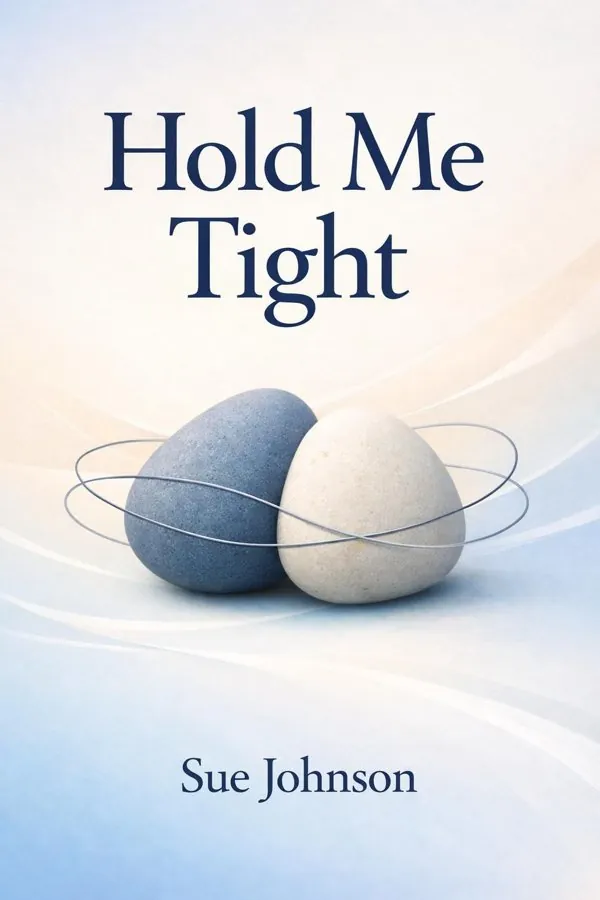
Hold Me Tight
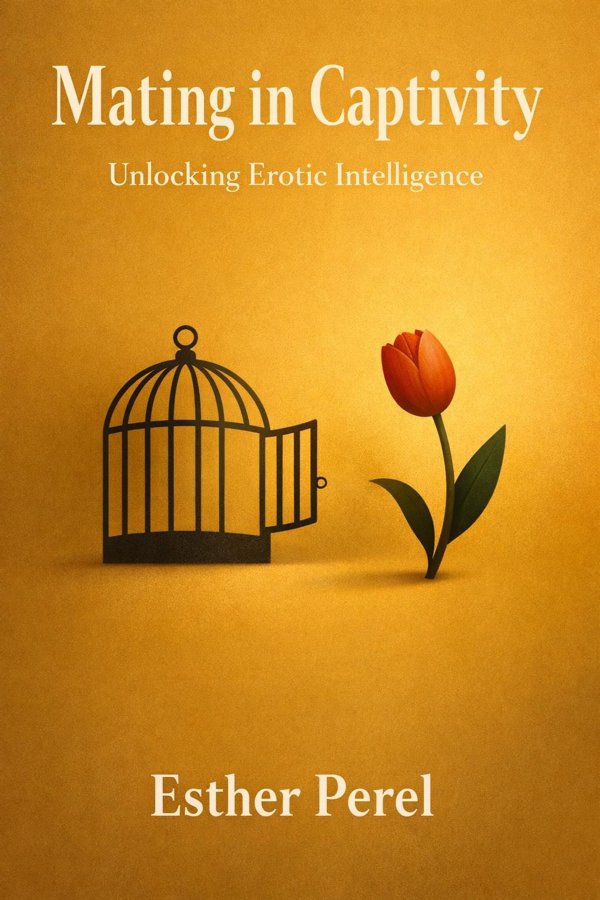
Mating in Captivity
In-Depth Analysis
Sue Johnson’s Hold Me Tight and Esther Perel’s Mating in Captivity are two of the most influential modern relationship books, but they are trying to solve different problems. Johnson asks, 'How do couples create emotional safety and repair disconnection?' Perel asks, 'How do couples sustain erotic energy once safety and familiarity are established?' Put simply, Johnson is the stronger guide to attachment; Perel is the sharper guide to desire. Read together, they reveal that a thriving long-term relationship needs both secure bonding and enough psychological space for attraction to remain alive.
Hold Me Tight is built on a clear therapeutic architecture: Emotionally Focused Therapy. Johnson’s core claim is that adult romantic love is rooted in attachment needs, much like the infant-caregiver bond described by John Bowlby. That does not mean adult love is childish; it means humans remain wired to seek emotional accessibility, responsiveness, and engagement. When those needs are threatened, couples do not merely 'argue about chores' or 'fight about tone.' They enter panic-driven protective patterns. Johnson’s most memorable contribution is naming these patterns the 'Demon Dialogues'—repetitive cycles in which one partner pursues, criticizes, or protests while the other withdraws, shuts down, or defends. By externalizing the cycle, she shifts the frame from 'my partner is the enemy' to 'our pattern is the enemy.'
That reframing is clinically powerful because it reduces shame and blame. A couple who thinks, 'She nags because she is controlling' or 'He withdraws because he doesn’t care' tends to become more entrenched. Johnson instead uncovers what she calls 'raw spots'—deeper vulnerabilities beneath the visible fight. A critical protest may conceal fear of abandonment; emotional numbing may conceal fear of failure or rejection. The sequence of conversations in Hold Me Tight invites partners to revisit painful moments and express these underlying fears directly. In that sense, the book is not merely descriptive. It is procedural. It gives couples a map.
Perel’s Mating in Captivity is less procedural but more conceptually disruptive. Rather than focusing on emotional injury and repair, Perel examines a different tension: love seeks closeness, predictability, and safety, while desire often feeds on novelty, uncertainty, and distance. Her central paradox is that the ingredients that make a relationship secure are not always the ingredients that make it erotic. Modern couples, she argues, often expect one relationship to provide everything—best friendship, emotional transparency, co-parenting, domestic partnership, and ongoing sexual excitement. Perel questions whether total intimacy actually serves desire. If we know everything, share everything, and eliminate all distance, we may create trust while draining the mystery that eroticism needs.
This is where the two books diverge most sharply. Johnson treats distance primarily as danger: emotional unavailability triggers attachment alarm. Perel treats too little distance as a possible erotic problem: over-familiarity can flatten attraction. Johnson wants to help couples say, in effect, 'Can I reach you? Will you be there for me?' Perel wants couples to ask, 'Can I still see you as separate, alive, and slightly unknowable?' Neither question cancels the other, but they operate in different emotional registers.
Their different assumptions shape their tone. Hold Me Tight is compassionate, stabilizing, and often comforting. It tells struggling couples that conflict may be a distorted bid for connection, not proof that the relationship is doomed. Mating in Captivity is more provocative. It asks readers to relinquish cherished ideals, especially the modern belief that emotional fusion naturally intensifies sex. Perel is willing to say things many relationship experts soften: caretaking can desexualize, constant closeness can inhibit longing, and domestic efficiency can coexist with erotic deadness.
In practical terms, Hold Me Tight is more useful for couples in acute distress. If partners are trapped in recurring escalations, feel chronically unseen, or are recovering from emotional rupture, Johnson provides better tools. Her method is especially valuable because it transforms reactive fights into conversations about fear, need, and reassurance. A couple repeatedly clashing over lateness, criticism, or withdrawal can often recognize themselves in the pursue-withdraw pattern and begin to interrupt it.
Mating in Captivity is more useful for couples whose bond is stable enough that the problem is not whether they love each other, but whether they still desire each other. Perel shines when discussing how domestic roles, gender expectations, and routines influence erotic imagination. She is especially helpful for readers who feel guilty or confused about diminished passion despite mutual affection. Rather than interpreting that decline as failure, she frames it as a structural tension in long-term love.
On evidence, Johnson has the stronger claim to scientific rigor because EFT is a named, researched therapeutic model linked to attachment science. Perel’s authority comes more from clinical sophistication and cultural insight than from formal treatment protocols. That does not make her ideas weaker, but it does make them different in kind. Johnson says, in effect, 'Here is a tested relational method.' Perel says, 'Here is a psychologically honest way to think about desire.'
The deepest insight from comparing them is that many couples need both books, but not for the same reason or at the same time. Security without desire can become loving stagnation. Desire without security can become unstable or avoidant intensity. Johnson teaches couples how to build a safe emotional home. Perel asks whether, once home is built, the relationship still contains enough freedom, imagination, and individuality to remain erotic. Together, they map two essential dimensions of lasting partnership: the need to be held and the need to remain capable of wanting.
Side-by-Side Comparison
| Aspect | Hold Me Tight | Mating in Captivity |
|---|---|---|
| Core Philosophy | Hold Me Tight argues that romantic distress is fundamentally an attachment problem. Sue Johnson frames love as an emotional bond shaped by safety, responsiveness, and accessibility, and her seven conversations are designed to repair ruptures in that bond. | Mating in Captivity centers on the tension between security and desire. Esther Perel argues that the very closeness that strengthens attachment can also weaken erotic charge, so couples must learn to preserve mystery, separateness, and imagination. |
| Writing Style | Johnson writes like a clinician-teacher: structured, reassuring, and explicitly therapeutic. The prose is accessible and warm, with concepts explained through recurring relationship patterns such as the 'Demon Dialogues.' | Perel writes in a more provocative, essayistic voice. Her style is elegant, psychologically rich, and often counterintuitive, inviting readers to rethink assumptions about intimacy, domesticity, and sexuality. |
| Practical Application | Hold Me Tight is highly practical because it translates EFT into seven guided conversations couples can actually try. Chapters like 'Recognizing the Demon Dialogues' and 'Finding the Raw Spots' give readers a repeatable framework for conflict repair. | Mating in Captivity offers practical insight, but less in workbook form. Its usefulness lies in reframing problems—such as why full transparency can flatten eroticism—rather than prescribing a tightly sequenced intervention. |
| Target Audience | This book is ideal for couples in distress, readers who want a therapy-informed roadmap, and those who value emotional security over abstract theory. It especially suits partners stuck in recurring conflict cycles who need language for unmet attachment needs. | This book fits readers who feel emotionally connected yet sexually dulled, as well as therapists and intellectually curious readers interested in modern erotic life. It is especially relevant for long-term couples grappling with routine, predictability, or desire discrepancies. |
| Scientific Rigor | Johnson leans heavily on attachment theory and the evidence base behind Emotionally Focused Therapy. The book presents itself as grounded in research and clinical outcomes, giving it a more formal therapeutic backbone. | Perel draws primarily from clinical observation, cultural analysis, and psychological interpretation. While insightful and influential, the book feels less like a research manual and more like a sophisticated therapeutic meditation on desire. |
| Emotional Impact | Hold Me Tight tends to be emotionally disarming because it recasts blame as protest against disconnection. Many readers feel relief when conflict is reframed not as incompatibility but as fear of abandonment or emotional unavailability. | Mating in Captivity often has a liberating but unsettling emotional impact. It can validate couples who love each other yet feel sexually flat, while also challenging cherished beliefs that more closeness always improves a relationship. |
| Actionability | The action steps are explicit: identify negative cycles, locate 'raw spots,' revisit painful moments, and create new bonding conversations. Readers can directly translate the material into discussions with a partner or use it alongside couples therapy. | The actionability is more conceptual than procedural. Perel gives readers new lenses—distance, autonomy, fantasy, play—but leaves more interpretive work to the couple to decide how those ideas should look in real life. |
| Depth of Analysis | Johnson goes deep on emotional bonding, conflict escalation, and the mechanics of relational repair. Her analysis is strongest when explaining why couples attack, withdraw, or panic when attachment needs feel threatened. | Perel goes deeper on erotic psychology than most mainstream relationship books. She examines how domestic routines, cultural expectations, over-familiarity, and the demand for emotional fusion can suppress desire even in loving partnerships. |
| Readability | The book is highly readable because its concepts are repetitive in a helpful way and organized around a clear sequence. Readers who want straightforward therapeutic language will likely find it easier to absorb. | Mating in Captivity is readable but denser in idea per page. Its more reflective, paradox-driven style may feel exhilarating to some readers and less immediately digestible to those seeking a simple step-by-step guide. |
| Long-term Value | Hold Me Tight has strong long-term value as a reference for conflict repair and emotional reconnection. Couples can return to its seven conversations repeatedly during different stages of strain or transition. | Mating in Captivity has lasting value as a lens on sustaining erotic aliveness over years. Its ideas often become more relevant as relationships grow more stable, domestic, and predictable. |
Key Differences
Attachment vs. Eroticism
Hold Me Tight is fundamentally about attachment security: feeling emotionally held, seen, and responded to. Mating in Captivity is fundamentally about erotic vitality: how desire depends not only on closeness but also on distance, individuality, and imagination.
Structured Method vs. Conceptual Reframing
Johnson gives readers a defined pathway through seven conversations, including recognizing conflict cycles and revisiting painful moments. Perel offers fewer stepwise exercises and instead changes how readers interpret intimacy, routine, and sexual boredom.
Conflict Repair vs. Desire Renewal
If a couple keeps escalating into criticism and withdrawal, Hold Me Tight speaks directly to that pattern. If a couple functions well as partners and parents but feels sexually flat, Mating in Captivity is much more on target.
Research-Based Therapy vs. Clinical-Cultural Insight
Hold Me Tight is anchored in Emotionally Focused Therapy and attachment theory, giving it a more formal evidence-based identity. Mating in Captivity relies more on Perel’s therapeutic experience and cultural analysis of modern expectations around sex and intimacy.
Comforting Tone vs. Provocative Tone
Johnson often reassures readers that painful conflict masks a longing for connection, which can feel healing and hopeful. Perel is more likely to unsettle readers by arguing that too much transparency, caretaking, or closeness can actually reduce desire.
Emotional Accessibility vs. Productive Separateness
In Hold Me Tight, the central question is whether partners can emotionally reach one another during distress. In Mating in Captivity, the key question is whether partners can remain distinct enough to continue seeing each other as desirable rather than merely familiar.
Immediate Repair Tools vs. Long-View Insight
Johnson’s book is more immediately useful in a difficult week because couples can identify their negative cycle and begin a new conversation right away. Perel’s value often unfolds over time as readers reflect on domestic life, fantasy, routine, and how long-term love changes the meaning of intimacy.
Who Should Read Which?
The distressed couple caught in the same fight every week
→ Hold Me Tight
This reader needs a map for conflict patterns, not just insight into attraction. Johnson’s explanation of 'Demon Dialogues,' emotional triggers, and attachment injuries offers immediate help for breaking repetitive cycles and creating safer conversations.
The long-term partner in a loving but sexually stale relationship
→ Mating in Captivity
This reader is less in need of conflict repair and more in need of a new framework for desire. Perel’s analysis of domesticity, over-familiarity, and the role of distance in erotic life is precisely aimed at this dilemma.
The intellectually curious reader or therapist wanting a broader theory of modern relationships
→ Mating in Captivity
While Hold Me Tight is more methodical, Perel offers a wider cultural and philosophical analysis of intimacy, freedom, and eroticism. Readers who enjoy tension, paradox, and rethinking social norms will likely find her more stimulating, even if Johnson remains more directly actionable.
Which Should You Read First?
For most readers, Hold Me Tight should come first. Sue Johnson gives you the emotional foundation that makes the rest of the relationship intelligible: why fights escalate, why withdrawal hurts so much, and how attachment needs drive conflict beneath the surface. If a couple is stuck in blame, criticism, shutdown, or mutual defensiveness, Johnson provides the vocabulary and structure needed to stabilize the bond. Without that base, Esther Perel’s insights can be misunderstood or applied too early. Read Mating in Captivity second, especially once the relationship feels basically safe. Perel’s book is most valuable when you can look beyond simple repair and ask a subtler question: how do we remain erotically alive inside commitment, routine, and closeness? In sequence, the books form a powerful progression. First, create security and emotional responsiveness. Then, examine how too much predictability or fusion might dampen desire. Johnson helps you reconnect; Perel helps you avoid mistaking reconnection for the complete solution to intimacy.
Want the full summary?
Get instant access to this book summary and 100K+ more with Fizz Moment.
Get Free SummaryAvailable on App Store • Free to download
Frequently Asked Questions
Is Hold Me Tight better than Mating in Captivity for beginners?
For most beginners, yes. Hold Me Tight is usually easier to start with because Sue Johnson offers a clear framework, defines recurring conflict patterns like the 'Demon Dialogues,' and walks couples through structured conversations. It is especially useful if you are new to relationship psychology and want concrete language for arguments, withdrawal, or emotional disconnection. Mating in Captivity is brilliant, but it is more paradoxical and less step-by-step. Beginners looking for immediate tools often benefit more from Johnson first, while Perel tends to resonate more once readers already understand the basics of emotional bonding and want to explore the harder question of sustaining desire.
Which book is better for married couples who love each other but have lost sexual chemistry?
Mating in Captivity is the stronger choice for that specific issue. Esther Perel directly addresses the common situation in which commitment, affection, and domestic partnership remain intact while erotic energy fades. Her analysis of how routine, over-familiarity, caretaking, and constant emotional transparency can suppress desire is more targeted than Johnson’s attachment framework. That said, if the sexual problem is partly driven by resentment, repeated conflict, or emotional insecurity, Hold Me Tight may still be a necessary foundation. In many marriages, erotic flatness is not purely sexual; it is intertwined with unhealed disconnection. So Perel is usually the better lead book, but Johnson may still be an important companion.
Should I read Hold Me Tight or Mating in Captivity first if my relationship has constant arguments?
Read Hold Me Tight first. Constant arguments usually signal a distressed interaction cycle, and Johnson is much more explicit about how to identify and interrupt those loops. Her concepts of attachment injury, protest, withdrawal, and 'raw spots' give couples a practical way to understand why the same fight keeps repeating under different topics. Mating in Captivity is valuable, but it assumes a bit more stability and reflection. If your relationship currently feels unsafe, volatile, or emotionally inaccessible, starting with Perel can be premature because erotic exploration rarely succeeds when basic trust and responsiveness are missing. Build emotional security first, then examine the role of mystery and desire.
Is Mating in Captivity too abstract compared with Hold Me Tight?
Compared with Hold Me Tight, yes, it is more abstract—but not in a useless way. Johnson writes like a therapist offering a treatment pathway, whereas Perel writes like a clinician-philosopher exploring a modern relational dilemma. You may not get a seven-step intervention from Mating in Captivity, but you do get a sharper conceptual vocabulary for understanding why intimacy and desire do not always rise together. For some readers, that reframing is transformative. For others, especially those wanting scripts or guided conversations, it may feel less immediately actionable. The difference is not depth versus shallowness; it is structured method versus interpretive insight.
Which book is more evidence-based: Hold Me Tight or Mating in Captivity?
Hold Me Tight is more clearly evidence-based in the conventional therapeutic sense. Sue Johnson grounds the book in attachment theory and Emotionally Focused Therapy, a recognized couples therapy model with research behind it. The book presents a formal framework for understanding distress and fostering reconnection. Mating in Captivity relies more on Esther Perel’s clinical practice, cultural observation, and psychological synthesis. Its arguments can feel profoundly true and are widely influential, but they are not packaged as a manual derived from a single empirically defined treatment model. If scientific grounding is your priority, Johnson has the stronger advantage.
Can Hold Me Tight and Mating in Captivity be read together for a complete relationship approach?
Absolutely, and they complement each other unusually well. Hold Me Tight helps couples create emotional safety by identifying negative cycles and expressing vulnerable needs more directly. Mating in Captivity then complicates the picture in a productive way by showing that safety alone does not guarantee erotic vitality. Together, the books address two dimensions many couples confuse: attachment and desire. One teaches how to become emotionally reachable; the other teaches why too much predictability can weaken attraction. Read together, they prevent one-sided thinking: Johnson protects against relational instability, and Perel protects against the idea that emotional closeness automatically solves every intimate problem.
The Verdict
If you want the more universally useful relationship book, Hold Me Tight is the stronger recommendation. Sue Johnson offers a clearer method, firmer scientific grounding, and more direct help for the problem most couples actually feel first: painful conflict, disconnection, and the sense that every conversation turns into the same fight. Her concepts of attachment needs, 'Demon Dialogues,' and vulnerable repair give readers an immediate framework they can apply. But if your relationship is fundamentally loving and stable, and the real issue is erotic dullness rather than emotional chaos, Mating in Captivity may be the more illuminating book. Esther Perel names a problem many couples struggle to admit: security and desire do not naturally reinforce each other. Her treatment of mystery, distance, and erotic imagination is more original and more challenging than Johnson’s. So the verdict depends less on which book is 'better' than on which problem you need solved. For repairing the bond, choose Hold Me Tight. For understanding why the spark fades inside a good relationship, choose Mating in Captivity. For the most complete education in long-term love, read both: Johnson first for emotional safety, Perel second for erotic complexity. One teaches you how to stay connected; the other teaches you how not to let connection become over-familiarity.
Want to read both books?
Get AI-powered summaries of both Hold Me Tight and Mating in Captivity in just 20 minutes total.