
No More Mr Nice Guy vs Hold Me Tight: Which Should You Read?
A detailed comparison of No More Mr Nice Guy by Robert Glover and Hold Me Tight by Sue Johnson. Discover the key differences, strengths, and which book is right for you.

No More Mr Nice Guy
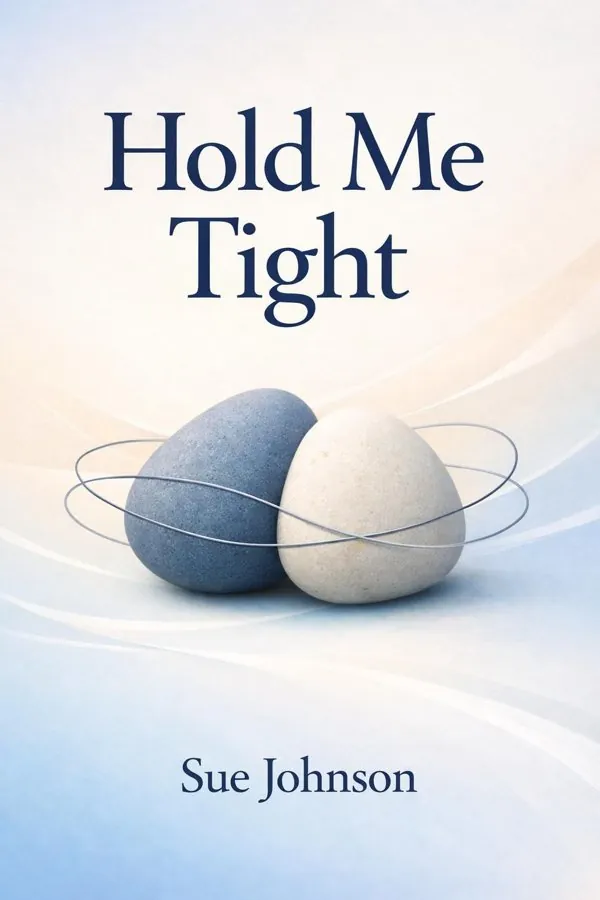
Hold Me Tight
In-Depth Analysis
At first glance, "No More Mr Nice Guy" by Robert Glover and "Hold Me Tight" by Sue Johnson appear to occupy the same broad category: relationship self-help written by therapists. But they are actually solving different relationship problems at different levels. Glover focuses on the individual personality adaptation he calls "Nice Guy Syndrome," while Johnson focuses on the emotional bond between partners and the recurring conflict cycles that threaten it. One book asks, "Why do I keep abandoning myself in relationships?" The other asks, "Why do we keep hurting each other when we’re trying to feel close?"
Glover’s book is built around a psychologically intuitive but behaviorally sharp insight: many men who think of themselves as generous, accommodating, and low-conflict are not actually acting from mature kindness. Instead, they may be driven by anxiety, shame, and a hidden belief that if they are good enough, needed enough, or nonthreatening enough, they will eventually be loved, rewarded, and spared rejection. This is where one of his most memorable ideas—covert contracts—becomes central. The Nice Guy unconsciously believes, "If I do this for you, you should do that for me," but never clearly states the need. The result is resentment, indirectness, and emotional dishonesty. Glover’s great strength is that he exposes how apparently moral behavior can actually be fear-based and manipulative.
Johnson, by contrast, is less interested in individual self-deception than in relational choreography. Her concept of the "Demon Dialogues" shifts attention from who is wrong to what pattern has taken over the couple. Instead of seeing one partner as needy and the other as cold, or one as critical and the other as avoidant, she asks readers to notice the cycle itself: protest, withdrawal, escalation, shutdown. This is a major conceptual difference. Glover tends to say, in effect, "You must stop performing for love and state your needs clearly." Johnson says, "You are both caught in a cycle driven by attachment alarm, and you need to hear the fear beneath the attack or withdrawal." Her frame is less accusatory and more systemic.
That difference shapes each book’s emotional tone. "No More Mr Nice Guy" often lands like an intervention. Its best moments are uncomfortable because they puncture flattering self-images. A reader may suddenly recognize that avoiding conflict is not peacekeeping but self-erasure, or that giving without asking is not generosity but a strategy to secure approval. This can be transformative, especially for men who have long mistaken compliance for virtue. But the same confrontational clarity can also feel reductive if a reader’s problems are more mutual and attachment-based than identity-based.
"Hold Me Tight" creates transformation through emotional reframing rather than confrontation. Johnson’s discussion of adult attachment—how partners seek safe emotional connection much as children seek secure caregiving—helps readers reinterpret fights about sex, chores, distance, or criticism as struggles over responsiveness. Her conversations such as "Recognizing the Demon Dialogues" and "Finding the Raw Spots" give couples a language for what otherwise feels chaotic. For example, a recurring argument about one partner coming home late may not really be about punctuality; it may activate a raw spot of abandonment in one partner and a raw spot of failure or engulfment in the other. Johnson is excellent at tracing that hidden emotional logic.
In terms of practical use, Glover is more immediately actionable for solo readers. A person can read one chapter and start doing things differently that day: tell the truth instead of giving half-truths, say no without elaborate justification, ask directly for what you want, stop using care-taking to gain control, and cultivate same-sex support instead of trying to get all validation from a partner. His advice is concrete, habit-oriented, and often disruptive in a productive way.
Johnson’s methods are practical too, but more dependent on mutual engagement. A couple can certainly use her seven conversations as a roadmap, but the process works best when both partners are willing to become emotionally curious rather than defensive. This makes "Hold Me Tight" exceptionally valuable for couples already committed to repair, but somewhat less useful if one partner refuses vulnerability or mocks emotional language. In that sense, Glover’s book is more individually executable, while Johnson’s is more jointly transformative.
The books also differ in intellectual grounding. Johnson’s work is more clearly tied to established theory and research, especially attachment theory and the evidence base for Emotionally Focused Therapy. Readers who want a framework that feels clinically validated will likely trust her more. Glover relies more on clinical observation and pattern recognition. His insights often ring true in lived experience, but the book is less careful in a research sense and more sweeping in its claims about men, shame, and masculinity.
Ultimately, the books can be complementary. A man trapped in Nice Guy patterns may use Glover to develop boundaries, honesty, and self-definition; without that work, Johnson’s conversations could become another performance of being agreeable without authenticity. Conversely, a reader inspired by Glover’s emphasis on directness may still need Johnson’s attachment lens to understand why honesty alone does not dissolve pain between partners. Glover teaches self-respect; Johnson teaches emotional bonding. Glover helps the over-accommodating individual stop disappearing. Johnson helps two wounded people find each other again.
If forced to choose between them, the decision comes down to the level of the problem. If the crisis is, "I don’t know how to stop people-pleasing and resentment," start with Glover. If the crisis is, "We love each other but keep getting trapped in the same painful fights," start with Johnson. One repairs the self that enters relationships; the other repairs the bond those selves create.
Side-by-Side Comparison
| Aspect | No More Mr Nice Guy | Hold Me Tight |
|---|---|---|
| Core Philosophy | "No More Mr Nice Guy" argues that many men organize their lives around approval-seeking, conflict avoidance, and covert contracts, then suffer because they neglect their own needs. Glover’s core claim is that recovery requires boundaries, honesty, responsibility, and a more integrated sense of masculinity. | "Hold Me Tight" is built on attachment theory and Emotionally Focused Therapy, arguing that relationship distress is less about surface disagreements than about insecure emotional bonding. Johnson’s core philosophy is that couples heal when they identify negative cycles and express vulnerability in ways that create safety and responsiveness. |
| Writing Style | Glover writes in a direct, provocative, workshop-like style aimed at jolting readers into self-recognition. The tone is blunt and personal, using case studies, behavioral descriptions, and exercises to challenge denial. | Johnson writes with a warmer, more therapeutic voice that blends clinical explanation with compassion. Her prose is more relational and emotionally interpretive, often slowing down to unpack what fear, protest, and longing sound like inside a couple’s argument. |
| Practical Application | The book is highly individual in application: readers are asked to identify childhood conditioning, expose hidden motives, stop caretaking compulsions, and practice directness. Its practical focus is personal reform before relational harmony. | Johnson organizes application around seven conversations couples can actually have, such as recognizing "Demon Dialogues," finding "raw spots," and revisiting painful moments safely. Its usefulness is strongest when both partners participate in the process together. |
| Target Audience | Although relevant to anyone who over-accommodates, the book is explicitly written for men who see themselves in the "Nice Guy" pattern: people-pleasing, passive resentment, hidden shame, and difficulty asserting needs. It especially targets readers frustrated by repeated relationship disappointments despite trying hard to be good. | This book is aimed at couples, therapists, and readers interested in understanding love through attachment science. It is especially well suited for partners who keep having the same fight in different forms and want a structured language for repair. |
| Scientific Rigor | Glover draws heavily from clinical experience and recurring behavioral patterns, but the book is less formal in its use of research evidence. Its framework is compelling and recognizable, though sometimes broader and more anecdotal than strictly empirical. | Johnson’s arguments are more explicitly grounded in attachment theory and the research base behind Emotionally Focused Therapy. The book feels more scientifically anchored because it connects practical advice to a well-established therapeutic model. |
| Emotional Impact | For many readers, the emotional impact comes from discomfort and recognition: the realization that being "nice" has often been manipulative, fearful, or self-erasing. It can feel liberating, but also confronting, because it asks readers to examine shame, anger, and dishonesty. | Johnson’s emotional impact is often softer but deeper in a different way, helping partners reinterpret conflict as a protest against disconnection rather than evidence of incompatibility. The book can be profoundly moving because it reframes blame into longing, fear, and the need for reassurance. |
| Actionability | The advice is concrete and behavior-focused: tell the truth, ask clearly for what you want, stop seeking approval, build male support, and set boundaries. Readers can implement changes immediately, even if the interpersonal consequences feel risky. | The action steps are also practical, but they require emotional literacy and relational cooperation. Recognizing negative cycles and holding attachment-focused conversations is powerful, yet harder to execute unilaterally if one partner is resistant or emotionally shut down. |
| Depth of Analysis | Glover goes deep on one specific pattern: how childhood adaptation produces adult people-pleasing, covert expectations, and passive resentment. The analysis is narrower but penetrating within that lane, especially around male identity and relational self-betrayal. | Johnson offers a broader theory of romantic distress by linking adult conflict to attachment insecurity and interactional cycles. Her analysis is deeper at the system level, showing how both partners co-create patterns neither fully intends. |
| Readability | The book is easy to read because it is blunt, repetitive in a useful way, and structured around recognizable behaviors. Even readers with little therapy background can quickly grasp what Glover means by Nice Guy traits. | Johnson is accessible for a therapy-informed book, but some readers may find the attachment terminology and process-oriented explanations more demanding. It reads smoothly, though it asks for more reflection and emotional nuance. |
| Long-term Value | Its long-term value lies in helping readers stop reenacting self-defeating habits across dating, marriage, work, and friendships. Many of its lessons on boundaries and honest self-definition remain relevant long after the first reading. | Its long-term value is especially strong for committed couples because the framework can be revisited whenever disconnection returns. The concepts of attachment needs, raw spots, and recurring negative cycles often become an enduring map for relationship maintenance. |
Key Differences
Individual Pattern vs Couple System
"No More Mr Nice Guy" diagnoses a pattern within the individual: the approval-seeking, conflict-avoiding, covertly resentful Nice Guy. "Hold Me Tight" looks at the couple as a system, showing how both partners co-create cycles like pursue-withdraw or attack-defend.
Boundaries vs Bonding
Glover emphasizes self-definition: saying no, telling the truth, asking directly, and giving up manipulative caretaking. Johnson emphasizes secure bonding: helping partners send and receive emotional signals of need, fear, and reassurance more effectively.
Confrontational Insight vs Compassionate Reframing
Glover often unsettles readers by exposing how "niceness" can be rooted in fear and control. Johnson softens conflict by reframing hostile interactions as attachment protests, helping readers see pain beneath blame.
Solo Usefulness vs Joint Usefulness
"No More Mr Nice Guy" can be implemented by one motivated reader without anyone else’s cooperation; for example, a person can stop half-truths and practice direct requests immediately. "Hold Me Tight" becomes most powerful when both partners engage in the seven conversations and examine their shared cycle together.
Masculinity Frame vs Universal Attachment Frame
Glover’s book explicitly addresses male socialization and the development of a distorted "nice" masculine identity. Johnson’s framework is broader and more universal, applying attachment principles across gender and relationship styles.
Behavioral Correctives vs Emotional Process
Glover tends to prescribe behavioral shifts such as setting boundaries, joining men’s groups, and stopping approval-seeking habits. Johnson focuses more on process: slowing down conflict, naming raw spots, and expressing vulnerable needs during key conversations.
Anecdotal Clinical Lens vs Research-Integrated Model
While both authors draw from therapy, Glover relies more on clinical pattern recognition and real-life examples. Johnson more explicitly integrates theory and evidence, especially attachment science and Emotionally Focused Therapy.
Who Should Read Which?
The people-pleasing man who avoids conflict and feels unappreciated
→ No More Mr Nice Guy
This reader is exactly Glover’s target audience. The book directly addresses covert contracts, hidden resentment, conflict avoidance, and the mistaken belief that being endlessly accommodating will earn love and respect.
The long-term couple stuck in the same arguments about distance, criticism, or emotional shutdown
→ Hold Me Tight
Johnson’s concept of Demon Dialogues and her seven structured conversations are designed for this kind of recurring relational gridlock. The book helps couples understand the fear and longing beneath the repetitive fight instead of just debating the surface issue again.
The therapy-oriented reader who wants both insight and a strong conceptual framework
→ Hold Me Tight
Although both books offer insight, Johnson provides a more research-grounded model through attachment theory and EFT. Readers who value a framework they can revisit, discuss in counseling, and apply systematically will likely find it richer over time.
Which Should You Read First?
If you are choosing a reading order, start by identifying whether your biggest problem is personal authenticity or couple disconnection. Read "No More Mr Nice Guy" first if you struggle to say what you want, avoid conflict, feel secretly resentful, or depend on approval to feel secure. Glover clears away habits that can sabotage any relationship conversation before it begins. In that sense, it can function as foundational work: you learn to stop hiding, stop managing others, and start speaking plainly. Read "Hold Me Tight" first if you are already in a committed relationship and the urgent issue is repetitive conflict, distance, or emotional shutdown between you and your partner. Johnson gives you a map for the bond itself, which may be more immediately useful if both of you are suffering together. For many readers, the best sequence is Glover first, Johnson second. First build a sturdier self; then build a safer relationship. That order works especially well because Johnson’s emotionally vulnerable conversations are much more effective when neither partner is trapped in covert contracts or chronic self-suppression.
Want the full summary?
Get instant access to this book summary and 100K+ more with Fizz Moment.
Get Free SummaryAvailable on App Store • Free to download
Frequently Asked Questions
Is No More Mr Nice Guy better than Hold Me Tight for beginners?
"No More Mr Nice Guy" is often easier for beginners if they want a fast, concrete, behavior-based self-help book. Glover’s concepts—people-pleasing, covert contracts, approval-seeking, and weak boundaries—are immediately recognizable and explained in plain language. "Hold Me Tight" is also accessible, but it asks readers to understand attachment theory, emotional triggers, and couple dynamics, which can feel more abstract at first. So for a solo reader new to relationship psychology, Glover may be the simpler starting point. For couples ready to work together, Johnson may actually feel more immediately relevant despite being more conceptually layered.
Should couples read Hold Me Tight or No More Mr Nice Guy together?
Most couples will get more direct shared benefit from reading "Hold Me Tight" together because it is explicitly designed around conversations partners can have as a pair. Johnson gives couples a common vocabulary for negative cycles, raw emotional wounds, and bids for connection, which makes the book naturally collaborative. "No More Mr Nice Guy" can still be valuable for couples, especially if one partner chronically avoids conflict or expresses needs indirectly, but its primary lens is individual transformation rather than mutual dialogue. In practice, couples often read Johnson together and Glover individually, then bring insights from both into the relationship.
Which book is more evidence-based: Hold Me Tight vs No More Mr Nice Guy?
"Hold Me Tight" is more clearly evidence-based because Sue Johnson explicitly grounds her work in attachment theory and the research behind Emotionally Focused Therapy. The book connects practical relationship advice to a recognized therapeutic model with a stronger formal research profile. "No More Mr Nice Guy" is based more on Robert Glover’s clinical experience and observed patterns among men struggling with approval-seeking and resentment. That does not make it useless—many readers find it uncannily accurate—but it is less rigorous in an academic or research-driven sense. If scientific grounding matters most to you, Johnson has the stronger case.
Is No More Mr Nice Guy or Hold Me Tight better for saving a marriage?
If the marriage problem is recurring disconnection, escalating fights, emotional shutdown, or loss of trust, "Hold Me Tight" is usually the stronger choice because it directly addresses how couples repair their bond. Johnson’s framework helps partners identify the destructive cycle itself rather than staying stuck in blame. However, if one spouse—often but not always the husband—struggles with passivity, hidden resentment, dishonesty, or chronic people-pleasing, "No More Mr Nice Guy" can be crucial. In some marriages, Glover fixes the distorted self-presentation while Johnson repairs the attachment bond. For many distressed marriages, the most effective answer is not either-or but sequencing them properly.
Who should read Hold Me Tight instead of No More Mr Nice Guy?
Readers should choose "Hold Me Tight" over "No More Mr Nice Guy" when the main issue is not identity-level people-pleasing but repeated emotional disconnection with a partner. It is especially well suited for couples who keep having the same fight, feel lonely despite love, or cannot discuss pain without defensiveness. It is also the better fit for therapists, counseling-oriented readers, and people interested in attachment science. If your question sounds like "Why do we keep missing each other emotionally?" rather than "Why can’t I stop seeking approval?" Johnson is the more precise and useful guide.
Can No More Mr Nice Guy and Hold Me Tight be read together for relationship growth?
Yes, and they often complement each other surprisingly well. "No More Mr Nice Guy" helps a reader become more honest, boundaried, and self-respecting, which prevents relationship work from turning into another performance of compliance. "Hold Me Tight" then helps both partners translate honesty into emotional connection by addressing fear, vulnerability, and attachment needs. For example, Glover may help someone stop saying "I’m fine" when they are resentful, while Johnson helps that person say what is actually underneath: hurt, fear of rejection, or longing for reassurance. Together, they address both self-development and couple repair.
The Verdict
These are both excellent relationship books, but they are excellent in different ways and for different readers. "No More Mr Nice Guy" is sharper, more confrontational, and more individually actionable. Its biggest value is helping readers—especially men—recognize that people-pleasing, conflict avoidance, and "being good" can mask fear, dishonesty, and resentment. If you need boundaries, directness, and a stronger sense of self, Glover is the more catalytic read. "Hold Me Tight" is the better book for understanding love itself as an attachment bond. It is more emotionally nuanced, more research-grounded, and more useful for couples who are stuck in repeating cycles of hurt and disconnection. Johnson excels at showing that beneath criticism, withdrawal, and defensiveness are usually fear and unmet needs for closeness, responsiveness, and security. If I had to recommend just one for the average couple in distress, I would choose "Hold Me Tight" because it offers a fuller framework for relational repair and tends to generate more compassion between partners. But if the reader is an over-accommodating individual who cannot state needs directly, keeps forming covert contracts, or feels chronically resentful while trying to be "nice," then "No More Mr Nice Guy" will likely produce more immediate change. Best overall strategy: read Glover if the self is the problem; read Johnson if the bond is the problem. Read both if you want to become both more authentic and more connected.
Related Comparisons


Want to read both books?
Get AI-powered summaries of both No More Mr Nice Guy and Hold Me Tight in just 20 minutes total.