
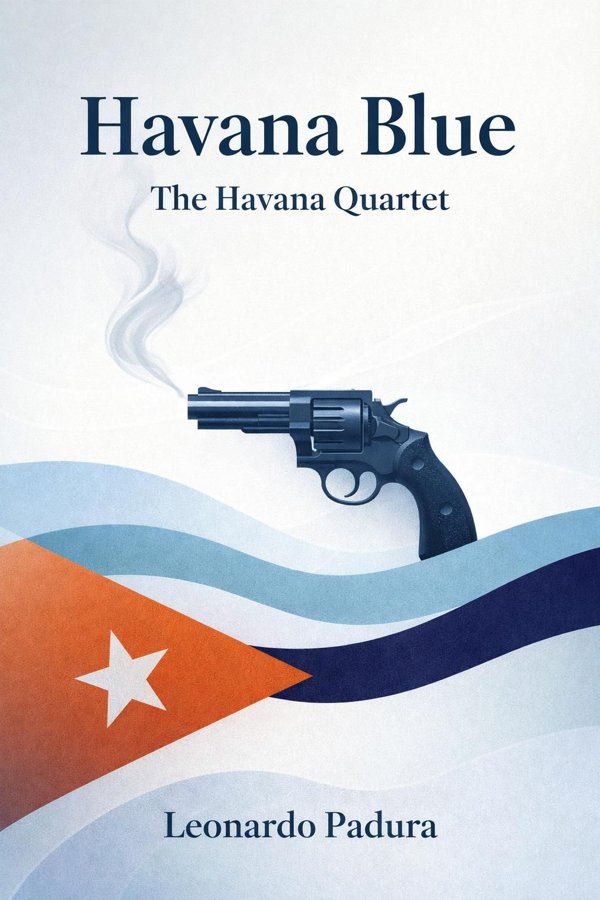
Havana Blue: The Havana Quartet: Summary & Key Insights
 10 min3 chaptersAudio available
What Is Havana Blue: The Havana Quartet About?
Havana Blue: The Havana Quartet by Leonardo Padura is a mystery book spanning 3 pages. Havana Blue (originally published in Spanish as El color del verano) is the fourth novel in Leonardo Padura’s acclaimed Havana Quartet series featuring detective Mario Conde. Set in Havana during the sweltering summer, the story follows Conde as he investigates a murder amid a backdrop of social decay, irony, and political disillusionment. The novel blends crime fiction with a deep reflection on Cuban identity and the realities of the 1990s.
This FizzRead summary covers all 3 key chapters of Havana Blue: The Havana Quartet in approximately 10 minutes, distilling the most important ideas, arguments, and takeaways from Leonardo Padura's work. Also available as an audio summary and Key Quotes Podcast.
Havana Blue: The Havana Quartet
Havana Blue (originally published in Spanish as El color del verano) is the fourth novel in Leonardo Padura’s acclaimed Havana Quartet series featuring detective Mario Conde. Set in Havana during the sweltering summer, the story follows Conde as he investigates a murder amid a backdrop of social decay, irony, and political disillusionment. The novel blends crime fiction with a deep reflection on Cuban identity and the realities of the 1990s.
Who Should Read Havana Blue: The Havana Quartet?
This book is perfect for anyone interested in mystery and looking to gain actionable insights in a short read. Whether you're a student, professional, or lifelong learner, the key ideas from Havana Blue: The Havana Quartet by Leonardo Padura will help you think differently.
- ✓Readers who enjoy mystery and want practical takeaways
- ✓Professionals looking to apply new ideas to their work and life
- ✓Anyone who wants the core insights of Havana Blue: The Havana Quartet in just 10 minutes
Want the full summary?
Get instant access to this book summary and 100K+ more with Fizz Moment.
Get Free SummaryAvailable on App Store • Free to download
Key Chapters
When the novel opens, Mario Conde is already tired—tired of his work as a detective, tired of his city, tired even of the lies people tell to survive. The Havana of the early 1990s is not the luminous city of propaganda; it is a place where resignation sweats through every shirt, where once beautiful buildings crumble from neglect, and where the smell of the sea mixes with the scent of decay. The heat is oppressive, not just meteorologically but symbolically: it pushes everyone to the edge of delirium, stirring old memories that refuse to die.
Into this suffocating air comes the case: Rafael Morín, an important official, has disappeared. When Conde is assigned to investigate, the past rushes back. He once knew Morín at school—a model student, ambitious, polished, the kind of man everyone expected to succeed. Conde, by contrast, was the dreamer, the rebel who believed in words and justice rather than power. And between them stood Tamara, the woman whose beauty shaped their friendship and rivalry alike. Now, decades later, Morín’s disappearance reopens wounds Conde thought long healed.
The investigation soon reveals that Morín was not merely missing but dead, and his death drags Conde deep into the murky world of bureaucratic privilege and moral compromise. In searching for the truth, he finds himself confronting what the system has produced: a network of opportunists who learned to survive by betraying their own principles. Each interview, each clue, each name leads Conde closer to the heart of a reality he already senses: that Havana’s decay is not accidental—it is the visible form of its citizens’ disillusionment. The more he digs, the more he feels that the murder is less about one man’s crime than about a society’s collective failure.
Yet amid this tragic unraveling, Conde remains a poet at heart. He is haunted by books he never wrote, by friendships dismantled by ideology, by the laughter of youth that echoes like a ghost through every street he walks. The case becomes the vessel through which he narrates not just murder, but time itself—the passing of dreams into dust. When the clues point to Morín’s hidden corruption, Conde’s disgust mingles with pity. It reminds him that even those who seemed strongest could not escape the hunger and hypocrisy of the age. In the heat of Havana, truth itself seems to sweat, ambiguous and painful.
As I wrote Conde’s journey through the investigation, I knew that Tamara had to reappear—not simply as a former lover, but as the embodiment of an impossible purity that still haunts him. Their reunion is tender but uneasy, threaded with decades of silence and secrets. For Conde, seeing Tamara again is like confronting his own lost self—the part of him that once believed in beauty, loyalty, and a future where love could be an anchor. For her, Conde represents the life that might have been, had she chosen art or honesty over security. Their dialogue, full of pauses and yearning, reflects the emotional paralysis of their generation: they have witnessed too many betrayals to trust easily, yet they still crave authenticity.
Through Tamara, the novel explores the emotional cost of survival in a society where moral compromise has become currency. Her husband’s corruption, exposed little by little through Conde’s inquiry, mirrors the erosion of intimacy itself. Havana becomes a mirror of these personal failures—a city where façades crumble as easily as ideals. Nights smell of rum and sweat, and people tell jokes to hide despair. Yet amid the ruin, pockets of affection, loyalty, and art remain; they are fragile, defiant acts of resistance.
Conde’s encounters with old friends and witnesses are steeped in melancholy. He listens to their stories of scarcity, of rationed food, of books bartered for survival, and he realizes how the island’s crisis has turned everyone into both victim and accomplice. The truth behind Morín’s death unfolds as an allegory of this collapse: a man seduced by power, who believed that stealing from a corrupt system was not crime but logic. When death comes to him, it comes wrapped in irony, as if the city itself demanded payment for all the transgressions committed under its sun.
And yet, even as I wrote of ruin, I wanted light to glimmer between the cracks. Conde resists full cynicism. His empathy, his absurd loyalty to lost causes, his love for literature—all these keep him alive. In one sense, the investigation into Morín’s death redeems him. By chasing truth through the labyrinth of lies, Conde cleanses himself. He learns that solving a case is less about punishment than about confronting one’s own capacity for self-forgiveness. It is this painful clarity, not the discovery of the killer, that grants him peace by the end.
+ 1 more chapters — available in the FizzRead app
All Chapters in Havana Blue: The Havana Quartet
About the Author
Leonardo Padura (born 1955 in Havana, Cuba) is an internationally recognized Cuban novelist, journalist, and screenwriter. He is best known for his detective series featuring Mario Conde and for historical novels such as The Man Who Loved Dogs. His works have been translated into numerous languages and have earned him multiple literary awards, including the Princess of Asturias Award for Literature in 2015.
Get This Summary in Your Preferred Format
Read or listen to the Havana Blue: The Havana Quartet summary by Leonardo Padura anytime, anywhere. FizzRead offers multiple formats so you can learn on your terms — all free.
Available formats: App · Audio · PDF · EPUB — All included free with FizzRead
Download Havana Blue: The Havana Quartet PDF and EPUB Summary
Key Quotes from Havana Blue: The Havana Quartet
“When the novel opens, Mario Conde is already tired—tired of his work as a detective, tired of his city, tired even of the lies people tell to survive.”
“As I wrote Conde’s journey through the investigation, I knew that Tamara had to reappear—not simply as a former lover, but as the embodiment of an impossible purity that still haunts him.”
Frequently Asked Questions about Havana Blue: The Havana Quartet
Havana Blue: The Havana Quartet by Leonardo Padura is a mystery book that explores key ideas across 3 chapters. Havana Blue (originally published in Spanish as El color del verano) is the fourth novel in Leonardo Padura’s acclaimed Havana Quartet series featuring detective Mario Conde. Set in Havana during the sweltering summer, the story follows Conde as he investigates a murder amid a backdrop of social decay, irony, and political disillusionment. The novel blends crime fiction with a deep reflection on Cuban identity and the realities of the 1990s.
More by Leonardo Padura
You Might Also Like



Browse by Category
Ready to read Havana Blue: The Havana Quartet?
Get the full summary and 100K+ more books with Fizz Moment.