
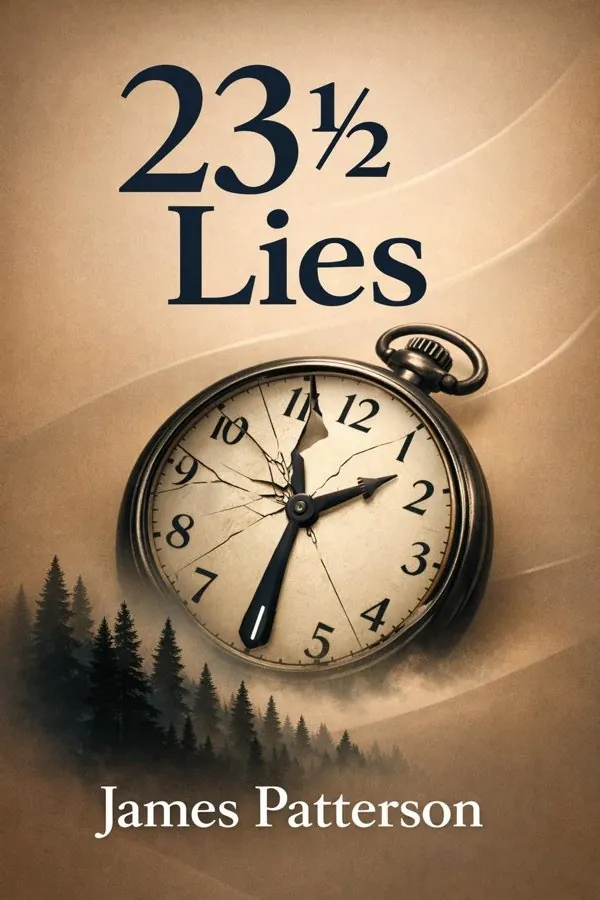
23 1/2 Lies: Summary & Key Insights
 10 min8 chaptersAudio available
Key Takeaways from 23 1/2 Lies
The most dangerous people in a thriller are often not the visibly violent ones, but the ones who know how to hide in plain sight.
A story does not need great length to create real tension; it needs urgency, precision, and momentum.
Crime fiction often becomes most gripping when justice is not merely institutional but deeply human.
Few things are more unsettling than discovering that trust, once given, may have rested on illusion.
Readers often think suspense comes mainly from shocking twists, but 23 1/2 Lies shows that pacing itself can create conviction.
What Is 23 1/2 Lies About?
23 1/2 Lies by James Patterson is a mystery book. 23 1/2 Lies is a fast-moving collection of three suspense novellas by James Patterson and Maxine Paetro, anchored by the title story featuring members of the Women’s Murder Club. Rather than delivering a single long investigation, the book offers three tightly constructed mysteries that explore deception, hidden motives, and the dangerous gap between appearances and truth. In “23 1/2 Lies,” familiar characters confront a case shaped by manipulation and personal stakes, while the other novellas expand the reading experience with different kinds of peril, secrets, and high-pressure decisions. What makes this collection compelling is its efficiency: each story drops readers into conflict quickly, builds tension through short chapters and cliffhangers, and delivers the kind of sharp revelations Patterson is known for. The book matters because it showcases modern commercial suspense at its most accessible—rapid, plot-driven, and emotionally direct. Patterson’s authority in the genre is undeniable. As one of the world’s bestselling thriller writers, he has built a reputation for irresistible pacing, memorable investigators, and stories designed to keep readers turning pages late into the night.
This FizzRead summary covers all 8 key chapters of 23 1/2 Lies in approximately 10 minutes, distilling the most important ideas, arguments, and takeaways from James Patterson's work. Also available as an audio summary and Key Quotes Podcast.
23 1/2 Lies
23 1/2 Lies is a fast-moving collection of three suspense novellas by James Patterson and Maxine Paetro, anchored by the title story featuring members of the Women’s Murder Club. Rather than delivering a single long investigation, the book offers three tightly constructed mysteries that explore deception, hidden motives, and the dangerous gap between appearances and truth. In “23 1/2 Lies,” familiar characters confront a case shaped by manipulation and personal stakes, while the other novellas expand the reading experience with different kinds of peril, secrets, and high-pressure decisions. What makes this collection compelling is its efficiency: each story drops readers into conflict quickly, builds tension through short chapters and cliffhangers, and delivers the kind of sharp revelations Patterson is known for. The book matters because it showcases modern commercial suspense at its most accessible—rapid, plot-driven, and emotionally direct. Patterson’s authority in the genre is undeniable. As one of the world’s bestselling thriller writers, he has built a reputation for irresistible pacing, memorable investigators, and stories designed to keep readers turning pages late into the night.
Who Should Read 23 1/2 Lies?
This book is perfect for anyone interested in mystery and looking to gain actionable insights in a short read. Whether you're a student, professional, or lifelong learner, the key ideas from 23 1/2 Lies by James Patterson will help you think differently.
- ✓Readers who enjoy mystery and want practical takeaways
- ✓Professionals looking to apply new ideas to their work and life
- ✓Anyone who wants the core insights of 23 1/2 Lies in just 10 minutes
Want the full summary?
Get instant access to this book summary and 100K+ more with Fizz Moment.
Get Free SummaryAvailable on App Store • Free to download
Key Chapters
The most dangerous people in a thriller are often not the visibly violent ones, but the ones who know how to hide in plain sight. That idea pulses through 23 1/2 Lies, where deception is not just a plot device but the engine of suspense. Across the three novellas, characters protect private histories, mask intentions, and distort reality for personal gain. These lies are rarely random. They are strategic, emotional, and often rooted in fear, greed, ambition, or survival. The result is a reading experience where every conversation may contain a trap and every polished exterior may conceal damage.
Patterson and Paetro understand that mystery works best when truth must be earned. Instead of presenting clear-cut villains from the start, they build tension by letting readers feel the uncertainty that investigators and ordinary people face. A witness may be unreliable. A loved one may be withholding something crucial. A seemingly solved situation may only be the surface of a larger danger. In the title novella especially, the concept of half-truths becomes central: people often tell just enough truth to seem credible while burying the part that truly matters.
This idea has practical appeal beyond fiction. In real life, conflict often escalates not because people openly announce harmful intentions, but because they conceal key facts. Workplace politics, family disputes, and personal betrayals all become more damaging when silence and partial honesty cloud judgment. The book reminds readers to pay attention not only to what is said, but also to what is omitted.
Actionable takeaway: when evaluating people or situations, look for patterns, inconsistencies, and missing pieces—because what remains unsaid often reveals more than the official story.
A story does not need great length to create real tension; it needs urgency, precision, and momentum. One of the clearest lessons from 23 1/2 Lies is how effectively the novella form can compress suspense. Each story enters conflict quickly, introduces a threat with minimal delay, and keeps the narrative moving through short scenes that heighten uncertainty. Instead of long digressions or extensive backstory, the book focuses on immediate danger, emotional pressure, and constant reversal.
This compact structure is a signature strength of Patterson’s storytelling. He writes with the instincts of a dramatist and an editor: every chapter must earn its place, every transition must increase curiosity, and every revelation must shift the reader’s expectations. Because the stories are shorter, there is little room for indulgence. That limitation becomes a creative advantage. Characters are sketched with sharp efficiency, and suspense is sustained through pace rather than complexity alone.
For readers, this means the book feels highly accessible. It can satisfy the desire for a complete mystery experience without demanding the commitment of a long novel. For writers or storytellers, the collection demonstrates an important craft principle: compression can intensify impact. A smaller narrative frame forces more deliberate choices about what matters most.
Outside literature, the same principle applies to communication. Strong presentations, persuasive reports, and memorable pitches often succeed not because they say more, but because they remove everything unnecessary. Clarity creates force.
Actionable takeaway: whether reading, writing, or presenting ideas, focus on the essential conflict and highest stakes first—brevity becomes powerful when every element serves momentum.
Crime fiction often becomes most gripping when justice is not merely institutional but deeply human. In 23 1/2 Lies, investigations and confrontations matter because they affect marriages, reputations, loyalties, safety, and trust. The characters are not pursuing truth as an abstract legal exercise. They are trying to protect people, preserve dignity, and survive the emotional fallout that crime creates. This gives the novellas a level of immediacy that goes beyond procedural mechanics.
Patterson’s best work frequently rests on this principle: readers care about clues because they care about consequences. A case is never only about the crime scene. It is about the lives surrounding it—the people who must reckon with fear, betrayal, loss, or moral compromise. In the Women’s Murder Club universe, this is especially effective because readers already associate the central figures with both professional skill and personal vulnerability. They are capable, but not detached. That emotional exposure keeps the stakes high.
This perspective matters because it reflects how justice operates in real life. Legal outcomes may resolve formal questions, but they do not automatically repair emotional damage. Communities, families, and friendships often continue to absorb the impact long after facts are established. The novellas acknowledge this by treating truth as something that restores order only partially. Solving a mystery may stop immediate harm, yet scars remain.
For readers, this creates a richer form of suspense. We are not simply asking, “Who did it?” We are asking, “What will this revelation cost?” That deeper question makes even familiar thriller patterns feel resonant.
Actionable takeaway: when assessing any conflict, focus not only on rules and evidence, but also on the human cost—understanding consequences leads to wiser decisions and more compassionate judgment.
Few things are more unsettling than discovering that trust, once given, may have rested on illusion. A recurring theme in 23 1/2 Lies is that trust is fragile, conditional, and constantly under pressure from new information. Characters rely on spouses, partners, witnesses, colleagues, and friends, yet each relationship can become unstable when hidden motives emerge. Suspense grows because safety often depends on whether a person has judged someone correctly.
The book uses this instability to great effect. Instead of placing danger exclusively in dark alleys or overt acts of violence, it places danger within relationships. This is a powerful thriller strategy because it attacks what people most want to feel secure about. If institutions are imperfect and strangers are risky, readers expect caution. But when intimacy itself becomes uncertain, tension sharpens. The familiar becomes threatening.
In practical life, trust works much the same way. People often make decisions based on assumptions of consistency: that a partner is honest, a coworker is reliable, a source is accurate, or a friend is loyal. Yet trust is not a permanent guarantee. It must be maintained through behavior, transparency, and accountability. The novellas do not suggest cynicism for its own sake, but they do encourage alertness. Believing in someone should not mean ignoring contradictions.
This theme also helps explain why Patterson’s work is so readable. He understands that readers fear emotional betrayal at least as much as physical harm. A hidden affair, misleading statement, or withheld fact can be as suspenseful as a weapon, because it changes the meaning of everything that came before.
Actionable takeaway: trust people with openness, but verify through patterns—healthy confidence grows from consistent actions, not reassuring words alone.
Readers often think suspense comes mainly from shocking twists, but 23 1/2 Lies shows that pacing itself can create conviction. When a story moves with confidence, readers feel pulled forward by a sense that every moment matters. Patterson has long mastered this effect through brief chapters, immediate scene-setting, and carefully timed cliffhangers. The result is not merely speed for speed’s sake. It is a method of shaping attention so that readers stay emotionally invested and mentally alert.
In this collection, pacing works like pressure. Scenes end with unanswered questions. New developments arrive before earlier tensions fully settle. The narratives repeatedly deny the comfort of complete certainty, which keeps readers participating actively. We speculate, revise assumptions, and continue because the structure encourages us to anticipate the next reveal. This is one reason the book feels so addictive: movement substitutes for hesitation.
There is a broader insight here about storytelling and decision-making. People engage most when they sense meaningful progression. In business, teaching, leadership, or personal communication, momentum builds trust. A meeting that stalls loses energy. A story with no escalation loses attention. A plan with no visible progress loses support. Forward motion helps people believe a destination exists.
At the same time, good pacing depends on control. If events pile up without coherence, speed becomes noise. Patterson avoids this by grounding each turn in stakes the reader already understands. The pace feels rapid, but not random.
Actionable takeaway: to hold attention in any form of communication, create clear progression—move from conflict to complication to consequence, and give people a reason to keep following.
One of the enduring appeals of suspense fiction is the reminder that danger does not always announce itself dramatically. In 23 1/2 Lies, peril emerges from recognizable settings and believable relationships, making the threats feel close to everyday life. The stories suggest that extraordinary crises often begin with ordinary routines: a marriage, a professional exchange, a chance encounter, a small suspicion. This nearness makes the suspense more unsettling because it removes the comfort of distance.
Patterson excels at translating common fears into narrative fuel. Instead of relying solely on exotic villains or implausible conspiracies, he often starts with emotionally familiar vulnerabilities—dishonesty in a relationship, a breach of trust, a hidden motive, a decision made under pressure. Readers can imagine themselves in similar situations, which deepens the impact. We are not just observing danger; we are recognizing how thin the barrier can be between normalcy and threat.
This idea resonates beyond thrillers. Many real-world problems begin gradually and invisibly. Financial trouble can start with one concealed expense. Professional conflict can begin with one misleading conversation. Personal crisis can grow from one ignored red flag. The novellas dramatize this pattern by showing how seemingly manageable situations can escalate rapidly once truth starts to fracture.
This is also why the collection feels accessible to casual readers. It does not demand specialized knowledge to understand the stakes. The emotional logic is immediate: anyone can understand fear inside intimacy, uncertainty inside routine, or danger hiding behind familiarity.
Actionable takeaway: take small inconsistencies seriously—whether in relationships, work, or personal habits, early warning signs are easiest to address before they become full-scale crises.
Suspense becomes more satisfying when readers already care who gets hurt, who succeeds, and who may be forced into impossible choices. The title story in 23 1/2 Lies benefits from its connection to the Women’s Murder Club, a long-running series that has built emotional familiarity over time. Even in novella form, the presence of known characters adds weight. Readers bring prior investment, which means the story can move quickly without sacrificing emotional stakes.
This is an important feature of Patterson’s broader storytelling method. He understands the value of continuity in commercial fiction. Returning characters create trust between author and reader. They provide a stable center inside shifting plots. No matter how new the case or danger, readers feel oriented because the emotional world is already partially known. That allows the author to spend less time establishing attachment and more time escalating conflict.
For readers new to the series, this also offers an entry point. A shorter work can introduce the tone, rhythms, and interpersonal dynamics of a larger fictional world without requiring commitment to a full-length installment. For longtime fans, it feels like a continuation of an ongoing relationship.
The lesson extends beyond fiction. In any field, people engage more deeply when there is continuity of voice, identity, and values. A trusted brand, teacher, team, or leader can introduce new ideas more effectively because a relationship already exists. Familiarity lowers resistance and increases attention.
Actionable takeaway: if you want people to stay engaged over time, build continuity—consistent characters, values, or communication create loyalty and make each new development matter more.
Popular thrillers are sometimes dismissed as pure diversion, yet books like 23 1/2 Lies demonstrate that entertainment and insight are not opposites. Beneath the quick pacing and dramatic twists lies a consistent interest in how people behave under stress. The novellas examine fear, self-protection, manipulation, loyalty, and moral compromise. Their pleasure comes from suspense, but their staying power comes from recognition: the characters act in ways that reflect real emotional pressures.
Patterson’s fiction succeeds partly because it understands fundamental human drives. People want safety, status, intimacy, control, and escape from consequences. When those desires conflict, lies emerge. When pressure intensifies, character is exposed. This is why even streamlined commercial fiction can feel psychologically persuasive. The stories are not philosophical treatises, but they know what people are like when cornered.
For readers, that means the book offers more than temporary adrenaline. It invites reflection on why deception is so tempting, why trust is risky, and why truth can be both liberating and destructive. The suspenseful framework makes these ideas easy to absorb because they are embodied in action rather than explained abstractly.
This principle has broad relevance. People often learn best through narrative because stories make motives visible. A lecture may define betrayal, but a thriller lets us experience its unfolding cost. A theory may explain denial, but a character living inside deception shows its emotional logic.
Actionable takeaway: when reading for pleasure, also ask what the story reveals about behavior under pressure—entertainment becomes more valuable when you use it to sharpen your understanding of people.
All Chapters in 23 1/2 Lies
About the Author
James Patterson is a bestselling American author known for his enormous impact on modern thriller and mystery fiction. Born in 1947, he built a career marked by commercial success, broad genre reach, and a distinctive storytelling style built on short chapters, rapid pacing, and high-stakes suspense. He is the creator of major series including Alex Cross, Women’s Murder Club, and Michael Bennett, and he has also written young adult fiction, nonfiction, and standalones. Patterson frequently collaborates with co-authors, a model that has helped him publish widely while maintaining his signature narrative energy. Beyond writing, he is recognized for supporting literacy, libraries, and education initiatives. His books have sold in the hundreds of millions worldwide, making him one of the most widely read authors of his generation.
Get This Summary in Your Preferred Format
Read or listen to the 23 1/2 Lies summary by James Patterson anytime, anywhere. FizzRead offers multiple formats so you can learn on your terms — all free.
Available formats: App · Audio · PDF · EPUB — All included free with FizzRead
Download 23 1/2 Lies PDF and EPUB Summary
Key Quotes from 23 1/2 Lies
“The most dangerous people in a thriller are often not the visibly violent ones, but the ones who know how to hide in plain sight.”
“A story does not need great length to create real tension; it needs urgency, precision, and momentum.”
“Crime fiction often becomes most gripping when justice is not merely institutional but deeply human.”
“Few things are more unsettling than discovering that trust, once given, may have rested on illusion.”
“Readers often think suspense comes mainly from shocking twists, but 23 1/2 Lies shows that pacing itself can create conviction.”
Frequently Asked Questions about 23 1/2 Lies
23 1/2 Lies by James Patterson is a mystery book that explores key ideas across 8 chapters. 23 1/2 Lies is a fast-moving collection of three suspense novellas by James Patterson and Maxine Paetro, anchored by the title story featuring members of the Women’s Murder Club. Rather than delivering a single long investigation, the book offers three tightly constructed mysteries that explore deception, hidden motives, and the dangerous gap between appearances and truth. In “23 1/2 Lies,” familiar characters confront a case shaped by manipulation and personal stakes, while the other novellas expand the reading experience with different kinds of peril, secrets, and high-pressure decisions. What makes this collection compelling is its efficiency: each story drops readers into conflict quickly, builds tension through short chapters and cliffhangers, and delivers the kind of sharp revelations Patterson is known for. The book matters because it showcases modern commercial suspense at its most accessible—rapid, plot-driven, and emotionally direct. Patterson’s authority in the genre is undeniable. As one of the world’s bestselling thriller writers, he has built a reputation for irresistible pacing, memorable investigators, and stories designed to keep readers turning pages late into the night.
More by James Patterson
You Might Also Like



Browse by Category
Ready to read 23 1/2 Lies?
Get the full summary and 100K+ more books with Fizz Moment.