
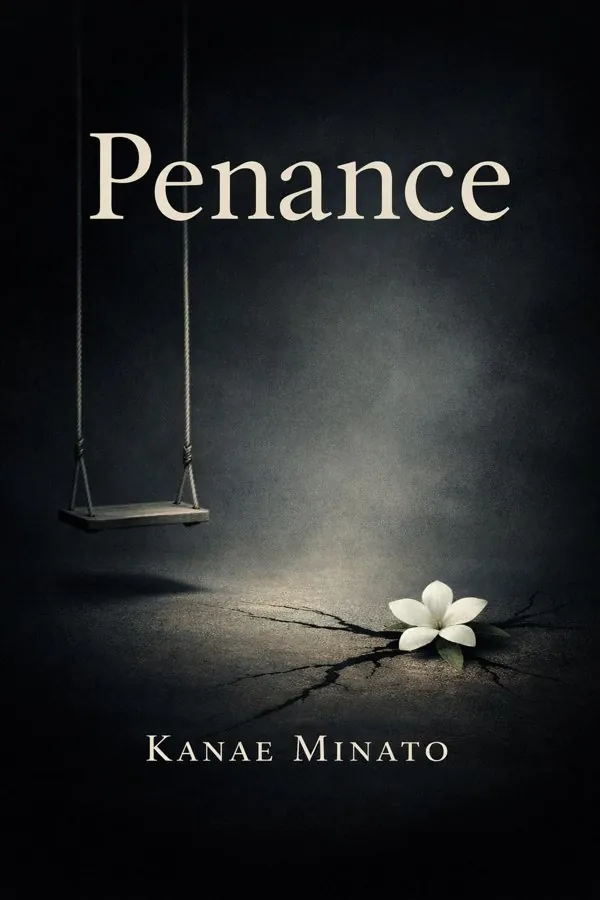
Penance: Summary & Key Insights
by Kanae Minato
 10 min9 chaptersAudio available
Key Takeaways from Penance
One violent moment rarely belongs only to the victim.
Not all guilt comes from actual wrongdoing.
What remains unspoken often becomes more powerful than what is said aloud.
Adults often underestimate how deeply children absorb the emotional climate around them.
Revenge becomes especially dangerous when it disguises itself as justice.
What Is Penance About?
Penance by Kanae Minato is a mystery book. Kanae Minato’s Penance is a chilling psychological mystery that begins with a child’s murder and unfolds into a study of how guilt can distort an entire life. In a quiet seaside town, four young girls witness the abduction of their friend Emily, but none can identify the killer. Emily’s mother, consumed by grief and rage, tells the girls that if they cannot help find the murderer, they must spend their lives atoning. That curse-like demand shapes everything that follows. Years later, each woman carries the memory differently, and Minato reveals how fear, shame, silence, and resentment have settled into adulthood. Rather than focusing only on solving a crime, the novel examines the emotional wreckage left behind and the ways people punish themselves long after a tragedy ends. Minato, celebrated for sharp, dark psychological fiction such as Confessions, is especially skilled at turning ordinary social pressures into suspense. Penance matters because it is not just about what happened to one child, but about how communities fail, how trauma hardens into identity, and how revenge can masquerade as justice.
This FizzRead summary covers all 9 key chapters of Penance in approximately 10 minutes, distilling the most important ideas, arguments, and takeaways from Kanae Minato's work. Also available as an audio summary and Key Quotes Podcast.
Penance
Kanae Minato’s Penance is a chilling psychological mystery that begins with a child’s murder and unfolds into a study of how guilt can distort an entire life. In a quiet seaside town, four young girls witness the abduction of their friend Emily, but none can identify the killer. Emily’s mother, consumed by grief and rage, tells the girls that if they cannot help find the murderer, they must spend their lives atoning. That curse-like demand shapes everything that follows. Years later, each woman carries the memory differently, and Minato reveals how fear, shame, silence, and resentment have settled into adulthood. Rather than focusing only on solving a crime, the novel examines the emotional wreckage left behind and the ways people punish themselves long after a tragedy ends. Minato, celebrated for sharp, dark psychological fiction such as Confessions, is especially skilled at turning ordinary social pressures into suspense. Penance matters because it is not just about what happened to one child, but about how communities fail, how trauma hardens into identity, and how revenge can masquerade as justice.
Who Should Read Penance?
This book is perfect for anyone interested in mystery and looking to gain actionable insights in a short read. Whether you're a student, professional, or lifelong learner, the key ideas from Penance by Kanae Minato will help you think differently.
- ✓Readers who enjoy mystery and want practical takeaways
- ✓Professionals looking to apply new ideas to their work and life
- ✓Anyone who wants the core insights of Penance in just 10 minutes
Want the full summary?
Get instant access to this book summary and 100K+ more with Fizz Moment.
Get Free SummaryAvailable on App Store • Free to download
Key Chapters
One violent moment rarely belongs only to the victim. That is the unsettling truth at the center of Penance. Emily’s murder is the event that structures the entire novel, but Kanae Minato is less interested in the mechanics of the crime than in the long afterlife of its consequences. Four girls survive the day of the murder, yet survival does not mean escape. The unresolved trauma follows them into adulthood, shaping relationships, careers, self-worth, and even their sense of what they deserve.
Minato shows that tragedy ripples outward in uneven ways. One girl becomes emotionally withdrawn, another seeks control through rigid life choices, another is driven by shame, and another by a desperate need to seem normal. These different outcomes reflect a deeper idea: people do not process the same event in the same way. Personality, family dynamics, social expectations, and access to care all affect how trauma settles in the mind.
In real life, this insight applies far beyond crime fiction. A scandal at work, a humiliating public failure, or a painful family rupture can affect everyone involved differently. One sibling may become hyper-responsible; another avoids confrontation entirely. One employee rebounds after a toxic boss; another loses confidence for years. Penance encourages readers to resist simplistic judgments about how people “should” react to suffering.
The novel’s power comes from showing that the true mystery is not only who committed the crime, but what the crime made of the people who remained. Actionable takeaway: when examining painful events in your own life or community, look beyond the initial incident and ask how its emotional aftershocks may still be shaping behavior today.
Not all guilt comes from actual wrongdoing. In Penance, guilt often grows from powerlessness, confusion, and survival. The girls were children when Emily was killed, yet they internalize responsibility because they failed to prevent the murder and could not identify the killer. Emily’s mother intensifies that burden by demanding lifelong atonement. What begins as grief-stricken blame becomes a psychological sentence, and each girl carries it as if punishment might somehow restore moral balance.
Minato carefully distinguishes guilt from responsibility. The girls were not morally equipped to stop what happened, but they grow up believing their lives must be defined by reparative suffering. This is how guilt becomes a private prison: it narrows possibilities, distorts self-perception, and convinces people they are unworthy of peace. Instead of asking what healing would require, they ask what penalty they deserve.
This dynamic is recognizable outside fiction. People often blame themselves for events they could not control: a parent replaying every decision after a child’s illness, a friend regretting what they “should have noticed,” or a colleague carrying shame after a business collapse caused by many factors. The mind invents guilt because guilt feels more manageable than randomness. If it was your fault, then at least the world is not arbitrary.
Penance warns that unresolved guilt does not produce wisdom automatically. It can produce paralysis, self-sabotage, and emotional isolation. The healthier alternative is honest moral sorting: What was truly your responsibility? What belonged to circumstance, age, or someone else’s choices? Actionable takeaway: when guilt overwhelms you, separate what you regret from what you actually controlled, and let that distinction guide your next step.
What remains unspoken often becomes more powerful than what is said aloud. In Penance, silence operates at every level: the girls cannot provide the answer adults want, the adults cannot process grief honestly, and the community cannot confront its own failures. Instead of communication, there is suspicion, repression, and emotional displacement. The result is not stability but corrosion.
Minato uses silence as both atmosphere and theme. The girls’ inability to identify the killer creates a vacuum that others fill with blame and projection. Emily’s mother transforms loss into a long command for penance rather than a conversation about grief. Families, too, often fail to speak directly about fear, resentment, or shame. The unspoken then shapes behavior in hidden ways. People become rigid, evasive, punitive, or emotionally detached without naming the wound underneath.
This is one of the book’s most practical insights. Silence in families, workplaces, and communities often masquerades as dignity or self-control, but it can also preserve dysfunction. A family may never discuss an old betrayal, yet every holiday is tense. A team may avoid addressing a failed project, and morale slowly deteriorates. A person may never talk about childhood humiliation, but overreact to criticism for decades.
Penance does not argue that every truth should be exposed crudely or immediately. Instead, it shows that when pain is buried rather than metabolized, it leaks into life through indirect forms: blame, distance, obsession, and cruelty. Actionable takeaway: identify one difficult subject you have been avoiding and begin to name it clearly, whether through conversation, journaling, or therapy, before silence turns it into a lasting structure.
Adults often underestimate how deeply children absorb the emotional climate around them. Penance demonstrates that children are not just passive witnesses to adult grief, anger, and fear; they are shaped by it. The girls at the center of the novel experience not only the trauma of Emily’s murder but also the emotional burden imposed by adults who cannot manage their own devastation. Emily’s mother, in particular, turns unbearable sorrow into a command that the children must carry forever.
This is what makes the novel especially disturbing. The girls are young, impressionable, and morally undeveloped, yet they are handed a psychological burden that even many adults could not process. Instead of being protected, they become containers for adult rage. Minato suggests that emotional violence does not always look like shouting or physical harm. It can take the form of expectations, accusations, moral pressure, or the demand that a child repair what cannot be repaired.
The lesson extends into ordinary life. Children notice when parents are chronically anxious, when adults weaponize shame, or when family tragedies are handled through blame instead of care. A child who hears, “You ruined everything,” may internalize that sentence for life, even if spoken in a moment of frustration. Likewise, a child forced to mediate adult conflicts may become overly responsible in adulthood, confusing love with emotional labor.
Penance invites readers to think carefully about what children are asked to carry. They need truth, but truth must be given with protection and perspective. Actionable takeaway: if you are responsible for children, examine whether your language relieves their fear or transfers your pain onto them, and choose words that create safety rather than burden.
Revenge becomes especially dangerous when it disguises itself as justice. In Penance, Emily’s mother appears to speak from righteous grief, and her demand for the girls’ lifelong atonement initially sounds like a reaction to unbearable loss. But Minato gradually reveals how vengeance can borrow the language of morality while remaining fundamentally destructive. The desire to make others suffer may feel purposeful, even noble, yet it rarely restores what was lost.
The novel complicates the reader’s sympathy. Emily’s mother is not a cartoon villain; she is a bereaved parent in profound pain. That complexity matters because it shows how revenge often emerges from genuine injury. Still, genuine injury does not sanctify every response. The wish to assign punishment where one feels helpless is understandable, but Penance demonstrates that punishment can spread harm rather than contain it. The girls spend years living under a sentence that never truly belonged to them.
This pattern appears in less extreme situations as well. Someone hurt in a breakup might seek public humiliation rather than closure. A manager embarrassed by a mistake may target a subordinate under the guise of accountability. Communities responding to wrongdoing may become more invested in symbolic punishment than in repair, prevention, or truth.
Minato’s insight is that revenge narrows the imagination. It asks only, “Who should pay?” and ignores harder questions: “What would healing require? What failed beforehand? How do we stop repetition?” Justice may involve consequences, but it also requires proportion, clarity, and moral discipline. Actionable takeaway: when anger feels morally justified, pause and ask whether your response is aimed at repair and truth, or simply at making someone else carry your pain.
We like to think memory preserves truth, but Penance suggests memory also edits, protects, and accuses. The girls’ recollections of the murder and its aftermath are filtered through fear, shame, time, and later experience. Their memories do not function as perfect evidence. Instead, they become living narratives that help each woman explain who she is and why her life unfolded as it did.
This is crucial to the novel’s structure and meaning. A mystery usually promises clarity through recovered facts, but Minato is equally interested in how memory shapes identity. People remember selectively. They emphasize certain details, soften others, and reinterpret the past to fit present needs. A woman who feels trapped may remember childhood as a chain of humiliations. Another who values control may retell the same past as proof that vigilance is necessary. Neither memory is entirely false, yet neither is neutral.
In everyday life, this matters immensely. Family members often remember the same event differently. A parent recalls being strict out of love; a child remembers emotional coldness. Coworkers remember the same meeting as either collaborative or hostile. Personal growth sometimes depends on revisiting memory with curiosity instead of certainty.
Penance does not tell readers to distrust memory completely. Rather, it encourages humility about what memory can and cannot do. Recollection preserves emotional truth, but not always balanced perspective. When trauma is involved, memory may circle around fragments instead of coherent facts. Actionable takeaway: treat your strongest memories as meaningful but revisable, and when conflict arises, ask not only “What happened?” but also “How has my version of this story shaped my life?”
A polished adult exterior can conceal a childhood built on fear. One of Penance’s most haunting achievements is its portrayal of normal-looking lives that are inwardly fractured. The girls grow up, make choices, build routines, and appear to enter adulthood, yet beneath that surface lie unresolved compulsions and emotional distortions tied to the original trauma. Minato resists dramatic stereotypes and instead shows how damage can hide inside respectable, ordinary existence.
This realism is part of what makes the novel so unsettling. Trauma does not always announce itself through visible breakdown. It may appear as perfectionism, passivity, controlling behavior, poor judgment in relationships, or an inability to trust joy. Someone can look highly functional while living according to a private script written by fear. In Penance, the women’s adult decisions often make sense only when viewed as adaptations to an earlier wound.
Readers can apply this insight in two ways. First, it encourages compassion. The difficult coworker, the rigid parent, or the emotionally distant partner may be acting from old injuries, even if those injuries do not excuse harm. Second, it encourages self-examination. Many people normalize habits that were once survival strategies: overexplaining to avoid conflict, pleasing others to stay safe, or clinging to control when uncertainty feels unbearable.
Minato’s point is not that everyone is secretly broken, but that the categories of “fine” and “damaged” are often too crude. People carry histories in subtle, behavioral forms. Actionable takeaway: when a pattern in your life feels irrational or stubborn, ask what problem it may once have solved, and whether that old survival mechanism still deserves authority over your present.
It is tempting to isolate evil in one perpetrator, but Penance argues that tragedy often grows in the gaps left by a failing community. The murder itself is committed by an individual, yet Minato draws attention to the social environment surrounding the crime: weak protection, shallow understanding, misplaced blame, and adults unable to create safety after disaster. The result is a broader indictment of how communities respond when something unthinkable happens.
The novel suggests that communities frequently prioritize appearance over care. People want answers, order, and emotional containment, but not necessarily the slow work of listening, supporting, and repairing. After the crime, the girls are not meaningfully helped; they are marked. The adults around them are caught in their own fear, grief, or judgment. In that vacuum, trauma becomes personalized rather than held collectively.
This insight applies powerfully outside fiction. When schools treat bullying as isolated incidents rather than cultural problems, children continue to suffer. When workplaces handle harassment quietly to protect reputation, victims often bear the long-term cost. When neighborhoods experience violence without investment in trust and support, fear hardens into fragmentation.
Penance reminds readers that private suffering is often intensified by public failure. A healthy community does not erase tragedy, but it can prevent secondary damage by offering accountability, care, and truthful dialogue. The absence of that care can become its own form of harm. Actionable takeaway: in any group you belong to, ask whether difficult events are being treated as individual problems to hide or shared responsibilities to address, and advocate for the latter.
People often confuse redemption with suffering, as if enduring enough pain will finally make the past morally balanced. Penance dismantles that idea. The women shaped by Emily’s death do not find peace by quietly serving their sentence of guilt. If anything, endless self-punishment deepens confusion and damage. Minato suggests that redemption, if it is possible at all, must begin with truth: truth about what happened, truth about responsibility, and truth about the emotional lies people have been forced to live inside.
This is one of the novel’s most important contributions. It reframes atonement from a theatrical burden into a difficult process of recognition. The characters cannot be freed simply by time passing or by appearing respectable. They need to confront distorted beliefs such as “I deserve no happiness,” “I caused this,” or “suffering is loyalty.” Without that confrontation, penance becomes identity rather than transformation.
In practical life, this insight is deeply useful. After making a real mistake, people may either deny responsibility or wallow in shame. Neither response leads to growth. Redemption involves honest admission, proportionate accountability, repair where possible, and the willingness to build a better future without insisting on perpetual self-condemnation. The same applies to grief and inherited blame: not everything should be carried forever.
Penance leaves readers with an uneasy but valuable lesson. The past cannot always be repaired, and innocence cannot always be restored. Still, people can stop worshipping punishment as if it were wisdom. Actionable takeaway: if you are trying to atone for something, replace vague self-punishment with concrete truth-telling, specific repair, and a deliberate decision about what you will no longer carry.
All Chapters in Penance
About the Author
Kanae Minato is a Japanese novelist best known for her dark psychological suspense and emotionally incisive crime fiction. She rose to international prominence with Confessions, a widely acclaimed novel that established her reputation for sharp plotting, multiple perspectives, and morally unsettling storytelling. Before becoming a full-time writer, Minato worked as a teacher, an experience that informed her keen understanding of social pressure, adolescence, and hidden emotional dynamics. Her fiction often explores guilt, revenge, trauma, and the quiet violence beneath ordinary life. In Penance, she demonstrates her signature ability to turn a single shocking event into a layered examination of memory, blame, and emotional aftermath. Minato is regarded as one of the most influential contemporary voices in Japanese psychological mystery.
Get This Summary in Your Preferred Format
Read or listen to the Penance summary by Kanae Minato anytime, anywhere. FizzRead offers multiple formats so you can learn on your terms — all free.
Available formats: App · Audio · PDF · EPUB — All included free with FizzRead
Download Penance PDF and EPUB Summary
Key Quotes from Penance
“One violent moment rarely belongs only to the victim.”
“Not all guilt comes from actual wrongdoing.”
“What remains unspoken often becomes more powerful than what is said aloud.”
“Adults often underestimate how deeply children absorb the emotional climate around them.”
“Revenge becomes especially dangerous when it disguises itself as justice.”
Frequently Asked Questions about Penance
Penance by Kanae Minato is a mystery book that explores key ideas across 9 chapters. Kanae Minato’s Penance is a chilling psychological mystery that begins with a child’s murder and unfolds into a study of how guilt can distort an entire life. In a quiet seaside town, four young girls witness the abduction of their friend Emily, but none can identify the killer. Emily’s mother, consumed by grief and rage, tells the girls that if they cannot help find the murderer, they must spend their lives atoning. That curse-like demand shapes everything that follows. Years later, each woman carries the memory differently, and Minato reveals how fear, shame, silence, and resentment have settled into adulthood. Rather than focusing only on solving a crime, the novel examines the emotional wreckage left behind and the ways people punish themselves long after a tragedy ends. Minato, celebrated for sharp, dark psychological fiction such as Confessions, is especially skilled at turning ordinary social pressures into suspense. Penance matters because it is not just about what happened to one child, but about how communities fail, how trauma hardens into identity, and how revenge can masquerade as justice.
You Might Also Like


Browse by Category
Ready to read Penance?
Get the full summary and 100K+ more books with Fizz Moment.