
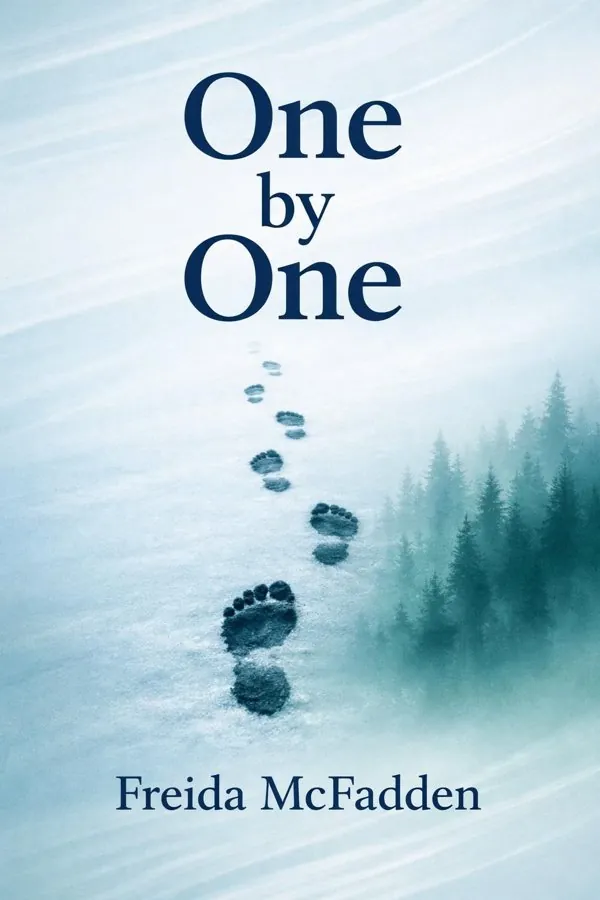
One by One: Summary & Key Insights
 10 min9 chaptersAudio available
Key Takeaways from One by One
Pressure does not create character so much as expose it.
Professional conflict often looks manageable until circumstances make it personal.
When people are afraid, facts matter less than interpretation.
People do not hide things only because they are guilty; they also hide things because they are afraid of being known.
In dangerous situations, physical strength matters less than social insight.
What Is One by One About?
One by One by Freida McFadden is a mystery book. One by One by Freida McFadden is a fast-paced psychological thriller that turns an ordinary work outing into a nightmare of fear, suspicion, and survival. The novel follows a group of coworkers whose trip takes a deadly turn after an accident leaves them stranded in an isolated wooded area. Cut off from help and forced to rely on one another, they soon discover that the greatest danger may not come from the wilderness at all, but from the secrets, resentments, and hidden motives within their own group. As tensions rise and trust collapses, every conversation becomes loaded, every choice feels dangerous, and every person becomes a possible threat. What makes the book so compelling is McFadden’s talent for blending claustrophobic suspense with sharp psychological observation. She understands how quickly polished professional relationships can unravel under pressure, and she uses that insight to build a story that feels both cinematic and unsettlingly believable. Known for addictive plotting, shocking twists, and emotionally charged suspense, McFadden has become one of the most popular voices in contemporary thriller fiction. One by One matters because it is not just about being trapped in the woods. It is about how fear exposes character, how secrets distort perception, and how survival often depends on seeing people clearly before it is too late.
This FizzRead summary covers all 9 key chapters of One by One in approximately 10 minutes, distilling the most important ideas, arguments, and takeaways from Freida McFadden's work. Also available as an audio summary and Key Quotes Podcast.
One by One
One by One by Freida McFadden is a fast-paced psychological thriller that turns an ordinary work outing into a nightmare of fear, suspicion, and survival. The novel follows a group of coworkers whose trip takes a deadly turn after an accident leaves them stranded in an isolated wooded area. Cut off from help and forced to rely on one another, they soon discover that the greatest danger may not come from the wilderness at all, but from the secrets, resentments, and hidden motives within their own group. As tensions rise and trust collapses, every conversation becomes loaded, every choice feels dangerous, and every person becomes a possible threat.
What makes the book so compelling is McFadden’s talent for blending claustrophobic suspense with sharp psychological observation. She understands how quickly polished professional relationships can unravel under pressure, and she uses that insight to build a story that feels both cinematic and unsettlingly believable. Known for addictive plotting, shocking twists, and emotionally charged suspense, McFadden has become one of the most popular voices in contemporary thriller fiction. One by One matters because it is not just about being trapped in the woods. It is about how fear exposes character, how secrets distort perception, and how survival often depends on seeing people clearly before it is too late.
Who Should Read One by One?
This book is perfect for anyone interested in mystery and looking to gain actionable insights in a short read. Whether you're a student, professional, or lifelong learner, the key ideas from One by One by Freida McFadden will help you think differently.
- ✓Readers who enjoy mystery and want practical takeaways
- ✓Professionals looking to apply new ideas to their work and life
- ✓Anyone who wants the core insights of One by One in just 10 minutes
Want the full summary?
Get instant access to this book summary and 100K+ more with Fizz Moment.
Get Free SummaryAvailable on App Store • Free to download
Key Chapters
Pressure does not create character so much as expose it. One of the most gripping ideas in One by One is that isolation strips away the social masks people wear in everyday life. At work, people can rely on routine, status, and politeness to hide insecurity, resentment, ambition, or deceit. But when a group is suddenly stranded after a traumatic accident, those familiar protections disappear. What remains is a raw test of personality, instinct, and trust.
Freida McFadden uses the remote setting to turn emotional discomfort into psychological danger. The woods are not just a physical location; they function like a pressure chamber. Without easy escape, minor workplace tensions become major conflicts. Old rivalries matter more. Casual remarks feel suspicious. A person who seemed competent in the office may become unreliable in crisis, while someone previously overlooked may emerge as decisive and observant.
This idea matters beyond fiction because many real relationships are only lightly tested. Teams often assume they know one another because they share meetings, deadlines, or goals. Yet true character is often revealed in moments of uncertainty: a missed deadline, a public mistake, a financial setback, or a sudden emergency. The novel reminds readers that stress changes group dynamics quickly and often permanently.
In practical terms, this can apply to how we judge trust in our own lives. It is wise to notice how people behave when plans fail, when they lose control, or when helping others costs them something. Reliability is easier to claim than to prove.
Actionable takeaway: Pay closer attention to how people act under pressure, because their crisis behavior often tells you more than their everyday charm ever will.
Professional conflict often looks manageable until circumstances make it personal. One by One explores how workplace relationships are rarely as neutral as they appear. Beneath surface-level cooperation, there may be competition, jealousy, grudges, power imbalances, and emotional wounds. In an office, these tensions can remain hidden behind emails, meetings, and polite conversation. In a survival situation, they can quickly turn explosive.
McFadden builds suspense by showing that coworkers do not arrive in the wilderness as blank slates. They bring histories with them. Every disagreement, every perceived slight, and every unresolved frustration can shape how they interpret danger and how willing they are to trust one another. This gives the novel psychological weight: the threat is not just external but deeply relational.
The book suggests an uncomfortable truth about group settings. People often underestimate how much stress accumulates in everyday interactions. A dismissive boss, an excluded teammate, a rivalry over recognition, or suspicion about someone’s motives may seem small in isolation. But under fear, these unresolved tensions can distort judgment. People stop thinking clearly. They assume the worst. Cooperation breaks down exactly when it is most needed.
Readers can apply this insight to any team environment. Healthy teams do not merely focus on output; they also address mistrust early. Leaders who ignore resentment can create conditions where panic and blame spread quickly. Even in families or friend groups, unspoken grievances can become destructive during hard times.
Actionable takeaway: Do not dismiss low-level tension in a group. Address friction early, clarify expectations, and create honest communication before stress turns discomfort into crisis.
When people are afraid, facts matter less than interpretation. A central idea in One by One is that fear changes how people see everything around them. A simple delay feels ominous. A private conversation looks suspicious. An accident may seem deliberate. McFadden understands that psychological thrillers work best not only when danger exists, but when uncertainty makes every detail feel unstable.
As the stranded group struggles to understand what is happening, fear magnifies misunderstanding. Characters do not just respond to events; they respond to what they think those events mean. This creates a chain reaction. Suspicion leads to defensive behavior. Defensive behavior appears guilty. Guilt invites further suspicion. In this way, fear becomes almost self-sustaining.
This idea is highly relevant in everyday life. Under stress, people commonly jump to conclusions with incomplete information. In workplaces, someone may assume a colleague is undermining them when the truth is simpler. In relationships, silence may be read as rejection. In crises, people often confuse confidence with truth and panic with evidence. The novel dramatizes how quickly distorted thinking can harden into dangerous certainty.
McFadden’s storytelling encourages readers to remain skeptical of first impressions. Not every fearful thought is a reliable signal. Emotions are real, but they do not always tell the truth. That distinction matters when decisions have consequences.
A practical example is conflict management. Before reacting, ask: What do I know for certain? What am I assuming? What else could explain this behavior? This pause can prevent escalation in both dramatic and ordinary situations.
Actionable takeaway: In moments of fear, separate evidence from interpretation before making decisions, because anxiety often turns guesses into false convictions.
People do not hide things only because they are guilty; they also hide things because they are afraid of being known. One by One is driven by the corrosive power of secrecy. As the plot unfolds, the sense that everyone may be withholding something creates a world where trust is fragile and every revelation has the power to reshape the group dynamic.
McFadden uses secrets as more than plot devices. They are emotional weapons. A hidden motive, a private fear, or an undisclosed history can alter who appears innocent, competent, or dangerous. Because the characters are cut off from outside support, information becomes one of the most valuable resources in the story. The person who knows more may hold an advantage. The person hiding something may become a threat, whether or not they intended harm.
The broader insight is that secrecy often grows in environments where people do not feel safe telling the truth. In real organizations and relationships, weak trust encourages selective honesty. People conceal mistakes to avoid blame. They hide emotions to avoid humiliation. They withhold information to preserve control. Over time, this creates instability, because decisions are made without a shared understanding of reality.
The novel reminds readers that not all secrets are equal, but all secrets change relationships. Even silence can send a message. If people suspect they are not getting the full story, cooperation suffers. That is especially dangerous in moments when mutual dependence is unavoidable.
A practical application is building cultures of openness. Whether at work or at home, people are more likely to be honest when they believe honesty will be handled fairly. Trust does not eliminate secrets entirely, but it reduces the need for them.
Actionable takeaway: Build relationships where truth can be spoken early, because hidden information becomes far more dangerous once fear enters the room.
In dangerous situations, physical strength matters less than social insight. One by One makes clear that survival is not only about finding shelter, staying calm, or navigating the environment. It is also about correctly understanding the people around you. In a confined, high-pressure group, misreading character can be fatal.
McFadden’s thriller structure depends on uncertainty about motive. Readers and characters alike must continually reassess who seems helpful, who seems manipulative, who is hiding fear, and who may be actively causing harm. This creates one of the book’s strongest lessons: safety depends in part on emotional intelligence. Knowing when someone is lying, spiraling, dominating, deflecting, or quietly observing can shape every decision.
This idea applies strongly to real life. We often think of practical intelligence as technical ability or efficiency. But in teams, families, and leadership settings, the ability to read tone, notice inconsistency, and recognize shifts in behavior can be just as valuable. Someone may say the right thing while signaling something very different through timing, avoidance, or aggression. One by One dramatizes the cost of missing these signals.
A useful practical example is group decision-making under stress. If one person is pushing an urgent plan, it matters to ask not only whether the plan sounds reasonable, but why that person is pushing so hard. Are they confident, reckless, self-protective, or deceptive? Similarly, someone who says little should not automatically be ignored; silence can indicate wisdom, fear, or calculation.
Actionable takeaway: Strengthen your ability to read behavior, not just words, because accurate judgment of people is often the difference between vulnerability and protection.
People often believe they are in control right up until events prove otherwise. A haunting idea in One by One is how quickly order can collapse. Plans fail, assumptions break, and ordinary people are forced to confront how little control they truly have over circumstances. The novel uses this shift to generate suspense, but it also points to a larger truth about human psychology: we depend heavily on routines to feel safe.
At the start of any normal outing, people assume they understand the rules. Transportation will work. Help will be available. Communication will remain open. Social roles will continue to function. Once the group is stranded, those assumptions vanish. Without structure, the characters are left to improvise, and improvisation reveals both resilience and panic.
This speaks to a common experience outside fiction. Many people organize life around predictability and feel competent as long as systems hold. But crisis shows whether someone can adapt when the map no longer matches reality. A lost job, sudden illness, severe weather event, or family emergency can produce the same destabilizing effect: the sense that what once felt solid was always more fragile than it seemed.
McFadden’s novel does not suggest that preparation is useless. Rather, it shows that flexibility matters as much as planning. People who cling too tightly to old expectations may freeze or make poor choices. Those who can accept new realities faster often fare better.
One practical application is personal resilience. Instead of assuming things will always go according to plan, build habits that help you adapt: backup options, emotional regulation, problem-solving, and willingness to revise decisions as new information appears.
Actionable takeaway: Prepare for uncertainty by practicing adaptability, because control is never as complete as it feels in calm moments.
In tense situations, emotion is contagious. One by One shows how panic can spread through a group more quickly than facts can be verified. A fearful comment, a rash accusation, or a visible emotional breakdown can alter the mood of everyone nearby. Once a group begins reacting emotionally rather than rationally, it becomes harder to restore clarity.
McFadden uses this dynamic to heighten suspense. The characters are not simply facing danger; they are facing one another’s escalating reactions to danger. This creates a layered threat. A person may survive the environment but still be endangered by the group’s poor decisions, fractured alliances, or irrational blame. In that sense, panic becomes a force multiplier.
This idea is deeply relevant in modern life, especially in workplaces, online communities, and families. Fear spreads through tone, repetition, and social cues. If one person sounds certain and urgent, others may follow without checking evidence. Rumors can become accepted truths. Blame can harden before facts emerge. The result is confusion, distrust, and bad judgment.
A practical example is crisis communication. In any emergency or high-stakes situation, the calmest person in the room can influence outcomes dramatically. Clear updates, steady tone, and transparent uncertainty are often more effective than false confidence. Saying “Here is what we know, here is what we do not know, and here is what we do next” can interrupt panic before it takes over.
The novel reminds readers that emotional contagion is real, and resisting it requires deliberate discipline. Calm is not denial. It is a form of leadership.
Actionable takeaway: When anxiety rises in a group, slow the emotional spiral by focusing on verified facts, clear communication, and the next useful step.
The most unsettling danger is often the one that comes from someone you thought you understood. One by One draws much of its power from transforming familiar relationships into sources of dread. Coworkers are supposed to be manageable companions, not existential threats. That inversion is what makes the novel psychologically effective: it suggests that danger may hide inside the ordinary.
McFadden plays on a fear many readers recognize. We spend large portions of life around people we know only partially. We understand their job titles, habits, and personalities in controlled settings, but not necessarily their deeper motives, past experiences, or breaking points. The novel asks a disturbing question: how much do we really know about the people around us?
This theme resonates because familiarity often creates false confidence. We assume repeated exposure equals real knowledge. Yet people can be polite, competent, or likable while still remaining opaque. Under stress, different aspects of personality emerge, and those revelations can be shocking. The book reminds us that predictability is often contextual. Someone may seem harmless in normal life and dangerous in a cornered one.
In practical life, this does not mean becoming paranoid. It means being realistic about the limits of perception. Trust should be informed, not automatic. It is worth noticing patterns rather than relying only on impressions. Does someone take responsibility? Do they show empathy? Are they consistent when circumstances change?
The thriller’s emotional impact comes from this collapse of the familiar into the frightening. It is not merely the woods that feel unsafe. It is the realization that proximity does not equal security.
Actionable takeaway: Respect the gap between familiarity and true understanding, and build trust on consistent behavior rather than casual assumptions.
A great psychological thriller keeps readers moving by constantly changing what they think they know. One by One demonstrates how suspense is built through shifting certainty rather than nonstop action alone. The novel’s tension comes from reversals, misdirection, and the steady erosion of confidence in simple explanations. Each new development forces readers to reinterpret earlier scenes and question their assumptions about guilt, innocence, and intent.
This technique matters because it mirrors human reasoning in uncertain situations. We rarely have full information at once. Instead, we assemble meaning piece by piece, often incorrectly. McFadden uses that process to keep the narrative sharp and addictive. The reader is invited into a mental game: form a theory, watch it destabilize, then build another. That repeated disruption creates momentum.
Beyond literary appreciation, there is a useful lesson here about thinking itself. People are often too eager to settle on a clear story because ambiguity is uncomfortable. But premature certainty can be dangerous. Whether assessing a conflict, interpreting a rumor, or making a high-stakes decision, the willingness to revise your view is a strength, not a weakness.
A practical application is in everyday judgment. If new evidence conflicts with your existing conclusion, resist the urge to defend the old story just because it feels familiar. Ask whether you are protecting truth or protecting your ego. Flexible thinking often leads to better decisions.
In the novel, suspense thrives because certainty never stays stable for long. That is part of what makes the book so absorbing and hard to put down.
Actionable takeaway: Hold your conclusions lightly until the evidence is strong, because the ability to revise your thinking is essential in both thrillers and real life.
All Chapters in One by One
About the Author
Freida McFadden is a bestselling author known for writing addictive psychological thrillers filled with tension, unreliable characters, and sharp plot twists. Her novels have earned a wide and loyal readership for their fast pacing, accessible style, and talent for turning everyday situations into high-stakes nightmares. In addition to being a successful writer, McFadden is also a physician, a background that informs her understanding of stress, vulnerability, and human behavior. She has become one of the most recognizable names in contemporary commercial suspense, with books that frequently explore deception, secrecy, family strain, and the hidden darkness beneath ordinary lives. Readers turn to her for gripping stories that are easy to start and very hard to stop.
Get This Summary in Your Preferred Format
Read or listen to the One by One summary by Freida McFadden anytime, anywhere. FizzRead offers multiple formats so you can learn on your terms — all free.
Available formats: App · Audio · PDF · EPUB — All included free with FizzRead
Download One by One PDF and EPUB Summary
Key Quotes from One by One
“Pressure does not create character so much as expose it.”
“Professional conflict often looks manageable until circumstances make it personal.”
“When people are afraid, facts matter less than interpretation.”
“People do not hide things only because they are guilty; they also hide things because they are afraid of being known.”
“In dangerous situations, physical strength matters less than social insight.”
Frequently Asked Questions about One by One
One by One by Freida McFadden is a mystery book that explores key ideas across 9 chapters. One by One by Freida McFadden is a fast-paced psychological thriller that turns an ordinary work outing into a nightmare of fear, suspicion, and survival. The novel follows a group of coworkers whose trip takes a deadly turn after an accident leaves them stranded in an isolated wooded area. Cut off from help and forced to rely on one another, they soon discover that the greatest danger may not come from the wilderness at all, but from the secrets, resentments, and hidden motives within their own group. As tensions rise and trust collapses, every conversation becomes loaded, every choice feels dangerous, and every person becomes a possible threat. What makes the book so compelling is McFadden’s talent for blending claustrophobic suspense with sharp psychological observation. She understands how quickly polished professional relationships can unravel under pressure, and she uses that insight to build a story that feels both cinematic and unsettlingly believable. Known for addictive plotting, shocking twists, and emotionally charged suspense, McFadden has become one of the most popular voices in contemporary thriller fiction. One by One matters because it is not just about being trapped in the woods. It is about how fear exposes character, how secrets distort perception, and how survival often depends on seeing people clearly before it is too late.
More by Freida McFadden
You Might Also Like


Browse by Category
Ready to read One by One?
Get the full summary and 100K+ more books with Fizz Moment.