
Heretics: Summary & Key Insights
 10 min8 chaptersAudio available
Key Takeaways from Heretics
Sometimes a missing object matters less for its market value than for the hidden lives attached to it.
One of history’s cruelest tragedies is that danger is sometimes obvious, yet compassion still fails to act.
Heresy often begins with a way of seeing.
In restrictive societies, even ordinary self-expression can become an act of rebellion.
Many people say they want freedom, but fewer ask what freedom demands from them.
What Is Heretics About?
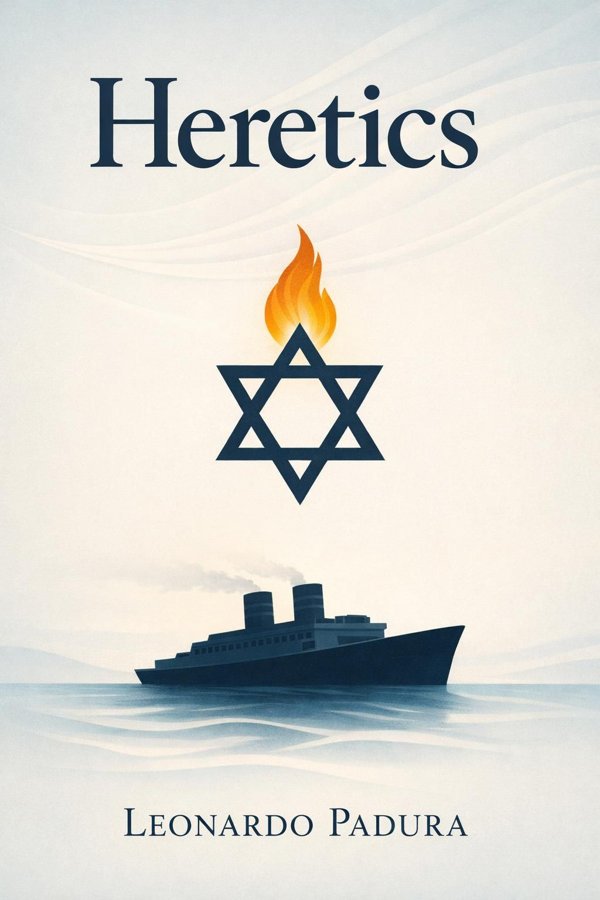
Heretics by Leonardo Padura is a bestsellers book spanning 4 pages. What does it mean to live freely when history, ideology, religion, and fear are all trying to define you? In Heretics, Leonardo Padura turns that question into a sweeping, deeply intelligent novel that moves across centuries, continents, and moral crises. At once a detective story, a historical saga, and a philosophical meditation, the book follows the familiar figure of Mario Conde, Padura’s weary, perceptive former policeman, as he investigates the disappearance of a young woman in contemporary Havana. That search opens onto a much larger mystery involving a lost Rembrandt, a Jewish family aboard the doomed voyage of the Saint Louis in 1939, and the fate of individuals who dared to think and live outside accepted boundaries. Padura’s authority comes not only from his mastery as a novelist but from his long engagement with Cuban reality, historical memory, and the costs of political and personal conformity. Widely regarded as one of Latin America’s most important contemporary writers, he brings emotional power and intellectual depth to every page. Heretics matters because it asks timeless questions: How much freedom can a person bear? What do we inherit from the past? And what is the price of refusing to belong?
This FizzRead summary covers all 8 key chapters of Heretics in approximately 10 minutes, distilling the most important ideas, arguments, and takeaways from Leonardo Padura's work. Also available as an audio summary and Key Quotes Podcast.
Heretics
What does it mean to live freely when history, ideology, religion, and fear are all trying to define you? In Heretics, Leonardo Padura turns that question into a sweeping, deeply intelligent novel that moves across centuries, continents, and moral crises. At once a detective story, a historical saga, and a philosophical meditation, the book follows the familiar figure of Mario Conde, Padura’s weary, perceptive former policeman, as he investigates the disappearance of a young woman in contemporary Havana. That search opens onto a much larger mystery involving a lost Rembrandt, a Jewish family aboard the doomed voyage of the Saint Louis in 1939, and the fate of individuals who dared to think and live outside accepted boundaries.
Padura’s authority comes not only from his mastery as a novelist but from his long engagement with Cuban reality, historical memory, and the costs of political and personal conformity. Widely regarded as one of Latin America’s most important contemporary writers, he brings emotional power and intellectual depth to every page. Heretics matters because it asks timeless questions: How much freedom can a person bear? What do we inherit from the past? And what is the price of refusing to belong?
Who Should Read Heretics?
This book is perfect for anyone interested in bestsellers and looking to gain actionable insights in a short read. Whether you're a student, professional, or lifelong learner, the key ideas from Heretics by Leonardo Padura will help you think differently.
- ✓Readers who enjoy bestsellers and want practical takeaways
- ✓Professionals looking to apply new ideas to their work and life
- ✓Anyone who wants the core insights of Heretics in just 10 minutes
Want the full summary?
Get instant access to this book summary and 100K+ more with Fizz Moment.
Get Free SummaryAvailable on App Store • Free to download
Key Chapters
Sometimes a missing object matters less for its market value than for the hidden lives attached to it. In Heretics, the search for a lost Rembrandt etching becomes far more than an art mystery. When a man from abroad arrives in Havana seeking answers about a family heirloom tied to the Holocaust and Cuba’s past, Mario Conde is drawn into an investigation that quickly reveals how objects can carry trauma, identity, and unfinished moral debts across generations.
Padura uses the missing artwork as a narrative hinge. The etching is not merely a collectible; it is a vessel of family memory, exile, survival, and absence. Its disappearance points to the larger losses produced by persecution and displacement. In Conde’s hands, the inquiry becomes a way of reading not just evidence but silences: what families do not say, what nations prefer to forget, and what history leaves scattered in private lives. This is one of the novel’s core strengths. It shows that memory is often fragmented, indirect, and embedded in ordinary material things.
In practical terms, the idea resonates far beyond the novel. Many people know families shaped by migration, dictatorship, war, or economic rupture. A photograph, letter, book, or inherited object can become the thread that reconnects present identity to a buried past. Padura reminds us that understanding ourselves often requires paying attention to such fragments rather than only to official narratives.
The investigation also sharpens Mario Conde’s role as more than a detective. He becomes an interpreter of historical residue, a man trying to reconstruct meaning from ruins. The lost Rembrandt teaches that recovering truth is rarely neat, but the attempt still matters.
Actionable takeaway: Look at one object from your family or personal history and ask what untold story it might preserve. Use it as a starting point for recovering a deeper understanding of the past.
One of history’s cruelest tragedies is that danger is sometimes obvious, yet compassion still fails to act. Heretics revisits the 1939 voyage of the Saint Louis, the ship carrying Jewish refugees escaping Nazi persecution who were denied safe harbor, including in Cuba. Through the Kaminsky family and the young Daniel, Padura transforms a historical episode into an intimate moral reckoning about abandonment, bureaucracy, and the devastating consequences of closed doors.
Daniel boards the ship with hope and fear, carrying not only personal dreams but a Rembrandt etching that symbolizes culture, continuity, and fragile dignity. What unfolds is a portrait of people suspended between catastrophe and rescue, only to discover that nations often protect their politics before they protect human beings. Padura does not treat the episode as distant history. He makes readers feel how paperwork, prejudice, and indifference can become instruments of destruction.
The significance of this section extends beyond World War II. The Saint Louis remains a haunting mirror for modern refugee crises. Whether the displaced are fleeing war, authoritarianism, or persecution, the same questions persist: Who is welcomed? Who is turned away? And how do societies justify their moral evasions? Padura’s genius lies in connecting historical injustice to contemporary habits of exclusion without reducing the novel to a political sermon.
For readers today, the lesson is practical as well as ethical. It challenges us to look critically at public language around migration and to recognize how easily institutions can depersonalize suffering. The novel asks us to resist the comfort of historical hindsight by noticing similar patterns in the present.
Actionable takeaway: When you encounter debates about refugees or displaced people, pause before accepting abstract labels. Ask what individual stories, fears, and hopes are being erased by administrative language.
Heresy often begins with a way of seeing. In the novel’s Rembrandt-centered historical strand, Padura explores Amsterdam in the seventeenth century as a world where art, commerce, religion, and power collide. Rembrandt emerges not simply as a famous painter but as a figure of artistic independence, someone whose gaze refuses obedience. His work becomes a metaphor for the freedom to perceive reality differently from the norms imposed by church, market, or community.
Padura is especially interested in the idea that true artists are often heretics because they insist on their own vision. Rembrandt’s choices, aesthetic and personal, carry costs. To paint or etch according to one’s deepest truth can lead to misunderstanding, marginalization, or economic decline. Yet Padura treats this defiance as spiritually necessary. Freedom, in this sense, is not comfort. It is fidelity to one’s inner eye.
This part of the novel broadens the meaning of heresy. It is not only theological dissent or political rebellion. It can also be artistic integrity, the refusal to simplify human complexity for approval. In modern life, this has clear applications. A writer resisting censorship, a teacher challenging rote thinking, or a professional refusing to distort facts for institutional convenience all practice a kind of secular heresy.
Padura’s portrayal encourages readers to examine where they outsource their vision. How often do we describe reality in borrowed language because it is safer? Rembrandt’s example suggests that seeing honestly is itself a courageous act.
The novel also links artistic freedom to moral imagination. Art does not rescue history, but it can preserve human singularity against systems that flatten people into categories. That is why the Rembrandt etching matters so much: it represents the stubborn survival of individual perception.
Actionable takeaway: Identify one area of your life where you rely too heavily on accepted opinions. Try articulating what you actually see, think, or feel in your own words, even if they differ from the consensus.
In restrictive societies, even ordinary self-expression can become an act of rebellion. In the contemporary Havana sections of Heretics, Padura shows how heresy has changed shape but not disappeared. Mario Conde’s investigation into a missing young woman leads him into subcultures, generational disillusionment, and the quieter forms of dissent practiced by people trying to live authentically in a place marked by scarcity, surveillance, and emotional fatigue.
The young woman at the center of this thread represents a new kind of outsider. Her difference is not necessarily political in the traditional sense. It is existential and cultural. She belongs to a generation searching for identity in a society that often offers prefabricated roles and limited horizons. Her disappearance becomes a symptom of a broader condition: many people vanish socially before they vanish physically, withdrawing from prescribed identities they cannot inhabit.
Padura’s Cuba is not reduced to caricature. He writes with affection, irony, and pain, showing both the warmth of everyday life and the pressure of stagnation. Heresy here may mean joining an alternative community, embracing an unconventional aesthetic, seeking spiritual intensity, or simply refusing to repeat the approved script. The result is a nuanced account of how freedom is negotiated in constrained settings.
This has wide relevance. Many readers live in environments that are not openly authoritarian yet still punish difference through ridicule, career penalties, or social exclusion. The novel suggests that heresy today often appears in lifestyle choices, creative scenes, and private acts of refusal rather than dramatic public declarations.
Mario Conde, with his skepticism and melancholy, serves as an ideal guide. He recognizes that people can be damaged by systems without losing their hunger for self-definition.
Actionable takeaway: Notice where conformity operates subtly in your environment. Support one person, including yourself, in expressing a more honest identity without immediate judgment or correction.
Many people say they want freedom, but fewer ask what freedom demands from them. One of Heretics’ most powerful insights is that freedom is not simply the absence of chains. It is the difficult responsibility of choosing a self, living with that choice, and accepting the loneliness that may follow. Across its multiple timelines, the novel shows characters confronting institutions, families, traditions, and collective identities that try to decide for them.
Padura resists simplistic heroism. His characters do not become free through triumphant declarations. Instead, they experience freedom as uncertainty, risk, and moral burden. To think independently may separate you from your community. To pursue desire may unsettle inherited loyalties. To reject dogma may leave you without the comfort of belonging. In this sense, the novel’s title is exact: a heretic is not merely someone who opposes authority, but someone willing to bear the consequences of inner conviction.
This idea applies directly to contemporary life. People often inherit scripts about career, belief, relationships, politics, and identity. Following them may bring social ease, while questioning them may create friction. Padura does not argue that all rebellion is noble. Rather, he asks whether a person can live honestly without examining the beliefs they have been handed.
What makes the novel especially compelling is that it ties existential freedom to historical circumstance. Some characters have more room to choose than others, and some pay far more heavily for dissent. Freedom is therefore both universal and unequal, a human aspiration always shaped by power.
Readers can take this beyond literature by reflecting on where their choices are genuinely their own. The novel invites self-audit rather than abstract admiration.
Actionable takeaway: Write down one belief or life path you have accepted largely because others expected it. Ask whether it still reflects your deepest convictions, and decide one small step toward a more deliberate choice.
We often imagine identity as something stable and coherent, but Heretics suggests that most identities are assembled from broken pieces. Family histories, religious inheritances, political systems, migrations, artworks, lost languages, and remembered wounds all shape who people become. Padura structures the novel itself as a mosaic to reflect this truth: no single storyline is sufficient on its own, and understanding emerges only when disparate fragments are held together.
This fragmented structure is not decorative. It is a philosophy of personhood. Daniel Kaminsky, Mario Conde, the missing young woman, and even the shadow of Rembrandt all stand at intersections between belonging and estrangement. Jewish identity, Cuban identity, artistic identity, and personal identity overlap but never fully resolve. The result is a novel that refuses easy labels. Characters are not reducible to nationality, ideology, or ancestry. They are formed in the tension between what they inherit and what they choose.
That insight is particularly relevant today, when identity is often discussed in rigid categories. Padura acknowledges the importance of collective history while insisting on individual complexity. A person may be shaped by trauma without being defined entirely by it. They may belong to a tradition while resisting parts of it. They may feel loyalty and alienation at the same time.
In practical life, this means resisting overly tidy self-descriptions and simplistic readings of others. It can be helpful to think of identity not as a finished statement but as an ongoing composition. Families, workplaces, and communities become healthier when they allow room for contradiction and evolution.
By making readers work across time periods and perspectives, Padura trains them in a more patient kind of understanding. To know someone, as to know history, you must tolerate incompleteness.
Actionable takeaway: Map your identity through five fragments such as a place, a memory, a value, a wound, and a chosen passion. Notice how your life story is more layered than any single label suggests.
Not every investigator solves mysteries by restoring order. Mario Conde is compelling because he understands that some losses cannot be repaired. In Heretics, as in Padura’s broader body of work, Conde is less a triumphant detective than a wounded witness. He moves through Havana with intelligence, irony, nostalgia, and a deep sensitivity to the decay of ideals. That makes him uniquely suited to this novel, where the central mystery opens onto centuries of displacement and disappointment.
Conde’s importance lies in his perspective. He is suspicious of grand narratives, whether political, historical, or moral. Yet he is not cynical in the empty sense. He still cares about truth, beauty, friendship, and the dignity of ordinary people. His secondhand book trade is symbolic: he works among discarded things, trying to preserve value in a culture of erosion. This gives him a particular authority when handling stories about lost art, forgotten refugees, and vanished lives.
Readers can learn a great deal from how Padura uses him. Conde listens more than he lectures. He notices atmospheres, contradictions, and social textures. He knows that a person’s surroundings often reveal as much as their statements. In practical terms, this is a model for understanding others in real life. Good judgment rarely comes from rushing to conclusions; it comes from patient observation and attention to context.
Conde also embodies the emotional cost of historical awareness. He sees what has been squandered in Cuba without losing his attachment to the island’s people and culture. That tension keeps the novel humane. Critique and love are not opposites here.
Actionable takeaway: In difficult situations, practice Conde’s method: observe carefully, listen for what is not being said, and avoid forcing a simple explanation onto a complex reality.
Large historical events are often taught as abstractions, but Heretics insists that history is felt most sharply in bedrooms, family conversations, inheritances, and silences. The novel connects the Holocaust, migration, art history, and post-revolutionary Cuban life without treating any of them as detached subjects. Instead, Padura shows how world events settle into individual destinies and continue to echo long after headlines fade.
This is one of the book’s major contributions. It closes the gap between macro history and personal experience. The refusal of the Saint Louis is not just a geopolitical shame; it is a wound carried by descendants. Artistic dissent in Rembrandt’s era is not merely a museum topic; it becomes a living meditation on freedom. Contemporary alienation in Havana is not just social commentary; it is embodied in missing persons, fragile friendships, and private searches for meaning.
Such an approach can change how readers think about their own lives. Family dynamics, opportunities, anxieties, and aspirations are often shaped by events that happened before we were born. Economic crises, migration decisions, cultural taboos, wars, and political transitions all leave marks that may not be immediately visible. Padura’s narrative invites curiosity about those hidden continuities.
This perspective also encourages humility. People’s choices make more sense when viewed against the histories that constrain them. Rather than judging quickly, we can ask what inherited pressures or collective memories may be operating beneath the surface.
The novel’s emotional richness comes from exactly this layering. No one is only an individual, and no one is only a product of history. Human beings are where public catastrophe and private longing meet.
Actionable takeaway: Ask an older family member about one historical event that changed the course of your family’s life. Listen for how public history became private experience.
All Chapters in Heretics
About the Author
Leonardo Padura Fuentes, born in Havana in 1955, is a Cuban novelist, journalist, essayist, and screenwriter best known for creating the detective character Mario Conde. He studied Latin American literature at the University of Havana and began his career in journalism before turning to fiction. Padura’s novels are celebrated for blending crime narrative with literary ambition, historical research, and penetrating commentary on Cuban society. His work frequently explores memory, exile, political disillusionment, and the moral complexity of everyday life. Over the course of his career, he has become one of the most internationally recognized Cuban writers of his generation. In 2015, he received the Princess of Asturias Award for Literature, confirming his place as a major voice in contemporary world literature.
Get This Summary in Your Preferred Format
Read or listen to the Heretics summary by Leonardo Padura anytime, anywhere. FizzRead offers multiple formats so you can learn on your terms — all free.
Available formats: App · Audio · PDF · EPUB — All included free with FizzRead
Download Heretics PDF and EPUB Summary
Key Quotes from Heretics
“Sometimes a missing object matters less for its market value than for the hidden lives attached to it.”
“One of history’s cruelest tragedies is that danger is sometimes obvious, yet compassion still fails to act.”
“Heresy often begins with a way of seeing.”
“In restrictive societies, even ordinary self-expression can become an act of rebellion.”
“Many people say they want freedom, but fewer ask what freedom demands from them.”
Frequently Asked Questions about Heretics
Heretics by Leonardo Padura is a bestsellers book that explores key ideas across 8 chapters. What does it mean to live freely when history, ideology, religion, and fear are all trying to define you? In Heretics, Leonardo Padura turns that question into a sweeping, deeply intelligent novel that moves across centuries, continents, and moral crises. At once a detective story, a historical saga, and a philosophical meditation, the book follows the familiar figure of Mario Conde, Padura’s weary, perceptive former policeman, as he investigates the disappearance of a young woman in contemporary Havana. That search opens onto a much larger mystery involving a lost Rembrandt, a Jewish family aboard the doomed voyage of the Saint Louis in 1939, and the fate of individuals who dared to think and live outside accepted boundaries. Padura’s authority comes not only from his mastery as a novelist but from his long engagement with Cuban reality, historical memory, and the costs of political and personal conformity. Widely regarded as one of Latin America’s most important contemporary writers, he brings emotional power and intellectual depth to every page. Heretics matters because it asks timeless questions: How much freedom can a person bear? What do we inherit from the past? And what is the price of refusing to belong?
More by Leonardo Padura
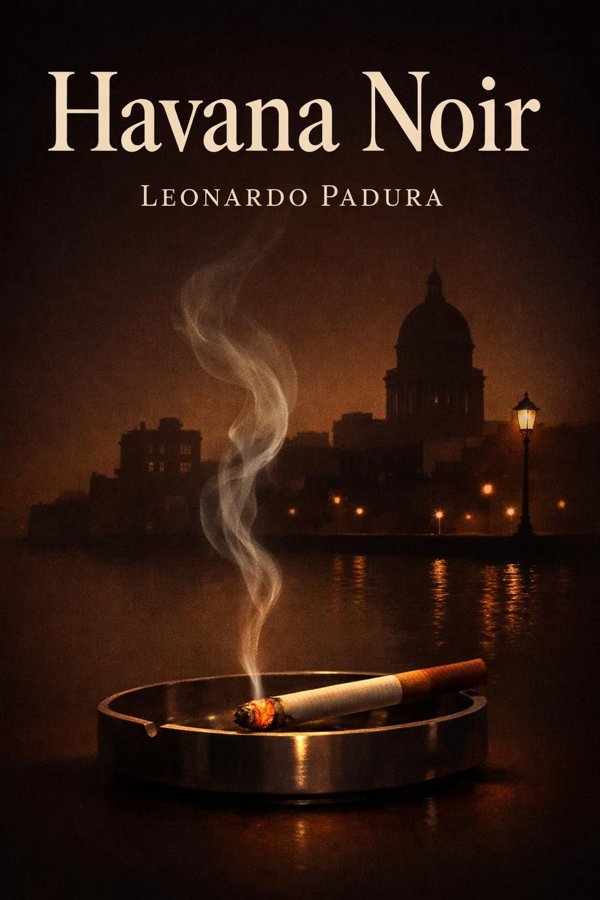
You Might Also Like
The Godfather
Mario Puzo
10 min
The Handmaid's Tale
Margaret Atwood
10 min
The Hunger Games
Suzanne Collins
10 min
The Nightingale
Kristin Hannah
10 min
The Seven Husbands of Evelyn Hugo
Taylor Jenkins Reid
10 min
Backwater Justice
Fern Michaels
10 minBrowse by Category
Ready to read Heretics?
Get the full summary and 100K+ more books with Fizz Moment.